


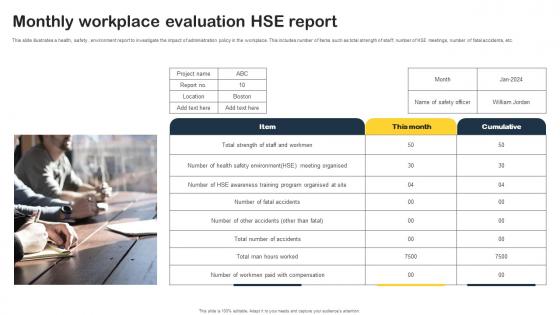
Monthly Workplace Evaluation HSE Report




Try Before you Buy Download Free Sample Product
 Impress Your
 Audience
 100%
100% Editable
 Save Hours
 of Time


This slide illustrates a health, safety , environment report to investigate the impact of administration policy in the workplace. This includes number of items such as total strength of staff, number of HSE meetings, number of fatal accidents, etc.
People who downloaded this PowerPoint presentation also viewed the following :
Monthly Workplace Evaluation HSE Report with all 9 slides:
Use our Monthly Workplace Evaluation HSE Report to effectively help you save your valuable time. They are readymade to fit into any presentation structure.








FAQs for Monthly Workplace
You'll want to cover four main things: what happened, why it happened, how you're fixing it, and when. Get specific with the incident details - who, what, where, when. The root cause analysis is honestly where most people phone it in, but it's super critical. Don't just look at the obvious stuff, dig deeper into what really caused this mess. Your corrective actions need to actually fix those root causes (not just bandaids), with realistic deadlines and someone clearly owning each task. Also throw in any immediate actions you already took and what you learned to prevent it happening again.
Honestly, get someone dedicated to tracking regulatory changes first - that's huge. Your data systems need to capture what regulators actually want, not just the easy stuff to measure. Internal audits will save your butt before inspectors show up. Don't start from scratch every time either - build templates and checklists that match the requirements exactly. I've seen too many companies wing it and regret it later. Set up a compliance calendar with all your deadlines mapped out. Sounds boring but you'll thank yourself when you're not scrambling last minute.
Honestly, turning your HSE reports into visuals is a game changer. Charts and dashboards beat walls of text every time - people can actually spot patterns and issues right away. I've seen executives completely tune out during traditional reports, but throw up a heat map? Suddenly they're engaged and asking smart questions. Your team will make faster decisions when they can see the data instead of hunting through paragraphs. Quick win: pick your top 5 safety metrics and turn them into simple charts first. The difference is night and day, trust me.
Most places do monthly HSE reports, but honestly it depends on your industry. Some need them way more often. The real thing is you've gotta update whenever something big happens - incidents, near-misses, new equipment, that kind of stuff. Don't get too hung up on the calendar though. Like if you install new machinery or change procedures, that's when you need a fresh report regardless of timing. I'd just set a monthly reminder and adjust based on what's actually going down at work. Way more practical than being super rigid about it.
Ugh, data collection is the worst part honestly. Every department tracks stuff differently, so you're constantly chasing people for missing info when deadlines hit. Quality control gets messy fast when nothing's standardized - like, you'll need documentation and it's just... not there. Resource constraints suck too, especially without dedicated HSE people. But here's what actually helps: get standardized templates going early. Set regular collection schedules so you're not scrambling last minute. Trust me, your future self will thank you when report time rolls around and you're not pulling your hair out.
Honestly, tech can save your sanity here. Start with digital forms that auto-populate - way less typing. Mobile apps are a game changer too, workers can report stuff right when it happens instead of scribbling notes they'll lose later (we both know how that goes). Set up dashboards to pull data automatically so you're not chasing people around for updates. Automated alerts bug people about overdue reports, which is kinda satisfying actually. You'll generate compliance reports in minutes instead of drowning in spreadsheets. Just tackle your most common incident forms first - that alone cuts out so much manual work.
Track your injury rates first - TRIR, DART, that basic stuff. Near misses are huge though, way more predictive than people think. Training completion rates, environmental incidents, spills, emissions. Compliance metrics matter too - audit findings and whether you're actually closing corrective actions on schedule. Behavioral observations are honestly my favorite because they catch problems before they become accidents. Balance the reactive metrics (what already went wrong) with proactive ones (what you're preventing). Don't go crazy with data - start with maybe 5-7 solid metrics or you'll lose everyone.
Honestly, anonymous feedback tools work best - people actually tell you what's wrong when they're not worried about getting in trouble. Set up regular surveys and suggestion boxes, but also grab quotes from incident reports and near-miss stuff. Safety committee notes are super useful too, plus any HSE complaints from exit interviews (you'd be surprised what people say when they're leaving). The trick is making it feel like an actual conversation instead of just management talking at everyone. Oh, and definitely add an "Employee Voice" section to your reports - makes a huge difference.
Honestly, just start by Googling "[your industry] safety benchmarks" - sounds lazy but it actually works pretty well! OSHA has tons of stats, and industry associations usually publish reports with this stuff. Focus on your main metrics first: injury rates, near misses, environmental incidents. The tricky part is making sure you're comparing similar company sizes and operations, not some massive corporation vs your setup. I'd grab the data and throw together a basic dashboard showing where you sit versus industry averages. Gives you something concrete to work toward instead of just guessing what "good" looks like.
Start with structure and simple language - headings, bullet points, executive summaries help people skim fast. Active voice hits harder: "we found three safety issues" not "three safety issues were identified." Cut the jargon where you can (I get it, regulations make this rough). Charts and photos break up those brutal text walls. Here's the thing though - put your big conclusions right upfront. Don't bury the lead on page 12. People won't dig for it. Oh, and visuals really do make everything more digestible.
Basically, you've got to know your audience when writing HSE reports. Management wants the money stuff - costs, compliance status, big picture risks. Workers need the practical bits they can actually act on, like what went wrong and how to avoid it next time. Regulators? They want every boring detail documented properly with all the metrics. Same data, totally different spin. I learned this the hard way when I sent a super technical report to our floor team once - nobody read it. Short punchy stuff for workers, comprehensive formal docs for regulators. Just don't overthink it.
Honestly, standardized forms are your best friend here - train everyone to record stuff the same way. I always have someone else double-check entries because you'd be shocked how many dumb mistakes slip through. Your system should flag weird data automatically before anyone submits it. Monthly reviews with the team help catch bigger patterns too. Oh, and this is huge - people won't report incidents if they think they'll get in trouble for it. Create that safe space first. Regular audits are annoying but they work. Trust me, fixing data problems early beats explaining screwed-up numbers to management later.
HSE reports are honestly a game-changer for building trust with your team. People actually start believing leadership cares when they see their safety concerns getting documented and followed up on. You'll catch patterns you'd miss otherwise - like why accidents keep happening in the same area or during shift changes. The transparency thing is huge too. When employees see you're tracking their input and making real changes, they'll speak up more about potential hazards instead of staying quiet. I'd definitely start sharing highlights from these reports in meetings - shows everyone their feedback matters and drives actual improvements, not just paperwork.
Honestly, real-time dashboards are everywhere now - they pull straight from IoT sensors and wearables instead of those boring quarterly PDFs. Predictive analytics is pretty slick too, catching problems before they actually happen. Most companies ditched the dense spreadsheet look for interactive storytelling (thank god). Everything's gotta tie back to sustainability metrics now since execs are obsessed with that stuff. Oh, and mobile-first is basically required - field teams live on their phones anyway. You should definitely check out some automated dashboard tools. They'll literally save you hours every month on data collection alone.
Ditch the fancy safety jargon - just tell people what's broken and how to fix it. Photos and charts work way better than walls of text (trust me on this). Don't only highlight problems; mention what's going well too so your team doesn't feel attacked. Get your frontline guys involved in the discussion since they're doing the actual work. Quick toolbox talks are perfect for this - people can ask questions and throw out ideas. Oh, and definitely follow up with deadlines. Otherwise nothing actually happens.
-
I am really satisfied with their XYZ products. Used their slides for my business presentations and now I am taking their help for my son's high-school assignments. Super satisfied!!
-
SlideTeam’s pool of 2Million+ PPTs has really benefited my team, everyone from the IT department to HR. We are lucky to have crossed ways with them.