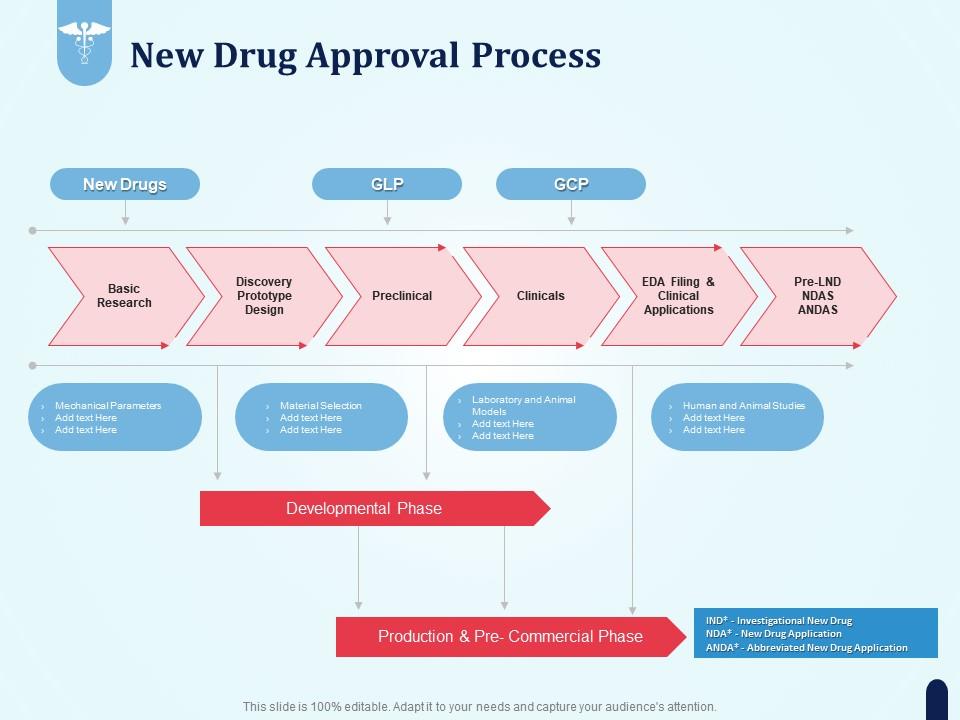
New drug approval process pharmaceutical development new medicine ppt file

Rating:
80%
New drug approval process pharmaceutical development new medicine ppt file
Slide 1 of 2
Favourites Favourites

Try Before you Buy Download Free Sample Product

Audience Impress Your
Audience
Editable 100%
Editable
Time Save Hours
of Time
The Biggest Sale is ending soon in
0
0
:
0
0
:
0
0
Rating:
80%
Deliver an outstanding presentation on the topic using this New Drug Approval Process Pharmaceutical Development New Medicine Ppt File. Dispense information and present a thorough explanation of Design, Developmental, Investigational using the slides given. This template can be altered and personalized to fit your needs. It is also available for immediate download. So grab it now.

FAQs for New drug approval process pharmaceutical development new

Okay so drug development has four main stages. First is preclinical - that's all the lab and animal testing stuff. Then you've got three phases of human trials. Phase I is just safety testing with small groups, Phase II tests if it actually works on a few hundred people, and Phase III is the big expensive one that'll either make or break you. Honestly, Phase III is where most companies burn through their cash. After all that you submit to the FDA and pray. The whole thing takes 10-15 years and costs insane money - like hundreds of millions. Oh, and definitely pad your timeline because literally everything gets delayed.

So the FDA has a bunch of ways to speed things up if your drug hits certain criteria. Breakthrough Therapy is probably your best bet - you get extra meetings with them and way faster reviews. Serious conditions with no good treatments are what they're looking for. There's also Priority Review which cuts it down to 6 months instead of the usual year-ish timeline. Fast Track and Accelerated Approval are other options too. Oh, and orphan drugs for rare diseases get their own special track. Honestly the whole system's kinda confusing but apply early and make a solid case for why yours deserves priority.

Look, clinical trials are basically how you prove your drug works without killing anyone. There's three phases - first one tests safety on small groups, then you check if it actually does anything useful, and finally you test it against current treatments with way more people. The whole thing takes forever and costs a fortune, which honestly sucks but whatever. FDA won't even glance at your application without rock-solid data showing it's both safe and effective. Oh, and match their guidance documents from day one or you'll just waste time fixing things later.

So the FDA reviews your clinical trial data in phases - first safety studies, then efficacy trials with real patients. You'll need to submit massive amounts of data on side effects, dosing, manufacturing quality, plus how it stacks up against existing treatments. Honestly, the whole thing is brutal and takes forever. They'll also inspect your facilities and want to see your risk management plans. Oh, and make sure your clinical data tells a clear story about benefits vs risks - that's huge. The manufacturing piece can be tricky too if you haven't planned for it properly.

So you can't even start human trials without getting your IND approved first - it's literally the gatekeeper. Basically you dump all your preclinical data, manufacturing details, and study protocols into this massive document to show the FDA your drug won't kill people right away. Then you wait 30 days for them to respond (assuming they don't hit you with a hold, which honestly happens more than you'd think). The whole thing is such a pain but there's no way around it. My advice? Start putting it together way earlier than you think you need to because this thing will make or break whether all your research can actually move forward.

Oh dude, fast-track can literally cut your approval time in half - like 6-8 months vs the usual 12+. You'll get way more FDA face time during development, which is honestly clutch because you can pivot early instead of getting blindsided later. Plus you become eligible for accelerated approval and priority review - basically stacking speed boosts. One thing though - the safety and efficacy bars stay just as high, they just make the whole process less painful. If your drug might qualify, jump on it early in development. Worth the paperwork headache.

Regulatory stuff will probably be your worst nightmare - incomplete data packages, compliance headaches, the works. FDA feedback can derail everything for months when they want more studies. Manufacturing is tricky too, especially scaling up from tiny batches to actual production volumes. Oh, and clinical trials? They're delayed constantly. Like, I can't think of one that went smoothly. Get regulatory consultants on your team ASAP and honestly just assume everything will take twice as long as planned. The back-and-forth with agencies alone will eat up way more time than you think.

So basically after your drug launches, the FDA and companies don't just walk away - they keep monitoring everything. Doctors and patients report side effects through systems like FAERS. Clinical trials only tell you so much, right? Real world use is totally different. Companies have to send in safety reports regularly, and if weird patterns pop up, FDA can force them to do more studies. Oh and if you're launching something, your pharmacovigilance team better be ready from day one because honestly, that's where things can go sideways fast if you're not prepared.

So basically, regular approval means you need all your Phase III data showing the drug actually helps people - takes forever. Accelerated lets you skip ahead using biomarkers or other signals that *should* mean it works, but you haven't fully proven it yet. Pretty smart system honestly. You still gotta do those confirmation studies after approval though, which some companies forget about. Timeline-wise? You're looking at saving maybe 2-4 years with the accelerated route. FDA's basically betting on your drug looking promising enough to get it out there faster.

So international regs actually make your life way easier for drug approvals. ICH guidelines mean you're not reinventing the wheel for every market - US, EU, Japan all want basically the same core data now. Thank god, because it used to be a total nightmare. You'll still hit some regional quirks though. FDA has their risk evaluation thing, EMA does conditional approvals differently. But honestly? The clinical and quality stuff lines up pretty well across the board. Just map out your target markets super early - like, before you even start trials early. That decision shapes everything else you do.

Advocacy groups are massively important for drug approvals now. They show up at FDA meetings sharing what it's actually like to live with these conditions - stuff clinical trials miss completely. For rare diseases especially, patient voices can basically make or break your application since there aren't many people who understand what you're dealing with. They also push regulators for faster timelines when there's clear unmet need. Honestly, if you're prepping any submission, get these groups on your side early. I've seen companies totally botch this by waiting too long. Their support matters way more than most people realize.

So drug development with AI is getting pretty wild right now. Machine learning can spot promising compounds way faster than the old school methods. Plus it catches which drugs will probably flop before companies burn through millions - which honestly should've happened years ago. The FDA's actually cool with AI for analyzing trial data and finding safety issues, but the regulations are still all over the place. It's also making patient recruitment less of a nightmare. Oh, and study protocols are way better now. Just keep watching those FDA updates because they're changing the rules constantly.

So basically when drugs get reclassified, it's all about switching between prescription and over-the-counter. If something goes from Rx to OTC, you can just grab it off the shelf - way easier - but your insurance won't cover it anymore. That part honestly sucks because some people get hit pretty hard financially. The flip side? OTC to prescription means you need a doctor's visit first, but then insurance usually helps out. Oh, and timing is all over the place. Sometimes it happens right away, sometimes they drag it out with phases. Your pharmacy people are actually super helpful about knowing what's coming down the pipeline.

So ethics aren't something you tack on at the end - they're baked into everything from day one. Your informed consent has to be rock solid so people actually get what they're signing up for. Randomization needs to be fair, and you better have clear rules for stopping if things go sideways. Honestly, the ethics review board should be your new best friend - run stuff by them early because they'll spot issues you totally missed. Oh, and don't forget you're trying to get good data while not making participants' lives miserable. It's a balancing act for sure.

RWE is getting massive for drug approvals these days. Basically shows how drugs work when patients aren't following perfect trial protocols (which, let's be real, never happens). FDA's pulling data from health records, insurance claims, patient registries - all that messy real-world stuff. Super helpful for rare diseases where you can't exactly run huge trials. Also great for safety monitoring after approval and expanding labels later. Oh, and if you're prepping submissions, start thinking about what data sources you could use now rather than scrambling later.

Ratings and Reviews

80% of 100
Review Form
Write a review
Most Relevant Reviews
  1. 80%

    by Darnell Tucker

    Great quality product.
  2. 80%

    by Dwayne Matthews

    The Designed Graphic are very professional and classic.
  3. 80%

    by Miller Rogers

    Informative presentations that are easily editable.

3 Item(s)

per page: