New Drug Development Process Clinical Trial Phases With Review And Approval Process
Try Before you Buy Download Free Sample Product
Audience
Editable
of Time
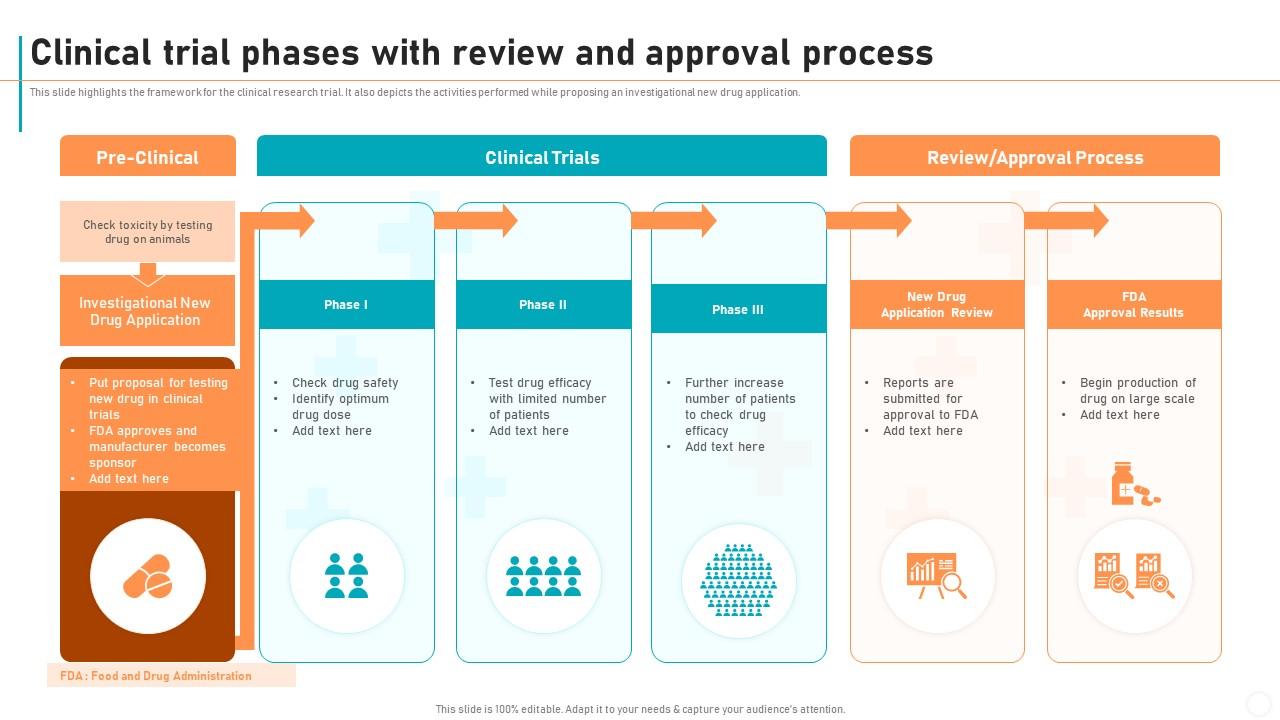
This slide highlights the framework for the clinical research trial. It also depicts the activities performed while proposing an investigational new drug application.
People who downloaded this PowerPoint presentation also viewed the following :
New Drug Development Process Clinical Trial Phases With Review And Approval Process with all 6 slides:
Use our New Drug Development Process Clinical Trial Phases With Review And Approval Process to effectively help you save your valuable time. They are readymade to fit into any presentation structure.
FAQs for New Drug Development Process Clinical Trial Phases With Review
So basically you've got discovery first - finding compounds that might work. Then it's preclinical testing on cells and animals to make sure they won't kill anyone. After that comes the fun part (kidding, it's torture): three phases of human trials. Phase I is just checking if it's safe with small groups. Phase II tests if it actually works. Phase III does huge studies comparing it to existing treatments - this is where things drag on forever. Finally you submit everything to the FDA and pray. Whole thing takes like 10-15 years and costs a fortune. Seriously, pad your timeline because something always goes wrong.
So preclinical is all the lab stuff - testing on cells and animals before they'd ever touch a human. Think of it as the "will this kill someone immediately?" phase. Clinical trials are totally different - that's when they actually test on people in those Phase I, II, III studies. Honestly, the preclinical stage is where most drugs probably fail, but you never hear about those disasters. They're basically proving it won't be toxic and might actually work before filing to test on volunteers. Pretty wild that your medication went through years of mouse studies first, right?
Dude, regulatory approval is literally the final boss you have to beat before your drug can sell. No way around it. You'll be grinding through clinical trials for years collecting safety data, then the FDA gets to pick apart your entire submission. Their review process? Brutal - expect 6-12 months minimum, sometimes way longer if your case is tricky. Timeline really comes down to whether you get priority status and how clean your paperwork is. Oh, and definitely start schmoozing with regulatory people early. Get those pre-submission meetings booked ASAP - trust me, it saves massive headaches down the road when you're already stressed about everything else.
So there's actually tons of safety stuff built into clinical trials. IRBs approve everything and keep watching throughout. Data monitoring boards can literally shut down a study if something goes wrong - which honestly happens more than you'd think. Participants have to give informed consent after learning all the risks. Any bad reactions get reported immediately, no exceptions. The FDA does random inspections too. Oh and if you're designing one yourself, build those safety checkpoints in early. Trust me, adding them later is a nightmare.
So there's a bunch of ways to find drug candidates actually. High-throughput screening is super common - basically throwing thousands of compounds at your target protein and seeing what works. You can also do structure-based design where you look at the 3D structure and try to design something that fits (easier said than done though). Natural products from plants and microbes are still a thing too. AI and computer modeling are blowing up right now - honestly kind of wild how good they're getting. Most people end up mixing several approaches since putting everything on one method is pretty risky.
So basically they test drugs against either fake pills or whatever treatment already exists. The whole thing's set up so nobody knows who's getting what until it's over - keeps everyone honest. Cancer drugs? They're watching tumors shrink. Blood pressure meds? Numbers dropping. Pretty straightforward stuff. What matters is hitting those main goals they set upfront (primary endpoints, if you're being fancy about it). Everything else is just noise. The statistics have to show it's actually the drug working, not just random luck. Honestly, reading trial results gets way easier once you figure out what to ignore.
Ugh, where do I even start? Time and money are killers - we're talking 10-15 years and billions per drug. Clinical trials are absolute chaos, especially finding enough patients. The FDA has crazy strict requirements at every single stage. Most drugs crash and burn anyway - like 90% never make it. Competition's brutal too since other companies are racing for the same treatments. Actually had a friend who worked at a biotech that folded after seven years of work. Build in extra time and budget for literally everything because something will go wrong.
Dude, AI is completely changing drug development right now. You can predict which compounds might actually work before even making them - saves crazy amounts of time and cash. Machine learning finds drug targets, plus computational models show how drugs behave in your body. The genomics stuff is honestly mind-blowing though, like we're basically customizing treatments based on people's DNA now. Clinical trials are way smoother too with remote monitoring and better patient matching. Oh, and definitely check out AI platforms for optimizing your research workflows - that's where I'd start if I were you.
So the main stuff you gotta think about is informed consent - like people actually get what they're agreeing to, not just signing papers. Risk vs benefit is huge too. Don't just test on whoever's easiest to find, that's super unfair. Honestly the ethics approval paperwork is brutal but you can't skip it. Get your review board involved from day one, not as an afterthought. Oh and vulnerable populations need extra protection - can't just throw them into trials. It's literally people's health we're talking about here.
So basically, drug companies spend insane amounts developing new drugs - we're talking billions per drug that actually makes it to market. Clinical trials alone are ridiculously expensive. Because of this, they price drugs to recover all that R&D money plus make profit for investors. It's honestly a brutal cycle because patients in lower-income areas get screwed over by these high prices. When you're looking at how companies set their pricing strategies, just remember they're thinking about that entire development timeline and all the risk involved. That's what drives their whole approach to market access.
So Phase I is the "don't kill people" test - small groups, figuring out safe doses. Then Phase II brings in a few hundred patients to see if it actually does what it's supposed to. Phase III is where things get real though - thousands of people, your drug vs whatever's already out there or a placebo. It's kinda like... you test if your new recipe is edible first, then if it tastes decent, then finally pit it against everyone's current favorite at a big dinner. Each step has to work or you're basically screwed and starting over.
Dude, genetic testing is totally changing drug development. You can actually pinpoint who'll respond to your drug before you even start trials - no more throwing darts in the dark. Companies are doing way smaller, focused studies now instead of those massive expensive ones that usually flop. The FDA's really into this approach too, especially for rare diseases where you can't exactly recruit thousands of patients. My cousin works in pharma and says it's saving them insane amounts of money. Build your biomarker strategy early though - don't treat it as an afterthought.
So basically, small molecules are like aspirin - chemically made, you can pop them as pills, and they get into cells easily. Biologics are more like insulin - big complex proteins made in living cells that you usually have to inject. Manufacturing costs are way different too. Small molecules are cheaper to make and behave predictably in your body. But here's the thing - biologics can hit disease targets that small molecules just can't touch, which is pretty cool. Development takes longer for biologics though, mainly because making them is such a pain. If you're thinking strategy, biologics cost more upfront but you can charge premium prices later.
Real-world data is honestly pretty huge right now for drug development. It helps you spot unmet medical needs and figure out your actual target populations. Plus regulators are getting way more interested in seeing how drugs work outside those super controlled trials - which makes sense if you think about it. You can catch safety issues earlier too. The data also helps design better trials based on what's actually happening with patients. Oh and it can support your regulatory submissions, which is clutch. I'd say start by connecting with healthcare systems or tapping into existing patient databases early on. Don't wait until later in development.
Patient advocacy groups are basically patients' megaphones during drug development. They push for faster approvals and help recruit people for trials. For rare diseases especially, they're surprisingly powerful - makes sense since every patient matters more. These groups fund early research and maintain patient registries that pharma companies actually need. Plus they give you the real scoop on what it's like living with whatever condition you're targeting. Honestly, if you're developing a new drug, reach out to relevant groups early. You'll get invaluable patient insights and they'll help drum up community support for your trials.
-
They saved me a lot of time because they had exactly what I was looking for. Couldn’t be happier!
-
The ease of modifying templates is just superb! Also, the vast collection offers plenty of options to choose from.