


Drug discovery process research fda powerpoint slides and ppt templates db





Try Before you Buy Download Free Sample Product
 Impress Your
 Audience
 100%
100% Editable
 Save Hours
 of Time


Leave no aspect of your presentations to chance. Thousands of Drug Discovery Process Research Fda Powerpoint Slides And Ppt Templates DB are ready now.
People who downloaded this PowerPoint presentation also viewed the following :
Drug discovery process research fda powerpoint slides and ppt templates db with all 11 slides:
Simply giving a boring presentation won't cut it. Lend life to your ideas through the engaging Drug Discovery Process Research Fda Powerpoint Slides And Ppt Templates DB design available here.
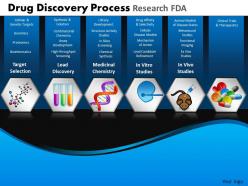
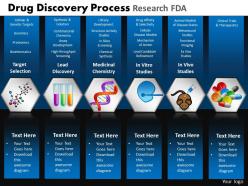
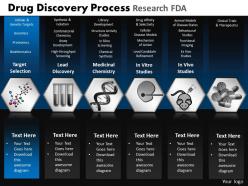
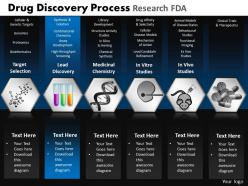
FAQs for Drug discovery process research fda powerpoint slides and
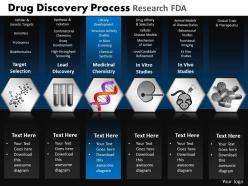
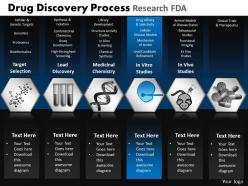
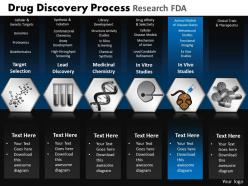
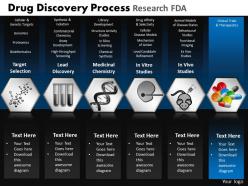
So basically you've got target identification, lead discovery, preclinical testing, then clinical trials (Phases I-III). First you find your biological target, screen a bunch of compounds for promising leads. Then comes the fun part - optimizing those leads and testing in animals before human trials. Honestly the failure rates are insane at every step, like genuinely depressing. These phases aren't as linear as textbooks make them seem though. You're constantly looping back when stuff fails. Oh and FDA requirements basically dictate everything from the start, so don't ignore those guidelines or you'll hate yourself later.
Dude, you absolutely cannot mess this part up. Target validation will literally make or break your entire program before you even touch a compound. Pick the wrong target? You're basically flushing money down the drain for the next decade plus. You need to prove three things: it's actually druggable, it matters for the disease, and hitting it won't cause terrible side effects. Honestly, the number of programs that died because they rushed past this step is just depressing. Yeah, it takes forever upfront, but trust me - do the work now or you'll hate yourself later when you're explaining to investors why you burned through $50 million.
So high-throughput screening is basically your workhorse for testing thousands of compounds super fast against whatever target you're working with. These robotic systems can screen entire chemical libraries in days instead of years - honestly it's pretty wild how efficient they are. The goal is casting a wide net early to find "hits" with some biological activity. Not your final drug candidate obviously, just decent starting points for optimization. Works as your first filter before diving into all the expensive medicinal chemistry stuff. Oh and definitely nail your assay conditions first - garbage in, garbage out situation there.
Dude, AI is completely changing drug discovery right now. What used to take decades might only take a few years - which is insane when you think about it. Machine learning can predict how molecules will behave and even design new compounds from scratch. The processing power is nuts too - it'll analyze millions of molecular interactions while your lab team is still setting up their first experiment. DeepMind and a bunch of biotech startups are already getting solid results in trials. Honestly, if you're not looking into AI partnerships or platforms yet, you're gonna fall behind pretty fast.
The worst part? You'll constantly battle between making compounds potent vs safe - boost one and the other usually crashes. ADMET stuff will kill you, especially getting decent oral absorption without nasty metabolites. Honestly, I'd run multiple optimization paths from day one instead of just chasing potency. Computational predictions help catch ADMET problems before you waste time synthesizing. Counter-screening panels are clutch upfront - your compound will hit random targets you never saw coming. SAR mapping saves your butt here. Oh, and think about formulation early because I've seen brilliant compounds die simply because nobody could dose them right.
So they basically play it like investing - spread your bets across tons of drug candidates since most are gonna bomb anyway. Smart move is tackling the big money targets first, then using computer models to weed out the obvious losers before you waste real cash. Partnering up helps split those insane costs too. "Fail fast, fail cheap" is like their mantra or whatever. Oh, and repurposing old drugs for new stuff? That's actually genius since it skips years of testing. Companies that know what they're doing also chat with the FDA early to avoid getting blindsided later.
Regulatory stuff hits way earlier than most people realize - like from day one of study design. FDA's got really specific rules for preclinical testing and data collection that'll dictate how you set everything up. IND applications are massive milestones, and honestly the paperwork is brutal. If you're thinking global, that's where it gets messy because FDA, EMA, and other agencies all want different things. Oh and compliance costs add up fast - I've seen people get blindsided by that. Get a good regulatory consultant early, trust me on this one.
Dude, PK and PD are literally everything in drug design. PK shows how your body processes the drug - absorption, metabolism, all that stuff. PD is what the drug actually does once it hits the target. You could design the most genius compound ever, but if it gets broken down too fast or can't even reach where it needs to go? Total waste of time. I learned this the hard way in grad school actually. The smart move is working on both together during optimization. Half-life, bioavailability, therapeutic window - you've gotta nail these early or you'll be stuck redesigning everything later.
Honestly, the biggest headache is animal testing ethics - you've gotta follow the 3 Rs thing (replace, reduce, refine) to minimize harm. Ethics committees will be breathing down your neck, which is actually good. Document everything, even the failures - I know it sucks but transparency matters. The worst part? Everyone wants miracle drugs yesterday, but rushing leads to disasters. Your team needs solid protocols for pulling the plug if things go sideways. Oh, and keep detailed notes on why you made certain decisions. Trust me, you'll thank yourself later when reviewers start asking questions.
Dude, COVID completely changed the game for drug discovery. All those bureaucratic hoops that usually take forever? Gone in months because everyone was actually working together for once. The mRNA thing was brilliant - they could just reprogram it for different targets super fast. Machine learning got huge too since labs needed to screen compounds way faster than normal. Even the FDA streamlined their approval process without cutting corners on safety. Honestly, if you're doing any discovery work now, these new methods aren't going anywhere. The whole industry basically got a crash course in efficiency.
So basically, drug companies aren't doing the whole "one pill for everyone" thing anymore. They're getting super specific about who gets what based on your genes and stuff. Makes trials way trickier since they need these tiny, hyper-targeted groups. Costs more upfront (obviously), but success rates are actually better. Oh, and they have to create these diagnostic tests to figure out who'll even respond to the drug - that's expensive too. My advice? Don't treat patient targeting like some bonus feature you add later. Build it into your entire process from the start or you'll regret it.
Honestly, these partnerships are pretty brilliant. Universities have all the cool research and smart people, but companies actually know how to get stuff through the FDA nightmare and have the cash to make it happen. Without industry backing, most academic discoveries just sit in labs collecting dust. Your best bet is hitting up conferences or talking to your school's tech transfer folks - they're usually connected to companies looking for new ideas. Plus academics get their projects funded while companies get fresh approaches they wouldn't think of internally. Win-win situation if you can find the right match.
Dude, biomarkers are a game changer. They let you actually see if your drug is doing something instead of just guessing. Use them to pick the right patients for trials and spot problems before you waste tons of money on late-stage failures. The FDA basically requires molecular proof these days anyway. Here's the thing though - don't treat every patient the same. Biomarkers help you figure out who'll actually respond to your drug. Oh, and start looking for them early in preclinical work. I've seen too many companies scramble to find them later and it's messy.
Demographics are absolutely crucial for drug development. Age, sex, ethnicity, comorbidities - all of that matters from the very beginning. Older patients metabolize drugs totally differently than younger ones, like their kidneys just don't clear stuff the same way. Different ethnic groups can have completely different responses too. Here's the thing though - your trial participants need to actually look like the real-world patients who'll eventually use your drug. Otherwise the FDA will probably give you grief during approval. Honestly, I'd map out target demographics super early and really focus on diverse recruitment. It's way harder to fix later.
AI is completely changing how we find targets and design molecules - honestly it's wild how accurate these computational models are getting at predicting drug interactions. Personalized medicine based on your genetics is huge right now too. Instead of betting on single drugs, companies are going hard on combination therapies. Oh, and regulatory folks are finally loosening up with adaptive trial designs, which is about time. The whole field's becoming way more data-driven rather than just educated guesses. Seriously though, pick up some bioinformatics skills if you haven't - you'll need them to stay competitive.
-
Much better than the original! Thanks for the quick turnaround.
-
Illustrative design with editable content. Exceptional value for money. Highly pleased with the product.