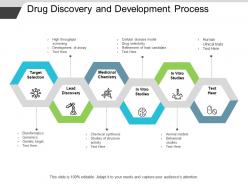
Drug discovery and development process
Try Before you Buy Download Free Sample Product
Audience
Editable
of Time
Our Drug Discovery And Development Process are an excellent bonus. Get a feeling of good fortune.
People who downloaded this PowerPoint presentation also viewed the following :
Drug discovery and development process with all 5 slides:
Our Drug Discovery And Development Process ensure feelings don't get hurt. It helps achieve a fine balance.
FAQs for Drug discovery
Ugh, so basically clinical trials are the worst part - they'll eat up like 6-10 years of your life. FDA approval is another nightmare that drags on forever. Manufacturing compliance is a whole other headache too. You're honestly looking at 10-15 years from start to finish, which is just insane when you think about it. Phase III trials kill most of your time since you need thousands of patients and all that long-term safety data. Then FDA review tacks on another 1-2 years because why not? Orphan drugs get fast-tracked though. Definitely do those pre-IND meetings early - trust me on this one.
So pharma companies get pretty sneaky when they know generics are coming. They'll reformulate drugs, make extended-release versions, create combo products - basically anything to squeeze more time out of their patents. Planning has to start like 3-5 years early or you're screwed. Once generics actually hit the market, branded drug prices usually drop 20-30% right away. Then they keep falling as more generic companies jump in. Honestly, it's kind of fascinating to watch - like a slow-motion price war. You need to build models that account for this drop happening eventually.
So pharmacogenomics is basically matching meds to someone's DNA to get better results and avoid bad reactions. People metabolize drugs totally differently - some are fast, others slow, which can make or break treatment. Pretty wild when you think about it. You can test for enzyme variants like CYP2D6 to predict how patients'll handle antidepressants or blood thinners. Honestly, I'd start using pharmacogenetic testing for risky meds when you can. Insurance is getting better about covering it, and it's way more accessible than it used to be.
COVID totally flipped pharma supply chains upside down. Companies went from that just-in-time approach to hoarding whatever they could find. Now everyone's building factories closer to home instead of depending so much on Asia - honestly, it was overdue. The whole single-source thing became a nightmare real quick. Digital tracking systems are everywhere now, and backup suppliers are the new normal. My friend works in procurement and says it's like a completely different world. If you're doing any supply chain planning, definitely have multiple options ready. Those super-lean, penny-pinching strategies? Pretty much dead.
Honestly, the biggest red flags are exploitation and consent issues. Vulnerable communities might not grasp the real risks or feel forced to join for money. Companies also do this awful "test and bail" thing - they study populations but then don't make treatments available afterward, which is pretty shitty if you ask me. Local hospitals often can't handle bad reactions properly either. Look for trials with strong local ethics boards (not just paperwork), actual benefit-sharing deals, and real community involvement. Oh, and make sure they're not just checking regulatory boxes.
Dude, AI is literally changing everything about drug discovery. Instead of spending years testing millions of compounds in labs (which costs insane amounts of money btw), algorithms can scan virtual libraries and spot promising candidates in just days. Pretty wild, right? Machine learning also predicts toxicity and helps figure out proper dosing. Some models even design completely new molecular structures from nothing. Oh, and they're great at finding new uses for existing drugs too. Honestly, research timelines are dropping from decades to years, and you won't blow money on compounds that were doomed from the start.
Patents are such a pain for pharma companies - they get 20 years of exclusivity which is great for recouping those insane R&D costs (like billions per drug, no joke). But here's the thing: they also stop other companies from building on those discoveries, which honestly slows everything down. The real drama happens when patents expire and generic drugs swarm the market. If you're looking at pharma investments, definitely check their patent timelines first. That'll show you exactly when their revenue is gonna tank and competitors can jump in.
So pharma companies do have some programs to help with costs, though honestly they're kind of a pain to navigate. There's patient assistance stuff like copay cards that cap what you pay out of pocket. They also do tiered pricing - basically charging less in poorer countries. Some partner with governments or NGOs too. Income-based pricing exists but it's pretty rare still. Oh, and there's compassionate use programs for people without insurance. The annoying part? You have to apply for everything and meet their criteria. But definitely worth checking what assistance programs exist for whatever specific medication you're dealing with.
So basically you want antimicrobial stewardship programs - they optimize dosing and how long patients stay on meds. Combination therapy hits bacteria from different directions, which is smart. Healthcare settings need really tight infection control too. Companies are pouring money into new drug classes, though honestly that's been frustratingly slow. Rapid diagnostics help identify bugs faster. Antibiotic rotation protocols work well, and you've got to educate doctors about proper prescribing. Start with auditing current patterns first - I swear you'll find some shocking overuse that's easy to fix right away.
Oh man, culture changes everything in pharma marketing. In places like Asia, they'll push how a drug helps your whole family, but here in the US it's all about YOU feeling better. Religious stuff matters too - some people won't take certain meds because of their beliefs. Trust levels are huge - like, if people don't trust doctors in that country, good luck getting them to follow prescriptions. I learned this the hard way working on a campaign that bombed in Europe because we totally misread their regulatory vibe. What crushes it in America can be a complete disaster somewhere else.
So real-world evidence is data from patients actually using drugs in normal practice, not those super controlled trials. Way more realistic tbh. You see how treatments work across different ages, health conditions, compliance rates - the whole mess of real life. Clinical trials are so sterile sometimes. This stuff shows long-term safety issues and rare side effects you'd never catch otherwise. Plus you figure out which patients truly benefit most. Oh, and start thinking about incorporating RWE early in your development process - it'll make regulatory submissions way stronger and help with market access down the road.
So pharma M&A usually kills competition short-term, but innovation gets weird. Big companies buy little biotechs and suddenly there's less price pressure. Thing is, the small guys often have killer drug pipelines that actually need serious funding to work. Some innovative companies just disappear after getting bought - total waste IMO. Others finally get the cash they've been desperate for. Really depends on whether the buyer keeps their R&D teams separate or just absorbs everything. I've noticed the separate R&D thing matters way more than people think.
Dude, pharmacists are literally your safety net. They're catching medication errors and spotting dangerous drug interactions before they mess you up. Way more than just counting pills - they do medication therapy management, help with dosing, and actually counsel patients. Most people don't realize how accessible they are for quick questions too. Honestly, I think they're underused in healthcare. They monitor if treatments are actually working and can adjust things. My friend's a pharmacist and she's always telling doctors about better options. Loop them into care decisions early if you want better outcomes.
Social media's actually perfect for breaking down medical stuff into bite-sized content. Instagram and Facebook are your best bet for infographics and quick explainer videos. Twitter works too, but ugh, that character limit makes everything feel rushed. Patient stories really connect with people - way more than dry facts do. Oh, and definitely find Facebook groups where your patients are already chatting. Don't be salesy though, people see right through that. Focus on genuinely helpful content and you'll build trust. Start small with one platform instead of spreading yourself too thin.
Yeah, biosimilars are finally hitting their stride. Patent cliffs on major biologics opened the floodgates, and manufacturers have gotten way better at this stuff. Competition's driving prices down 30-40% in some cases, which is huge. The interchangeability thing matters more than people realize - pharmacists can actually swap them out now without calling doctors. US adoption was painfully slow compared to Europe (typical, honestly), but it's picking up steam. If you're looking ahead, oncology and autoimmune are where the real money-saving action will be. Those spaces are about to get really interesting over the next couple years.
No Reviews