


Drug discovery and development to promote human health and launch new pharmaceutical drug complete deck




Try Before you Buy Download Free Sample Product
 Impress Your
 Audience
 100%
100% Editable
 Save Hours
 of Time


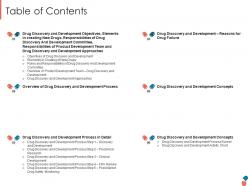
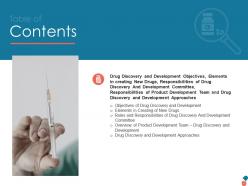
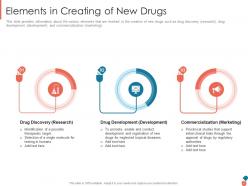
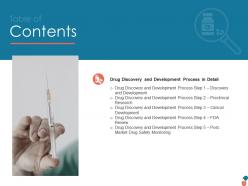
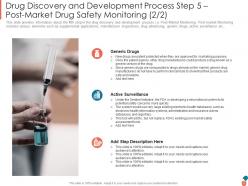
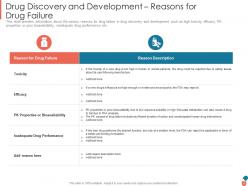
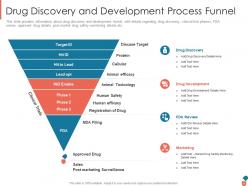
Introducing our drug discovery and development to promote human health and launch new pharmaceutical drug complete PPT deck. Display the development of drugs with the help of our pharmaceutical development PowerPoint deck. This drug initiation PPT theme consists of a slide that discusses objectives of drug discovery and development. Assimilating this medicine development PPT layout will help you in understanding the elements in the creation of new drugs. This pharmaceutical PowerPoint design contains a slide that talks about the drug discovery and the process of developing it in step-by-step detail. Incorporating this particular drug sales PPT theme allows you to display statistics. This medicine development PowerPoint creative set contains slides on preclinical research, clinical development, FDA review, and post-market drug safety monitoring. Selection of this narcotic medicine development PowerPoint template helps in drug discovery and development concepts. Choose this drug discovery PowerPoint design to showcase organization and assurance. Download this PPT slide to explore true perfection.
People who downloaded this PowerPoint presentation also viewed the following :
Drug discovery and development to promote human health and launch new pharmaceutical drug complete deck with all 43 slides:
Use our Drug Discovery And Development To Promote Human Health And Launch New Pharmaceutical Drug Complete Deck to effectively help you save your valuable time. They are readymade to fit into any presentation structure.

















FAQs for Drug discovery and development to promote human health and launch new pharmaceutical
So basically drug discovery is the fun part - you're hunting for molecules that might actually work as medicines. Target identification, screening compounds, optimizing leads, preclinical testing. Development is where things get real (and expensive honestly). That's your clinical trials - Phase I, II, III - plus getting regulatory approval and figuring out how to manufacture at scale. Discovery usually takes 3-6 years, but development? Oof, that's easily 10-15 years. Think of it like discovery is the cool science experiment phase, then development is "okay now let's actually make this into something people can take safely."
Dude, AI is literally changing everything about drug discovery right now. Instead of taking decades, we're talking maybe a few years. Machine learning can predict if compounds will work before you even make them in the lab - saves tons of cash and time. The accuracy is getting scary good honestly. Plus it finds new drug targets by crunching massive datasets no human could handle. Oh, and catching side effects early? Game changer. I'd mess around with some of these newer platforms if I were you. Can't hurt to see what's out there.
Dude, the FDA basically runs your whole show. They decide what studies you can do and whether your drug ever sees daylight. Clinical trial design, safety stuff - all their rules, all impacting your timeline. The approval alone? 6-12 months minimum, but honestly they love asking for more data so expect longer. I'd definitely set up those pre-submission meetings early. Way better than finding out you missed something when you're already burning cash in Phase III. Trust me on that one - those late surprises are brutal.
So basically you can screen millions of compounds on your computer before wasting time in the lab. Way cheaper than making a bunch of random molecules and hoping something works. The algorithms predict which ones will actually bind to your target protein - honestly it's pretty cool how accurate they've gotten. You've got two main approaches: structure-based if you know your protein's 3D shape, or ligand-based when you already have some active compounds. I'd start with free databases like ZINC or ChEMBL, then run everything through AutoDock or Schrödinger to rank your hits. Then you can focus your actual experiments on the promising candidates.
Ugh, where do I even start? Patient recruitment will absolutely wreck your timeline - I've seen trials drag on for months because nobody can find enough people. Work with multiple sites and nail down your inclusion criteria early, trust me on this. Regulatory stuff is another beast entirely. Get in front of agencies with pre-submission meetings so you're not scrambling later. Oh, and safety monitoring boards are your best friend - they'll spot problems before everything implodes. Honestly though, just assume something will go wrong and have backup plans ready. It always does.
So pharmacogenomics is basically matching drugs to people's DNA - pretty cool stuff. You can actually predict who'll respond well and who might get hit with bad side effects before giving them anything. No more throwing random meds at patients and hoping for the best. Clinical trials become way smarter too since you can group people by their genetic markers from the start. Honestly saves pharmaceutical companies from those brutal late-stage flops that cost millions. My advice? Get genetic screening into your process early. It's one of those things that seems like extra work upfront but pays off huge later.
Honestly, the consent thing is huge - most forms are ridiculously confusing and people don't actually understand what they're agreeing to. Patient safety has to come first, even if you have to scrap a trial that looked promising. Can't exploit desperate patients either, that's just wrong. Risk-benefit analysis is critical too. Ethics review boards help catch stuff you might miss. Oh, and be upfront about any financial conflicts - that gets messy fast. I always think: would I put my own mom in this study? If the answer's no, there's your problem right there.
So universities are perfect for the risky early research stuff, then companies jump in with their massive budgets for clinical trials. Think of it like a relay race - everyone does what they're good at. Academic researchers can chase wild ideas without worrying if they'll make money right away. Meanwhile, pharma has the cash and knows how to deal with all the regulatory headaches (which honestly sounds awful). These partnerships help bridge that funding gap where tons of promising discoveries just... die. Oh, and figure out who owns what intellectual property from day one. Seriously, don't wait on that part.
Honestly, AI-driven drug design is exploding right now - companies are using machine learning to predict how proteins fold and design better antibodies. It's crazy how fast this stuff is advancing. Personalized cell and gene therapies are huge too, plus you've got more complex biosimilars entering the market. What's really interesting is the push toward interchangeable biosimilars instead of just similar ones. That'll totally change market dynamics. Oh, and regulators are actually making things easier for novel stuff like CAR-T therapies. If you're thinking investments, definitely look at AI partnerships and map out when biosimilar competition might hit your targets.
Orphan drugs get crazy good perks from the FDA - expedited reviews, 7 years of market exclusivity instead of 5, plus tax credits. Clinical trials can be way smaller too. The patient populations are tiny, but honestly? You can charge premium prices with barely any competition. "Rare" diseases still hit hundreds of thousands of people worldwide, so the numbers aren't as depressing as they sound. I'd look for stuff with solid biomarkers and patient groups that actually give a damn - makes everything smoother.
Dude, drug repurposing is basically the fast lane - cuts 3-5 years off development time since the safety stuff is already sorted. You skip the whole "will this kill people" phase and go straight to testing if it works for new conditions. The FDA loves it too because they're dealing with drugs they already know. Risk drops way down since you've got the side effects, dosing, all that mapped out. Honestly feels like cheating sometimes lol. My cousin works in pharma and swears by it. Instead of designing from scratch, just screen existing drug libraries against whatever you're targeting. Way smarter approach.
Honestly, patents and market size run the whole show from the start. You'll want targets with solid IP protection and big patient populations - dropping $1B+ on something competitors can copy easily is financial suicide. Patent cliffs are nasty too. There's always this tension between chasing me-too drugs in proven markets versus rolling the dice on first-in-class stuff. Regulatory exclusivity periods mess with your timelines, plus there's the whole orphan drug angle to consider. My advice? Map your IP landscape and figure out where you stand competitively before you get deep into lead optimization. Otherwise you're just burning cash.
Patient advocacy groups have way more power than you'd think. They're constantly lobbying pharma companies to prioritize neglected diseases and pushing regulators for faster approvals. Plus they fund tons of early research. For clinical trials? They're goldmines for recruitment - honestly can save your entire study. Rare diseases especially benefit since there's not much profit incentive otherwise. My advice? Reach out to relevant groups super early in your process. I've seen them become researchers' biggest champions in getting stuff approved and actually reaching patients.
So biomarkers are basically your best friend for picking the right patients and catching issues early. They help you figure out who'll actually respond to your drug - saves you from wasting years on people it won't work for. Plus they're amazing at spotting safety red flags before things get ugly, like liver enzymes going crazy before real damage happens. Honestly feels like cheating sometimes. The trick is don't treat them as an afterthought - build that strategy in from the start. Get your biomarker team involved early and start collecting samples right away. Trust me on this one.
Dude, AI is seriously speeding up drug discovery - we're talking 10+ years down to maybe 3-5 by predicting how molecules will behave. Quantum computing's gonna solve protein folding puzzles that regular computers just can't crack. Clinical trials will get way more efficient with digital twins and better biomarkers too. The whole thing's moving crazy fast right now, honestly makes me wonder what pharma will even look like in a decade. If you're mapping out research plans, might want to think about how this stuff could totally change your timelines and budget priorities.
-
Easily Understandable slides.
-
Very unique, user-friendly presentation interface.
-
Easily Editable.
-
Professional and unique presentations.
-
Awesome presentation, really professional and easy to edit.
-
Attractive design and informative presentation.
-
Excellent work done on template design and graphics.
-
Topic best represented with attractive design.