


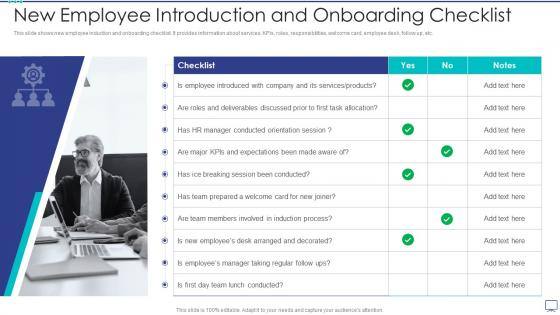
New Employee Introduction And Onboarding Checklist




Try Before you Buy Download Free Sample Product
 Impress Your
 Audience
 100%
100% Editable
 Save Hours
 of Time


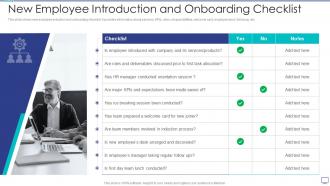
This slide shows new employee induction and onboarding checklist. It provides information about services, KPIs, roles, responsibilities, welcome card, employee desk, follow up, etc.
People who downloaded this PowerPoint presentation also viewed the following :
New Employee Introduction And Onboarding Checklist with all 6 slides:
Use our New Employee Introduction And Onboarding Checklist to effectively help you save your valuable time. They are readymade to fit into any presentation structure.





FAQs for New Employee Introduction
Okay so first thing - get their paperwork and login stuff sorted before they even start. Nobody wants to spend day one filling out forms! Have their desk ready and set up meetings with the people they'll actually work with. Pair them up with someone who can show them where the good coffee is and answer all those random questions. The training should be specific to what they'll be doing, not just generic company stuff. Oh and definitely do check-ins at 30, 60, 90 days - sounds formal but it's honestly super helpful for catching issues early. Just map out a timeline so you're both on the same page.
Honestly, templates are a game-changer for onboarding. Your new hires get that "wow, this place has their act together" vibe instead of cobbled-together slides. You'll save tons of time not starting from zero each time. I always forget something crucial like benefits signup when I wing it – so annoying! Different managers can stay on the same page too. Oh, and you can still personalize stuff for each role. I'd make maybe 2-3 basic templates and just swap out the specifics. Way less stressful than the alternative.
Honestly, culture's everything in onboarding. Don't just do the typical death-by-PowerPoint thing though - nobody remembers that stuff anyway. Instead, weave it throughout the whole process. Pair them with someone who actually embodies your values, not just the person who happened to be free that week. Show real examples of how decisions get made, introduce them to the people who really know what's up. The unwritten rules matter more than the employee handbook half the time. You want them thinking "oh, so THIS is how we do things" rather than just memorizing mission statements.
Honestly, just start simple - throw a quick survey after each section of your onboarding. Google Forms works fine, or Mentimeter if you want to get fancy during live sessions. Ask stuff like "what confused you?" and "what actually helped?" Don't overthink it. The magic happens when you actually look at responses monthly and fix things. I mean, most people collect feedback then let it sit there doing nothing. Also get new hires to fill out something quick at the end of each day while it's fresh. Start with one feedback point and add more later - you don't need to build the perfect system right away.
For onboarding metrics, I'd focus on time-to-productivity and 90-day retention first. Employee satisfaction scores matter too - people quit when they feel lost early on. Track how long new hires take to complete onboarding tasks, plus when they actually feel ready to do their job (this one's honestly make-or-break for confidence). Manager feedback is gold here. Are they seeing prepared employees after onboarding? Also check early performance reviews. Don't try measuring everything though - pick 3-4 metrics max or you'll drown in data.
Oh man, it's a game changer honestly. All that annoying paperwork - offer letters, tax forms, benefits stuff - gets handled through one system instead of you running around like crazy. New people can fill everything out beforehand too, which saves your sanity on their first day. I swear sitting through hours of form drama used to be the worst part of onboarding. The automatic reminders are clutch because let's be real, stuff always gets forgotten otherwise. You'll set up templates once and then you're basically done - works for every new hire after that.
Honestly, the worst thing you can do is dump everything on them day one - total information overload. People bail fast when that happens. Also don't just wing it without any plan, that's almost worse. Oh, and the social stuff matters way more than people think! I've watched new hires get completely left out because no one bothered introducing them around. Give them a buddy system. Map out their first few weeks with actual structure. Check in regularly instead of ghosting them and hoping they're good. Start planning this stuff before they even walk through the door.
So the big thing is getting them connected early since they're missing all the random hallway chats. I'd ship welcome packages to their place and set up virtual coffee meetings with the team. Also create a newbie Slack channel where they can ask dumb questions without feeling weird about it. Tech setup matters too - send equipment ahead of time and do screen shares to show them around your systems. Oh, and assign an actual buddy who'll genuinely check in, not one of those "let me know if you need help" people who disappear. Schedule way more one-on-ones their first month because catching problems early beats dealing with major confusion later.
Dude, good onboarding can bump your retention up 25-50% - it's huge. Most people quit in the first 90 days when they're confused and feel lost. Your first week is make-or-break honestly. Map out what new hires actually experience those first few days. Cover the basics: what their job really entails, company vibe, and get them talking to their teammates early. I swear, companies that just dump people at a desk with zero guidance are shooting themselves in the foot. People stick around when they feel like someone actually cares whether they succeed or not.
Honestly, stories stick way better than boring bullet points. When you're explaining company values, don't just read them off a slide - tell them about that time the team pulled together during a crazy deadline. People actually listen to stories, you know? Plus new hires can picture themselves in those situations. Customer wins, how the founder started the company, even just "here's what Tuesday looks like" - all of that works. Oh, and definitely swap out at least one of those data-heavy slides for a real example. Trust me, nobody remembers statistics anyway.
Honestly, just ditch the cookie-cutter approach. Match new people with mentors who get their background if you can. Give everyone different ways to learn - some folks need visual stuff, others want to jump right in. Ask each person straight up what they need instead of guessing. Create space for people to actually share their perspectives without it feeling forced or weird. Oh, and definitely check your current process for bias - we all have blind spots there. The whole point is making people feel safe enough to be themselves from day one. Short timelines stress people out unnecessarily too.
So mentorship programs give new people someone to ask stuff that's not their boss - way less awkward that way. Your regular onboarding handles the boring paperwork and training videos. But mentors? They're the ones who actually tell you "oh, Sarah in accounting is super helpful but don't bug her before 10am" - all that real insider knowledge. Honestly, the pairing matters more than you'd think. I'd do regular check-ins for maybe three months. Just make sure you give the mentors some basic expectations upfront so they're not totally winging it.
So for your onboarding checklist, definitely cover the basics first - get their equipment and logins sorted before day one. First day should be workspace tour, meet the team, paperwork stuff. Nobody wants to sit alone at lunch that first week, so plan some social time too. Break the training into chunks over a few weeks because information overload is real. I'd do 30-60-90 day goals so they know what success looks like. Oh and don't forget compliance training - boring but necessary. Key contacts list is clutch. Honestly, just think about what would've made your first week less awkward and build from there.
Honestly, quarterly reviews are usually enough unless you're one of those companies that changes everything constantly. Monthly might be better if you're always rolling out new stuff or switching tools. I've watched new hires get so confused by outdated training materials - like seriously, why are we still showing them the old CRM system? Set up some calendar reminders and maybe assign different people to own different sections. That way nothing gets forgotten. Oh and definitely ask your newest hires what's wrong or confusing. They'll catch the outdated stuff right away since everything's still fresh.
Honestly, those follow-up sessions are a lifesaver. New people are totally overwhelmed at first - there's no way they'll absorb everything during orientation. Questions only pop up once they're actually doing the job, you know? Plus you can catch any weird habits early before they stick. I usually do check-ins at 30, 60, and 90 days. It shows you actually care about helping them succeed, not just checking boxes. The 90-day one is probably the most telling - that's when you really see if someone's clicking with the role or still struggling with basics.
-
Awesome presentation, really professional and easy to edit.
-
If you are looking for satisfactory PowerPoint services, SlideTeam is your go-to place. I am fully contented with their research and development team.