

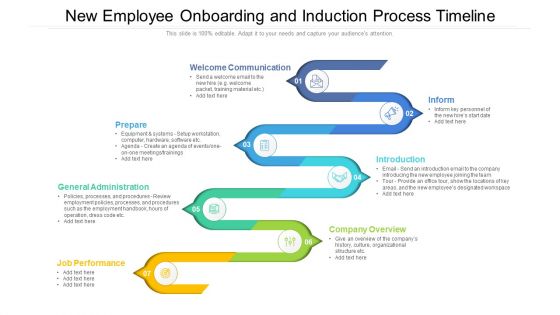
New employee onboarding and induction process timeline





Try Before you Buy Download Free Sample Product
 Impress Your
Audience
 100%
Editable
 Save Hours
of Time


Our New Employee Onboarding And Induction Process Timeline are topically designed to provide an attractive backdrop to any subject. Use them to look like a presentation pro.
People who downloaded this PowerPoint presentation also viewed the following :
New employee onboarding and induction process timeline with all 2 slides:
Use our New Employee Onboarding And Induction Process Timeline to effectively help you save your valuable time. They are readymade to fit into any presentation structure.

FAQs for New employee onboarding and
So basically you want three phases - before they start, first week/month, then up to 90 days. Get all the boring paperwork done beforehand so day one isn't a mess. That first week is make-or-break territory, seriously. Focus on the basics and helping them feel like they belong. After that you can dive deeper into actual job skills and introductions to the team. Oh and don't just wing it - actually plan what you want to accomplish in each phase. Trust me, new people can tell when you're just throwing stuff at them randomly. Makes a huge difference in how supported they feel.
Honestly, just tailor it to what each role actually needs. Developers might burn their whole first week setting up environments - that's totally normal. But sales people? Get them CRM access and territory details on day one or they'll go crazy. Customer-facing roles should get product training early, while technical folks need those deep system dives. Map out the must-knows for weeks 1, 2, and 4 versus the stuff that can wait. Here's what I'd do - ask your top performers what they wish they'd learned sooner. That'll tell you exactly where to prioritize.
Honestly, start with retention rates at 30/60/90 days - that's your biggest indicator right there. Time-to-productivity matters too (basically how long until they're actually hitting their targets). Track if people are finishing onboarding milestones and get manager feedback scores because those will tell you if someone's truly ready or just went through the motions. Oh, and don't skip engagement surveys. Quick contributions to real projects is another good one to watch. I know it seems like a lot, but retention is really the make-or-break metric since bad onboarding is usually why people bail early. You can always add job-specific stuff later once you nail the basics.
Oh totally - timing makes a huge difference here. Rushing people through orientation in like 2 days? Recipe for disaster. I've watched so many good hires just peace out after a few months because they felt completely lost. What actually works is stretching it over 2-3 months with regular check-ins and proper training phases. Companies doing this see their retention jump by 50%+ which is honestly pretty crazy when you think about it. My old manager used to say "marathon not sprint" about this stuff and she was right. Those first 90 days really set the tone for everything.
Honestly, start with the basics - get a decent digital onboarding platform like BambooHR to handle all that paperwork nonsense. Learning management systems are clutch for training too. But here's what actually matters: set up a proper Slack channel so new people aren't wandering around lost asking random questions. Interactive stuff works great - virtual office tours, pairing them with mentors, welcome videos from the team. Though I'd skip trying to do everything at once. Pick a couple things that'll actually move the needle first, then add more later.
Set up check-ins at week 1, 30 days, and 90 days - super basic but most places don't do it. Quick surveys work, or just have managers grab coffee with new people. The key part? Actually fix stuff when you hear the same complaint twice. I swear, companies love collecting feedback then ignoring it completely. If everyone's saying the training video sucks, scrap it before the next group suffers through it. Keep it conversational too - nobody wants another boring presentation. Catch the issues early and people won't bail after a month.
Dude, having a mentor is clutch - they'll answer all your random questions without you having to hunt down the right person for everything. Like where's the good coffee, how do expense reports work, that kind of stuff. Your first week won't feel as chaotic. They also clue you into the unwritten rules that nobody puts in the employee handbook (which honestly is half the battle). I'd grab coffee with them regularly your first month, even just quick 15-minute chats. Trust me, it saves you so much time stumbling around confused.
Honestly, automating the paperwork alone will save you tons of time. BambooHR or Workday handle all that digital stuff way better than passing forms around. Set up email sequences that trigger at different stages - saves you from remembering to send things manually. Interactive checklists work great too since people can move at their own speed. Oh, and record those "here's how we do X" videos with Loom instead of explaining the same thing over and over (trust me on this one). Give new hires a dedicated Slack space so they don't feel weird asking basic questions. Start by writing down what you're doing now, then figure out which steps you can automate first.
Oh man, don't dump everything on them the first week - I've literally watched people nope out because of info overload. Spread the important stuff across their whole first month instead. Also, that generic company history presentation? Total snooze fest, skip it. Give them role-specific training first, then add the broader company context later. And please build in actual work time between all those department meet-and-greets - back-to-back introductions are exhausting. Honestly, customizing based on how complex their job is makes such a difference. Short bursts work way better than marathon training sessions.
Don't just dump all your compliance stuff in week one - honestly, that's the worst approach I've seen. Spread the training modules across like 30-60 days instead. Mix them in with actual job tasks so it doesn't feel like pointless busy work. Your HRIS can track completions automatically (thank god for that). I'd pair new hires with training buddies too - keeps them accountable. The whole thing works better when compliance feels connected to what they'll actually be doing day-to-day. Make it part of the real onboarding flow, not some afterthought checkbox situation.
Communication styles are huge - some cultures are super indirect while others will just tell you straight up what they think (honestly can be refreshing). Work-life balance expectations vary tons too. Don't assume everyone wants the same meeting style or feedback approach. Religious holidays matter, plus whether they're used to working solo vs. in teams. Learning preferences differ a lot. Hierarchy stuff is tricky - some people expect way more formal structure than others. Best bet? Just ask them during their first week what works for them instead of guessing.
Honestly? Every 6 months works well for most places. I mean, you could do it quarterly if things are really chaotic, but that feels like overkill. New tools pop up constantly, teams get reshuffled, and suddenly your "perfect" process is garbage. New hires will definitely tell you what sucks - actually listen to them. Major company changes are obvious trigger points to review everything. Oh, and set a calendar reminder or you'll totally forget until someone's having a terrible first week and complaining. Been there.
Honestly, flexibility is everything here. Some people just absorb info differently, you know? Don't make it all about what leadership thinks matters—I've watched so many programs totally miss the mark because they only reflected one perspective. Mix up how people can learn the stuff: videos, written materials, actual hands-on work. Check in with people regularly instead of crossing your fingers and hoping they're all good. Oh, and this might be obvious but actually listen when you ask for feedback. Half the companies I know ask but then ignore what people tell them. Short story: give people options and pay attention to what's working.
Don't let onboarding just end after 90 days - that's honestly such a waste. Map out learning paths that keep going way beyond the basics. What I'd do is connect those first training modules to actual certifications or specializations down the road. Check in again at 6 and 12 months to see how things are going and tweak their development plans. Here's the thing though - you gotta show new hires this bigger picture right from week one. They need to see onboarding isn't the end goal, it's just the starting point. Makes them way more invested when they know there's actual growth ahead.
Your company values should totally shape how you design onboarding - they're like the foundation for everything. Got innovation as a core value? Build in some creative problem-solving stuff or maybe innovation showcases. Collaboration matters more? Focus on team intros and group work instead of solo tasks. Honestly, the values need to feel integrated into every single touchpoint, not just slapped on a slide deck. New hires can smell fake values from a mile away - it's kind of impressive actually. Your onboarding timeline better reflect what you actually believe in.
-
Innovative and attractive designs.
-
Attractive design and informative presentation.