

Neuer Produktentwicklungsprozess PowerPoint-Präsentationsfolien





Try Before you Buy Download Free Sample Product
 Impress Your
Audience
 100%
Editable
 Save Hours
of Time


Mit unseren professionell gestalteten Produktmanagementvorlagen können Sie Ihre neuen Produkte und Dienstleistungen ganz einfach Ihrem Publikum präsentieren. SlideTeam präsentiert Ihnen vorgefertigte PowerPoint-Präsentationsfolien für neue Produktentwicklungsprozesse, mit denen Sie die verschiedenen Herausforderungen und Unsicherheiten beseitigen können. Diese inhaltsbereite, professionell erstellte PPT-Präsentation für neue Produktdesigns umfasst verschiedene Folien wie Ideengenerierung, Markttrends, Ideenscreening, Delphi-Methode, Konzepttests, Produktpositionierungskarte, ausführliches Interview, Entwicklung von Marketingstrategien, Geschäftsanalyse, Verkaufsprognose, Markttests , Kommerzialisierung, Initiierung des Produktlebenszyklus und vieles mehr. Darüber hinaus können Sie mit diesen NPD PPT PowerPoint-Grafiken auch an vielen anderen Themen wie agiler Entwicklung, Produktdesignphasen, Entwicklung und Einführung, Produktstrategieformulierung, Markenführung, Produktmanagement, Produktlebenszyklus, Produktinnovation usw. arbeiten beeil dich und warte nicht darauf! Klicken Sie einfach auf unsere Präsentationsgrafiken für den neuen Produktentwicklungsprozess und laden Sie sie herunter. Verleihen Sie Ihrer Präsentation ein professionelles Aussehen. Sie werden das anspruchsvollste Publikum begeistern.
People who downloaded this PowerPoint presentation also viewed the following :
Inhalt dieser Powerpoint-Präsentation
Folie 1 : Diese Folie stellt den Entwicklungsprozess für neue Produkte vor. Geben Sie Ihren Firmennamen an und beginnen Sie.
Folie 2 : Dies ist eine Agenda-Folie. Präsentieren Sie hier Ihre Agenda.
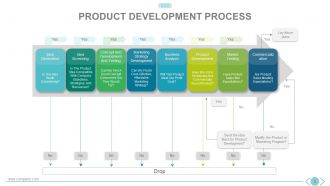
Folie 3 : Diese Folie präsentiert den Produktentwicklungsprozess mit Ideen-Screening: Ist die Produktidee mit den Unternehmenszielen, Strategien und Ressourcen kompatibel? Konzept und Entwicklung und Tests: Können wir ein gutes Konzept finden, von dem Verbraucher sagen, dass sie es ausprobieren würden? Entwicklung der Marketingstrategie: Können wir eine kostengünstige und erschwingliche Marketingstrategie finden? Geschäftsanalyse: Wird dieses Produkt unser Gewinnziel erreichen? Produktentwicklung: Haben wir ein technisch und kommerziell einwandfreies Produkt? Markttests: Haben die Produktverkäufe die Erwartungen erfüllt? Kommerzialisierung: Erfüllt der Produktverkauf die Erwartungen? Ideengenerierung: Ist die Idee eine Überlegung wert?
Folie 4 : Diese Folie trägt den Titel Ideengenerierung, um voranzukommen. Sie können den Inhalt nach Bedarf ändern.
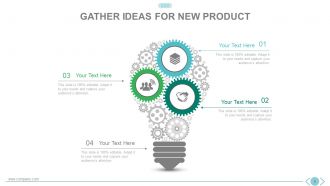
Folie 5 : Auf dieser Folie werden Ideen für neue Produkte mit kreativen Glühbirnenbildern gesammelt.
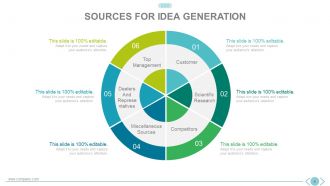
Folie 6 : Diese Folie zeigt Quellen für die Ideengenerierung mit den folgenden Unterüberschriften: Top-Management, Kunde, wissenschaftliche Forschung, Wettbewerber, verschiedene Quellen, Händler und Vertreter.
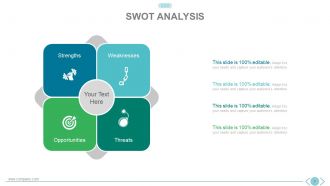
Folie 7 : Diese Folie präsentiert die SWOT-ANALYSE.
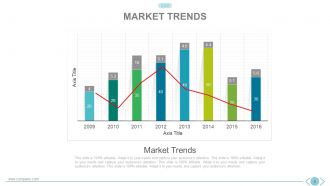
Folie 8 : Diese Folie präsentiert Markttrends in grafischer Form.
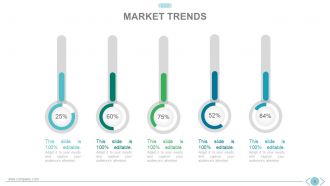
Folie 9 : Diese Folie präsentiert Markttrends in kreativer Donut-Chart-Form.
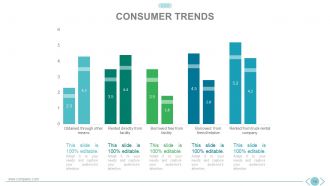
Folie 10 : Diese Folie präsentiert Verbrauchertrends in grafischer Form.
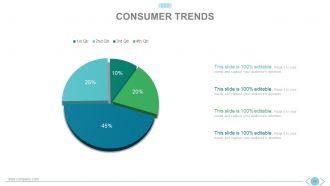
Folie 11 : Diese Folie zeigt Verbrauchertrends in Form eines Kreisdiagramms.
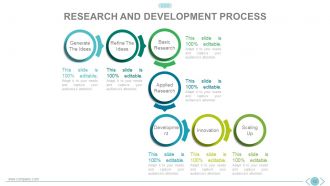
Folie 12 : Diese Folie zeigt den Forschungs- und Entwicklungsprozess mit den folgenden Punkten: Ideen generieren, Ideen verfeinern, Grundlagenforschung, Angewandte Forschung, Entwicklung, Innovation, Skalierung.
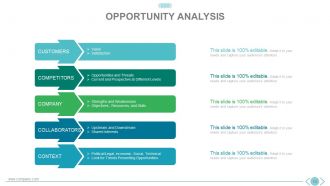
Folie 13 : Diese Folie präsentiert die Opportunity-Analyse mit den folgenden Unterüberschriften – KUNDEN: Wert, Zufriedenheit. WETTBEWERBER: Chancen und Bedrohungen, aktuell und prospektiv auf verschiedenen Ebenen. UNTERNEHMEN: Stärken und Schwächen, Ziele, Ressourcen und Fähigkeiten. MITARBEITER: Upstream und Downstream, gemeinsame Interessen. KONTEXT: Politik/Recht, Wirtschaft, Gesellschaft, Technik, Suche nach Trends, die Chancen bieten.
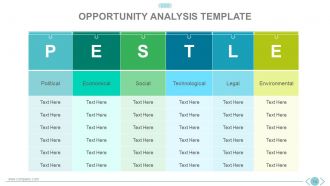
Folie 14 : Diese Folie zeigt die Opportunity-Analyse-Vorlage mit der PESTLE-Analyse.
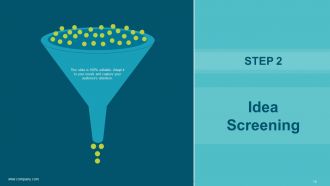
Folie 15 : Diese Folie trägt den Titel Ideenscreening. Sie können den Inhalt nach Bedarf ändern.
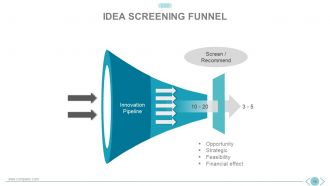
Folie 16 : Diese Folie zeigt den Ideen-Screening-Trichter mit Innovationspipeline, Screening/Empfehlen, Gelegenheit, Strategisch, Machbarkeit, Finanzielle Wirkung.
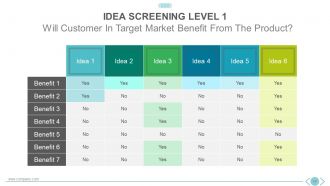
Folie 17 : Diese Folie zeigt die Vorteilstabelle der Ideenprüfungsebene.
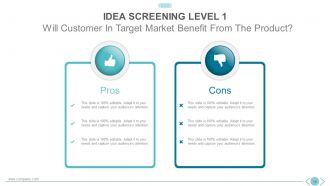
Folie 18 : Diese Folie zeigt die Vor- und Nachteile der Ideen-Screening-Stufe.
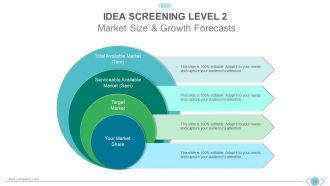
Folie 19 : Diese Folie zeigt das Ideenscreening-Niveau mit Marktgröße und Wachstumsprognosen, verfügbarer Gesamtmarkt (Tam), Zielmarkt, Ihren Marktanteil, nutzbarer verfügbarer Markt (Sam).
Folie 20 : Diese Folie zeigt das Ideenscreening-Niveau mit- Wettbewerbsdruck für Produktideen, bestehend aus- Potenzielle Neueinsteiger, Käufer, Potenzielle Substitute, Lieferanten, Wettbewerbsdruck, Verhandlungsmacht der Käufer, Überlegen; Konzentration, Besetzungswechsel, Wettbewerb, Risiko/Potenzial vertikaler Integration, Bedrohung durch Substitute, Berücksichtigen: Preis, Leistung des Substituten, Kundenmarkentreue, Marktwahrnehmung des Substituten, Verhandlungsmacht der Lieferanten, Berücksichtigen: Konzentration, Lieferantenwechselkosten, Risiko/ Potenzial der vertikalen Integration, Bedrohung des Markteintritts, Berücksichtigen Sie: Größe, Erfahrung, Verteilung, Erforderliche Investitionen, Gesetzgebung
Folie 21 : Diese Folie zeigt das Ideenscreening-Niveau mit Branchenumsätzen und Markttrends.
Folie 22 : Diese Folie zeigt das Ideenscreening-Niveau mit der Bewertung der Machbarkeit neuer Produkte
Folie 23 : Diese Folie zeigt die Ebene des Ideenscreenings mit der Frage, ob das Produkt profitabel sein wird
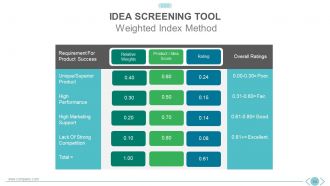
Folie 24 : Diese Folie präsentiert das Ideen-Screening-Tool mit der Methode des gewichteten Index
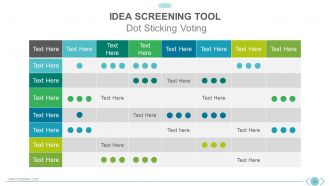
Folie 25 : Diese Folie präsentiert das Ideen-Screening-Tool mit Dot Sticking Voting
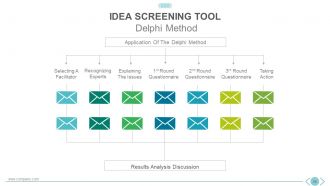
Folie 26 : Diese Folie stellt ein Ideen-Screening-Tool mit Delphi-Methode vor, bestehend aus: Auswahl eines Moderators, Anerkennung von Experten, 1. Runde Fragebogen, Erklären der Probleme, Ergreifen von Maßnahmen, 2. Runde Fragebogen, 3. Runde Fragebogen, Diskussion der Ergebnisanalyse, Anwendung des Delphi Methode.
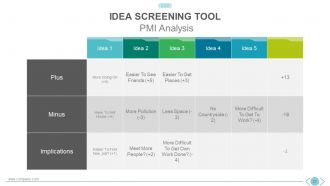
Folie 27 : Diese Folie präsentiert das Ideen-Screening-Tool mit PMI-Analyse
Folie 28 : Diese Folie zeigt das Ideen-Screening-Tool mit SWOT-Analyse
Folie 29 : Diese Folie trägt den Titel STEP 3 Concept Testing. Sie können den Folieninhalt nach Bedarf ändern.
Folie 30 : Diese Folie zeigt das TEST-TOOL (Fokusgruppendiskussion).
Folie 31 : Diese Folie zeigt TESTING TOOL (Eingehendes Interview).
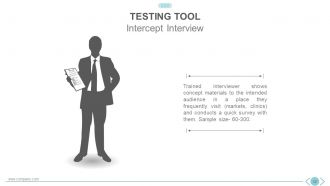
Folie 32 : Diese Folie zeigt das TESTWERKZEUG (Intercept Interview).
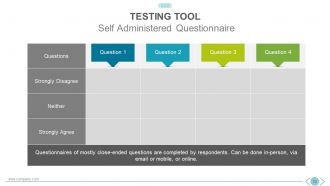
Folie 33 : Diese Folie zeigt TESTING TOOL (Selbstverwalteter Fragebogen).
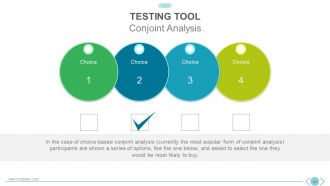
Folie 34 : Diese Folie zeigt das TESTWERKZEUG (Conjoint-Analyse).
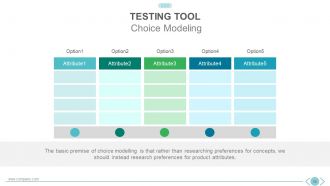
Folie 35 : Diese Folie zeigt TESTING TOOL (Choice Modeling).
Folie 36 : Diese Folie präsentiert eine Matrix der Produktpositionierung.
Folie 37 : Diese Folie präsentiert eine Matrix zur Markenpositionierung.
Folie 38 : Diese Folie trägt den Titel SCHRITT 4 Marketingstrategieentwicklung. Sie können den Folieninhalt nach Bedarf ändern.
Folie 39 : Diese Folie zeigt den Marktstrategieprozess mit den folgenden Punkten – Kunden verstehen, Marketing-Mix definieren, Marktposition bestimmen, Marketingbudget, Marktanalyse, Ausführungsplan.
Folie 40 : Diese Folie präsentiert das Verständnis der Kundenpräsentation – Marketingsegmentierung, geografische, demografische, psychografische, verhaltensbezogene.
Folie 41 : Diese Folie zeigt Marktanalyse in Diagrammform mit Weltkartenbild.
Folie 42 : Diese Folie zeigt die Analyse des Wettbewerbs in Tabellenform.
Folie 43 : Diese Folie präsentiert den Marketing-Mix mit 4 Ps des Marketingprodukts: Vielfalt, Qualität, Design, Funktionen. Preis: Listenpreis, Rabatte, Zulagen, Gutschriften. Promotion: Werbung, Verkaufsförderung, Öffentlichkeitsarbeit, Direktmarketing. Ort: Kanäle, Abdeckung, Standorte, Transport.
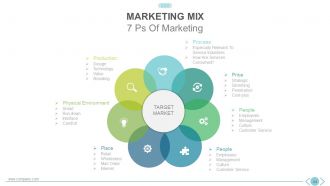
Folie 44 : Diese Folie präsentiert Marketing Mix 7Ps von Mrketing mit Ort: Einzelhandel, Großhandel, Versandhandel, Internet. Preis: Strategisch, Skimming, Penetration, Cost-Plus, Produktion: Design, Technologie, Wert, Branding, physische Umgebung: Smart, heruntergekommen, Schnittstelle, Komfort. Prozess: Besonders relevant für Dienstleistungsbranchen, wie werden Dienstleistungen konsumiert? Personen: Mitarbeiter, Management, Kultur, Kundenservice. Personen: Mitarbeiter, Management, Kultur, Kundenservice.
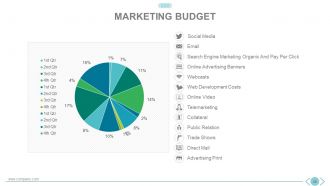
Folie 45 : Diese Folie zeigt Marketingbudget mit E-Mail, Suchmaschinenmarketing (organisch und Pay-per-Click), Online-Werbebanner, Webcasts, Webentwicklungskosten, Online-Video, Telemarketing, Sicherheiten, Öffentlichkeitsarbeit, Messen, Direktwerbung, Werbedruck, Sozialen Medien.
Folie 46 : Diese Folie trägt den Titel STEP 5 Business Analysis. Sie können den Folieninhalt nach Bedarf ändern.
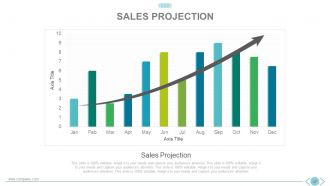
Folie 47 : Diese Folie zeigt ein Diagramm zur Verkaufsprognose.
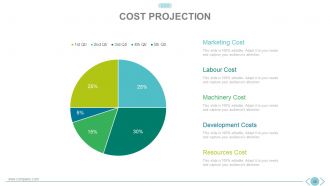
Folie 48 : Diese Folie zeigt ein Kostenprojektions-Kreisdiagramm mit Marketingkosten, Arbeitskosten, Maschinenkosten, Entwicklungskosten, Ressourcenkosten.
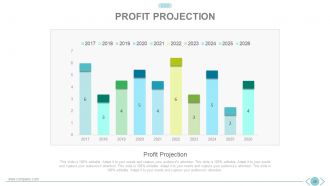
Folie 49 : Diese Folie zeigt ein Diagramm der Gewinnprognose.
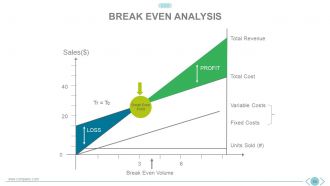
Folie 50 : Diese Folie zeigt ein Break Even Analyse-Diagramm.
Folie 51 : Diese Folie trägt den Titel SCHRITT 6 Produktentwicklung. Sie können den Folieninhalt nach Bedarf ändern.
Folie 52 : Diese Folie zeigt die Prototypenentwicklungstabelle.
Folie 53 : Diese Folie zeigt Finalize Quality Management System with- Monitoring & Measurement, Continuous Improvement, QMS, Key Business Processes, Quality Manual, Purchasing & Supplier Management, Documentation, Control, Internal Audit/Self Assessment, Training & Development Communications, Customer Bedürfnisse (Input), Kundenzufriedenheit (Output).
Folie 54 : Diese Folie zeigt die Operationsplantabelle.
Folie 55 : Diese Folie präsentiert die Präsentation der Logistikplanung – Lieferant, Lager, Einzelhändler, Wareneingangslager, Betrieb, Fertigwarenlager, Markt, Vertrieb, Betrieb, Beschaffung.
Folie 56 : Diese Folie zeigt den strategischen Logistikplanungsprozess mit Überwachung und Marketing, Übergang zum Geschäftsprozess, Feedback, Erste Schritte, Vorplanung, Strategie, Strategisches Plandokument, Erstellung, Kommunikation mit Stakeholdern und Führungskräften.
Folie 57 : Diese Folie stellt einen Notfallplan vor. Sie können den Folieninhalt nach Bedarf ändern.
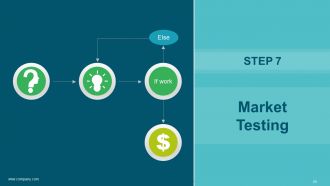
Folie 58 : Diese Folie trägt den Titel STEP 7 Market Testing. Sie können den Folieninhalt nach Bedarf ändern.
Folie 59 : Diese Folie zeigt, WANN MAN TEST VERMARKTET, in Form eines Diagramms, das die Phasen des Produktentwicklungszyklus, Kosten- und Zeitersparnis, Lernumfang und Genauigkeit darstellt.
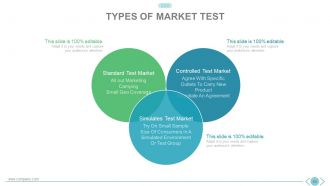
Folie 60 : Diese Folie zeigt Arten von Markttests mit Standardtest Markt: All-out Marketing Camping, Small Geo Coverage. Kontrollierter Testmarkt: Vereinbaren Sie bestimmte Verkaufsstellen, um neue Produkte zu führen. Simuliert Testmarkt: Verhandeln Sie eine Vereinbarung, probieren Sie eine kleine Stichprobe von Verbrauchern in einer simulierten Umgebung oder einer Testgruppe aus.
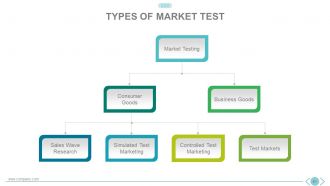
Folie 61 : Diese Folie zeigt die Hierarchie der Markttests, bestehend aus: Sales Wave Research, Simuliertes Testmarketing, Controlled Test Marketing, Test Markets, Market Testing, Business Goods, Consumer Goods.
Folie 62 : Diese Folie trägt den Titel SCHRITT 8 Kommerzialisierung. Sie können den Folieninhalt nach Bedarf ändern.
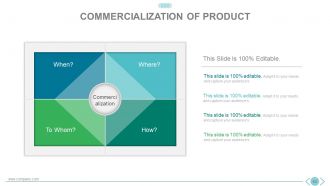
Folie 63 : Diese Folie präsentiert die Kommerzialisierung des Produkts in Form einer Matrixbox mit Präsentation – Wann? Wo? An wen? Wie?
Folie 64 : Diese Folie zeigt das Diagramm des Produktlebenszyklus initiieren, das aus Zeit, Reife, Wachstum, Eintritt, Umsatz besteht.
Folie 65 : Dies ist eine Dankesfolie mit Adresse# Hausnummer, Stadt, Bundesland, Kontaktnummern, E-Mail-Adresse.
Neuer Produktentwicklungsprozess PowerPoint Präsentationsfolien mit allen 65 Folien:
Bringen Sie eine feierliche Atmosphäre mit unserem kompletten Powerpoint-Deck mit Folien zur Entwicklung neuer Produkte. Das Jubiläum durchführen können.
-
New Product Development Process
-
Agenda Slide
-
PRODUCT DEVELOPMENT PROCESS
-
New Product Development Process Complete with Sl
-
Gather Ideas for New Product
-
SOURCES FOR IDEA GENERATION
-
SWOT Analysis
-
Market Trends
-
Market Trends
-
Consumer Trends
-
Consumer Trends
-
Research and Development Process
-
Opportunity Analysis
-
Opportunity Analysis Template
-
New Product Development Process Complete with Sl
-
Idea Screening Funnel
-
IDEA SCREENING LEVEL 1 Will Customer In Target Market Benefit From The Product
-
Idea Screening Level 1
-
IDEA SCREENING LEVEL 2 Market Size Growth Forecasts
-
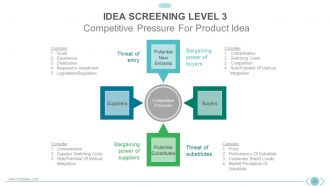
IDEA SCREENING LEVEL 3 Competitive Pressure For Product Idea
-
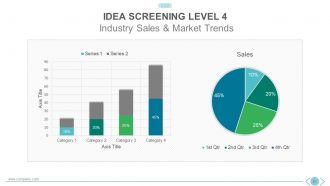
IDEA SCREENING LEVEL 4 Industry Sales Market Trends
-
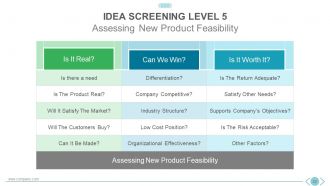
IDEA SCREENING LEVEL 5 Assessing New Product Feasibility
-
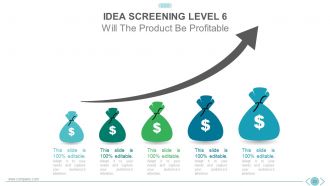
Idea Screening Level 6 Will The Product Be Profitable
-
Idea Screening Tool Weighted Index Method
-
Idea Screening Tool Dot Sticking Voting
-
Idea Screening Tool Delphi Method
-
Idea Screening Tool PMI Analysis
-
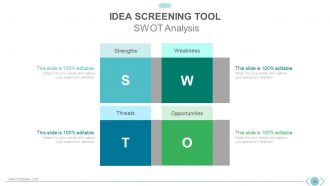
Idea Screening Tool SWOT Analysis
-
Concept Testing
-
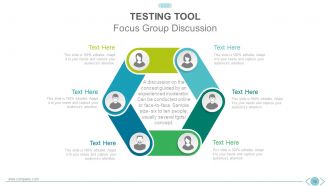
Testing Tool Focus Group Discussion
-
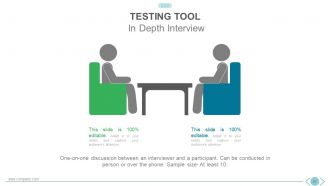
Testing Tool In Depth Interview
-
Intercept Interview
-
Testing Tool Self Administered Questionnaire
-
Testing Tool Conjoint Analysis
-
Testing Tool Choice Modeling
-
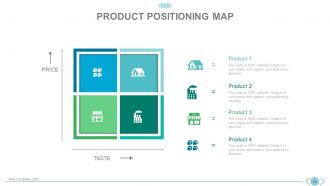
PRODUCT POSITIONING MAP
-
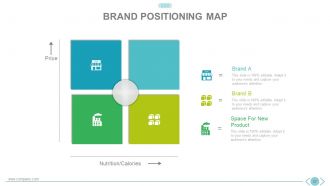
Brand Positioning Map
-
Marketing Strategy Development
-
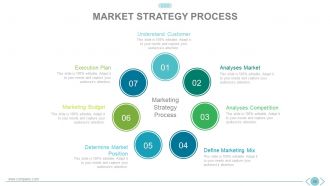
Market Strategy Process
-
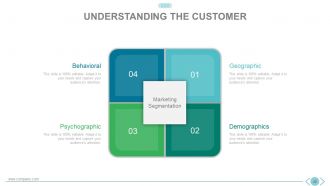
Understanding the Customer
-
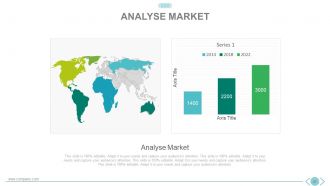
Analyse Market
-
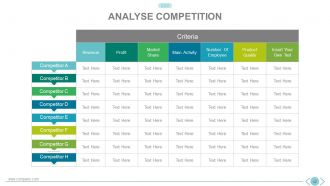
Analyse Competition
-
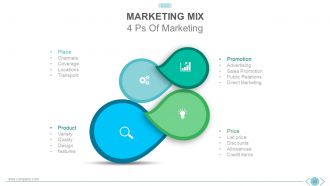
Marketing Mix 4 Ps Of Marketing
-
Marketing Mix 7 Ps Of Marketing
-
Marketing Budget
-
New Product Development Process Complete with Sl
-
Sales Projection
-
Cost Projection
-
Profit Projection
-
Break Even Analysis
-
New Product Development Process Complete with Sl
-
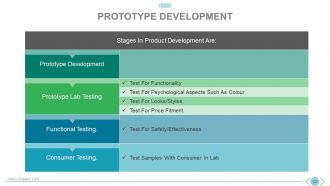
Prototype Development
-
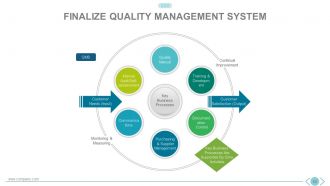
Finalize Quality Management System
-
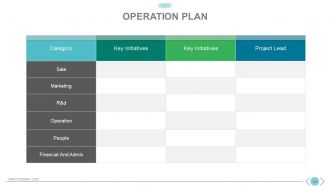
Operation Plan
-
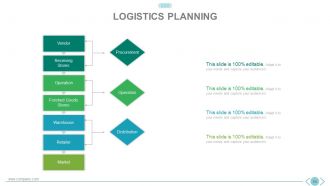
Logistics Planning
-
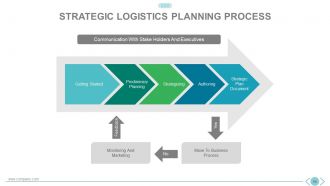
Strategic Logistics Planning Process
-
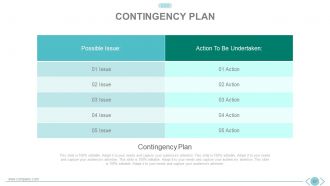
Contingency Plan
-
New Product Development Process Complete with Sl
-
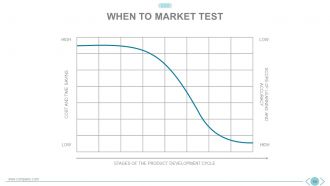
When to Market Test
-
TYPES OF MARKET TEST
-
TYPES OF MARKET TEST
-
New Product Development Process Complete with Sl
-
COMMERCIALIZATION OF PRODUCT
-
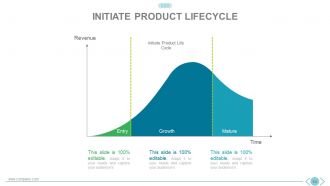
INITIATE PRODUCT LIFECYCLE
-

Thank You
FAQs for New product development process
So there's basically six stages you gotta hit: idea generation, concept development, feasibility analysis, prototype development, testing, and launch. Start with brainstorming what people actually need, then flesh out your concept. Here's the thing though - don't skimp on the feasibility check. I've seen too many people skip this part and regret it big time. After that, build your prototypes and test everything. Testing feels like it drags on forever but it's worth it. Launch when you're ready, not before. Oh, and prototyping gets messy - just warning you now!
Your market research is basically a cheat sheet for design decisions that won't flop. Pain points tell you what to tackle first - nobody wants to build the wrong thing. User preferences guide everything from layout to colors (honestly, color debates are the worst). I've watched entire teams do complete 180s after realizing people just wanted simple, not fancy. Happens all the time. The trick? Turn those insights into actual design specs, not vague "make it better" notes. Oh, and stay in touch with your research folks during development. Flying blind sucks.
Dude, cross-functional teams make or break products - I've seen it firsthand. Getting engineering, design, marketing, and ops in the same room from the start saves you from disasters later. Each group sees blind spots the others miss. Engineers build cool features that nobody actually wants (classic), while marketing knows what'll tank with customers. Don't do that thing where teams just toss requirements back and forth - that's garbage. Actually get them collaborating early with regular check-ins. Oh, and make sure everyone gets a real say in big decisions, not just lip service.
Oh man, where do I even start? Technical stuff breaks at the worst possible times - like seriously, why does it always happen right before a demo? Users will give you feedback that's the complete opposite of what you expected, which is honestly kind of hilarious but also frustrating. Timeline pressure gets real when nothing works like you planned it would. Materials and testing eat through your budget crazy fast too. Coordinating with test users is a nightmare - everyone's schedule is different. When people want totally opposite things, turning that feedback into actual changes becomes this whole puzzle. Build in extra time and money upfront, and write everything down so you can spot patterns later.
Get everything documented early - like, as soon as you have an idea worth protecting. File provisional patents right away instead of waiting until your product's done. NDAs are your best friend here, use them with literally everyone (contractors, partners, that random consultant you hired). I learned this the hard way watching other startups get screwed over. Run freedom-to-operate searches regularly so you don't accidentally infringe on someone else's stuff. Oh, and keep a simple tracker of what IP you're creating vs. what belongs to others. Honestly, just bake IP protection into your regular dev process from day one.
Look at three main areas: does the market actually want it, can you make money, and is it technically doable? Market size and customer demand are huge - honestly, this is where most people mess up by building stuff nobody wants. Then check your revenue projections versus development costs and when you'll break even. Technical complexity matters too - how hard is this to actually build with your resources? If you can grab some early customer feedback, even better. I'd score each idea against these categories, maybe 1-10 or whatever works. The winners hit well on all three fronts.
Your customers are gonna tell you straight up what's broken - way more honest than your own assumptions. I've watched so many teams skip this step and then scramble later when nobody uses their product right. Get feedback super early, even on messy prototypes. Each round helps you spot confusing buttons, missing stuff, or features that just don't make sense. Don't wait until launch to ask users what they think - that's like asking for directions after you're already lost. Build those check-ins throughout development. Trust me, it'll save you from major headaches down the road.
Dude, always pad your budget by like 20-30% because something random will definitely blow up your costs. I learned this the hard way lol. Break everything into phases—research, design, testing, launch—so you can see where your money's actually going. Don't hire expensive specialists right away though. Get your core team sorted first, then bring in the fancy people once you know what you need. Monthly check-ins are clutch for staying on track. And honestly? Just use a basic spreadsheet you'll actually update. Those complex budget models look impressive but they're useless if you never touch them again.
So basically, tech helps you move faster by cutting out all the tedious stuff and getting your team on the same page. Tools like Figma or Miro are game-changers - you get feedback instantly instead of those endless email threads (ugh). Project management software catches problems before they blow up. Digital prototyping saves you from building physical stuff too early, which honestly can be a money pit. Analytics give you real user data so you're not just guessing. Here's the thing though - don't go crazy with tools. Pick maybe 2-3 that fix your biggest headaches first.
So competitive analysis basically shows you where the gaps are and how to stand out. Look at what features they're pushing, their pricing, messaging - all that stuff. Sometimes you'll realize your "amazing" idea already exists (awkward but better to know now). The real value is finding white space you can own. Plus you'll see what everyone's already saying so you don't sound like a copycat. I'd focus on crafting positioning that actually highlights what makes you different from the alternatives customers are already looking at. It's honestly one of the most eye-opening exercises you can do early on.
Start by figuring out your actual limits - budget, timeline, what's technically possible. Let the team go wild during brainstorming, but then be brutal about checking if ideas are buildable. Honestly, I've watched so many brilliant concepts crash because nobody did a reality check early enough. Set up regular check-ins to make sure you're being innovative but not delusional. The magic happens when you get creative *within* your constraints instead of pretending they don't exist. Oh, and define your "risk budget" upfront - how much experimentation can you actually handle without everything falling apart?
Honestly, just start doing things at the same time instead of waiting around. Like get your marketing team prepping stuff while the engineers are still figuring out specs - saves tons of time. Cross-functional teams help too because nobody's sitting in boring handoff meetings all day. Build your MVP first, then fix it as you go. I know it sounds backwards but trust me on this one. Those rapid prototyping tools are clutch for getting feedback early. Way better than spending months perfecting something customers might hate anyway. Sometimes shipping something decent beats waiting forever for perfection.
Think of your brand as a decision-making compass for products. Strong brands make choices way easier - you'll instantly know what works and what doesn't. Apple launching a cheap flip phone? Never gonna happen because it clashes with their whole vibe. Map out your brand attributes first, then check new ideas against them. Does the pricing match? What about features and messaging? I honestly think this is where most companies mess up - they skip this filter step. Keep everything consistent with what people already expect from you. Short version: if it doesn't feel like "you," don't do it.
Honestly, start with safety - both physical and mental harm stuff. Data privacy is obvious but people mess it up constantly. Can disabled users actually navigate your thing? That's accessibility and it matters. Supply chain labor practices are tricky but you gotta look into it. Environmental impact is everywhere now, no escaping that conversation. Oh, and think about weird social consequences you didn't predict - products do strange things in the wild. My advice? Build an ethics checklist right at the beginning instead of playing catch-up later when everything's already broken.
Dude, product development is wild right now. AI's everywhere - teams are using it for prototyping and trying to predict what people actually want. Sustainability stuff is huge too, like you literally can't ignore circular design anymore with all the regulations. Remote work changed everything honestly, sometimes our best ideas come from random Zoom calls (weird but true). Companies are obsessed with getting to market faster. Agile's pretty much the standard now, and you've got to keep iterating based on user feedback constantly. Your cycles need to be way shorter than before if you don't want to get left behind.
-
Very good presentation style
-
The content is very helpful from business point of view.
-
Illustrative design with editable content. Exceptional value for money. Highly pleased with the product.