

Nps tracker powerpoint presentation slides




Try Before you Buy Download Free Sample Product
 Impress Your
 Audience
 100%
100% Editable
 Save Hours
 of Time


Evaluate customer loyalty to a brand or company using NPS Tracker PowerPoint Presentation Slides. Determine the chances that the customers will buy again your products with the help of evaluating their experience with your brand. Use nps tracker PPT presentation templates to measure customer experience. Incorporate this presentation which has various nps tracker PowerPoint presentation slides to make the work easy for you. Use these templates to know the likelihood of customers recommending your product to others. These templates are completely customizable. You can edit the color, text, icon and font size as per your need. You can add your own content. Grab nps tracker PPT presentation deck to ensure that company is meeting customers expectations. This deck covers topics such as nps score for broadband and mobile providers, nps dashboard, and more. Download professionally designed nps tracker PowerPoint presentation templates to measure, evaluate and analyse customer buying behavior. Our Nps Tracker Powerpoint Presentation Slides help establish a fair environment. Fight any form of inequality.
People who downloaded this PowerPoint presentation also viewed the following :
Content of this Powerpoint Presentation
Slide 1: This slide introduces NPS Tracker. State Your Company Name and begin.
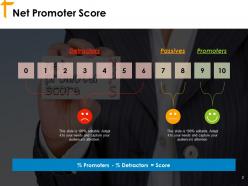
Slide 2: This slide presents Net Promoter Score with detractors, passives, promoters.
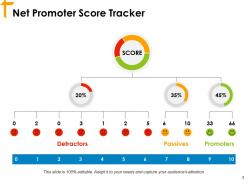
Slide 3: This slide showcases Net Promoter Score Tracker. Use it for your own use and requirement.
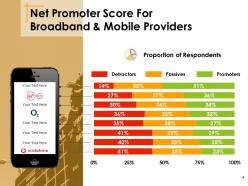
Slide 4: This slide presents Net Promoter Score For Broadband & Mobile Providers with these four parameters- Proportion of Respondents, Detractors, Passives, Promoters.
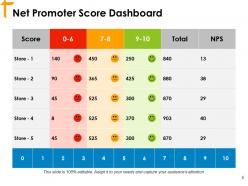
Slide 5: This slide shows Net Promoter Score Dashboard with a store and score.
Slide 6: This is a Coffee Break slide to halt. You may change it as per requirement.
Slide 7: This slide is titled Charts & Graphs to move forward.
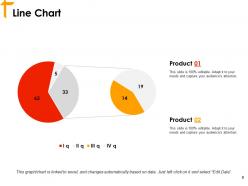
Slide 8: This is a Line Chart slide for product/entity comparison.
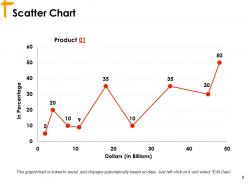
Slide 9: This slide showcases Scatter Chart. You can add the data and use it.
Slide 10: This slide is titled Additional Slides to move forward.
Slide 11: This is a Vision, Mission and Goals slide. State them here.
Slide 12: This slide showcases Our Team with Name and Designation to fill.
Slide 13: This is an About Us slide showing Our Company, Value Client, and Premium services as examples.
Slide 14: This slide shows Vital financial circles with percentage and text boxes.
Slide 15: This is a Business Quotes slide to quote something you believe in.
Slide 16: This is a Bulb/idea image slide to show information, ideas, innovation specific stuff etc.
Slide 17: This is a Thank You slide with Address# street number, city, state, Contact Numbers, Email Address.
Nps tracker powerpoint presentation slides with all 17 slides:
Our Nps Tracker Powerpoint Presentation Slides combine ability and agility. They enable you to get it done faster.








FAQs for Nps tracker
Effective NPS Tracker components include automated survey distribution, real-time scoring calculations, customer segmentation tools, trend analysis dashboards, and follow-up action workflows. These systems streamline feedback collection by categorizing promoters, passives, and detractors automatically, while enabling organizations to identify improvement opportunities and track satisfaction changes over time, ultimately delivering enhanced customer retention and competitive advantage.
Businesses leverage NPS data by identifying detractors' pain points, enhancing promoter experiences, and addressing neutral customers through targeted improvements in service delivery, product quality, and customer support processes. Companies like retail chains and financial services use NPS insights to streamline operations, personalize interactions, and reduce churn, ultimately delivering higher satisfaction scores and stronger customer loyalty.
Strategies to increase NPS response rates include optimizing survey timing, personalizing invitations, keeping surveys brief, offering incentives, and using multiple channels for distribution. These approaches enhance participation by reducing friction, creating urgency through follow-up sequences, and targeting customers at high-engagement moments, with many organizations finding that mobile-friendly formats and clear value propositions ultimately deliver response rates exceeding industry benchmarks.
Different industries interpret NPS scores through sector-specific benchmarks and customer lifecycle considerations, with financial services focusing on retention metrics, healthcare emphasizing patient satisfaction outcomes, and retail prioritizing purchase intent correlations. These interpretations enable targeted improvements in customer touchpoints, service delivery protocols, and experience optimization strategies, ultimately delivering enhanced competitive positioning and measurable revenue growth across diverse market segments.
Common pitfalls include focusing solely on the overall score without examining segment-specific trends, ignoring qualitative feedback from detractors and promoters, and making decisions based on insufficient sample sizes. Many organizations also mistake short-term fluctuations for meaningful trends, while overlooking operational factors that influence responses, ultimately missing actionable insights that drive customer experience improvements and retention strategies.
NPS tracking helps identify customer segments by categorizing customers into promoters, passives, and detractors based on their likelihood to recommend your brand. This segmentation enables targeted marketing approaches, with promoters becoming brand advocates through referral programs, passives receiving engagement campaigns to increase satisfaction, and detractors getting retention-focused communications, ultimately delivering more personalized customer experiences and improved conversion rates.
Employee engagement directly influences NPS by affecting service quality, customer interactions, and overall experience delivery, as engaged employees demonstrate higher productivity, better problem-solving, and more authentic customer relationships. Companies with highly engaged workforces typically see NPS scores 12-18 points higher than competitors, with engaged employees becoming natural brand advocates who create positive customer experiences, ultimately driving loyalty and retention.
Real-time NPS tracking accelerates decision-making by providing immediate customer sentiment insights, enabling faster issue resolution, and identifying satisfaction trends before they impact revenue. Organizations can pivot strategies quickly, address service gaps proactively, and optimize customer experiences in real-time, ultimately delivering more responsive operations and competitive advantage through data-driven agility.
Follow-up actions after collecting NPS feedback are crucial for converting insights into meaningful business improvements, customer retention strategies, and relationship strengthening initiatives. These responses demonstrate organizational commitment to customer experience, enable targeted service recovery for detractors, and help promoters become brand advocates, ultimately delivering enhanced loyalty, reduced churn, and sustainable competitive advantage in increasingly customer-centric markets.
Organizations should engage promoters through referral programs, testimonials, and loyalty initiatives while addressing detractor concerns through direct outreach, service recovery, and systematic issue resolution. This strategic approach transforms promoters into brand advocates and converts detractors into satisfied customers, ultimately improving overall customer retention and reducing churn across service touchpoints.
NPS tracking tools include Salesforce, HubSpot, SurveyMonkey, Qualtrics, and Zendesk, alongside specialized platforms like Delighted and AskNicely. These technologies streamline feedback collection, automate survey distribution, and provide real-time analytics dashboards, with many organizations finding that integrated CRM solutions deliver enhanced customer insights and faster response times to improve satisfaction scores.
NPS surveys should typically be conducted quarterly for most businesses, with transactional surveys after key customer interactions and relationship surveys every 3-6 months. This frequency enables organizations to track trends while avoiding survey fatigue, with many companies finding that consistent quarterly tracking delivers actionable insights for improving customer loyalty and identifying retention opportunities.
NPS scores correlate with business growth through customer retention, word-of-mouth referrals, reduced acquisition costs, and increased lifetime value, while declining scores often signal churn risks and competitive vulnerabilities. Companies with higher NPS typically experience 2.5x faster revenue growth, with many organizations finding that promoters spend significantly more and generate valuable referrals, ultimately delivering sustainable competitive advantage.
Qualitative feedback transforms NPS scores into actionable insights by revealing specific pain points, emotional drivers, and improvement opportunities behind numerical ratings. Through detailed comments, organizations can identify recurring themes across customer segments, prioritize operational changes, and develop targeted solutions that address root causes, ultimately enabling more strategic decision-making and faster customer experience improvements.
NPS tracking integrates into customer experience strategies through real-time feedback collection, cross-departmental data sharing, closed-loop follow-up processes, and predictive analytics integration. These practices enable organizations to identify experience gaps, prioritize improvement initiatives, and measure impact across touchpoints, with many companies finding that strategic NPS integration ultimately delivers enhanced customer retention and competitive advantage.
-
Presentation Design is very nice, good work with the content as well.
-
Use of icon with content is very relateable, informative and appealing.