


Objective Key Results OKRS Powerpoint Ppt Template Bundles




Try Before you Buy Download Free Sample Product
 Impress Your
 Audience
 100%
100% Editable
 Save Hours
 of Time


Our Objective Key Results OKRS Powerpoint Ppt Template Bundles are topically designed to provide an attractive backdrop to any subject. Use them to look like a presentation pro.
People who downloaded this PowerPoint presentation also viewed the following :
Objective Key Results OKRS Powerpoint Ppt Template Bundles with all 15 slides:
Use our Objective Key Results OKRS Powerpoint Ppt Template Bundles to effectively help you save your valuable time. They are readymade to fit into any presentation structure.






FAQs for Objective Key Results OKRS Powerpoint
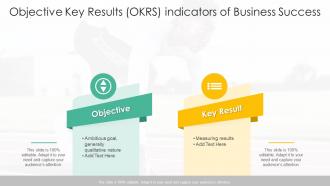
So basically you want **Objectives** that are the big inspiring goals - like "become the go-to platform for small businesses" - and **Key Results** that are just hard numbers proving you actually got there. Don't go crazy with more than 2-4 key results per objective or you'll lose focus. Make your objectives motivational while key results need specific metrics and deadlines. Here's the thing though - aim for about 70% confidence you can hit them. Too easy and they're pointless, too hard and people give up. Start with the objective first, then figure out what numbers would actually prove you won.
Start with your big company goals and work your way down. Like if you're trying to expand into new markets, make sure your team OKRs actually support that - something like "boost lead gen in target regions by 40%." Each team needs to see how their stuff connects back to the main strategy. Trust me, I've seen too many random OKRs that look good on paper but don't really matter. What works well is doing quarterly check-ins where teams explain how their objectives tie back to the bigger picture. Keeps everyone focused and honest about what they're actually working toward.
Look, your leaders have to actually care about this stuff or it'll crash and burn. They need to share their own OKRs - even the messy ones where they're missing targets. Don't let them micromanage though, that kills the whole point. I've watched this fail so many times when executives just dump it on middle managers and disappear. Regular check-ins are huge, and celebrate the small wins along the way, not just final results. Oh and make sure they're actually bought in first - like genuinely excited about it, not just going through the motions.
Honestly, weekly check-ins are where it's at - keeps everyone on track and catches problems before they spiral. I'd do more formal reviews monthly or quarterly depending on your cycle. Don't skip the weekly stuff though, that's where most teams mess up. You can tweak key results during monthly reviews if you need to, but try not to change your main objectives mid-cycle unless something big happens. Oh and consistency beats perfection every time. Start with whatever you can actually stick to - better to nail monthly reviews than burn out trying to do weekly ones you'll abandon after a few weeks.
Honestly, most teams mess up by setting way too many OKRs - like 15 per quarter, which is insane. Keep it to 3-5 max. Also people make them super vague instead of specific and measurable. The quarterly thing throws everyone off at first too. Feels rushed but you get used to it. Here's what actually works: make your key results ambitious enough that hitting 70% is solid progress, not failure. Don't treat them like regular KPIs where you need perfect scores. Regular check-ins help way more than obsessing over hitting every target. Oh and alignment between teams matters more than individual execution - learned that one the hard way!
Honestly, OKRs are so much better than those dusty annual reviews nobody looks at again. You set quarterly goals that everyone can actually see - no more department silos. Here's the weird part though: you're supposed to fail at like 30% of them because they should stretch you. Traditional goals? You aim for 100% and call it done. With OKRs, there's real transparency. Everyone knows what you're working on and how it ties to bigger company stuff. Oh, and don't go crazy with too many - stick to 3-5 max or you'll be all over the place.
Track your completion rates and how you're hitting targets - that's the obvious stuff. But honestly? The real magic happens when you check if people actually get what they're working toward. Mid-cycle surveys are clutch for this. Ask if the goals feel relevant and motivating. Also worth tracking whether OKRs are helping teams align better and if they're actually influencing day-to-day decisions. I know it sounds like extra work, but that feedback will save you so much hassle in your next planning round. Oh, and don't forget to compare how your goal-setting improves cycle to cycle.
Start with regular check-ins - weekly's probably best, bi-weekly if you're swamped. Make sure everyone can see the data, don't hide progress in some spreadsheet nobody opens. Honestly, most teams I know set their OKRs then completely forget about them until panic time at quarter-end. Each objective needs a clear owner, and here's the thing - people have to feel safe saying "we're behind" without getting roasted. Otherwise you'll just get fake progress updates. The trick is making these reviews feel routine, not like some dreaded status meeting everyone tries to skip.
You need both to get the full story, honestly. Sure, hitting that "30% more signups" target feels great, but what if users hate the experience? That's where the softer stuff comes in - satisfaction scores, feedback, all that. Numbers show you what went down, but they don't tell you if you're actually building something people want. I've seen teams obsess over metrics that looked amazing on dashboards but meant nothing for the business. Mix them together so you're not just gaming stats that sound impressive but don't move the needle on what actually matters.
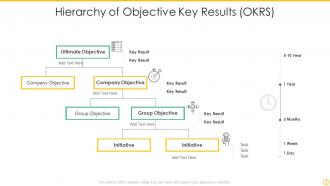
Look at your team's key results first - that's where you'll find what to connect your individual stuff to. Make sure your objectives actually help hit at least one of those team goals. Then work backwards to see how it ties to the bigger company picture. Be really specific about impact though. Like if the company wants 20% revenue growth and your team does lead gen, focus your OKR on qualified leads or conversion rates - something concrete. I always draw this out visually because it's way easier to explain to people (and honestly helps me think through it too). Nobody wants to feel like they're just spinning their wheels on random tasks.
Okay so here's what works: use action verbs and get super specific. Don't say "improve customer satisfaction" - say "hit 4.5/5 satisfaction scores" or "launch the mobile app by Q3." Vague stuff like "enhance" drives me crazy because it means literally nothing. Your objectives should be ambitious but not totally unrealistic, you know? And they need to connect back to whatever your company's actually trying to do. The test I always use - could someone brand new read this and know exactly what you're going for? If a new hire would be confused, you're being too abstract. Make it inspiring but crystal clear.
Honestly, just throw all your OKRs on a shared dashboard where everyone can see them - no hiding stuff in silos. Cross-functional goals work great too since teams actually have to talk to each other to hit targets. Regular check-ins are clutch, but make sure people feel safe admitting when they're behind (nobody likes those meetings where everyone pretends everything's fine). Leadership needs to go first with the vulnerability thing - if executives won't share their struggles, why would anyone else? Oh, and wikis work too if dashboards feel too formal for your company culture.
Dude, just skip the spreadsheet nightmare and grab a real OKR tool. Weekdone's solid, plus 15Five, Lattice, and Ally are all decent options. My old team wasted so much time fumbling around in Excel - never again lol. These platforms handle the tracking automatically and send check-ins to your team. Most plug into Slack or whatever you're already using. Honestly? Just download 2-3 free trials and see which one doesn't make you want to throw your laptop. Way better than manually updating cells every week.
OKRs are brilliant for staying agile since you review them every quarter instead of being stuck with yearly goals that become pointless. When stuff changes (and it always does), you can actually pivot without throwing your whole strategy out the window. The short feedback loops are where the magic happens - you'll catch what's not working fast and course-correct. Your team gets to experiment too because OKRs focus on outcomes, not how you get there. Oh, and here's a tip: build in specific "pivot points" each quarter where you honestly ask if your OKRs still make sense. Game changer.
Honestly, OKRs work really well if you don't mess them up. Your team gets clear direction and can actually see how their daily grind connects to the big picture stuff. That transparency thing is golden - when everyone knows what others are doing, people naturally hold themselves more accountable. Quick wins from hitting key results keep morale up too. Just avoid making them crazy aggressive or you'll burn everyone out (learned that one the hard way). I'd start realistic and tweak as you go. The "why" factor is what really gets people motivated though.
-
Great product with highly impressive and engaging designs.
-
“The presentation template I got from you was a very useful one.My presentation went very well and the comments were positive.Thank you for the support. Kudos to the team!”