


Omnichannel Banking Services Powerpoint Presentation Slides





Try Before you Buy Download Free Sample Product
 Impress Your
 Audience
 100%
100% Editable
 Save Hours
 of Time


The omnichannel banking approach merges digital and personal channels for a seamless customer experience. Check out our professionally designed Omnichannel Banking Services deck, which showcases various banking services offered to customers for easy banking solutions access. It has reduced the need for physical bank branches, which saves customers time. Our branchless banking services PPT provides different omnichannel banking services with a gap analysis based on challenges faced by the traditional banking system. The benefits include electronic wallets, IVR and API bill payments, kiosks, chatbots, live chats, and video branch banking services. It further contains the operational and financial impact of these omnichannel banking services. Lastly, our Omnichannel banking technologies module exhibits the dashboards for evaluating the performance of these banking services. Customize this 100 percent editable presentation with our highly skilled research or design team. Get access to this powerful template now
People who downloaded this PowerPoint presentation also viewed the following :
Content of this Powerpoint Presentation
Slide 1: This slide introduces Omnichannel Banking Services. Commence by stating Your Company Name.
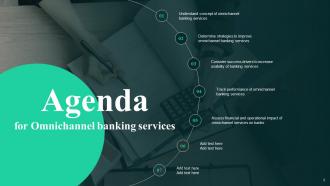
Slide 2: This slide depicts the Agenda of the presentation.
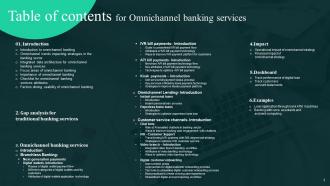
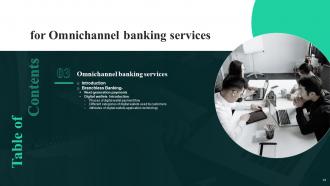
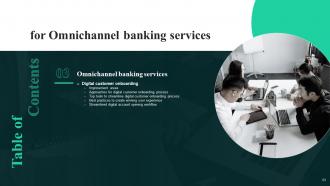
Slide 3: This slide incorporates the Table of contents.
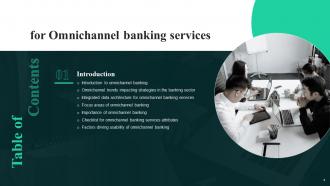
Slide 4: This slide highlights the Title for the Topics to be covered in the upcoming template.
Slide 5: This slide covers brief summary about omnichannel banking services used by top banks.
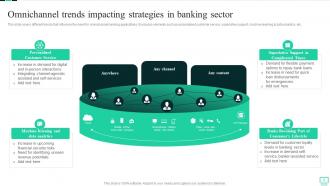
Slide 6: This slide showcases different trends that influence the need for omnichannel banking applications.
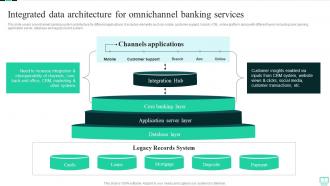
Slide 7: This slide elucidates omnichannel banking system architecture for different applications.
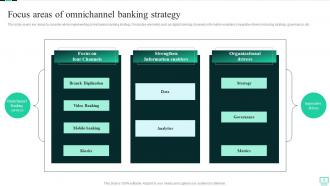
Slide 8: This slide deals with the Focus areas of omnichannel banking strategy.
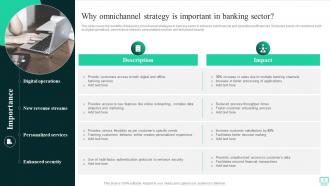
Slide 9: This slide showcases the top benefits of deploying omnichannel strategies in banking sector to enhance both financial and operational efficiencies.
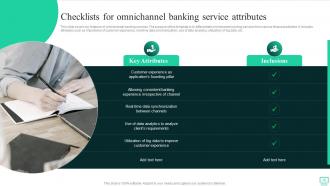
Slide 10: This slide states key features of omnichannel banking services.
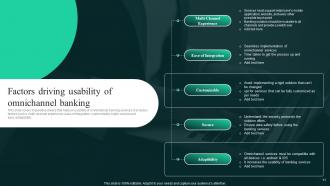
Slide 11: This slide indicates the Factors driving usability of omnichannel banking.
Slide 12: This slide exhibits the Heading for the Contents to be discussed next.
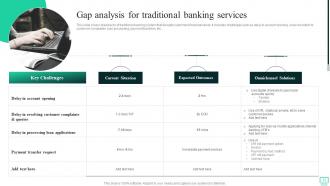
Slide 13: This slide covers drawbacks of traditional banking system that disrupts customers financial needs.
Slide 14: This slide highlights the Title for the Ideas to be covered in the next template.
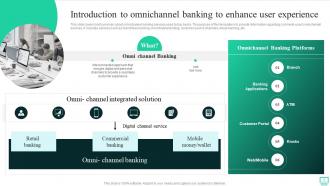
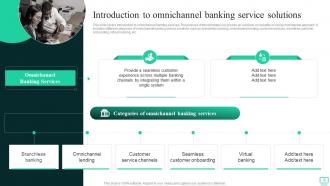
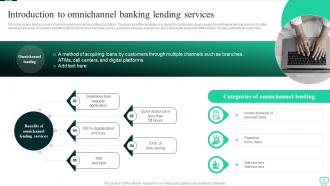
Slide 15: This slide mentions about the introduction to omnichannel banking services.
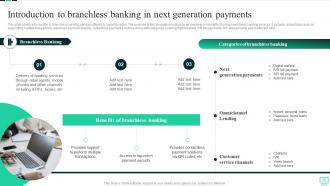
Slide 16: This slide presents an overview of the branchless banking in next generation payments.
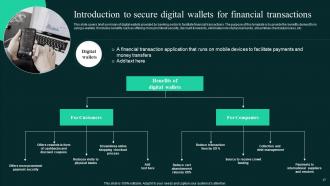
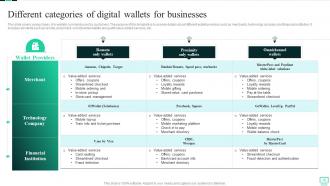
Slide 17: This slide reveals a brief summary of digital wallets provided by banking sector to facilitate financial transactions.
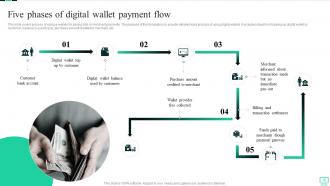
Slide 18: This slide states the Five phases of digital wallet payment flow.
Slide 19: This slide covers various types of e-wallets commonly used by customers.
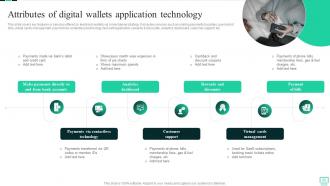
Slide 20: This slide lists the key features or services offered by electronic wallets via omnichannel strategy.
Slide 21: This slide exhibits the Heading for the Components to be covered further.
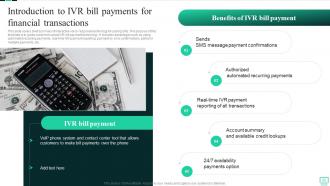
Slide 22: This slide showcases a brief summary of interactive voice response technology for paying bills.
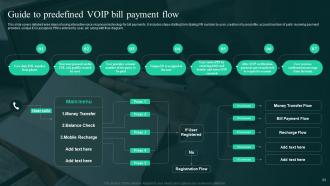
Slide 23: This slide covers detailed wise steps of using interactive voice response technology for bill payments.
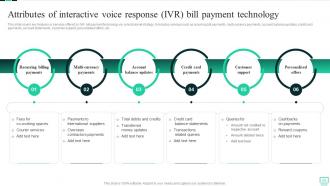
Slide 24: This slide elucidates the Attributes of interactive voice response (IVR) bill payment technology.
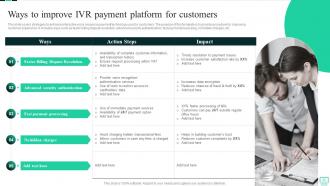
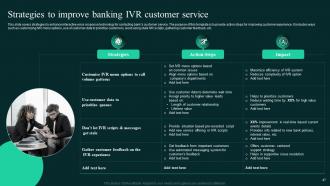
Slide 25: This slide exhibits the strategies to enhance interactive voice response payment technology used by customers.
Slide 26: This slide mentions the Title for the Ideas to be discussed in the following template.
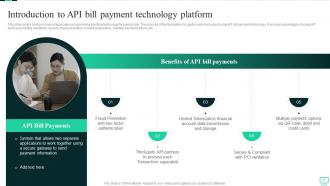
Slide 27: This slide incorporates brief summary of application programming interface technology for paying bills.
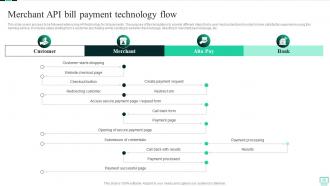
Slide 28: This slide illustrates the Merchant API bill payment technology flow.
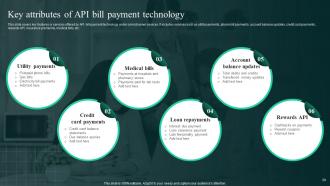
Slide 29: This slide indicates the Key attributes of API bill payment technology.
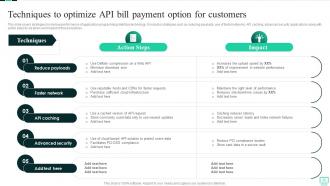
Slide 30: This slide showcases the Techniques to optimize API bill payment option for customers.
Slide 31: This slide depicts the Heading for the Topics to be discusseed next.
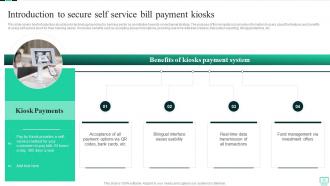
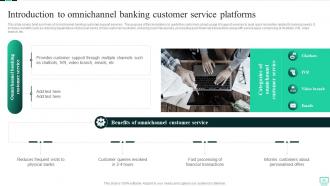
Slide 32: This slide contains a brief introduction about kiosks technology launched by banking sector as an initiative towards omnichannel strategy.
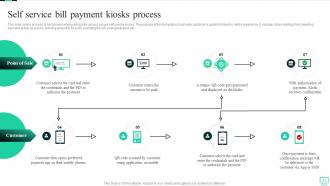
Slide 33: This slide elucidates the Self service bill payment kiosks process.
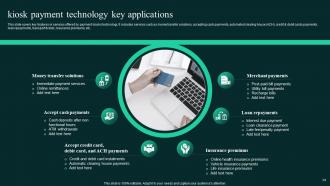
Slide 34: This slide covers key features or services offered by payment kiosks technology.
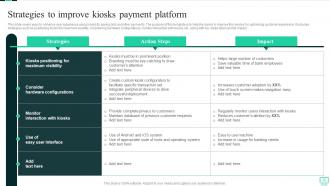
Slide 35: This slide highlights the Strategies to improve kiosks payment platform.
Slide 36: This slide reveals the Title for the Topics to be discussed further.
Slide 37: This slide covers brief summary of omnichannel loan services offered by banks.
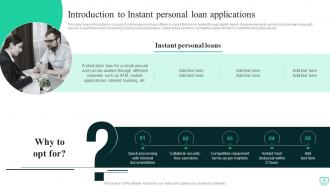
Slide 38: This slide exhibits the introduction to concept of instant personal loans offered by banks that can be availed through digital means.
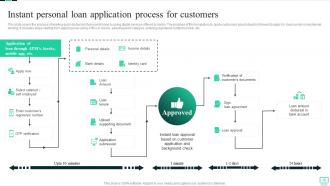
Slide 39: This slide showcases the process of availing quick disbursal of personal loans by using digital services offered by banks.
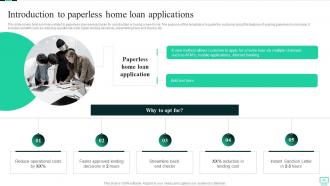
Slide 40: This slide highlights a brief summary related to paperless loan services taken for construction or buying a new home.
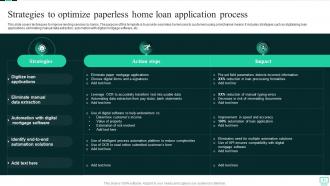
Slide 41: This slide exhibits the Strategies to optimize paperless home loan application process.
Slide 42: This slide presents a brief summary of omnichannel banking customer support services.
Slide 43: This slide potrays the Heading for the Contents to be covered in the forth-coming template.
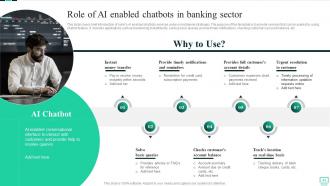
Slide 44: This slide showcases the role of AI enabled chatbots in banking sector.
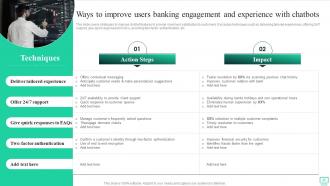
Slide 45: This slide highlights the Ways to improve users banking engagement and experience with chatbots.
Slide 46: This slide focuses on Transforming IVR customer support systems with 360-degree test strategy.
Slide 47: This slide covers strategies to enhance interactive voice response technology for contacting bank’s customer service.
Slide 48: This slide incorporates the Title for the Ideas to be discussed further.
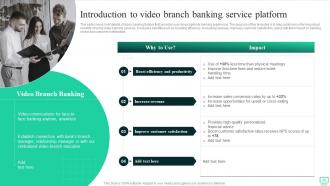
Slide 49: This slide gives brief details of video banking feature that provides user an exceptional banking experience.
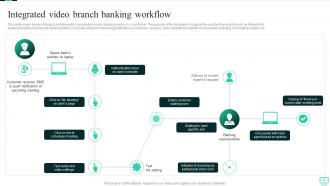
Slide 50: This sldie deals with the Integrated video branch banking workflow.
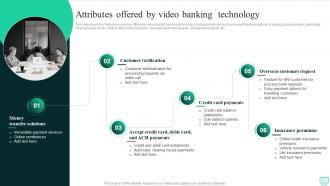
Slide 51: This slide states the Attributes offered by video banking technology.
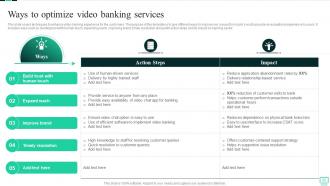
Slide 52: This slide showcases techniques to enhance video banking experience for the customers.
Slide 53: This slide incorporates the Heading for the Components to be covered next.
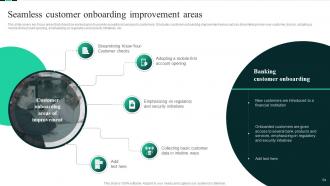
Slide 54: This slide contains key focus areas that should be worked upon to provide exceptional services to customers.
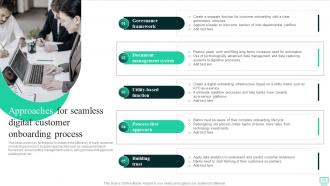
Slide 55: This slide highlights the Approaches for seamless digital customer onboarding process.
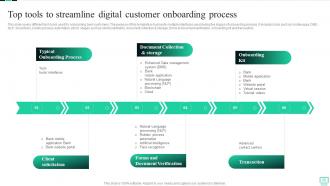
Slide 56: This slide deals with the Top tools to streamline digital customer onboarding process.
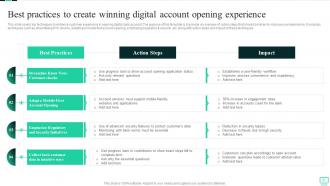
Slide 57: This slide exhibits the Best practices to create winning digital account opening experience.
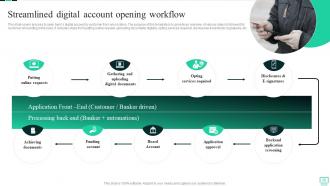
Slide 58: This slide illustrates the Streamlined digital account opening workflow.
Slide 59: This slide depicts the Heading for the Topics to be covered in the next template.
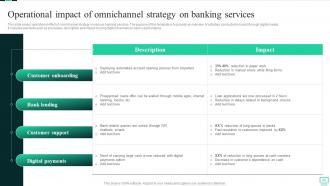
Slide 60: This slide elucidates the Operational impact of omnichannel strategy on banking services.
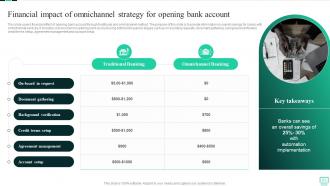
Slide 61: This slide shows the Financial impact of omnichannel strategy for opening bank account.
Slide 62: This slide incorporates the Title for the Contents to be discussed in the following template.
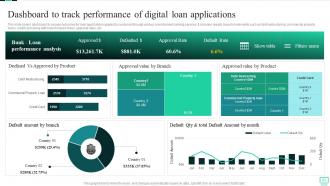
Slide 63: This slide illustrates the Dashboard to track performance of digital loan applications.
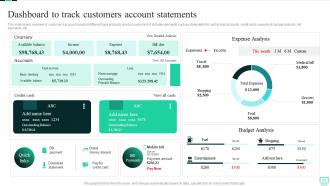
Slide 64: This slide represents the Dashboard to track customers account statements.
Slide 65: This slide incorporates the Heading for the Ideas to be covered next.
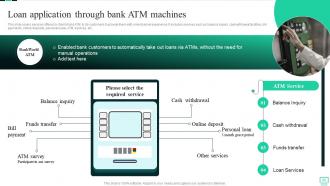
Slide 66: This slide deals with the Loan application through bank ATM machines.
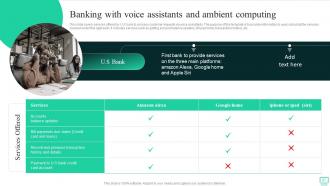
Slide 67: This slide focuses on Banking with voice assistants and ambient computing.
Slide 68: This is the Icons Slide containing all the Icons used in the plan.
Slide 69: This slide is used for showcasing some Additional information.
Slide 70: The purpose of this slide is to mention the Company's vision, mission and goal.
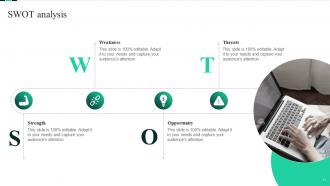
Slide 71: This slide displays the SWOT analysis.
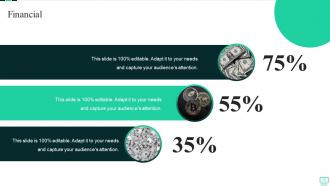
Slide 72: This slide talks about the Financial topic.
Slide 73: This is Meet our team slide. List the information related to your team members here.
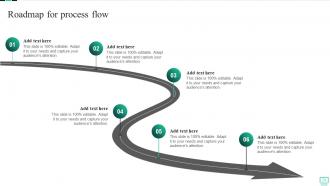
Slide 74: This slide illustrates the Roadmap for process flow.
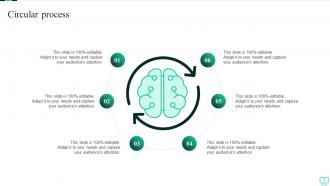
Slide 75: This slide represents the Circular process with related imagery.
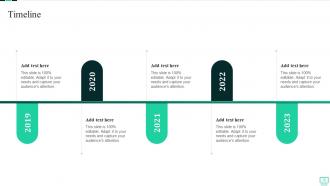
Slide 76: This slide elucidates the Organization's Timeline.
Slide 77: This slide incorporates the 30 60 90 days plan for efficient planning.
Slide 78: This is the Thank You slide for acknowledgement.
Omnichannel Banking Services Powerpoint Presentation Slides with all 83 slides:
Use our Omnichannel Banking Services Powerpoint Presentation Slides to effectively help you save your valuable time. They are readymade to fit into any presentation structure.












FAQs for Omnichannel Banking Services
Honestly, the biggest payoff is just happier customers - nobody wants to repeat their info three times when switching from app to website. Operational stuff gets way smoother too since people can start something on mobile and wrap it up in person. Your data becomes actually useful (instead of scattered everywhere), which means better targeting and usually more revenue. Oh, and here's the thing - if your systems can't actually communicate with each other, you're basically building fancy silos. I've seen companies mess this up by not thinking through the tech integration first.
Dude, omnichannel banking is huge for keeping customers happy. Your info follows you everywhere - app, website, branch, whatever. No more explaining your situation five times to different people (seriously, that's the worst). Customers can literally start something online and finish it in person without missing a beat. The trick is making sure all your systems actually sync up properly. Otherwise you're just doing regular multichannel stuff. People love feeling in control of how they bank, and honestly? When it works right, it cuts down on so much annoying back-and-forth. Total game changer.
Honestly, the worst part is dealing with legacy systems - those decades-old banking platforms are a nightmare to modernize while keeping everything running. Integration is brutal too since most banks have separate systems for each channel that barely communicate. Regulatory stuff gets messy because compliance rules are different for digital vs physical touchpoints. Your staff will need serious training to understand how everything connects (which takes forever). Oh, and data silos are everywhere - such a headache. I'd start by actually mapping out how customers move between your channels right now. Find the biggest pain points first, then tackle those.
Okay so here's the thing - data analytics shows you exactly how customers move through your business, whether they're on mobile, web, whatever. You can see where they bail out or get annoyed. The cool part is using that info to actually predict what they want before they even know it. Say someone keeps checking their savings balance on their phone - boom, perfect time for a CD offer. I mean, this stuff works way better than just waiting around for problems to happen. When you get ahead of what customers need, your engagement numbers will definitely go up.
Your banking app is basically the command center for everything else. It knows where you are, sends you alerts, and does crazy stuff like depositing checks through your camera. Pretty cool tech honestly. But the real magic happens when it connects to other channels - you could start a loan application on your phone, walk into a branch to finish it, then get text updates later. All your preferences sync up so whether you're calling customer service or using an ATM, everything feels connected. Way better than the old days when each channel felt completely separate.
Honestly, personalization is what makes customers actually stick around instead of just putting up with your bank. You know how Netflix somehow always knows what you want to watch? Same concept but for financial stuff. When you can recognize someone across all their touchpoints - mobile app, branch visits, whatever - and actually tailor things to their spending habits, they feel like you get them. Not just another account number, you know? The smart move is using your data to figure out what they need before they even realize it themselves. Start small though - pick one customer journey and map where you can add those personal touches.
APIs are what really make omnichannel work - they connect your mobile app, website, branches, all of it so customer data actually talks to each other. Cloud platforms are massive for this too since you can scale without spending a fortune on infrastructure. The AI personalization stuff is honestly getting crazy good these days. Oh, and real-time analytics mean whether someone's on their phone or talking to a teller, you're seeing the same customer picture. When you're looking at solutions though, API flexibility should be your first priority. That's literally what determines if your integration actually works or just looks pretty in demos.
So basically you've gotta connect all your systems first - that's where most banks screw up. When I start something on my phone, I shouldn't have to explain it all over again at the branch, you know? Map out where customers currently get stuck between channels. Your staff needs to see the same info in real time too. I'd focus on building those unified customer profiles so the handoffs actually work. Trust me, those gaps are probably killing your conversion rates more than you realize. Oh and make sure your processes stay consistent everywhere - mobile, online, in-person, whatever.
So chatbots basically keep everything connected when you're jumping between your banking app, website, whatever. You won't have to repeat your whole story every single time - honestly such a pain point right now. They learn from every interaction too, so they actually get better at figuring out what you need. Available 24/7 which is clutch for simple stuff like checking balances. The real win? Same experience whether you're messaging at 2am or calling during normal hours. I'd start by looking at where customers bail out between channels - that's probably where smarter AI integration helps most.
Honestly, you're gonna want one system that handles compliance across all your channels instead of juggling separate processes. Map out where your current gaps are between mobile, web, branches - that's your starting point. KYC, AML, data privacy stuff needs to flow smoothly between touchpoints or you'll get buried in regulatory issues (learned this the hard way at my last job). Get a compliance orchestration platform that tracks customer interactions everywhere. Way better than trying to piece together different systems later. Trust me, unified governance frameworks save you so many headaches down the road.
Track completion rates first - can people actually finish stuff when they jump from mobile to desktop? That's your main indicator. Also watch how often customers switch channels and whether those handoffs are smooth (spoiler: they're probably not). Customer satisfaction by channel tells you the real story, plus NPS gives you the bigger picture. Cost per transaction and employee productivity matter too, obviously. Honestly, I'd start small - map your top 3 customer journeys and measure those end-to-end before you get fancy with everything else.
Honestly, it all comes down to what your customers actually want, not what you think they want. Most people love mobile for quick stuff but still want face-to-face help when they're buying a house or whatever. You've got to make switching between channels super smooth. Sure, younger folks might be all digital, but I've seen plenty of older customers who are way more tech-savvy than expected. The trick is actually asking them - survey your customers about which channels they prefer for different banking tasks. Then use that data to map out their real journeys instead of guessing.
Omnichannel banking is huge for keeping customers - like 15-20% better retention than old-school single channels. Your customers can hop between mobile, web, branches, whatever, without starting over each time. That alone stops so many people from ditching you for competitors. Nobody wants to repeat their story three times to different systems (honestly drives me nuts when banks do that). The trick is making everything feel connected. I'd say start by looking at where customers get frustrated during handoffs - that's usually where you're losing people. Once you fix those pain points, retention shoots up pretty fast.
Honestly, you've gotta stop thinking of social media as just another place to post ads. Connect it straight to your CRM - that way when someone bitches on Twitter then calls in, your team actually knows what happened. Training staff for banking questions on social is brutal though, compliance makes everything 10x harder. Figure out customer verification first (huge pain) and have a solid plan for bumping complex stuff to phone/email fast. Oh and don't try Facebook, Instagram AND Twitter at once. Pick one, get it working smoothly, then expand.
Honestly, start with AI personalization - people expect banks to just know what they want now. Voice banking is exploding since we're all used to talking to our phones anyway. Real-time analytics lets you create those smooth experiences whether someone's using the app, calling in, or actually visiting a branch (do people still do that?). Open banking APIs are pretty crucial for connecting third-party stuff seamlessly. Embedded finance is where things get interesting - customers want banking built right into their shopping apps. But here's the thing: check your data integration first. Without that working properly, you can't pull off real omnichannel experiences.
-
Keep doing the good work guys. Surpass the needs and expectations always!!
-
Thank you for showering me with discounts every time I was reluctant to make the purchase.