


Digitalising Customer Onboarding Journey In Banking Complete Deck




Try Before you Buy Download Free Sample Product
 Impress Your
 Audience
 100%
100% Editable
 Save Hours
 of Time


Bank digital customer onboarding is a process of automating banking operations to improve banking activities through using automated software and tools. Check out our meticulously crafted PowerPoint Presentation titled, Digitalising Customer Onboarding Journey in Banking which provides a comprehensive overview of the digitalizing customer onboarding process and its importance in enhancing bank processes. Additionally, this Client Onboarding Process Deck showcases challenges faced by banks while onboarding potential customers and solutions to overcome these barriers. Moreover, It also includes assessing the need for digitalizing the onboarding process and identifying various challenges in customer onboarding. Furthermore, this Digital Banking shows techniques that can be used to optimize the onboarding process such as artificial intelligence, robotic process automation, predictive analytics, and mobile banking. Lastly, the Mobile Banking Application module follows the implementation and management of digitalization techniques with their impact on the customer onboarding process in banks. Get access now.
People who downloaded this PowerPoint presentation also viewed the following :
Content of this Powerpoint Presentation
Slide 1: This slide introduces Digitalising Customer Onboarding Journey in Banking. State Your Company Name and begin.
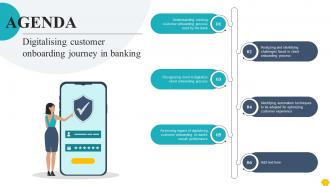
Slide 2: This slide is an Agenda slide. State your agendas here.
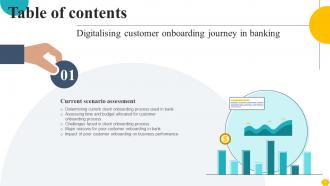
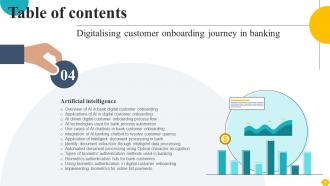
Slide 3: This slide shows a Table of Contents for the presentation.
Slide 4: This slide is an introductory slide.
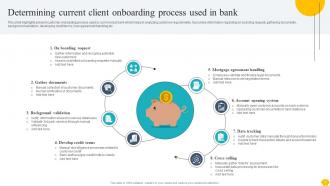
Slide 5: This slide highlights present customer onboarding process used by commercial bank which helps in analyzing customer requirements.
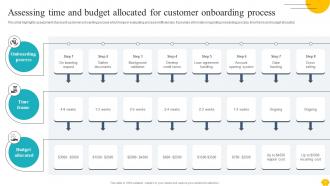
Slide 6: This slide illustrates assessment of present customer onboarding process which helps in evaluating process inefficiencies.
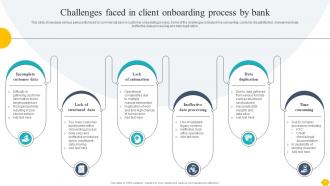
Slide 7: This slide showcases various pain points faced by commercial bank in customer onboarding process.
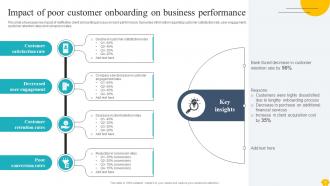
Slide 8: This slide presents key impact of ineffective client onboarding process on bank performance.
Slide 9: This slide is an introductory slide.
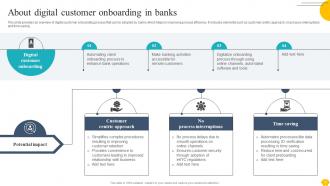
Slide 10: This slide provides an overview of digital customer onboarding process that can be adopted by banks which helps in improving process efficiency.
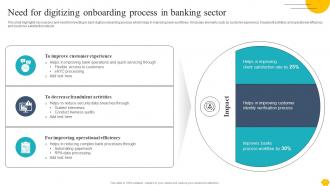
Slide 11: This slide includes key reasons and need for investing in bank digital onboarding process which helps in improving bank workflows.
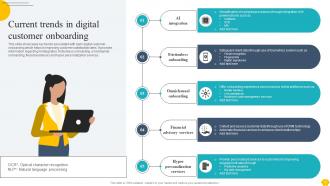
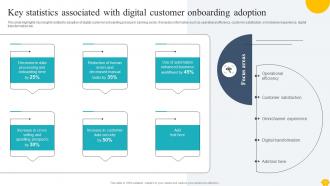
Slide 12: This slide entails key trends associated with bank digital customer onboarding which helps in improving customer satisfaction rates.
Slide 13: This slide portrays key insights related to adoption of digital customer onboarding process in banking sector.
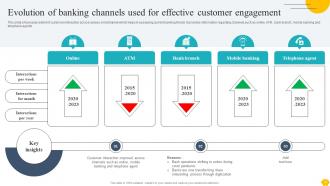
Slide 14: This slide showcases extent of customer interaction across various omnichannel which helps in assessing current banking trends.
Slide 15: This slide shows key focus areas for enhancing banks customer onboarding process which helps in improving customer experience.
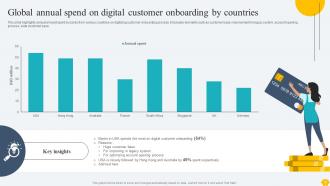
Slide 16: This slide highlights annual amount spent by banks from various countries on digitizing customer onboarding process.
Slide 17: This slide is an introductory slide.
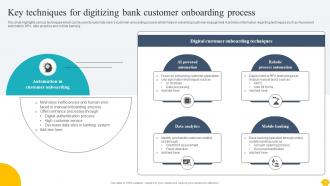
Slide 18: This slide mentions various techniques which can be used to automate bank’s customer onboarding process which helps in enhancing customer engagement.
Slide 19: This slide is an introductory slide.
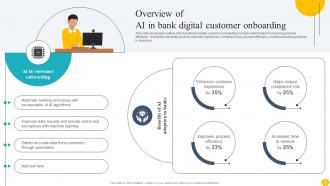
Slide 20: This slide outlines an overview of AI adoption in digital customer onboarding in banks which helps in improving process efficiency.
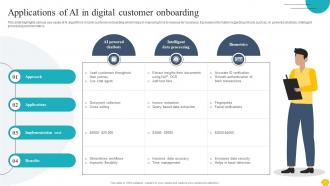
Slide 21: This slide highlights various use cases of AI algorithms in bank customer onboarding which helps in improving time to revenue for business.
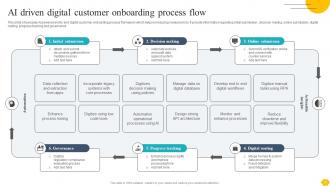
Slide 22: This slide pertains to AI powered end to end digital customer onboarding process framework which helps in reducing manual errors.
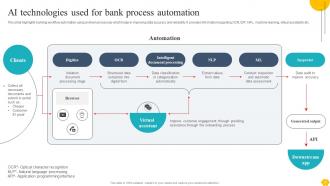
Slide 23: This slide illustrates banking workflow automation using ai driven processes which helps in improving data accuracy and reliability.
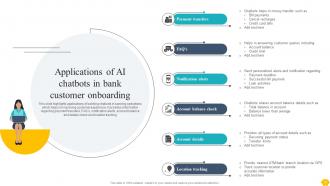
Slide 24: This slide refers to applications of banking chatbots in banking operations which helps in improving customer experience.
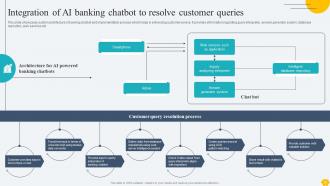
Slide 25: This slide marks system architecture of banking chatbot and implementation process which helps in enhancing customer service.
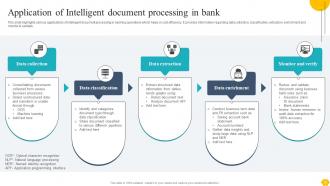
Slide 26: This slide puts various applications of intelligent document processing in banking operations which helps in cost efficiency.
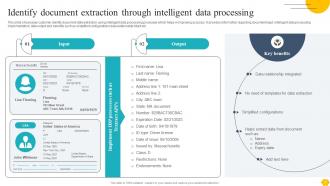
Slide 27: This slide elucidates customer identity document data extraction using intelligent data processing processes which helps in improving accuracy.
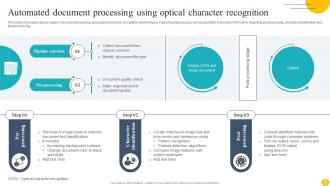
Slide 28: This slide presents various steps in document processing using optical character recognition which helps in improving data accuracy and accessibility.
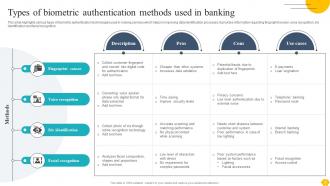
Slide 29: This slide highlights various types of biometric authentication technologies used in making services which helps in improving data identification processes.
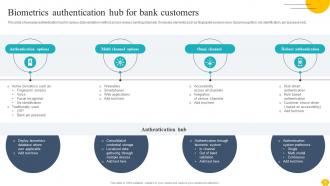
Slide 30: This slide pertains to authentication hub for various data validation method across various banking channels.
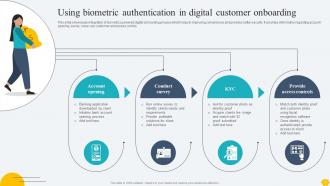
Slide 31: This slide cates to integration of biometrics powered digital onboarding process which helps in improving convenience and provides better security.
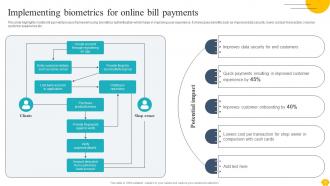
Slide 32: This slide contains mobile bill payment process framework using biometrics authentication which helps in improving user experience.
Slide 33: This slide is an introductory slide.
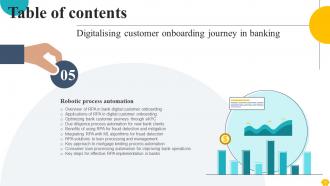
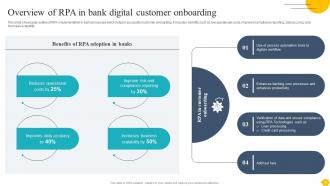
Slide 34: This slide provides an outline of RPA implementation in bank processes which helps in successful customer onboarding.
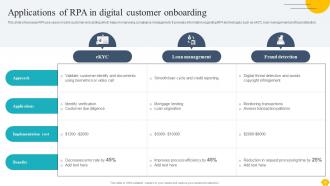
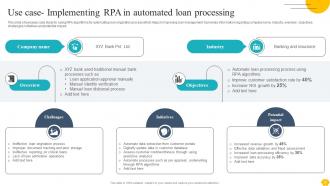
Slide 35: This slide includes RPA use cases in bank customer onboarding which helps in improving compliance management.
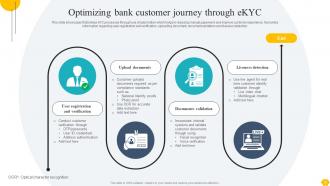
Slide 36: This slide showcases frictionless KYC processes through use of automation which helps in reducing manual paperwork and improve customer experience.
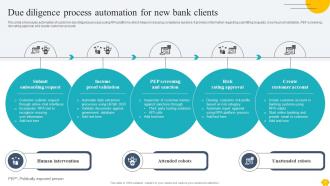
Slide 37: This slide shows automation of customer due diligence process using RPA platforms which helps in reducing compliance burdens.
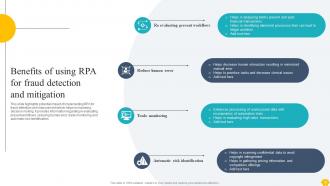
Slide 38: This slide covers potential impact of implementing RPA for fraud detection and improvement which helps in improving decision making.
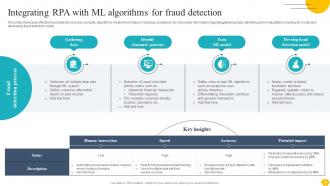
Slide 39: This slide contains effective fraud detection process using ML algorithmic model which helps in reducing compliance risk.
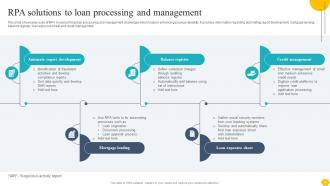
Slide 40: This slide caters to the uses of RPA in overcoming loan processing and management challenges which helps in enhancing process reliability.
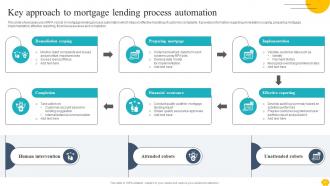
Slide 41: This slide elucidates use of RPA robots in mortgage lending process automation which helps in effective handling of customer complaints.
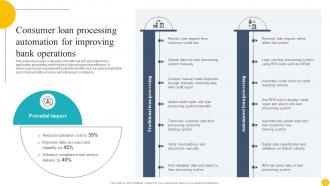
Slide 42: This slide pertains to the comparison of traditional and automated loan application processing which helps in improving process efficiency.
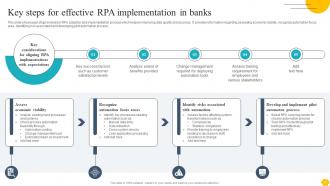
Slide 43: This slide showcases steps involved in RPA adoption and implementation process which helps in improving data quality and accuracy.
Slide 44: This slide is an introductory slide.
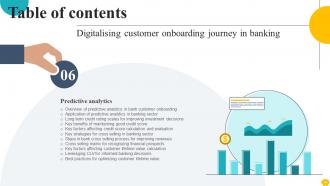
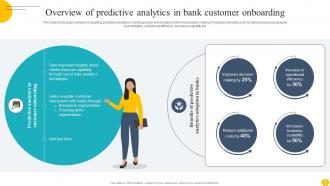
Slide 45: This slide shows overview of adopting predictive analytics in banking sector which helps in informed decision making.
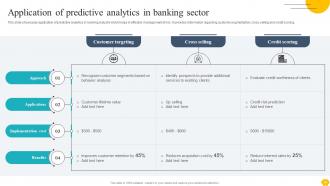
Slide 46: This slide highlights application of predictive analytics in banking industry which helps in effective management of risk.
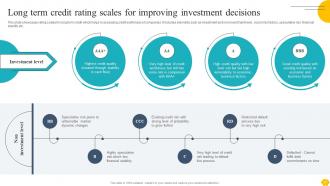
Slide 47: This slide presents rating scales for long term credit which helps in assessing credit worthiness of companies.
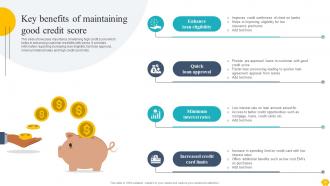
Slide 48: This slide represents importance of retaining high credit score which helps in enhancing customer credibility with banks.
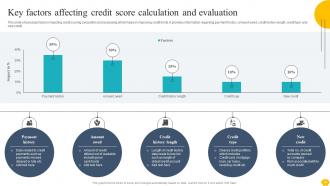
Slide 49: This slide elucidates factors impacting credit scoring calculation and assessing which helps in improving credit limits.
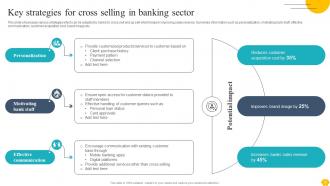
Slide 50: This slide portrays various strategies which can be adopted by banks to cross sell and up sell which helps in improving sales revenue.
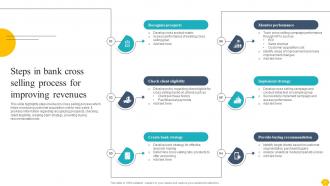
Slide 51: This slide highlights steps involved in cross selling process which helps in reducing customer acquisition cost for new sales.
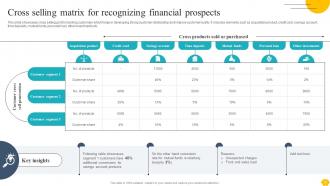
Slide 52: This slide showcases cross selling grid for banking customers which helps in developing strong customer relationship and improve customer loyalty.
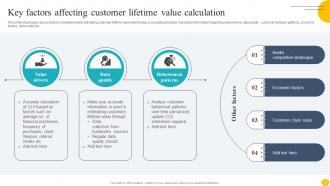
Slide 53: This slide shows various factors considered while estimating customer lifetime value which helps in accurate prediction.
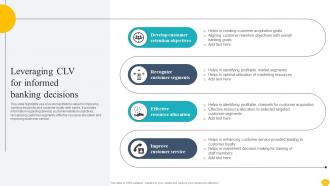
Slide 54: This slide contains use of customer lifetime value for improving banking decisions and customer loyalty with banks.
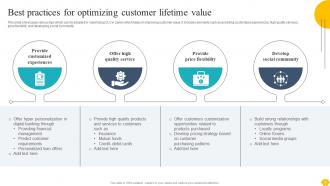
Slide 55: This slide caters to various tips which can be adopted in maximizing CLV in banks which helps in improving customer value.
Slide 56: This slide is an introductory slide.
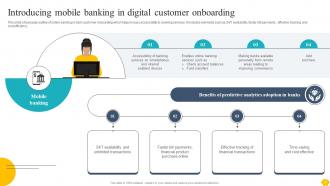
Slide 57: This slide showcases outline of online banking in bank customer onboarding which helps in easy accessibility to banking services.
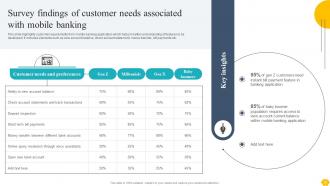
Slide 58: This slide includes customer requirements from mobile banking application which helps in better understanding of features to be developed.
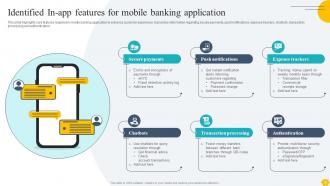
Slide 59: This slide presents core features required in mobile banking application to enhance customer experience.
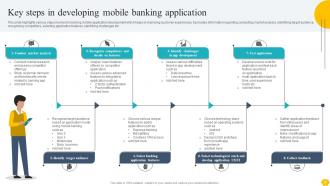
Slide 60: This slide represents various steps involved in banking mobile application development which helps in improving customer experiences.
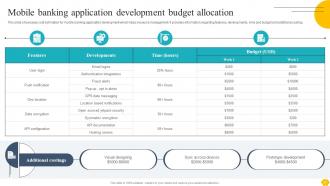
Slide 61: This slide elucidates cost estimation for mobile banking application development which helps resource management.
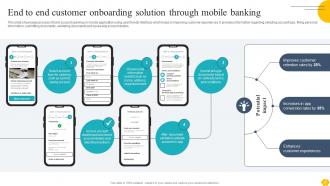
Slide 62: This slide showcases process of bank account opening on mobile application using user friendly interface which helps in improving customer experiences.
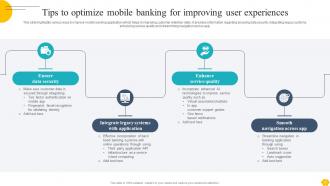
Slide 63: This slide depicts various ways to improve mobile banking application which helps in improving customer retention rates.
Slide 64: This slide is an introductory slide.
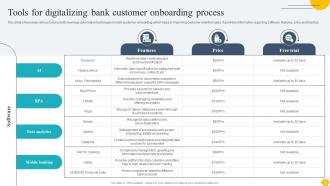
Slide 65: This slide demonstrates various tools used to leverage automation techniques in bank customer onboarding which helps in improving customer retention rates.
Slide 66: This slide is an introductory slide.
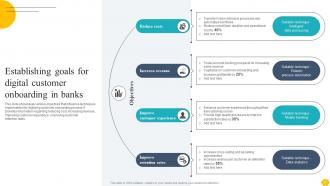
Slide 67: This slide elucidates various objectives that influence techniques implemented for digitizing customer onboarding process.
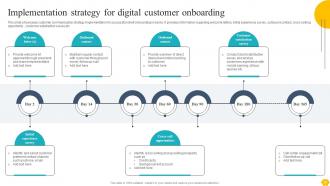
Slide 68: This slide provides customer communication strategy implementation for successful client onboarding in banks.
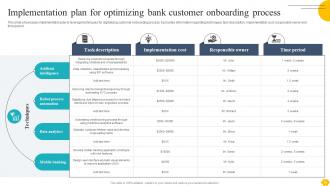
Slide 69: This slide pertains to implementation plan to leverage techniques for digitalizing customer onboarding process.
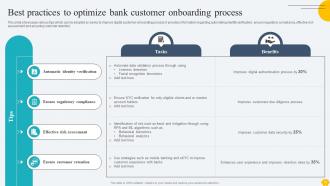
Slide 70: This slide provides various tips which can be adopted by banks to improve digital customer onboarding process.
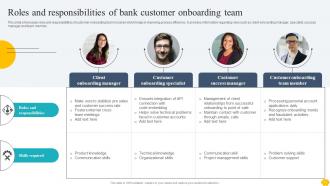
Slide 71: This slide showcases roles and responsibilities of customer onboarding team in banks which helps in improving process efficiency.
Slide 72: This slide is an introductory slide.
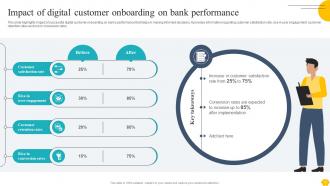
Slide 73: This slide highlights impact of successful digital customer onboarding on banks performance that helps in making informed decisions.
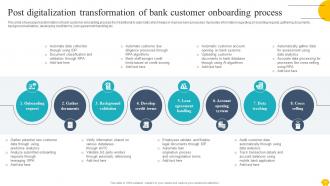
Slide 74: This slide contains transformation of bank customer onboarding process from traditional to automatic which helps in improve bank processes.
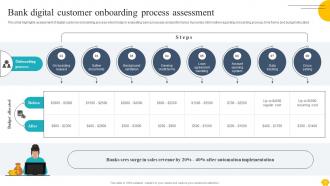
Slide 75: This slide caters to assessment of digital customer onboarding process which helps in evaluating bank processes and performance.
Slide 76: This slide is an introductory slide.
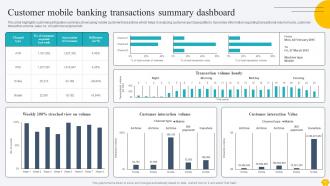
Slide 77: This slide represents customer participation summary showcasing mobile customer transactions which helps in analyzing customer purchase patterns.
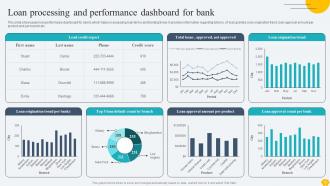
Slide 78: This slide mentions loan performance dashboard for banks which helps in assessing loan terms and funding times.
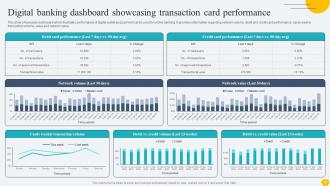
Slide 79: This slide elucidates dashboard which illustrates performance of digital wallet and payment cards used for online banking.
Slide 80: This slide is an introductory slide.
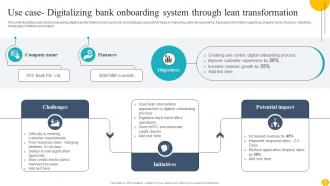
Slide 81: This slide illustrates case study showcasing digital transformation of bank customer onboarding process which helps in improving customer experience.
Slide 82: This slide enables case study for using RPA algorithms for automating loan origination process which helps in improving loan management.
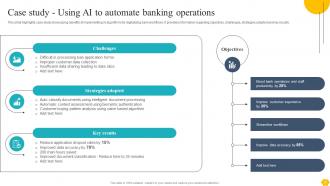
Slide 83: This slide puts case study showcasing benefits of implementing AI algorithms for digitalizing bank workflows.
Slide 84: This slide shows all the icons included in the presentation.
Slide 85: This slide is a thank-you slide with address, contact numbers, and email address.
Digitalising Customer Onboarding Journey In Banking Complete Deck with all 93 slides:
Use our Digitalising Customer Onboarding Journey In Banking Complete Deck to effectively help you save your valuable time. They are readymade to fit into any presentation structure.











FAQs for Digitalising Customer Onboarding Journey In
Honestly, leadership buy-in is everything - if your execs aren't actually championing this stuff, you're just burning money on fancy tools. Get them aligned on the vision first. Then focus hard on bringing employees along because people will torpedo anything they don't understand the "why" behind. I can't tell you how many companies completely skip change management and then act shocked when nobody uses their shiny new systems. Culture beats technology every single time, trust me on that. Yeah, your data infrastructure matters too, but start with getting everyone bought into the journey before you worry about the tech stack.
Okay so first thing - figure out your baseline numbers before you do anything else. Then track the obvious stuff like cost savings and revenue bumps, but also the squishy metrics like how happy your customers actually are. Employee engagement scores matter too, even though they're harder to measure. Pick maybe 3-5 things to focus on max because honestly you'll go crazy trying to track everything. Do monthly check-ins to see if you're hitting your targets. Just don't expect magic overnight - this stuff usually takes like a year to 18 months before you see real money coming back.
Dude, leadership makes or breaks this stuff. They're the ones setting direction and deciding where money goes, but the real game-changer is getting them to actually change how things work day-to-day. I've watched so many projects crash because executives would give these inspiring speeches then disappear when the real work started. Your leaders have to live this digital-first approach themselves. Otherwise people just roll their eyes and wait for the next shiny initiative. Get everyone on the same page about WHY you're doing this first - honestly that's half the battle right there.
Most companies kick off with a digital maturity assessment - sounds fancy but it's really just figuring out where you stand tech-wise. Look at your current infrastructure, data setup, and honestly how digitally savvy your employees are. Culture matters too - is leadership actually on board or just saying they are? I'd probably get an outside consultant because internal teams miss obvious stuff. Check your digital tools, workforce skills, budget, all that. Oh and don't try to fix everything at once - that never works. Once you see the gaps, pick the biggest pain points first.
Honestly, don't try to transform everything at once - that's where most companies crash and burn. Pick one area first and run a small pilot. Your biggest mistake would be jumping into trendy tech without thinking if it actually solves your problem. Also, people hate change way more than you think, so get your team involved early or they'll sabotage the whole thing (speaking from experience lol). Make sure you've got a solid plan for moving your data over. Oh, and have an actual strategy before you start throwing money at shiny new tools.
Look at your data first - figure out where things are actually falling apart for customers. Most companies have tons of data just sitting there doing nothing, which is honestly pretty frustrating to see. Grab info from all your customer touchpoints and hunt for patterns. What's working? What sucks? Focus on stuff that hits both customer experience and how smoothly you're running things. Then don't just make fancy charts - actually pick one real problem the data shows you and build a digital solution for it. That's your starting point.
AI and machine learning are huge right now, obviously. Cloud computing too - companies can scale up instantly without buying tons of hardware. IoT sensors are everywhere, tracking supply chains and energy usage. Every week there's some "revolutionary" AI tool, but honestly? Most are overhyped. The real magic happens when you mix these technologies together smartly. Automation's probably your best bet for quick wins though. Just pick one super manual process you hate dealing with and automate that first. Way easier than trying to overhaul everything at once.
Honestly, bring your team into this from the beginning instead of just dropping changes on them. Ask what tools would actually help their day-to-day stuff. Training is everything - I can't tell you how many places just dump new software on people and then act shocked when nobody uses it. Be real about why you're switching things up. Get your tech-savvy folks excited first since they'll naturally help others figure it out. Oh, and make sure you're showing wins early on. People need to see this is making life easier, not creating more headaches for them.
So digital transformation basically changes everything about how customers connect with your business. You can personalize stuff for tons of people at once, which is pretty cool. Chatbots help you respond super fast, and you're meeting customers on whatever platform they're already using. The data you collect shows you what people actually want in real-time. Honestly, customers are spoiled now - they'll start shopping on their phone then expect to seamlessly pick up where they left off on their laptop. I'd say start by looking at your current customer journey, then figure out where tech can make things less annoying.
Honestly, culture is everything when it comes to how fast companies can transform digitally. Places that are cool with experimenting and don't freak out over mistakes? They move lightning fast. But those super rigid companies where you need like five signatures for everything - ugh, painful to watch. Risk-averse teams just take forever adopting new tech, which I get but it's so frustrating. The companies crushing it are the ones where employees actually feel safe trying new stuff without getting thrown under the bus. Leadership has to walk the walk too, not just talk about being innovative.
Definitely start by figuring out what you actually need to keep from your old systems - no point dragging dead weight forward. API connections work great for letting legacy stuff talk to new platforms without rebuilding everything. MuleSoft or Dell Boomi are solid choices, though they'll add another thing to babysit. Break it into phases instead of doing everything at once - you'll thank yourself when issues pop up and you can isolate them. Oh, and get your users involved early. They always catch the weird edge cases you missed and they'll tell you what's actually broken vs. what just looks messy.
Honestly, just pick one thing that's driving you crazy right now. Are you spending forever on invoices? Get that automated first. Losing track of potential customers? Grab a simple CRM. The cool thing about being small is you can actually move fast - unlike those huge companies where changing software takes six months and forty meetings. I'd focus on whatever saves you real time each week or directly brings in more money. Master that one tool, then tackle the next problem. Don't try fixing everything at once or you'll just overwhelm yourself.
Look, cybersecurity isn't just some add-on you deal with later - it's what makes your whole digital transformation actually work. Moving stuff to the cloud and digitizing processes? You're basically creating new ways for hackers to mess with you. It's like upgrading your house but leaving the front door wide open, which honestly I've seen companies do way too often. You've got to build security right into each new project from the start. The trick is making security help your innovation instead of killing it. Do security checks while you're planning everything else.
Honestly, just make failing feel normal instead of scary. Celebrate the smart risks that don't work out - people need to know they won't get fired for trying stuff. Give teams small budgets to experiment without jumping through approval hoops. Mix your tech people with business folks so they actually talk to each other (shocking concept, right?). But here's the real thing - leadership has to visibly try new digital tools themselves. If the bosses aren't walking the walk, forget it. Teams smell that hypocrisy from miles away and it kills everything.
Honestly, everyone won't shut up about AI automation right now, but it's actually worth the hype. Edge computing is getting big too - basically faster data processing. Oh and hyper-personalized customer stuff. Low-code platforms are everywhere now. Your marketing team can literally build apps without bugging IT constantly, which is pretty sweet. There's also this whole composable business thing where you can swap tools in and out super easily. My advice? Look at your current processes first. See where AI could automate the boring stuff - that's probably your fastest ROI right there.
-
A library of engaging, customizable and content-ready templates.
-
Kudos to SlideTeam for achieving the high success rate in delivering the top-notch slides.