


Org Structure Real Estate Platform Investor Funding Elevator Pitch Deck




Try Before you Buy Download Free Sample Product
 Impress Your
 Audience
 100%
100% Editable
 Save Hours
 of Time


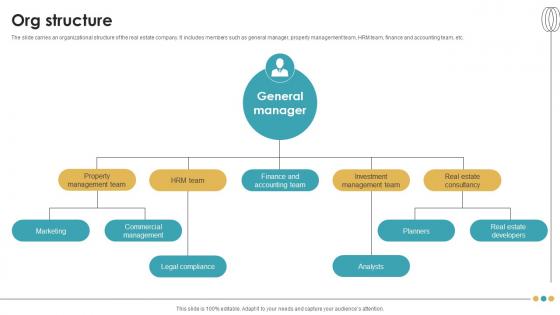
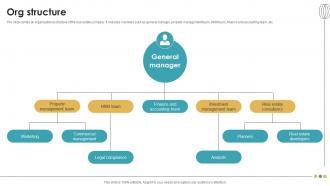
The slide carries an organizational structure of the real estate company. It includes members such as general manager, property management team, HRM team, finance and accounting team, etc.
People who downloaded this PowerPoint presentation also viewed the following :
Org Structure Real Estate Platform Investor Funding Elevator Pitch Deck with all 9 slides:
Use our Org Structure Real Estate Platform Investor Funding Elevator Pitch Deck to effectively help you save your valuable time. They are readymade to fit into any presentation structure.








FAQs for Org Structure Real Estate Platform Investor Funding
Start with the problem-solution thing - investors eat that up every time. Hit the basics: what you're solving, your fix, market size, how you make money, any traction you've got, and why your team rocks. Honestly, don't get too caught up in lengthy product demos. They want to see the market opportunity and that you can actually grab it. Show why now makes sense and why you're the ones to pull this off. Oh, and your financials better be solid. End with exactly what you need money-wise and when, so they know what's expected.
Dude, stories beat spreadsheets every time. Numbers are boring - but when you wrap them in a narrative about actual people with real problems? That's when investors start caring. I've watched pitches with mediocre metrics get funded just because the founder told this crazy compelling story about their customer's struggles. Plus it gives your whole pitch structure - problem, solution, big vision. Honestly, lead with your "holy shit" moment or a specific customer example. Gets them hooked right away, then everything else just clicks into place.
Stick to 10-12 slides max – that's like 10-15 minutes of talking, which gives you tons of time for questions (that's the good stuff anyway). I've watched so many founders kill their pitch with 25+ slide monsters. Nobody cares about slide 18, trust me. Hit your main points: problem, solution, market size, some traction if you've got it, team, and what you need. Your job isn't explaining every tiny detail – it's getting them interested enough for a second meeting. Save the spreadsheet deep-dive for later. Keep it snappy and you'll actually hold their attention.
Angels want the emotional hook - they're usually ex-founders who get the struggle. Tell them your story, why this problem keeps you up at night, stuff like that. VCs though? Show them the money trail. Market size, growth metrics, how you'll scale to a massive exit. Both want returns obviously, but angels invest more with their feelings. Lead with traction numbers when you're pitching VCs - they live and breathe spreadsheets. Honestly, I've seen founders mess this up by using the same pitch for both. Make angels feel your vision, make VCs see dollar signs.
Biggest thing? Don't dump a million technical details on them - investors hate that. Your financials need to be rock solid too, that's where people totally bomb. Skip the endless problem setup and get to your actual solution faster. Practice your timing so you're not racing through slides like a maniac. Clean presentation, know your competition cold, and for the love of god have realistic projections ready. Honestly the market size question comes up every single time, so prep for that. Just rehearse until it flows naturally instead of sounding robotic.
Honestly, your deck design matters way more than you'd think. Investors judge you in like 3 seconds flat based on that first slide alone. If it looks clean and professional, they'll assume you're organized and serious about your business. But throw together something messy with weird fonts? They're already thinking you probably half-ass other stuff too. I've literally watched great pitches die because the slides looked terrible - such a waste. Keep everything simple and consistent so they actually listen to what you're saying instead of getting distracted by your design choices.
Dude, focus on the metrics that actually matter - revenue growth, gross margins, and that CAC to LTV ratio. Those show your business model isn't just wishful thinking. If you're SaaS, MRR is everything. Burn rate and runway? Critical - investors need to know how long their cash will keep you alive. Most pitch decks are stuffed with BS vanity metrics, so real unit economics will seriously set you apart. Don't forget your path to profitability timeline either. Oh, and keep slides clean - you want them grilling you about the numbers, not struggling to read microscopic charts. Trust me on this one.
Dude, you gotta get real proof, not just "I think people want this." Pre-orders are gold. So are signed letters saying companies actually want your product. Waitlist numbers work too - basically anything showing real demand. Customer testimonials hit different though, especially when someone's like "yeah we'd totally pay for this." Third-party stuff helps validate your claims - market research, analyst reports, that kind of thing. Mix your own data with outside validation. Even if you're super early, start collecting this now. Trust me, investors see through wishful thinking pretty fast.
Look, investors want to see you actually get your market - competitive analysis proves you're not delusional. Having competitors is good! It shows real demand exists. But here's the thing: don't bash them like some amateur. That just makes investors think you're missing something obvious. Instead, be honest about what they do well, then explain why you're still gonna win. Maybe it's your tech, pricing, whatever - just make it clear. The goal isn't proving you have zero competition (red flag honestly), it's showing you can realistically grab market share from the players already there.
So here's what I wish I'd known earlier - anticipate their objections and work your answers right into the pitch itself. Don't wait for Q&A! Research the usual concerns for your space first. Market size, competition, whether your team can actually pull this off. Then during your presentation, say stuff like "You're probably thinking the market looks crowded, but here's what makes us different." I got totally caught off guard once and it sucked. Shows you've thought things through, which investors love. Oh, and definitely have backup slides ready for when they want to dig deeper into the tricky stuff.
Ok so first thing - record yourself on your phone because you probably say "um" way more than you realize (I definitely do). Actually speak it out loud, don't just run through it in your head. The goal is making it sound like a normal conversation, not some robotic script you memorized. Tell them a story instead of just listing facts. Way more engaging. Also figure out the objections they'll probably throw at you and have answers ready. Oh and definitely practice on friends first! Get their honest feedback before you're sitting across from actual investors. End with a specific ask too - be super clear about what you want from them.
Bigger fonts are your friend - like, way bigger than you think you need. Screens are all different sizes and some people will be squinting at phones. Don't cram words everywhere since someone's audio will definitely cut out at the worst time (Murphy's law of Zoom calls). Your slides should make sense even without narration. I'd throw in slide numbers too - makes Q&A way less awkward when people can just say "slide 7." Keep visuals clean but punchy. Oh, and practice with whatever platform you're actually using, not just PowerPoint. Trust me on that one. Have your backup ready because technology loves to fail during important moments.
Definitely get that follow-up out within 24-48 hours max. Send your pitch deck, financial projections, and any supporting stuff like market research or customer testimonials. I'd toss in a one-pager summary too - honestly, investors are drowning in pitches so a quick recap helps. Don't forget exec team bios and competitive analysis. Did they ask specific questions during your pitch? Address those directly in the email. Oh, and organize everything as PDFs in a clean folder structure. Nobody wants to hunt through messy files. Quick thank-you note reiterating your ask and next steps rounds it out nicely.
Just be yourself, seriously. Don't try to put on some fake "entrepreneur voice" - investors see through that instantly. Tell them the real story of why you started this thing. What problem was driving you crazy enough that you HAD to solve it? Your energy should naturally light up when talking about your product because you genuinely care about it. Skip the word-for-word script approach - that sounds terrible. Know your main points but let it feel like an actual conversation. I mean, you're already excited about this or you wouldn't be doing it, right? Practice like you're explaining it to a buddy over coffee.
Honestly, just go with PowerPoint or Google Slides - they're boring but everyone can actually open them. Canva's pretty solid if you suck at design (their templates are decent). There's also Pitch.com which is built specifically for this, though it's still kind of new. Figma gives you more control if you're into that. But here's the thing - VCs have literally seen thousands of these decks. The fancy tool won't save a crappy story. Focus on nailing your numbers and narrative instead. Oh, and whatever you pick, definitely export a PDF backup. I've seen people's presentations completely break during demos. Test it on different screens first too.
-
SlideTeam makes creating presentations easy. Unlimited products, premium quality designs and affordable.
-
Good research work and creative work done on every template.