

Sicherheitsdienst-Unternehmensprofil




Try Before you Buy Download Free Sample Product
 Impress Your
Audience
 100%
Editable
 Save Hours
of Time


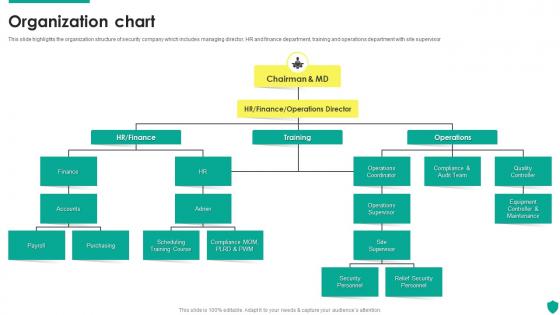
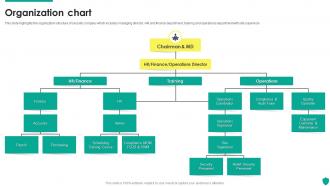
Die Organisationsstruktur des Sicherheitsunternehmens umfasst den Geschäftsführer, die Personalabteilung und Finanzen, die Abteilung für Schulung und Betrieb mit einem Standortleiter.
People who downloaded this PowerPoint presentation also viewed the following :
Inhalt dieser Powerpoint-Präsentation
Stellen Sie sich vor, Sie haben einen neuen Mitarbeiter eingestellt, der Fragen stellt wie "Wer ist er?", "Wofür ist er verantwortlich?", "Wer ist der CEO?", "Wer ist der Abteilungsleiter?" und so weiter.
Es ist nicht die Schuld der Person! Ihre Neugier auf die Organisation und der Eifer, sich mit jedem anderen Mitarbeiter vertraut zu machen, treiben ihre Nachfragen an.
Denken Sie nun an eine Situation, in der Sie neuen Mitarbeitern eine Übersicht über die Organisationshierarchie geben, einschließlich der jeweiligen Rollen und Verantwortlichkeiten jedes Mitarbeiters. Ein solches Organigramm könnte neuen Mitarbeitern helfen, die Unternehmensstruktur zu visualisieren und einen Eindruck von den Rollen und Verantwortlichkeiten jedes Mitglieds, den Abteilungsinformationen und der Beziehung zueinander zu bekommen. Es kann hierarchisch, flach, Matrix- oder divisionsbasiert sein, wobei die miteinander verbundenen Beziehungen leicht von den Top-Führungskräften bis zu den unteren Führungsebenen gesehen werden können.
Die Erstellung eines solch komplexen Organigramms wäre gleichermaßen mühsam. Wenn Sie nur ein "Organigramm" hätten, um einen schnellen Überblick über die Unternehmensstruktur auf einen Blick zu geben, die Kommunikationslinie zu etablieren und auch den Entscheidungsprozess zu fördern.
Wir haben eine Lösung.
Die Organigramm-Vorlage von Slideteam kann in Situationen verwendet werden, in denen Sie die Kommunikation optimieren und eine klare hierarchische Autorität etablieren möchten. Unsere Präsentationsvorlage ist vollständig anpassbar, um Ihren organisatorischen Machtfluss und die Verteilung von Verantwortlichkeiten darzustellen. Darüber hinaus kann sie in jeder anderen Branche eingesetzt werden, um Ziele abzustimmen und den Personalbedarf zu ermitteln.
Insbesondere geht es in dieser Anleitung um das Organigramm von Slideteam für ein Sicherheitsdienstunternehmen. Lassen Sie uns eine kurze Erklärung dieses PPT-Designs geben:
Vorlage 1: Organigramm für Sicherheitsdienstleistungen
Organigramm

Diese PPT-Folie enthält ein Organigramm für ein Sicherheitsdienstunternehmen, in dem Sie die Rollen von CEO, Personalwesen, Finanzen und Operativem Direktor definieren können. Es ist eine klare Darstellung der Berichtsstruktur in einem Sicherheitsdienstunternehmen, in der die Führungskräfte der obersten Ebene und die Führungskräfte an vorderster Front ihre Verantwortlichkeiten innerhalb der Organisation kennen. Vorgesetzte werden ihre Aufsicht durch die Berichtsbeziehungen und Teamdynamik zur Unterstützung der Direktberichte verbessern. Verwenden Sie diese Präsentationsvorlage, um das Organigramm zu strukturieren und einen Überblick über die gesamte Organisation zu geben. Sie können damit alle formellen Beziehungen visuell abbilden und eine Kommunikationslinie aufbauen, die es allen ermöglicht, bei Bedarf die betreffende Person zu erreichen. Ein weiterer Vorteil der Verwendung dieses PPT-Layouts besteht darin, dass Sie eine langfristige Planung vornehmen können, indem Sie einfach einen Blick auf das Organigramm werfen, was Ihnen hilft, Eventualitäten oder Systemstörungen sofort zu beheben.
Navigieren Sie durch das Organigramm, um die Personalausstattung auszurichten und zu stärken
Sie wissen, dass Organigramme eine Hilfe sind, wenn es darum geht, große Entscheidungen zu treffen. Ob Sie den Personalbedarf analysieren, Aufgaben zuweisen oder einfach nur verfolgen möchten, was andere tun - ein Organigramm ist der richtige Weg, um alles auf einen Blick zu sehen. Mit unserer Organigramm-PPT-Vorlage können Sie die Kommunikation optimieren und gleichzeitig die Transparenz der Rollen erhöhen. Damit können Sie eine klare Befehlslinie sicherstellen, in der jeder seine Rolle und den Vorgesetzten kennt, dem er berichtet. Sie bauen eine Kultur der Zusammenarbeit und Kooperation auf, die Ihnen langfristig zum Erfolg verhelfen wird.
Sicherheitsdienst-Unternehmensprofil mit Organigramm: Slide 1: Unternehmensprofil Slide 2: Organisationsstruktur Slide 3: Führungskräfte Slide 4: Dienstleistungen Slide 5: Qualifikationen und Ausbildung Slide 6: Kontaktinformationen
Unser Organisationsdiagramm für Sicherheitsdienste können Sie nutzen, um Ihre wertvolle Zeit effektiv zu sparen. Sie sind fertig erstellt und passen in jede Präsentationsstruktur.





FAQs for Organization Chart Security Guard
So most security companies have the CEO/Owner up top, obviously. Operations Manager runs the daily chaos. Site Supervisors handle specific client locations while Field Supervisors basically live in their cars checking on guards all day - seriously, the mileage on those company vehicles is insane. Then your actual Security Officers doing the real work. HR deals with hiring and training new people. You'll also see Scheduling Coordinators juggling shifts and Account Managers keeping clients happy. Bigger outfits sometimes throw in a Training Director too. Quick tip though - if their org chart looks like spaghetti with weird reporting lines, that's a red flag for communication problems later.
Dude, having a solid org chart is a game changer for security ops. When incidents happen, your guards instantly know who to call - supervisor, shift manager, or straight to the ops director. No wasted time figuring out the chain of command. Short sentences work. Then you avoid that nightmare where multiple people think they're handling the same breach because nobody knows whose job it is. I've seen that mess happen way too often at poorly run sites. Post your command structure somewhere visible so everyone can reference it. Trust me, it's like the difference between having directions versus driving around completely lost.
So most security companies have pretty predictable structures. You've got CEO/Owner at the top, then usually a General Manager underneath. Middle management is your Regional Managers handling multiple sites, plus Site Supervisors for daily stuff. Field Supervisors or Shift Leaders are basically senior guards who deal with scheduling headaches. Regular Security Officers do the actual work at the bottom. Bigger companies might have Training Coordinators or Account Managers thrown in too. Honestly, the reporting lines matter way more than job titles - that's who controls your schedule and decides if you're having a good day or not.
Dude, org charts are a lifesaver for this stuff. Your guards will actually know who to call instead of just hitting up whoever answers first - trust me, you don't want that chaos. Response times get way better because supervisors know their people. New hires can figure out the pecking order without asking a million questions. Information flows up and down smoother too. Honestly, I'd stick updated charts in all your guard stations and make sure everyone has their supervisor's contact saved in their phone. Makes everything less of a headache.
The flat vs hierarchical thing is brutal when you've got multiple sites. Communication gets messy fast. For emergencies you need clear command chains, but too many management layers just slow everything down and kill your margins. 24/7 operations make it worse - different clients want different things at each location. High turnover means you're constantly reshuffling people. Supervisors, guards, admin staff, client relations people... everyone needs their lane defined. Honestly? Map out how info actually flows in your company first, then build around that reality instead of some textbook org chart. Most security companies get this backwards and wonder why nothing works smoothly.
So basically, your org structure should grow with your headcount. When you're small, it's just the owner, maybe a supervisor or two, and your guards - everyone does everything. Medium-sized? You start getting department heads for ops, sales, HR. Big companies go nuts with regional managers, specialized teams like K-9 units, compliance people, the whole nine yards. I swear it's wild how fast a simple family business turns into this corporate machine. Don't make your structure too complicated though - if you've got 20 people, you don't need 5 management layers. Match the complexity to what you actually need.
So there's Event Security Coordinators doing logistics and crowd stuff, then Corporate Security Managers handling facilities. Executive Protection Officers are a thing too - honestly those corporate titles get ridiculous sometimes. You've got Operations Supervisors running daily stuff, Training Coordinators keeping everyone certified, Client Relations people managing contracts. Oh, and Cyber Security Liaisons if you're into that. Really depends what services you're focusing on though. Event companies need more logistics roles while corporate security is all about risk assessment positions. I'd figure out your main services first, then build around that.
Dude, the security industry is totally different now. Companies are hiring cybersecurity analysts and drone operators like crazy. Even regular security guards need to know how to use surveillance tech and apps - it's not just walking around with a flashlight anymore. Data analysts are reviewing camera footage (which honestly sounds boring but pays well). You'll also need IT support people, remote monitoring specialists, and someone to train everyone on the new systems. My cousin works for a security company and says half their org chart didn't exist five years ago. Start planning for these hybrid roles before you get left behind.
So basically, your org chart becomes this visual roadmap for everyone's career growth. New hires can see exactly where they might end up - from guard to supervisor to ops manager. Makes training so much more focused since people know what skills they need for the next level up. I'd definitely use it during onboarding to get people excited about their future here. Plus you'll spot gaps pretty quick - like realizing nobody has the right certifications for certain roles. Honestly beats having everyone guess what comes next. Reference it when you're doing development plans too.
So looking at the org chart, they've got compliance built right into the structure. There's a Compliance Officer reporting straight to senior management, which is good. Training Coordinators sit under HR and handle all the licensing stuff for guards. Each supervisor level has their own compliance duties too - way more organized than my last security gig, tbh. The reporting chain makes it super clear who's responsible for background checks, certs, and training updates. Your regional manager can break down how it works for your specific team if you need details.
You'll need three main roles working together: Operations Manager, Shift Supervisors, and Field Guards. Think of it like a chain - your Ops Manager deals with clients and scheduling, Shift Supervisors are the middlemen keeping everyone connected, and Field Guards are your eyes and ears reporting back. Communication flows both ways too - policies come down from management while incidents get reported up. Without good communication between these levels? Total disaster, trust me. Set up regular check-ins and clear protocols so nobody's left guessing what to do.
Set up regions first - North, South, whatever makes sense for your coverage areas. Put a regional manager over each one. Under them, copy the same setup everywhere: ops manager, shift supervisors, then your actual guards. Trust me, you'll thank yourself when there's a 2am crisis and people know exactly who to call. CEO sits at the top obviously. The tricky part is figuring out what stays corporate (HR, training, big client stuff) versus what each location handles on their own. Keep the chain of command super clear though - nothing worse than confusion during an actual incident.
Start with client retention and how fast your team responds to calls - that's your real test. Employee turnover will kill you in this industry, so watch those numbers like a hawk. Check if your supervisors are managing too many people at once. Also track how well info flows from dispatch down to the actual guards on site. Training completion rates matter too, plus how accurately incidents get reported back up the chain. Honestly, communication breakdowns are where most security companies screw up. Benchmark your current response times first, then fix the worst problem areas one by one instead of changing everything at once.
Look, quarterly is the bare minimum, but monthly makes way more sense if you're dealing with the usual security industry chaos - people quitting left and right, new contracts popping up. Update it whenever you promote guards, add sites, or shuffle teams around. Nobody wants to be looking at some ancient chart from six months ago wondering who half these people even are. Keep it straightforward though - guards just need to know their chain of command and who to bug when stuff hits the fan. Oh, and actually get the new version out to all your sites. Sounds obvious but you'd be surprised how often that gets forgotten.
Your company's culture totally drives how you set up that org chart. Military-style places? You'll see those rigid supervisor-to-guard lines everywhere. But if you're more team-focused, it gets flatter - maybe just team leads instead of formal bosses. Some cultures want specialists for each area, others cross-train everyone. I swear, I watched one company redo their whole structure just because the new CEO wanted a "different energy" (whatever that means). Point is, design it around how your people actually communicate and work, not some cookie-cutter format you found online.
-
Impressive templates. Designing a presentation is fun now!
-
Such amazing slides with easy editable options. A perfect time-saver.