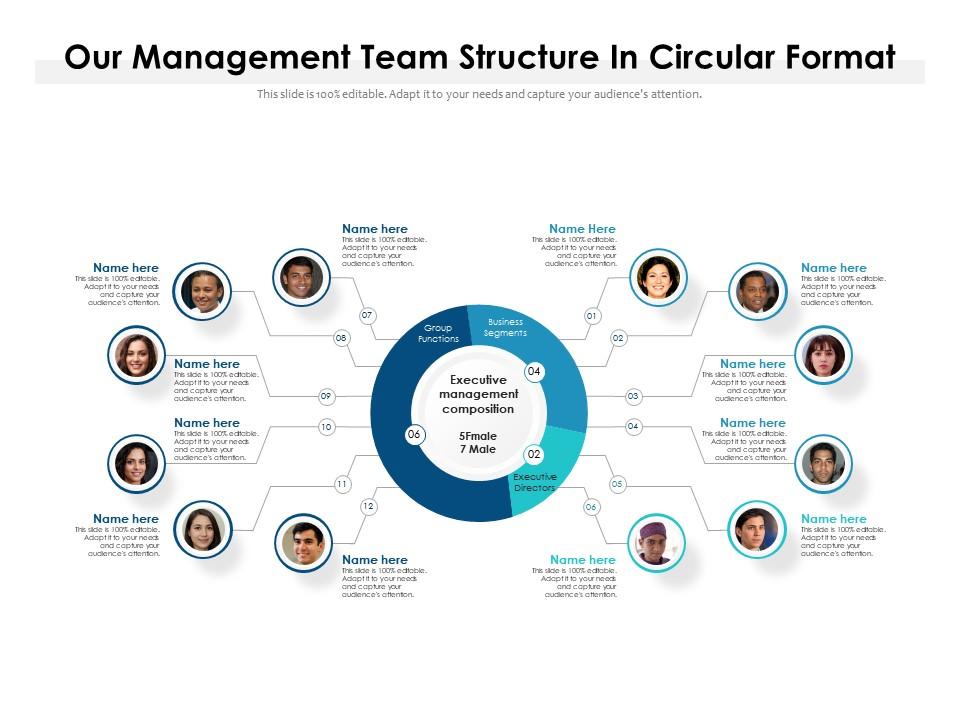
Our management team structure in circular format
Try Before you Buy Download Free Sample Product
Audience
Editable
of Time
Our Our Management Team Structure In Circular Format are topically designed to provide an attractive backdrop to any subject. Use them to look like a presentation pro.
People who downloaded this PowerPoint presentation also viewed the following :
Our management team structure in circular format with all 2 slides:
Use our Our Management Team Structure In Circular Format to effectively help you save your valuable time. They are readymade to fit into any presentation structure.
FAQs for Our management team structure
So basically you've got your CEO/President running the show, then underneath that it's usually your main department heads - CFO for money stuff, COO for operations, CMO for marketing, CTO handling tech, CHRO for HR. Depending on company size, there might be VPs or directors below them too. Honestly some places go crazy with titles but whatever. The trick is making sure each person owns their area without stepping on each other's toes. They still gotta collaborate on big decisions though. I'd figure out what functions you actually need covered first - no point having a fancy org chart if it doesn't match reality.
Honestly, good communication fixes like 90% of team drama. When managers are upfront about what matters most and what they expect, nobody's scrambling around confused or working off old info. I've seen teams waste weeks because someone assumed a different timeline - so frustrating! Regular check-ins help too, maybe weekly leadership calls where you can catch problems before they blow up. People actually trust their bosses more when they're not kept in the dark about decisions. Bottom line: if everyone knows what's happening, they'll stop working against each other.
Honestly, it depends what your team's actually doing day-to-day. Slack's great for quick chats, Teams if you're already in Microsoft land. For tracking stuff, Asana's pretty user-friendly - Monday.com too but it can get pricey. Miro's clutch for brainstorming when you can't all be in the same room. Google Workspace handles docs well if that's mostly what you need. But here's the thing - don't go crazy with tools. Pick maybe 2-3 max that actually talk to each other. I've seen teams drown in like 10 different apps and it's a mess. Start simple with communication + project tracking, then see what else you're missing.
Honestly, team size is everything when you're trying to get decisions made. Keep it to 3-5 people and you'll move fast, though you might miss some key insights. Go bigger and sure, you get more brains in the room, but then you're stuck in those painful meetings where everyone talks in circles. I've learned the hard way that 5-7 people max usually works best - any more and it's chaos. Oh, and don't feel bad about keeping certain meetings small even if people get annoyed they weren't invited. Match the team size to how complex the decision is and you'll be fine.
First thing - map out who actually talks to each other daily, then build around those connections. Most managers can handle 5-8 people (though honestly depends on how messy the work gets). Group by expertise and natural workflows. Career paths matter too - think about who'd be good mentors for who. Geography's a pain if you're spread out, so factor that in. Oh, and don't forget about span of control - some people are just better at managing larger groups than others. Start with the communication patterns though, that's your foundation right there.
Look, when you've got people from different backgrounds on your team, they just think about stuff differently. Someone with a finance background sees risks I'd totally miss. Cultural differences matter too - what seems obvious to me might be completely wrong in another market. It's honestly pretty cool how it works out. You end up with way better solutions because nobody's thinking the exact same way. Plus you avoid those stupid mistakes that happen when everyone just agrees with each other. My advice? Don't hire people who remind you of yourself. Find the gaps in how your current team thinks, then fill those spots.
Communication breakdowns are the worst - like when everyone thinks someone else is handling the critical stuff. Plus you get those messy decision-making situations where strong personalities clash over priorities. I swear, some teams waste entire meetings just to rehash the same problems next week. It's honestly exhausting to watch. Resource fights happen constantly too, and clashing leadership styles? That's a whole other nightmare. Set up clear processes early though. Regular check-ins help you catch tensions before they blow up completely.
Your management setup basically shapes everything else that happens. Flat structures? People collaborate more and decisions happen faster since everyone feels like they can actually speak up. Hierarchical ones create clearer accountability but honestly, things can drag when everyone's waiting for approval from three levels up. Here's what I've noticed though - teams copy whatever their leadership does. Transparent managers breed transparent employees. So take a hard look at your current structure. Is it actually creating the culture you want, or just the one you accidentally ended up with?
Honestly, weekly one-on-ones are a game changer - way better than those quarterly reviews everyone forgets about. Set specific goals people can't wiggle out of and make progress visible on a shared board or something. The hard part? Actually following through when someone drops the ball. Don't let things slide or the whole system becomes pointless. Oh, and document who owns what by Friday - sounds basic but you'd be surprised how often that step gets skipped. Consistent check-ins where people actually report back make all the difference.
Dude, project management tools are a total game-changer for cutting out pointless meetings. I've been using Asana lately and it's wild how much you can track without bugging people constantly. Shared dashboards show everyone what's going on in real-time, so no more "quick sync to align on deliverables" torture sessions. Slack's pretty solid too - you can get approvals super fast instead of waiting three days to schedule something. My old boss was obsessed with status meetings though, drove me nuts. Just pick one tool that fixes your biggest headache first, then expand from there.
Dude, your leadership style literally sets the vibe for everything. Collaborative leaders? Their teams talk openly and bounce ideas around constantly. More autocratic approach means people just sit there waiting to be told what to do. I've watched entire teams flip overnight when they got a new manager - honestly kind of crazy how fast it happens. The way you handle decisions and give feedback directly impacts whether people feel comfortable or like they're walking on eggshells. Your team's gonna mirror whatever energy you bring, so you might as well be deliberate about it.
Honestly, mix hard numbers with the softer stuff. Check retention rates, productivity metrics, and how often teams actually hit their goals. But here's what really matters - those engagement surveys will tell you everything about whether your managers suck or not. Also track things like revenue per team and project completion rates. The 360 feedback thing is pretty revealing too. I'd probably throw in some cross-team collaboration scores since that shows if people can actually work together. Set up quarterly reviews where you all sit down and look at this data together. You'll start seeing patterns real quick.
Dude, cross-functional teams are honestly amazing for breaking down those stupid silos between departments. Instead of marketing and engineering never talking, everyone's actually in the same room figuring stuff out together. Decisions happen way faster since you're not waiting for five different managers to play telephone. Problem-solving gets better too because you've got different perspectives right there. Your people pick up new skills working outside their usual bubble - which is pretty cool for their careers. Only tricky part is you need solid goals and someone who can wrangle all those personalities without losing their mind.
Honestly, start with making people feel safe to mess up - nobody's gonna take risks if they think you'll tear them apart. Give them actual time to experiment, like 20% of their week or whatever works. I've watched so many "innovation programs" crash because everyone's buried in regular work stuff. Mix up your teams so different departments can bounce ideas off each other. Oh, and here's the big one - throw a party when someone fails intelligently. Sounds weird but it works. When people see you genuinely celebrating smart risks that flopped, they'll start taking more chances.
First figure out what you're actually struggling with as a manager, then find programs that hit those specific pain points. Communication and conflict resolution training are huge - way more useful than generic leadership stuff, honestly. Executive MBA courses are fine but I'd go for hands-on coaching or 360-feedback programs instead. The scenario-based ones with peer mentoring work best since managing is basically all people skills anyway. Oh, and if your industry has weird processes or whatever, those specialized leadership certs can be worth it too.
-
Topic best represented with attractive design.
-
Designs have enough space to add content.
-
Visually stunning presentation, love the content.
-
Topic best represented with attractive design.
-
Presentation Design is very nice, good work with the content as well.
-
Awesome presentation, really professional and easy to edit.
-
Qualitative and comprehensive slides.