


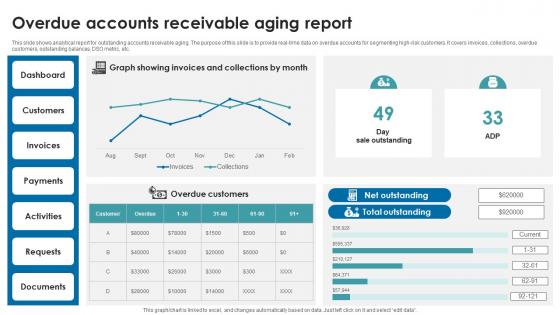
Overdue accounts receivable aging report




Try Before you Buy Download Free Sample Product
 Impress Your
 Audience
 100%
100% Editable
 Save Hours
 of Time


This slide shows analytical report for outstanding accounts receivable aging. The purpose of this slide is to provide real time data on overdue accounts for segmenting high risk customers. It covers invoices, collections, overdue customers, outstanding balances, DSO metric, etc.
People who downloaded this PowerPoint presentation also viewed the following :
Overdue accounts receivable aging report with all 10 slides:
Use our Overdue accounts receivable aging report to effectively help you save your valuable time. They are readymade to fit into any presentation structure.









FAQs for Overdue accounts
Start with automated invoicing and payment reminders - honestly that's the lowest hanging fruit. Set up aging reports so you can see who's actually behind (not just guessing). Don't just copy everyone else's "net 30" terms either - figure out what actually works for your industry. Have someone consistently following up, whether it's you or a team member. Clear credit policies upfront save you so much headache later. Oh and build a proper collections workflow once you get the automated stuff running. The aging reports basically tell you exactly where to focus your energy first.
Honestly, start invoicing the second you deliver - that alone makes a huge difference. Offer early payment discounts if you can swing it, and yeah, you'll have to chase down overdue accounts even though it's uncomfortable. Most people are way too generous with credit terms... like why give everyone 60 days? Set up automated reminders so you're not doing it manually. New customers should probably put down deposits. Track your collection period each month - it's boring but you'll catch issues before they get worse. The whole point is getting paid faster, not just more sales volume.
Dude, start with automated invoicing - that alone will save you hours every week. Your payment reminders and follow-ups can run on autopilot too. Online payment portals are a game changer because customers actually pay faster when it's convenient (who knew, right?). The dashboard stuff shows you exactly who owes what in real time, so no more guessing. Everything syncs with your ERP automatically, which means way fewer screw-ups from manual data entry. Honestly, I was skeptical at first, but automating the tedious paperwork frees you up for actual business stuff.
Get those invoices sent right after you deliver - don't wait around. Make payment terms super obvious (like "Net 30") and put the due date where they can't miss it. Honestly, I've seen invoices that look like ancient scrolls nobody can decode. Send them electronically if possible since it's way faster. Break down every charge so there's zero confusion about what they're paying for. Following up is key, but don't be annoying about it. Oh, and this might sound obvious but offer different payment methods - credit card, ACH, whatever. Makes it painless for them to actually pay you.
Dude, aging reports are lifesavers for chasing down overdue invoices. You'll see exactly who owes what and for how long - way better than randomly calling people hoping they'll pay up. Focus on the oldest or biggest amounts first, obviously. Plus you start noticing patterns, like how Jim from that construction company is literally always 30 days behind (seriously, set a calendar reminder at this point). I usually do gentle nudges for anything under 30 days, then get more direct after that. Just run them weekly and actually DO something with the info, don't just print and forget.
Ugh, the payment stuff is brutal. Slow payers are the worst, but then you've got people who just ghost you completely. Tracking everything gets messy fast too - like, who paid what and when? Your cash flow turns into this constant stress when invoices just sit there for months. Plus you're stuck chasing people down all the time, which honestly feels degrading sometimes. The payment terms you set up initially probably won't work anyway. Set up those automated reminders though, and be super direct about when you expect payment. Trust me, spell it out from day one or you'll regret it.
Dude, respond super fast when customers complain about invoices - like within 48 hours max. Have all your backup ready: contracts, receipts, work orders, whatever proves you're right. Honestly, the longer you wait, the worse it gets. Document literally everything - every call, every email. Trust me, you'll need that paper trail later if things go south. Stay professional even when they're being ridiculous (hardest part tbh). Oh, and make sure your whole team knows the exact steps to follow. I've seen too many businesses get burned because they didn't have their stuff together from the start.
Honestly, most businesses are way too soft on this stuff. Tighten your payment terms and actually stick to them - set clear due dates, send reminders before things are overdue, then follow up immediately after. Early payment discounts work pretty well too, like 2% off if they pay within 10 days. I know a guy who cut his late payments in half just by staying on top of people consistently. Oh, and definitely check credit on new customers upfront. Pick your three worst repeat offenders and put them on a stricter schedule first - once word gets around that you're serious, others will start paying on time.
So basically your credit policies control who gets credit and how much - that directly hits your accounts receivable and how fast you get paid. Tighter rules mean fewer bad debts but you might lose sales. There's always that balance, you know? Looser policies can pump up revenue but then you're stuck with more collection headaches and cash tied up in unpaid invoices. Focus on three things: your approval process, payment terms, and how you collect. Honestly, I'd check these every quarter to make sure they still match your customers and cash flow situation.
So there's a few things you really need to watch. DSO is huge - that's how long it takes to actually get paid, and you want 30-45 days max. Run your aging report weekly too, breaks down who owes what and for how long. Honestly, those two metrics alone will tell you if you're in trouble. Collection effectiveness shows if you're actually good at getting money (versus just hoping), and obviously track your bad debt ratio. Oh and turnover ratio measures how fast you turn sales into actual cash. I'd start with DSO and aging reports first though - way easier than diving into everything at once.
Look, these AR companies are way better at the "um, you owe us money" calls than your team will ever be. They've got systems down to a science and honestly don't feel weird about being pushy. Your cash flow improves pretty quickly since they're constantly following up - like, it's literally their only job. Meanwhile your people can actually focus on growing the business instead of playing phone tag with deadbeat customers. Just make sure you crunch the numbers first because some of these services aren't cheap, but the faster payments usually make it worth it.
Honestly, a good CRM totally transforms your AR game. You'll catch payment patterns way easier when everything's in one spot - customer history, past conversations, all of it. Automated follow-ups are a lifesaver too, cuts down so much manual work. Here's the thing though - customers actually pay faster when they feel like you know their business personally. I'd focus first on getting your payment history synced up with customer interactions. Oh, and targeted reminders work way better than generic ones. You can spot problems early instead of chasing people down later.
Seasonal changes totally throw off your AR - payment timing gets weird, collection periods shift around, and cash flow becomes unpredictable. Peak seasons? Customers delay payments since they're buying more inventory. Slow periods mean faster payments but fewer orders. It's honestly a pain to manage. I'd suggest tweaking your credit policies based on these patterns - maybe seasonal payment terms or stepping up collections before you hit those rough patches. Oh, and definitely track AR aging by season. Way better to plan for this stuff than scramble when it hits.
Dude, first thing - don't be that company that calls at 9pm or threatens people. The Fair Debt Collection Practices Act will bite you in the ass if you do. Write everything down, keep it factual, no scary language. Double-check you've got the right person and the debt's actually legit and not too old. I swear, some businesses think they can just bulldoze people and wonder why they get sued. Stay professional but firm. If it gets messy, just hire a decent collection agency - honestly way less headache than dealing with it yourself.
Your AR aging reports are goldmines for predicting actual cash flow. I track how long each customer typically takes - like if Company X always pays in 45 days, I build that into forecasts instead of pretending they'll hit their 30-day terms. Spoiler alert: they won't. Also check your collection rates by age bucket so you know what percentage of those 60+ day receivables you'll probably write off. Way more accurate than just staring at due dates and hoping for the best.
-
I had them make a presentation for an office retirement party. They were very helpful in understanding what we wanted and delivered the perfect presentation. Highly recommended!
-
Their products can save your time, effort and money. What else you need. All in one package for presentation needs!