Working Capital Dashboard With Accounts Receivable And Payable

Rating:
80%
Working Capital Dashboard With Accounts Receivable And Payable
Slide 1 of 7
Favourites Favourites

Try Before you Buy Download Free Sample Product

Audience Impress Your
Audience
Editable 100%
Editable
Time Save Hours
of Time
The Biggest Sale is ending soon in
0
0
:
0
0
:
0
0
Rating:
80%
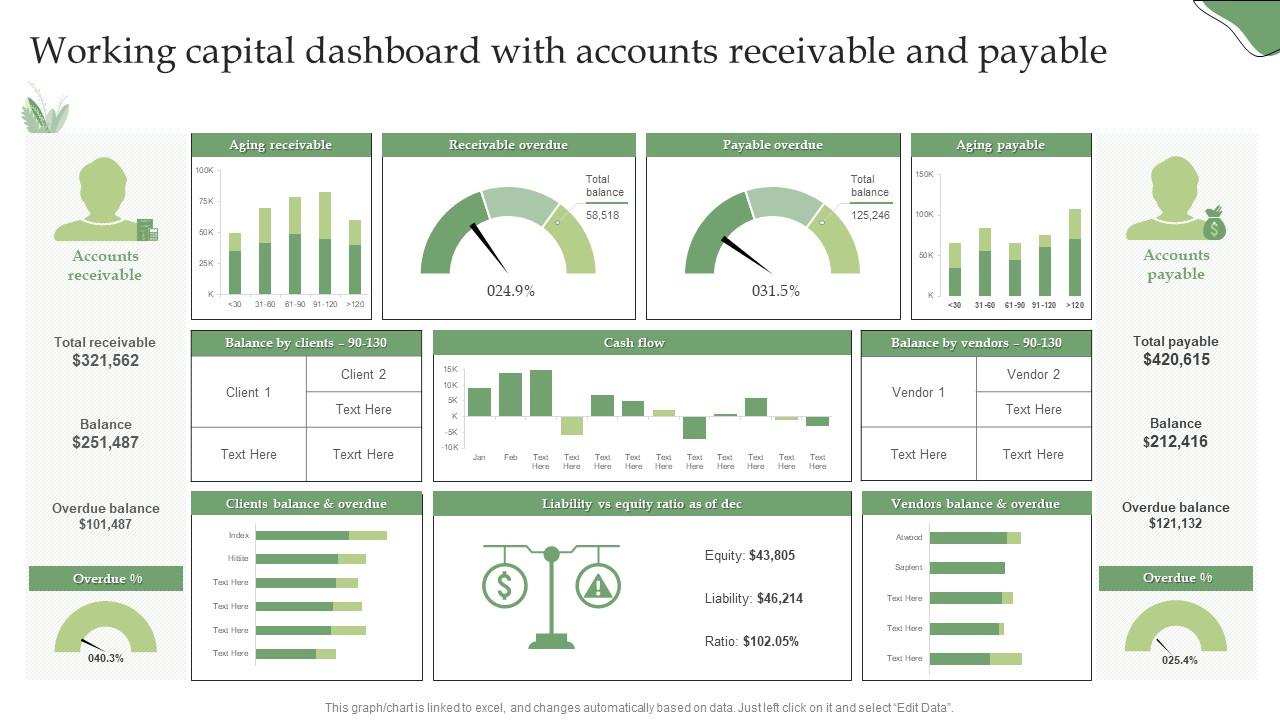
Presenting our well-structured Working Capital Dashboard With Accounts Receivable And Payable. The topics discussed in this slide are Aging Receivable, Receivable Overdue, Payable Overdue, Aging Payable. This is an instantly available PowerPoint presentation that can be edited conveniently. Download it right away and captivate your audience.

FAQs for Working Capital Dashboard With Accounts

Working capital = current assets minus current liabilities. Cash, inventory, stuff you can collect within a year, minus short-term debts. You need this buffer to pay suppliers and employees while waiting for customers to actually pay you. Low working capital? You'll be scrambling to cover basic expenses (trust me, it sucks). But hoarding too much cash isn't smart either - that money should probably be working harder for you. I'd check your working capital ratio monthly. Honestly, most people ignore it until they're already in trouble. Catches problems before they become real headaches.

Start with current assets minus current liabilities, but that's honestly just scratching the surface. The real game-changer? Map out your cash conversion cycle - receivables collection time, inventory turnover, supplier payment timing. Seasonal businesses get hit especially hard here, so break it down month by month. I swear, cash flow is way more unpredictable than people think. Build a 12-month rolling forecast and refresh it quarterly. Oh, and always pad it with a 10-15% buffer because random stuff will definitely mess with your plans.

Cash flow really comes down to four things: cash, inventory, accounts receivable, and accounts payable. Get customers to pay you faster. Stretch out payments to suppliers (within reason, obviously). And honestly? You're probably holding way too much inventory - most businesses are. These four components control whether you're constantly stressed about making payroll or actually sleeping at night. Calculate your current ratios for each one first so you know what you're working with. Once you nail this balance, daily operations become way less of a headache.

Think of working capital as your business's cushion for daily stuff. Positive working capital means you can actually pay bills and handle surprises without panicking. Go negative though? That's when banks start side-eyeing you because it screams cash flow issues. I always tell people to watch their current ratio - just divide current assets by current liabilities. Sweet spot is usually 1.2 to 2.0. Any higher and you're probably sitting on too much cash doing nothing. It's honestly one of those boring-but-crucial metrics that'll save your butt.

So basically you want to get paid faster, pay slower, and hold less stuff. Start with your cash conversion cycle - that'll show you where you're hemorrhaging money. For collections, try early payment discounts (way better than playing phone tag with deadbeat customers). Tighten up credit terms too. Inventory's probably your biggest cash suck though - get better at forecasting demand and push suppliers toward just-in-time delivery. Oh, and negotiate longer payment terms with vendors when you can. Just don't piss them off in the process. The whole game is speeding up what comes in while slowing down what goes out.

Oh man, seasonal cash flow is such a pain. You'll need way more money right before your busy season hits - think retailers stocking up for Christmas or lawn care companies prepping for spring. The tricky part? Your working capital spikes before the revenue actually comes in. During slow months you won't need as much, but honestly the swings can be brutal if you're not ready. I'd start tracking your patterns now and get a credit line set up like 6 months early. Don't wait until you're scrambling - banks hate that.

Here's what I've learned the hard way - inventory is basically cash that's stuck on your shelves instead of flowing through your business. The longer stuff sits there, the worse your cash situation gets. You'll want to track your turnover ratio and see how fast things actually move. I used to think more inventory was always safer, but honestly? It just creates problems. Look at what's collecting dust and figure out how to move it faster. The goal is having just enough stock to meet demand without tying up all your working capital in products that might sit around forever.

Okay so cash flow - invoice the second you deliver stuff, like same day. Don't wait around. Most people honestly just forget to pay (I do this all the time lol), so set up those automatic reminders. They actually work really well. You could also try early payment discounts - maybe 2% off if they pay in 10 days instead of 30. Oh and deposits help too, especially for bigger orders. If you can cut your collection time from 45 to 30 days, that's a ton of cash freed up for other things.

Dude, the two big ones that kill businesses? Being way too relaxed about when customers pay you, or completely botching your cash flow predictions. Like, you'll give someone 60-day terms but then scramble when your own bills are due in 30. Classic mistake. Inventory's another nightmare - you're either drowning in stuff nobody wants or constantly out of what people actually buy. Weekly cash flow checks will save your life, trust me. Also, ditch whatever ancient Excel sheet you're using (we're all guilty of this) and get serious about collecting what you're owed.

Basically when you borrow more money, your debt payments eat up way more of your cash flow. So you've got less sitting around for normal stuff - buying inventory, paying suppliers while waiting for customers to pay you back. Think of it like having a huge car payment that makes everything else in your budget super tight. Banks also love throwing restrictions at you about how much cash you can keep on hand, which honestly makes things even more annoying. Just watch your debt-to-equity ratio so you don't get screwed when you actually need that working capital.

Check your working capital ratio first - current assets divided by current liabilities. You want it between 1.2-2.0. Then break down the pieces: how fast you're collecting from customers (days sales outstanding), how long inventory just sits there, and how long you take to pay your own bills. The cash conversion cycle matters too because it shows how long your money's stuck in day-to-day stuff. I honestly think monthly tracking is the way to go since things change fast. Oh, and set up some alerts when these hit certain levels - way easier to catch problems early than scramble later.

Honestly, tech makes a huge difference with cash flow stuff. Start with automating your invoicing and payment reminders - I've seen companies cut their collection time by weeks just doing that. Real-time dashboards are game-changers too since you're not flying blind until month-end reports come out. AI forecasting sounds fancy but it actually works pretty well for predicting when you'll need cash. The inventory tracking automation helps, though that's more of a nice-to-have. Oh, and definitely connect your accounting system to your bank - saves so much manual work and those annoying data entry mistakes. AR automation first though, that's where the money is.

When customers pay late, your cash gets stuck in accounts receivable instead of your bank account. You're basically fronting money while still needing to cover payroll, suppliers, rent - all that fun stuff. It's honestly like when friends borrow money and conveniently "forget" to pay back, except way worse because it's your business. The longer they take, the tighter your cash flow gets. Track how long collections actually take on average. Maybe throw in some early payment discounts? Even 2% off can work wonders for speeding things up.

Yeah, it's crazy how different industries handle this stuff. Retail moves fast - inventory flies off shelves and customers pay right away, so you're looking at maybe 30-60 day cycles. Manufacturing though? Completely different game. They've got these long production timelines, messy supply chains, and customers who drag their feet paying for like 2-3 months. Ties up so much more cash. Honestly, generic ratios are pretty useless here. You gotta compare yourself to similar companies in your space. What works for Target would absolutely destroy Boeing's cash flow, you know?

Look at Apple - they're insane at this. Get components now, pay suppliers way later. Basically made their suppliers into free banks, which is kinda genius if you think about it. Amazon does the same thing, collecting customer money before they even pay their own bills. Dell actually started this whole trend years ago with their custom-build approach, so they weren't stuck with inventory just sitting there. For your business, try stretching out when you pay people while getting paid faster yourself. Even tweaking payment timing by a week or two can free up real cash.

Ratings and Reviews

80% of 100
Review Form
Write a review
Most Relevant Reviews
  1. 80%

    by Cristobal West

    The quality of the templates is as fine as it could get. It was a purchase well made!
  2. 80%

    by Dominique Vazquez

    Top Quality presentations that are easily editable.

2 Item(s)

per page: