


Overdue accounts receivable KPI dashboard




Try Before you Buy Download Free Sample Product
 Impress Your
 Audience
 100%
100% Editable
 Save Hours
 of Time


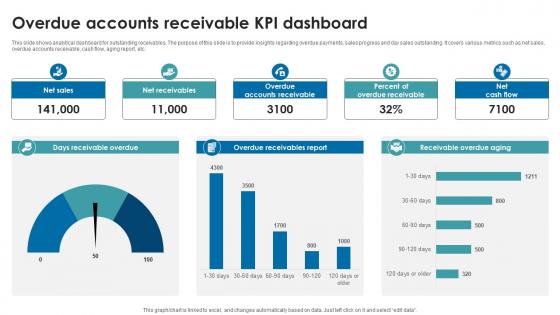
This slide shows analytical dashboard for outstanding receivables. The purpose of this slide is to provide insights regarding overdue payments, sales progress and day sales outstanding. It covers various metrics such as net sales, overdue accounts receivable, cash flow, aging report, etc.
People who downloaded this PowerPoint presentation also viewed the following :
Overdue accounts receivable KPI dashboard with all 10 slides:
Use our Overdue accounts receivable KPI dashboard to effectively help you save your valuable time. They are readymade to fit into any presentation structure.









FAQs for Overdue accounts
Look, start with your aging report - that's gonna show you exactly where you're bleeding money. Most businesses screw up the invoicing piece honestly, so get those out fast and double-check they're right. Credit policies matter too, but they're useless without consistent follow-up on late accounts. Payment terms should actually work for your situation, not just copy what everyone else does. The communication thing is huge - call people before they go totally delinquent. I learned this the hard way. Check your aging report first though, it'll tell you which fire to put out.
Start with credit reports from Experian or Dun & Bradstreet - that's your foundation. Payment history with other vendors matters too. Financial statements are honestly the best thing you can get your hands on, shows their actual cash flow situation. Don't forget to just Google them either, seriously you'd be shocked what sometimes comes up. Trade references are clutch because other suppliers will tell you straight up if they're slow payers. Even a basic credit app works for smaller guys. Oh and stick to whatever process you set up - I've seen people get burned skipping steps because a company looked solid at first glance.
Dude, AR automation is where it's at. Set up automatic invoicing and payment reminders - saves you hours every week. Your customers can pay online through portals, which honestly makes collections way less awkward than chasing people down. Most platforms sync with whatever accounting software you're using already. Real-time dashboards show aging reports and cash flow at a glance. Oh, and collections workflows can run themselves too. Start with cloud-based systems since they're usually easier to set up. Once it's running, you'll wonder why you waited so long.
So payment terms are basically this constant tug-of-war between getting paid fast and keeping customers chill. Net 15 gets cash in your pocket quicker, but some clients will grumble about it. Net 60? Customers love the extra time, but you'll be sitting there watching your cash flow get tight. I learned this the hard way when I first started out - gave everyone Net 45 thinking I was being generous, then couldn't pay my own bills on time. Look at what others in your industry do, check how reliable each customer actually is, then pick something that won't drive you crazy.
Honestly, just make your invoices stupid simple to understand and pay. Send them right after you finish the work - I'm terrible at this when I'm busy but it makes such a difference. Put everything upfront: what you did, when it's due, how they can pay. Multiple payment options help tons. Try shortening your terms to 15 days instead of 30 if possible. Set up those automated reminders for a week before and after the due date (saves you from being the nagging person). The whole thing is really about removing friction - people will pay faster when they're not confused about what they owe or how to send it.
Document everything first - save all your messages and the original contract stuff. Respond fast, like within 24-48 hours max. Letting disputes drag on is the worst thing you can do, trust me. Listen to what they're actually upset about before you get all defensive (yeah, I know it's hard). Most of the time it's just confusion about what you were supposed to deliver or payment stuff. Try finding some middle ground - maybe they pay in chunks or you give partial credit? If you're totally stuck, bring in someone neutral to mediate. Way better than lawyers getting involved later.
Honestly, start with Days Sales Outstanding (DSO) - that's your go-to for tracking payment speed. Then check your aging buckets (30, 60, 90+ days overdue) to see what's getting stuck. Collection effectiveness index shows how much you're actually recovering, which is pretty telling. Bad debt ratio matters too since writeoffs suck. Oh, and turnover ratio - how fast you're converting receivables to cash. I pull these monthly and compare to industry standards, though sometimes I forget and do it quarterly instead. DSO alone will tell you a lot if you're just getting started with this stuff.
Here's what's worked for me - get stricter with credit checks upfront and don't let invoices sit around. Send them out right away, then actually follow up on late payments (I used to hate doing this but it's necessary). Aging reports help you see who owes the most so you can prioritize the big fish first. Early payment discounts work surprisingly well too. The biggest thing though? Stay consistent with collections instead of letting everything pile up until it becomes this huge mess. Oh, and automate whatever you can - saves so much time.
Good debt is money you'll actually collect - customers with solid payment history who pay on time. Bad debt? Those deadbeat accounts that'll never pay up. Track payment patterns and run credit checks to tell the difference. Aging reports help flag chronic late payers too. Honestly, communication style tells you a lot - if they're dodging your calls for months, that's a red flag. Don't waste time chasing obvious losses forever. Write off the hopeless cases and focus on what's actually collectible. I learned this the hard way!
Dude, debt collection is tricky - there's federal stuff like the Fair Debt Collection Practices Act plus state laws that are all different. Can't harass people or make threats, and there are rules about calling times/frequency. Credit reporting has to be accurate or you'll get sued. Honestly, the paperwork is probably the most annoying part - document everything. Every call, every agreement, all of it. My advice? Write up clear collection policies from day one. Maybe talk to a lawyer too because this stuff gets messy fast if you screw it up.
Just call or shoot them an email first - "Hey, did you get that invoice from last month?" Most people honestly just forget or it gets buried in their inbox (happens to me all the time). Don't assume they're dodging you on purpose. Follow up weekly, but keep it chill and collaborative. Ask if there's something wrong with the invoice or if they need different payment terms. Things dragging on? Get more formal gradually, but never go full accusation mode. Oh, and document everything - trust me, you'll need those records if this turns into a whole thing later.
Dude, your AR aging is basically a crystal ball for cash flow. Those 90+ day invoices? Most won't get paid - I learned this the hard way last quarter. Don't be overly optimistic when forecasting. Apply realistic collection rates based on how old stuff is. Fresh invoices might have 95% collection rates, but anything over 60 days drops to like 40-50%. Check your aging report weekly and track what actually comes in. Otherwise you'll be sitting there wondering where all your projected cash went. Trust me, it's better to be pleasantly surprised than scrambling to cover payroll.
Look, getting paid faster = more cash in your pocket, simple as that. Send invoices right away and actually follow up when people don't pay on time. I swear, some businesses just let money sit there collecting dust - makes no sense. You collect quicker, you've got more cash for whatever you need. Growth stuff, daily bills, whatever. Set payment terms that work for you and stick to them. Don't be wishy-washy about it. The whole point is turning those "people owe me money" numbers into actual money you can spend.
Honestly, talking to your customers makes or breaks everything. Set clear payment terms from day one and send those reminder emails before stuff's even late. When payments start dragging, call them up - half the time it's just a simple mix-up or they're having their own cash problems. Document every conversation though, trust me on this one. I learned that the hard way when I couldn't remember what someone promised me three weeks ago. Be consistent but don't be that annoying person who calls twice a day. Most people want to pay, they just need gentle nudging sometimes.
So basically, dig into your payment history to see who's always late versus who pays on time. You'll start noticing patterns - some customers hit that 30-day mark religiously, others drag it out past 60 days like it's a hobby. Set up alerts for the risky ones so you can bug them before they're actually overdue. Way better than playing catch-up later. Also check for seasonal stuff - I swear some industries just vanish every December. Once you've got this data, you can tweak credit limits and know exactly where to focus your energy.
-
Excellent design and quick turnaround.
-
Thanks to SlideTeam, we have an ideal template to present all the info we need to cover. Their slides give our numbers and projections a more clear and enchanting look.