

Pitching for consulting services powerpoint presentation slides




Try Before you Buy Download Free Sample Product
 Impress Your
 Audience
 100%
100% Editable
 Save Hours
 of Time


Sales pitch helps prospects understand the long term benefits and structure of the consulting service and showcases what is in it for them. One can promote their services using various effective marketing strategies like placing social media ads, hosting events, referrals, etc. Here is an efficiently designed template on Pitching for Consulting Services that will display the importance of other services like competitive analysis, corporate strategy, etc. The proposal showcases the vision, mission, goals, ownership details, CEO vitals, etc. Firms can mention the products and services that they are offering with proposed solutions to every problem. You can even display graphs, images, and infographics for the market size of the industry and the competitive advantage you are going to face. The template lets you exhibit the five year financial plan of your organization using bar graphs and stacked column charts. One can even show the contact details of their company so that clients find it easy to contact them when in need. Through this 100 percent editable proposal, businesses can present pie charts, posts for past feedbacks of clients, comparison of products, a yearly timeline of their success, etc. Talk to our experts for all your queries and get access to the markets best template on Pitching for Consulting Services. Book a free demo for yourself and download the proposal now.
People who downloaded this PowerPoint presentation also viewed the following :
Content of this Powerpoint Presentation
Slide 1: This slide displays the title i.e. 'Pitching for Consulting Services' and your Company Name.
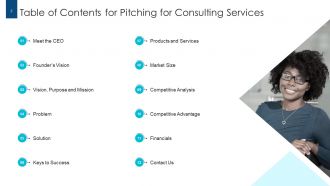
Slide 2: This slide presents the table of contents for the project.
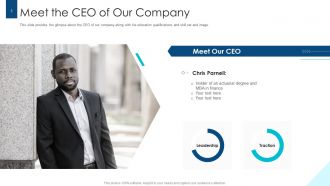
Slide 3: This slide provides the glimpse about the CEO of our company along with his education qualifications and skill set and image.
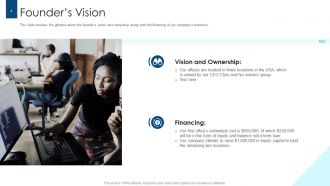
Slide 4: This slide provides the glimpse about the founder’s vision and ownership along with the financing of our company’s branches.
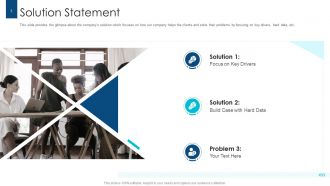
Slide 5: This slide explains the company’s solution which focuses on how our company helps the clients and solve their problems by focusing on key drivers, hard data, etc.
Slide 6: This slide presents the problem faced by the users since email is used for personal use which leads to problems such as poor productivity, and regular errors.
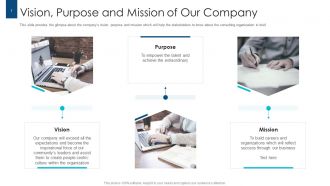
Slide 7: This slide provides the glimpse about the company’s vision, purpose and mission which will help the stakeholders to know about the consulting organization in brief.
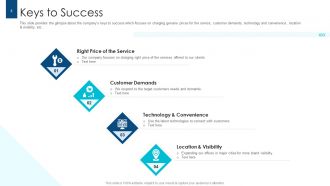
Slide 8: This slide explains the company’s keys to success which focuses on charging genuine prices for the service, customer demands, location & visibility, etc.
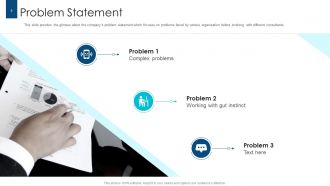
Slide 9: This slide exhibits the company’s problem statement which focuses on problems faced by various organization before involving with different consultants.
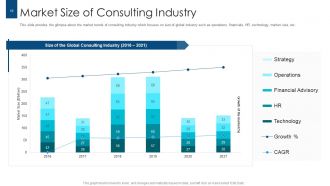
Slide 10: This slide displays the market trends of consulting industry which focuses on size of global industry such as operations, financials, HR, technology, market size, etc.
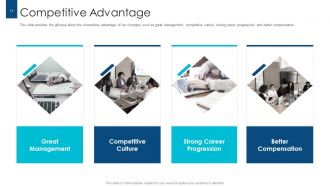
Slide 11: This slide presents the competitive advantage of our company such as great management, competitive culture, strong career progression, and better compensation.
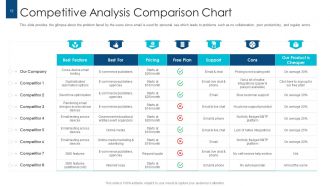
Slide 12: This slide exhibits the problem faced by the users since email is used for personal use which leads to problems such as poor productivity, and regular errors.
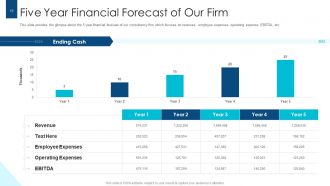
Slide 13: This slide demonstrates the 5 year financial forecast of our consultancy firm which focuses on revenues, employee expenses, operating expense, EBITDA, etc.
Slide 14: This slide provides the glimpse about the contact details of our company along with address, phone number, email, and other social media platforms links.
Slide 15: This is the icons slide for the project.
Slide 16: This slide displays the title for additional slides.
Slide 17: This slide showcases about the company.
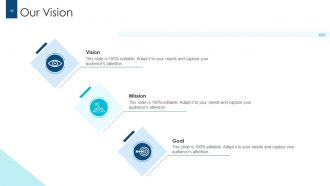
Slide 18: This slide showcases the vision, mission, strategies and goals of your company.
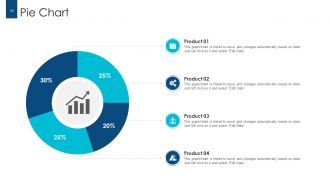
Slide 19: This slide displays the pie chart for different products. The charts are linked to Excel.
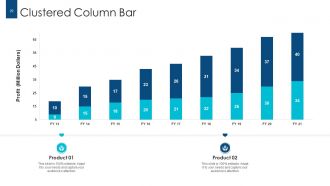
Slide 20: This slide displays the clustered column bar for different products. The graphs are linked to Excel.
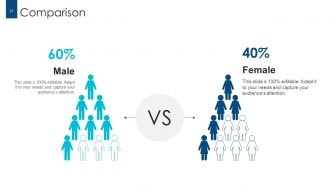
Slide 21: This slide presents the comparison of your products based on gender select.
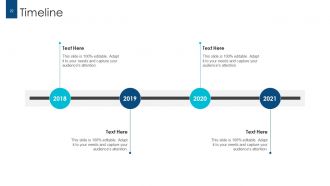
Slide 22: This slide presents the yearly timeline of your company.
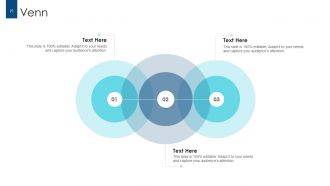
Slide 23: This slide exhibits the venn diagram for your company targets.
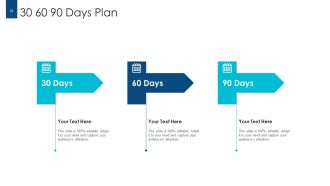
Slide 24: This slide displays the 30-60-90 days plan for your project.
Slide 25: This slide showcases the posts related to past experiences of clients.
Slide 26: This slide explains the mind map for your company.
Slide 27: This is the thank you slide and displays the contact details of the company i.e. office address, contact number, etc.
Pitching for consulting services powerpoint presentation slides with all 27 slides:
Use our Pitching For Consulting Services Powerpoint Presentation Slides to effectively help you save your valuable time. They are readymade to fit into any presentation structure.

FAQs for Pitching for consulting services
Alright, so first thing - nail down exactly what problem you're solving for them. Then show them you've actually done this before with real examples (but don't go overboard with the details). What really matters is explaining why YOU over everyone else, because trust me, you're not the only one they're talking to. Be upfront about timeline and what it'll cost - nobody likes surprises later. Oh, and give them a clear roadmap with actual numbers they can track. End with something simple like "let's hop on a call" or suggest a small test project. Basically make it stupidly easy for them to move forward.
Dude, stories totally beat data dumps every time. Clients actually remember them! Skip the "we boosted efficiency 23%" opener and try something like "your team was drowning in manual processes until we stepped in." Way more engaging, right? People zone out during bullet-point hell anyway. A good case study narrative keeps them hooked and makes your abstract solutions feel real. Structure each example like a mini-story—problem, what you did, happy ending. Honestly works better than I expected when I first tried it.
Look, market research is honestly your best bet for nailing pitches across different industries. Each sector has its own headaches and jargon - healthcare worries about compliance stuff while manufacturing cares more about supply chains, you know? Do your homework first. Figure out their actual problems, not what you think they are. Then you can drop the right buzzwords and reference real challenges they're facing. Otherwise you'll sound like every other generic consultant walking through their door. I'd start by listing 3-5 industry-specific pain points you can actually solve. Makes your opening way stronger.
Honestly, skip the fancy charts trying to wow them - just make your data super clear. Start with the problem, hit them with numbers showing impact, then walk through your solution. Charts beat tables every time (seriously, no one wants to read spreadsheets in a meeting). One insight per slide, keep colors consistent so they're not confused. I'd open with a visual that shows the whole problem right away, then add supporting data. Oh, and always wrap up each slide by explaining what it actually means for their business. That's where you really hook them.
Skip the whole "let me tell you about our 20 years of experience" opening - nobody cares yet. What kills most pitches? Generic promises that could apply to anyone. You need to prove you actually get their specific mess first. I've watched so many people dump every buzzword they know and try fixing everything at once. Bad move. Pick 2-3 solid results you can actually deliver instead of rattling off your entire service menu. Oh, and don't lowball your price to land it - that just screws you over later. Be upfront about timelines and what your process looks like.
Honestly, just ask them about their problems first before pitching anything. I used to jump straight into "here's what I can do" mode - big mistake. Let them talk while you actually listen. They'll drop hints about budget issues or office drama that matter way more than you think. Write down the exact words they use for stuff, then use those same terms when you explain your approach later. Makes a huge difference. The whole thing is about making them feel like you actually get their situation, not just trying to sell them something. Oh, and always recap what you heard at the end.
Hey! So for metrics, I'd go with three main buckets: outcome stuff (revenue growth, cost savings), process tracking (how fast projects get done, client satisfaction), and before/after comparisons. The before/after thing is honestly clutch - it tells such a clear story. Get specific with your numbers too. "Increased revenue by 23%" sounds way more impressive than vague stuff like "significantly improved performance." Oh, and client retention rates are huge if you've got them. Shows you're not just a one-hit wonder. Pick maybe 3-5 metrics tops, but make sure you can actually prove them with real data.
Honestly, case studies are like showing your work instead of just saying "trust me, I'm good at this." Pick ones that actually match what your prospect is dealing with - same industry, similar headaches. Walk them through how you helped Company X boost revenue 30% or whatever. People can picture you doing that for them way easier than believing some vague promise about your "proven expertise." Don't just throw around the flashy results though. Be ready to explain your actual process - that's what separates you from every other salesperson claiming they're amazing. Works way better than generic pitches.
Listen closely and ask real questions about what's actually bugging them - way better than jumping straight into your pitch. Match however they're talking, you know? Definitely dig into their website beforehand and drop their company name like you actually know who they are. I swear half the people I meet clearly winged their research. Come with maybe 2-3 things you noticed about their business and get their thoughts. Share stories from similar companies if you've got them. The whole thing works better when you're genuinely curious instead of just trying to sell them stuff.
Dude, your slides are literally doing half the work before you even open your mouth. Clean layouts and consistent branding? Total game-changers. I've watched incredibly smart people bomb because their presentations looked like something from 2003 - it's painful to see. Don't go crazy with animations though. Keep your key points super clear and easy to follow. Start with a decent template that makes you look legit, then tweak the colors to match each client's vibe. Oh, and visual hierarchy matters way more than people think.
Honestly, just listen first before you jump in with your pitch. Show them you actually heard what they said, not just waiting for your turn. I love the "feel, felt, found" thing - like "I get how you feel, other clients felt the same way, here's what they discovered..." Ask questions too because half the time their real objection isn't what you think it is. And here's something counterintuitive - agree with part of their concern sometimes. Builds way more trust than fighting every point. Then bring it back to your specific solution with real examples. Works way better than being defensive about everything.
Definitely shoot them a thank-you email within 24 hours - mention something specific you talked about so they know you weren't just going through the motions. Don't forget whatever you promised to send. Propose actual next steps with real dates too. If they go radio silent after a week, follow up but make it worth their time. Share an article, connect them with someone cool, drop an industry insight. I swear timing beats being pushy every time. Set monthly reminders even when things seem dead - you never know when they'll suddenly need what you're offering.
Figure out who you're talking to first - that's honestly the biggest game changer. C-suite folks want to hear about ROI and big picture stuff right off the bat. Meanwhile, operational managers? They're thinking timelines and how this actually gets done. I used to mess this up constantly early on, leading with whatever I thought sounded smart instead of what they cared about. With executives, hit them with business outcomes first and skip the technical weeds. Technical teams are the opposite - show your expertise upfront. Also switch up your language depending on the crowd. Less jargon for generalists, more industry terms for specialists.
Honestly, ditch the boring PowerPoint if you can. Interactive dashboards are clutch for showing real data that actually matters. Virtual whiteboards work great too - gets people involved instead of just staring at slides. AR/VR stuff is cool but kinda overkill unless it really fits what you're selling. Screen sharing makes remote pitches super smooth. Pick one thing that'll make your story clearer, not just flashy tech for the sake of it. I'd start with something simple - maybe add one interactive piece to your next pitch and see how it lands. The goal is making complex stuff easier to understand, not overwhelming people with bells and whistles.
Honestly, blown pitches are the best teachers - way better than the ones you win. Look back at what feedback you got (or the awkward silence you didn't get). Maybe you were fixing the wrong problem entirely? I see this all the time where people dump their whole resume instead of digging into what's actually keeping the client up at night. Sometimes we get obsessed with our fancy process when they just want to know you get their panic. Oh, and double-check if your pricing scared them off. Next round, start with their headache, not your magic cure.
-
Unique and attractive product design.
-
Awesome presentation, really professional and easy to edit.