


Planning Technology Initiatives Powerpoint Presentation Slides





Try Before you Buy Download Free Sample Product
 Impress Your
 Audience
 100%
100% Editable
 Save Hours
 of Time


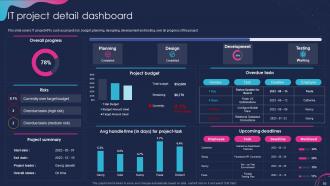
Check out our professionally designed Planning Technology Initiatives deck Playbook, meticulously crafted for enterprises poised to infuse their business systems and networks with cutting-edge technology. This IT Planning dynamic PowerPoint presentation encompasses pivotal junctures within the agile product development lifecycle, workflow enhancement, strategic orchestration, and fundamental facets of agile project management. Further, the IT implementation PPT in Organization further enriches your understanding of agile team dynamics, precise cost estimation analysis, real-time progress visualization via intuitive dashboards, and a comprehensive technology implementation checklist. Moreover, this Tech Implementation deck strategically outlines prevalent obstacles and potential risks inherent in technology assimilation, accompanied by a robust blueprint for the triumphant integration of novel technological solutions. Also, this Technology implementation module playbook is an exhaustive technology service roadmap seamlessly integrated with an enterprise-centric interface. Lastly, the Tech Implementation deck encompasses pivotal aspects such as proactive technology server issue mitigation and support dashboards, technology application interfaces, a comprehensive view of managed services, and a granular IT project details dashboard. Unlock the gateway to revolutionize your business systems and networks, harnessing the potential of avant-garde technology solutions. Get access to this powerful template now.
People who downloaded this PowerPoint presentation also viewed the following :
Content of this Powerpoint Presentation
Slide 1: This slide introduces Planning Technology Initiatives.
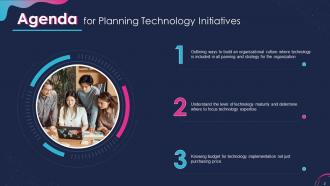
Slide 2: This slide depicts the Agenda of the presentation.
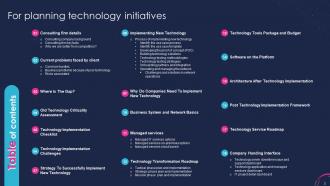
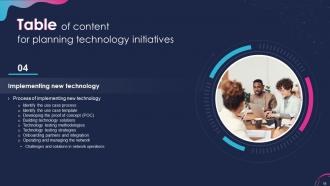
Slide 3: This slide includes the Table of contents.
Slide 4: This slide highlights the Title for the Topics to be discussed further.
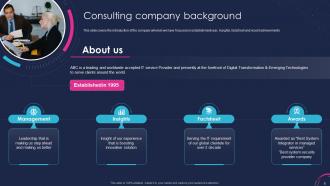
Slide 5: This slide covers the introduction of the company.
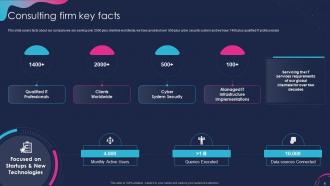
Slide 6: This slide exhibits the Consulting firm key facts.
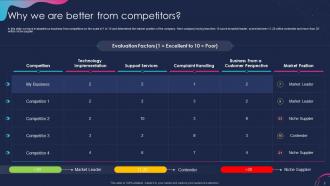
Slide 7: This slide states Why the company is better from competitors.
Slide 8: This slide shows the Heading for the Contents to be covered next.
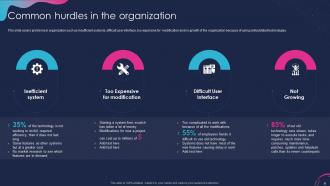
Slide 9: This slide covers problems in organization.
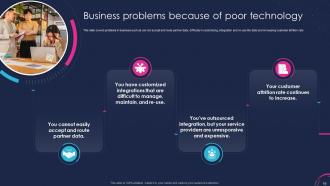
Slide 10: This slide reveals the Business problems because of poor technology.
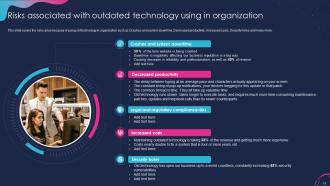
Slide 11: This slide covers the risks arise because of using old technology in organization.
Slide 12: This slide states the Title for the Ideas to be discussed further.
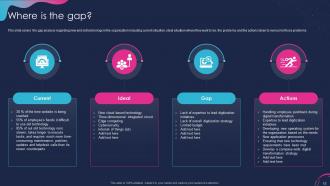
Slide 13: This slide presents the gap analysis regarding new and old technology in the organization.
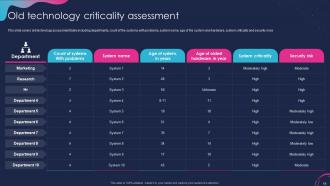
Slide 14: This slide portrays old technology assessment table.
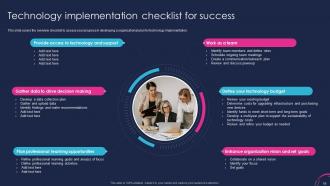
Slide 15: This slide reveals the Technology implementation checklist for success.
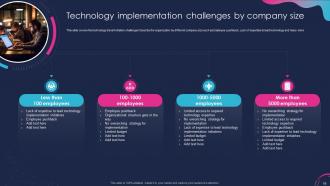
Slide 16: This slide highlights the Technology implementation challenges by company size.
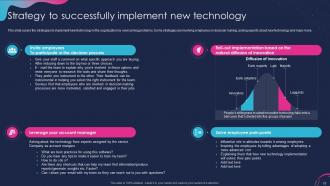
Slide 17: This slide covers the strategies to implement new technology in the organization by overcoming problems.
Slide 18: This slide states the Heading for the Ideas to be covered in the upcoming template.
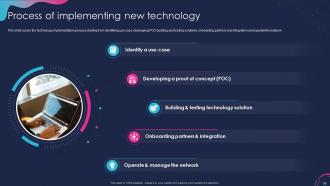
Slide 19: This slide showcases the Process of implementing new technology.
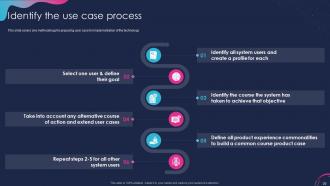
Slide 20: This slide covers one methodology for preparing user case for implementation of the technology.
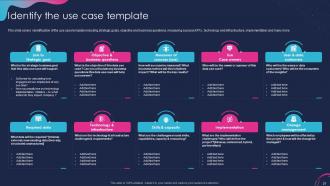
Slide 21: This slide contains identification of the use case template including strategic goals, objective and business questions, etc.
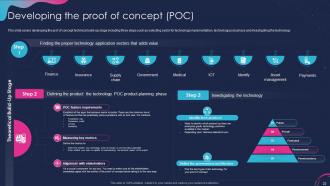
Slide 22: This slide focuses on Developing the proof of concept.
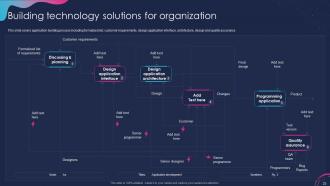
Slide 23: This slide talks about Building technology solutions for organization.
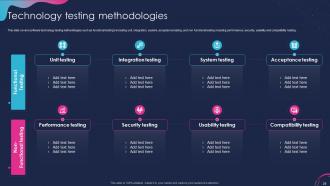
Slide 24: This slide indicates the Technology testing methodologies.
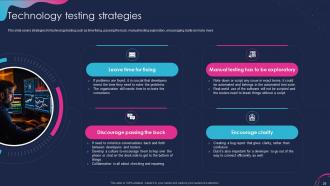
Slide 25: This slide highlights the Technology testing strategies.
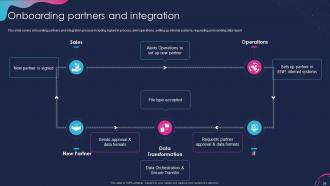
Slide 26: This slide shows the Onboarding partners and integration.
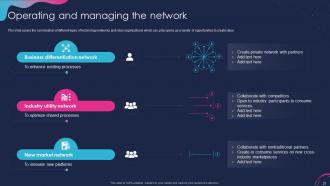
Slide 27: This slide covers the combination of different types of technology networks and roles organizations.
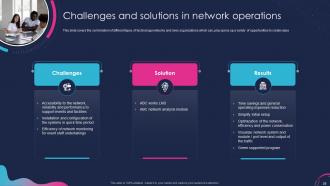
Slide 28: This slide exhibits the Challenges and solutions in network operations.
Slide 29: This slide presents the Title for the Contents to be discussed in the next template.
Slide 30: This slide shows the reason to implement new technology along with planning.
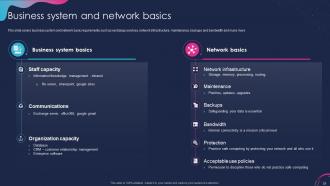
Slide 31: This slide covers business system and network basic requirements.
Slide 32: This slide states the Heading for the Topics to be covered in the upcoming template.
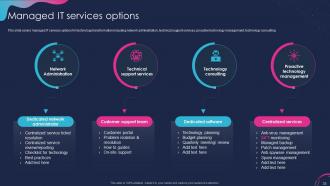
Slide 33: This slide highlights the IT services options for technology transformation.
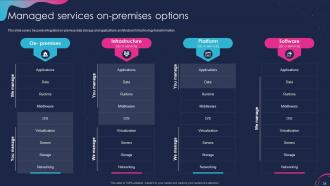
Slide 34: This slide talks about the Managed services on-premises options.
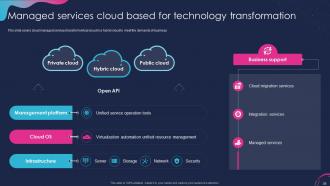
Slide 35: This slide covers cloud managed services transform virtual cloud in a hybrid cloud to meet the demands of business.
Slide 36: This slide portrays the Title for the Topics to be covered further.
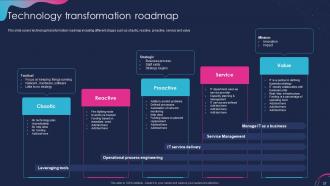
Slide 37: This slide mentions about the Technology transformation roadmap.
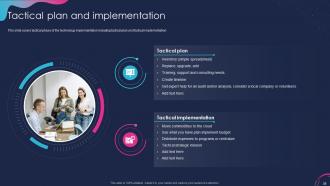
Slide 38: This slide covers tactical phase of the technology implementation including tactical plan and tactical implementation.
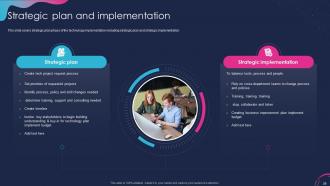
Slide 39: This slide displays the Strategic plan and implementation.
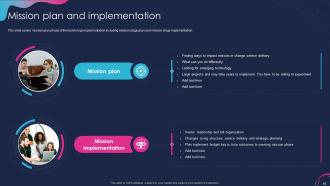
Slide 40: This slide depicts the Mission plan and implementation.
Slide 41: This slide exhibits the Heading for the Contents to be discussed next.
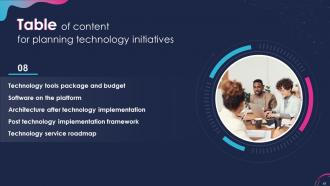
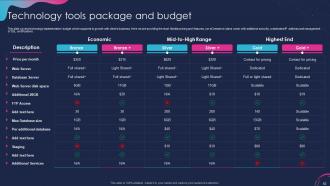
Slide 42: This slide covers technology implementation budget which supports to growth with client's business.
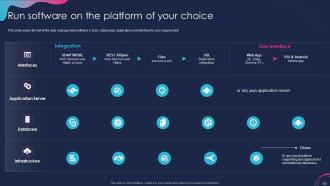
Slide 43: This slide presents the Run software on the platform of your choice.
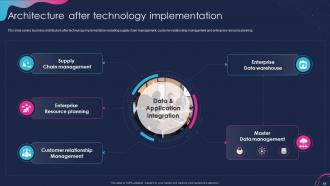
Slide 44: This slide contains the business architecture after technology implementation.
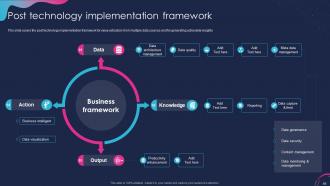
Slide 45: This slide illustrates the Post technology implementation framework.
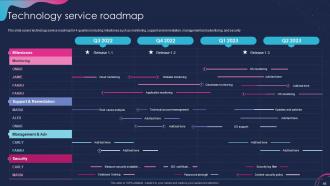
Slide 46: This slide covers technology service roadmap for 4 quarters.
Slide 47: This slide reveals the Title for the Ideas to be covered next.
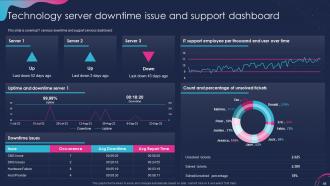
Slide 48: This slide illustrates the Technology server downtime issue and support dashboard.
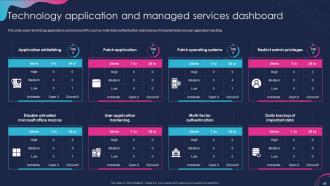
Slide 49: This slide covers technology applications and services KPIs.
Slide 50: This slide states IT project KPIs.
Slide 51: This slide is used for showcasing some additional information.
Slide 52: This slide is used for stating the organization-related information.
Slide 53: This is the Comparison Slide.
Slide 54: This slide elucidates the firm's Roadmap.
Slide 55: This slide elucidates information related to the Financial topic.
Slide 56: This slide continues information related to the Financial topic.
Slide 57: This is the Bar chart template slide.
Slide 58: This is our Pie chart template slide.
Slide 59: This slide represents the Bar graph.
Slide 60: This is the Clustered bar chart slide.
Slide 61: This slide shows Hiring funnel attract assess select using silhouettes.
Slide 62: This slide presents the organization's Timeline.
Slide 63: This slide continues the Timeline.
Slide 64: This is the Thank You slide for acknowledgement.
Planning Technology Initiatives Powerpoint Presentation Slides with all 65 slides:
Use our Planning Technology Initiatives Powerpoint Presentation Slides to effectively help you save your valuable time. They are readymade to fit into any presentation structure.






FAQs for Planning Technology Initiatives
Honestly, AI and machine learning are the biggest game-changers right now - they're automating customer service, supply chains, you name it. Cloud computing makes scaling way simpler without dropping tons of cash on infrastructure. Blockchain's creating new ways to handle trust, though some of that buzz is pretty overblown if you ask me. IoT sensors are pumping out data that's totally reshaping how manufacturers run things. 5G's enabling real-time stuff we couldn't even imagine before. My advice? Figure out which tech could actually fix your worst headaches first - that's where you'll see real impact.
Honestly, just start with something small and non-critical first. Map out what you're already doing so you actually know where AI might help vs. just creating more headaches. I've watched way too many companies try to overhaul everything at once - total nightmare. Get your team trained early because they'll either make this work or tank it completely. Look for spots where AI can work alongside your current stuff instead of replacing it right away. Pick one specific pain point and test there. You can always expand later once you've figured out what actually works.
Honestly, data privacy isn't just important - it's everything when it comes to customer engagement tech. People won't even touch your platform if they think you're sketchy with their info. I've watched companies blow up their whole customer base over one stupid data breach. So be upfront about what you're collecting and why. Give people actual control over their settings. And here's the thing - build privacy protections into your system from the start, don't try to patch it in later (trust me on this one). First step? Audit what data you're actually grabbing versus what you really need.
Dude, cloud computing is a game changer for remote teams. Everyone can jump into the same files and apps from wherever they are - no more "which version are we using?" chaos. Your team edits docs together in real-time, video calls run straight from the browser, and project stuff syncs automatically. I swear it's like night and day compared to the old email-everything approach. Super painful before this existed. If you haven't moved your main collaboration tools to cloud versions yet, that's honestly where I'd start.
Track business stuff like ROI and cost savings, plus technical things like uptime and how fast you can ship features. User adoption rates matter too - honestly, if people aren't actually using what you built, what's the point? Employee satisfaction is huge because nobody wants to deal with systems that suck. Pick maybe 3-5 metrics max that actually relate to your project. I'd start by figuring out what "winning" looks like first, then decide which numbers will tell you if you're getting there. Don't try tracking everything or you'll go crazy.
Dude, IoT can basically turn your products into money-making machines. Think subscription services for monitoring stuff, or selling those usage insights to other companies. The operational side is where it gets really interesting though - sensors show you exactly what's breaking down before it actually breaks. Honestly, most businesses have no clue how much money they're bleeding until they can actually see their processes in real-time. I'd say start with just one thing, like your most expensive equipment. Once you see how much you're saving (and you will), then you can go crazy with it.
Honestly, there's three big things you can't ignore here. Job displacement is huge - try retraining people instead of just cutting them loose. Data privacy gets messy fast, especially with personal info. The bias thing is probably the trickiest though - your system will make unfair decisions if the data or algorithms are screwed up from the start. Can people actually understand how your system works? That transparency piece matters more than companies think. Do an impact assessment before you launch anything. Oh, and set up some way to monitor these systems once they're running - things get weird in the real world.
Dude, shopping's gotten crazy with all this tech stuff. AI keeps suggesting things I never knew I wanted - honestly kind of creepy but also convenient? AR lets people try stuff on from home now. One-click buying makes impulse purchases way too easy. Everyone's becoming an influencer thanks to social algorithms. Mobile payments and voice ordering are so smooth people don't even think about spending money anymore. You've gotta adapt to where technology's pushing everyone instead of sticking with old-school retail methods.
Get leadership on board first - they need to explain the "why" behind switching systems. People hate change when they don't get the reasoning. Let employees help pick the tech if you can, and honestly, don't cheap out on training. One demo session is basically useless. Find those naturally tech-savvy people in each department to be your go-to helpers. Set up ways for feedback to come back to you fast. Oh, and expect things to slow down at first - productivity always dips during transitions. That's just reality. Celebrate the small victories though, it keeps morale up while everyone's figuring things out.
So instead of doing those huge waterfall projects, just chop everything into 2-4 week chunks. Figure out your MVP first, write some user stories, then sprint it out. Honestly, most teams go overboard with all the agile ceremonies - like, we don't need a meeting about meetings, you know? Just do quick standups, review what you built, and talk about what sucked in retros. Treat it like you're building something for actual people who want to see progress regularly. Oh, and set up mixed teams early on and let them make decisions without going up the chain every time.
Honestly, psychological safety is everything - people won't innovate if they're scared of getting fired for failing. Block out actual time for experimentation too, because asking someone to be creative on top of their regular workload is just cruel. Leadership has to buy in or forget it, nobody's gonna stick their neck out if the executives are just paying lip service. Cross-functional stuff works wonders when teams actually leave their little bubbles and talk to each other. I'd start by straight-up asking your team what's stopping them from trying new ideas. That'll give you way more insight than any fancy framework.
So first thing - audit your current tech setup's energy usage. That's your starting point. From there, energy monitoring systems are clutch for tracking your carbon footprint. IoT sensors help with smarter resource management too. AI's pretty solid for optimizing supply chains and cutting waste (honestly, it's one of the better use cases). Moving to cloud typically slashes energy consumption by like 65-80%, which is insane. The ROI actually works out well once you factor in long-term savings. Just prioritize based on what'll give you the biggest bang for your buck.
Honestly, there's a bunch of ways to partner with tech startups that actually work. Pilot programs are pretty standard - you basically let them test their stuff in your company. Joint development is cool too, where you build something together. If they're crushing it, maybe acquire them? Some bigger companies do VC investments or co-create innovation labs, though that's getting a bit fancy. The real advantage is startups don't have all your corporate bureaucracy slowing things down. They'll prototype and pivot way faster than your internal teams ever could. My advice? Figure out what's actually broken in your business first, then hunt for startups solving exactly those problems. Don't just chase shiny tech.
Build for flexibility right from the start - go modular with cloud-native stuff that can actually grow. I've watched way too many companies get stuck with ancient systems that become impossible to change. APIs and microservices are your friends here, lets you swap pieces without torching everything. Stick with industry standards instead of some weird proprietary thing that'll die in 5 years. Think about tomorrow's problems, not just today's. Oh and definitely audit what you've got now - figure out which parts would be a nightmare to scale later.
Buddy system is honestly your best bet here - way more effective than fancy training sessions. Do some role-specific workshops first, then pair everyone with tech-savvy coworkers during the actual transition. Quick help docs are crucial, plus regular manager check-ins. Oh and set up office hours where people can just drop by with questions - removes that awkward feeling of bothering someone. A Slack channel for troubleshooting helps too. The whole thing only works if people aren't scared to ask what they think are stupid questions, you know?
-
I joined SlideTeam last month and there’s no doubt that I tend to find our bond only strengthening over time. Best place to find world-class themes, templates, and icons.
-
I was never satisfied with my own presentation design but SlideTeam has solved that problem for me. Thank you SlideTeam!