


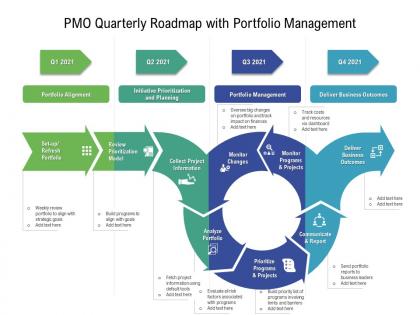
Pmo quarterly roadmap with portfolio management




Try Before you Buy Download Free Sample Product
 Impress Your
 Audience
 100%
100% Editable
 Save Hours
 of Time


Visualize your work plan and communicate your ideas impactfully with our pre designed PMO Quarterly Roadmap With Portfolio Management. Showcase the detailed overview of the project, the key deliverables, and the milestones to be achieved with the help of our fully customizable PowerPoint layout. You can easily emphasize on the project goals and discuss all the activities involved in an easy to comprehend manner by utilizing our professionally designed PPT theme. This roadmap PowerPoint layout is a perfect strategic planning tool that can help in keeping the project on track. With our attractive PowerPoint theme, you can articulate the workflow, track the work progress, and have a clear vision of the goal to be achieved. Download this versatile PMO Quarterly Roadmap With Portfolio Management and save your hours of work.
People who downloaded this PowerPoint presentation also viewed the following :
Pmo quarterly roadmap with portfolio management with all 2 slides:
Use our PMO Quarterly Roadmap With Portfolio Management to effectively help you save your valuable time. They are readymade to fit into any presentation structure.
FAQs for Pmo quarterly roadmap
You'll want four main things: governance structure, process standardization, resource management, and performance metrics. Honestly, start with your PMO charter and stakeholder expectations first - yeah, it's like herding cats but you gotta do it. Map out how projects get intake, get your teams using the same methodologies, then build those portfolio dashboards. Oh and don't skip the change management stuff or training for your PMs. Pro tip though - don't try building everything at once. Pick one or two pieces, prove they work, then expand from there. Way less overwhelming.
Start by connecting your PMO work directly to what the company's trying to achieve this year. Look at those big annual goals, then make sure your major milestones actually support them. I always do a visual chart thing - executives eat that up for some reason. Don't just track project completion rates either. Focus on metrics that matter to the business side. Your roadmap's gonna need constant tweaking too since priorities change like every quarter. The whole point is showing leadership that your PMO isn't just busy work - it's actually moving the needle on stuff they care about.
Honestly, start with Agile and Scrum - they're perfect for iterative stuff. PRINCE2 is solid if you need governance frameworks that actually work. Lean Six Sigma is a must-have for cutting waste (I can't believe some PMOs still don't use this). PMBOK's your go-to for risk management. Oh, and if you're constantly dealing with changes, definitely add some Change Management principles. But here's the thing - don't try to implement everything at once. Pick what fits your team's culture first. I'd pilot maybe two methodologies max, otherwise you'll just overwhelm everyone and nothing will stick.
Seriously, don't try building your PMO roadmap alone - it'll backfire. Get stakeholders involved from day one. Talk to executives, project managers, team leads, even end users if you can. I've watched PMOs crash and burn because they assumed they knew what people wanted instead of actually asking. Map out who has real influence first. Start with honest one-on-one conversations (way better than group meetings where people just nod along). Then run your draft roadmap by everyone before you lock it down. Oh, and actually listen when they tell you their pain points - that's pure gold for your planning.
Don't treat change management like something you slap on at the end - that's a recipe for disaster. Map out who your stakeholders are right from the start and figure out what they actually care about. Communication is huge here, and honestly, you can't overdo it. I'd rather annoy people with too many updates than have them blindsided later. Time your change stuff so it happens right before you need people to say yes to whatever's next. Everyone's gonna ask "what's in it for me?" so have that answer ready for each group. Run change management as its own track alongside the technical work - they need to move together.
Track the obvious stuff first - project success rates, budget/timeline performance, resource usage. That tells you if your processes actually work. But here's the thing: numbers mean nothing if everyone hates working with your PMO. Stakeholder satisfaction matters way more than people think. Also measure PM skill improvements and how well projects align with company strategy. I'd start with maybe 3-4 metrics that your leadership actually cares about. Don't go crazy with data at first - you can always add more once you've got a solid foundation running.
Monthly check-ins work best for fast-paced environments, but quarterly is fine if things are stable. Don't go crazy with constant updates though - I've watched teams get trapped in endless revision cycles and never actually ship anything. Major overhauls usually happen twice a year unless something big hits (merger, new CEO, whatever). The trick is staying flexible without giving everyone roadmap whiplash. Set up regular stakeholder meetings and watch for early warning signs that things need shifting. Way better than scrambling to catch up later. Oh, and track metrics that actually matter - not just vanity numbers that look good in presentations.
Honestly, the worst part is people freaking out about new processes - they think you're there to micromanage everything. Executive buy-in is tough too if they don't see quick wins. Plus figuring out your actual budget and staffing? Good luck with that mess. Oh, and everyone will want you to magically fix their project disasters overnight. Scope creep happens fast. My take? Start super small and celebrate every little victory. Communication is key - keep telling people what you've accomplished. Set realistic timelines or you'll burn out trying to please everyone.
Honestly, the right tech stack makes such a huge difference for PMO roadmaps. You'll get real-time visibility into where projects actually stand instead of playing email tag for updates. Automated reporting saves tons of time, and predictive analytics help catch issues early. Project management platforms, BI dashboards, resource tools - they keep teams aligned on what matters. Just make sure everything talks to each other or you're back to data silos (learned that one the hard way). Map out your biggest headaches first, then find tools that solve those specific problems.
Honestly, the biggest mistake I see is people jumping straight into timelines without nailing down what the PMO actually does first. Get your stakeholders involved early - their buy-in is make-or-break. Your roadmap needs realistic phases with real milestones, not fluffy stuff like "improve project success." Always pad your timeline because everything takes way longer than you think. Those first 90 days are crucial for quick wins that'll build your credibility. Oh, and executives have zero attention span - if they can't get your roadmap in 30 seconds, you're screwed. Review quarterly and don't be afraid to pivot.
Start by collecting project ideas from everyone, then score them on strategic alignment, ROI, resources needed, and risk. Strategic alignment should get the highest weight - leadership obsesses over that stuff. Plot everything on a grid afterward. Quick wins are high impact but low effort, major initiatives need high impact AND high effort. Oh, and check for dependencies between projects because that'll mess up your timeline if you miss it. Here's the trick though: make stakeholders help with the scoring. They can't whine about priorities later if they helped create them.
PMO roadmaps are all about juggling strategy with people management - and honestly, the people part is way harder than anyone tells you. Communication skills are non-negotiable since you're constantly selling the vision to skeptical stakeholders. Obviously you need solid project management basics, but change management is where most people trip up. Roadmaps mess with everyone's workflows, so expect resistance. You'll also be influencing teams that don't report to you, which is... fun. Oh, and analytical skills matter too for tracking progress. Take stock of what you're already good at, then work on your biggest weakness first.
So here's the thing - your PMO's maturity basically dictates what you can realistically pull off. New PMOs? Stick to the basics first. Get your processes down, win over stakeholders, that kind of stuff. Don't go crazy trying to do everything at once (trust me, I've watched that train wreck happen). Once you've got solid governance though, then you can mess around with the fancy stuff like portfolio optimization. My old manager used to say "crawl before you walk" - sounds cheesy but it's true. Just be honest about where you're actually at right now and build from there.
Honestly, the two biggest mistakes I see are trying to do way too much at once and skipping the whole political game. Don't promise the world in your roadmap - pick maybe 2-3 solid wins for your first six months and nail those. Politics are annoying but you can't ignore them. Figure out who needs to be on your side and actually involve them in building the thing. Oh, and don't just copy what worked at Google or wherever. What works there probably won't work at your place anyway. Start small, show some quick wins, then build from there based on what actually makes sense for your team.
So basically a PMO roadmap shows you what's happening across all projects at once. Super helpful for catching resource conflicts before they blow up - like when you realize three teams all want the same developer next month (ugh, the worst). I'd say map things out at least a quarter ahead, maybe more if you can swing it. That way you can figure out which projects get priority based on deadlines and how important they actually are. Weekly check-ins with project leads keeps everything current. Oh, and sometimes you'll spot chances to share people between projects or shuffle timelines around to make life easier.
-
Unique research projects to present in meeting.
-
Excellent Designs.