


Pmp certification training for project managers it powerpoint presentation slides




Try Before you Buy Download Free Sample Product
 Impress Your
 Audience
 100%
100% Editable
 Save Hours
 of Time


This PowerPoint presentation covers PMP certification training templates. This PPT depicts that Project Management Professional PMP is a globally acknowledged professional certification considered essential for project managers. It also illustrates that PMP demonstrates the experience, education, skill, and competency required to lead and direct projects. The table of content for this module is as follows Overview of PMP certification, career paths, job description, role delineation ob analysis, certification timeline, and PMP eligibility requirements. This presentation also includes the PMP application submission procedure and payment process along with certification fees. Further, it provides project management institution PMI audit policies and strategies. Next, this PPT covers detailed information about PMP exam policies and procedures. Lastly, it includes a PMP exam task map, process groups, Knowledge areas, and Processes. Download our 100 percent editable and customizable template, which is also compatible with Google Slides.
People who downloaded this PowerPoint presentation also viewed the following :
Content of this Powerpoint Presentation
Slide 1: This slide introduces PMP Certification Training for Project Managers. State Your Company Name and begin.
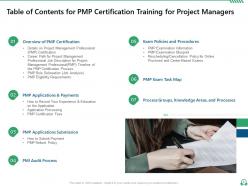
Slide 2: This slide shows Table of Content for the presentation.
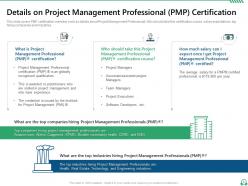
Slide 3: This slide presents Details on Project Management Professional (PMP) Certification.
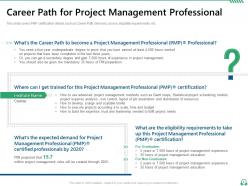
Slide 4: This slide displays PMP certification details such as Career Path, demand, course, eligibility requirements etc.
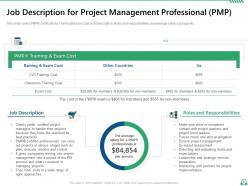
Slide 5: This slide covers PMP certifications Training & Exam Cost, Job Description, Roles and responsibilities and average salary package etc.
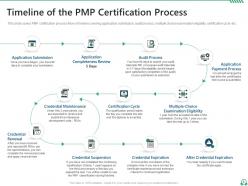
Slide 6: This slide shows Timeline of the PMP Certification Process
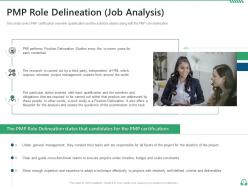
Slide 7: This slide presents PMP certification overview qualification and the activities details along with the PMP role delineation
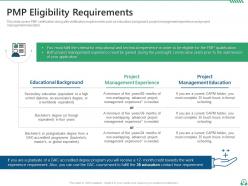
Slide 8: This slide displays PMP certification along with certification requirements such as education background, project management experience and project management education.
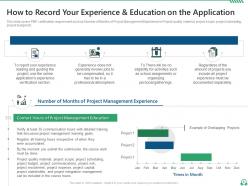
Slide 9: This slide covers PMP certification requirement such as Project quality material, project scope, project scheduling, project budget etc.
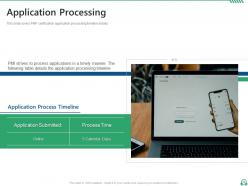
Slide 10: This slide represents PMP certification application processing timeline details.
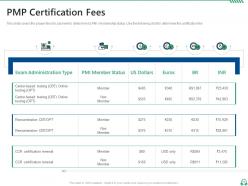
Slide 11: This slide covers the proper fees for payment to determine by PMI membership status. Use the following chart to determine the certification fee
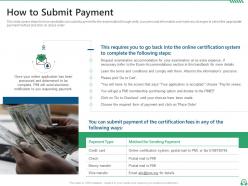
Slide 12: This slide presents steps for how candidate can submit payment for the examination.
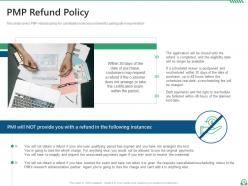
Slide 13: This slide displays PMP refunds policy for candidates how does not want to participate in examination
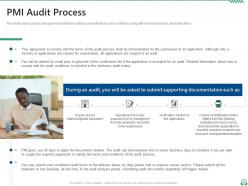
Slide 14: This slide covers project management institution audit process with terms and conditions along with set of documents and instructions
Slide 15: This slide represents the PMP examination information including no of scored questions, unscored questions and total examination questions along with allotted examination time.
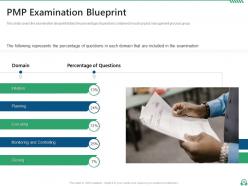
Slide 16: This slide presents the examination blueprint details the percentage of questions contained in each project management process group
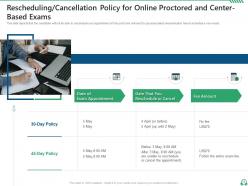
Slide 17: This slide depicts that the candidate will not be able to reschedule your appointment at this point and will need to pay associated reexamination fees to schedule a new exam.
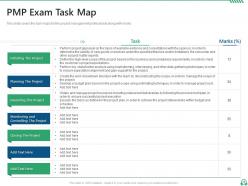
Slide 18: This slide displays the task maps for the project management professional along with marks
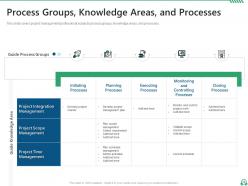
Slide 19: This slide covers project management professional subjects process groups, knowledge areas, and processes.
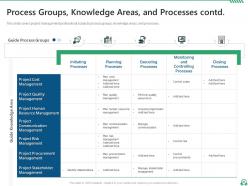
Slide 20: This slide represents project management professional subjects process groups, knowledge areas, and processes.
Slide 21: This slide presents PMP Certification Training for Project Managers IT Icons.
Slide 22: This slide is titled as Additional Slides for moving forward.
Slide 23: This is About Us slide to show company specifications etc.
Slide 24: This is Our Mission slide with related imagery and text.
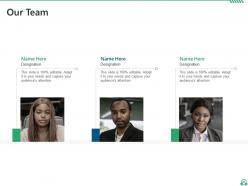
Slide 25: This is Our Team slide with names and designation.
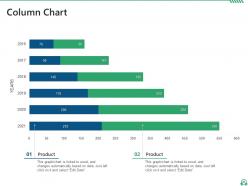
Slide 26: This slide displays Column chart with two products comparison.
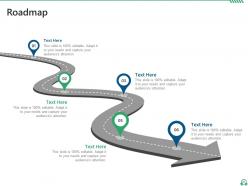
Slide 27: This slide shows Roadmap with text boxes.
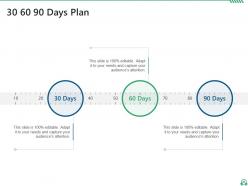
Slide 28: This slide represents 30 60 90 Days Plan with text boxes.
Slide 29: This is a Thank You slide with address, contact numbers and email address.
Pmp certification training for project managers it powerpoint presentation slides with all 29 slides:
Use our PMP Certification Training For Project Managers IT Powerpoint Presentation Slides to effectively help you save your valuable time. They are readymade to fit into any presentation structure.


FAQs for Pmp certification training for project managers it
Dude, definitely go for it. PMP certification can boost your salary by like 15-25% - that's real money we're talking about. It gives you actual credibility too, shows you know the standardized processes instead of just making it up as you go. Half the "project managers" I've worked with honestly have no clue what they're doing. The framework actually makes your job way easier once you learn it. Opens doors to senior roles and consulting gigs too. I mean, if you're serious about PM as a career, just start studying now. The ROI is totally worth it.
Dude, getting PMP certified actually makes a huge difference in project success rates. The methodologies they teach aren't just theory - they work in real situations. You learn proper planning, execution, monitoring, all that good stuff using processes that help you avoid the typical mistakes everyone makes. Honestly? The credibility boost is insane. People take you way more seriously with those letters after your name - it's kinda ridiculous but whatever works, right? The training hits everything from scope management to quality control, so you're ready for pretty much any chaos your projects throw at you. Just figure out which training format won't mess up your schedule too much.
So you need either a bachelor's + 3 years of PM experience, or high school/associate's + 5 years. The experience has to be legit project management work though - not just being on a project team (my friend made that mistake and got rejected). You also need 35 training hours, which is honestly pretty easy to knock out with a good program. Then there's the documentation part - 4,500 or 7,500 hours depending on your degree. I'd tackle the training first since it's straightforward. Document your experience right after - trust me, you'll forget details if you wait too long.
You need 35 contact hours for PMP training - that's just what PMI requires. Most people do it part-time over 4-6 weeks, but the bootcamp route gets you done in a week. Fair warning though, bootcamps are brutal but super efficient. After that you'll still need time to actually study for the exam. Plan on 2-3 months total. Here's what I'd do - book your training first, then immediately schedule the exam maybe 6-8 weeks out. Having that deadline looming really helps with motivation, trust me.
So the PMP is 180 questions in 230 minutes - basically almost 4 hours which sounds brutal but goes faster than you'd think. It's split into People (42%), Process (50%), and Business Environment (8%). You'll see multiple choice, some matching, hotspot questions, even fill-in-the-blank stuff. The tricky part? Everything's scenario-based, not just memorizing definitions. You're actually solving real PM situations. At least you can take breaks, thank god. I'd definitely practice scenario questions beforehand - the format throws people off if they're not ready for it.
So basically, training providers vary a lot in format and cost. Some do live classes, others are self-paced online, or a mix of both. Prices go anywhere from $300 to over $2,000 depending on what you get. The pricier ones usually include exam simulators, study guides, and sometimes retake guarantees if you bomb it (though most people pass first try anyway). Cheaper options might just cover the basic 35 hours you need to qualify. I'd definitely compare what study materials and support they throw in before picking one. Oh, and read reviews - some providers are way better than others at actually preparing you for the real exam.
Get the PMBOK Guide first - it's the official stuff but honestly pretty dry. Rita Mulcahy's prep book is way better for actually understanding things. Practice exams are crucial too, maybe PMTraining or PrepCast since the questions are weirdly worded sometimes. Oh and you need 35 contact hours before you can even take the test, which I totally forgot about when I first looked into it. Start with a bootcamp or course to nail the basics. PM PrepCast on YouTube has decent free videos if you're trying to save money. Then just drill practice tests until you're sick of them.
Honestly, practice exams are a game changer for PMP prep. PMI has this weird way of wording questions that'll mess with your head at first - trust me on that one. I'd knock out at least 3-4 full practice tests before the real thing. They're great for finding those random knowledge gaps you somehow missed, plus you need to build up stamina for sitting through 4 hours straight (which is brutal). Start early though, so you've got time to go back and review whatever areas you bombed. My brain was fried after my first practice test, but it gets easier.
Honestly? Time management will kick your butt. There's just way too much content to absorb, and those situational questions are brutal - you actually have to think like a PM instead of just memorizing stuff. The terminology is insane, especially coming from outside the field. What really got me though was how practice exams jump between different knowledge areas. Your brain just dies after a while lol. Don't rush it - I'd rather study for 6+ months than try cramming. Oh, and make a schedule you'll actually stick to, not some perfect one that looks good on paper.
Honestly, getting your PMP is worth it if you're serious about project management. Most hiring managers see it and immediately know you've got the real skills. Salary bump is usually around 15-25%, which isn't bad at all. Companies actually trust you with the bigger projects once you have it - like, they'll finally consider you for those senior roles that always seemed out of reach. The PMI networking stuff is decent too, though I haven't used it much personally. If climbing the PM ladder matters to you, I'd say go for it this year.
You don't *need* to network for PMP, but seriously, why make it harder on yourself? Study groups with other candidates are clutch - you can bounce ideas around and tackle those confusing parts together. PMI chapters do meetups and study sessions too, which honestly beat cramming alone any day. The cool part is these same people become your contacts later for jobs and project stuff. I started going to chapter events while studying and it was probably the smartest thing I did. Gets you plugged in early instead of scrambling to build connections after you're already certified.
Honestly, making a realistic schedule is half the battle - sticking to it is where most people crash and burn. I'd give yourself 2-3 months if you're doing this part-time, maybe 1-2 hours daily. Don't bounce around topics randomly, just tackle one knowledge area at a time. Those PMBOK sections are absolutely mind-numbing, so try the Pomodoro thing to break them up. Oh, and practice exams are clutch in your final weeks - they'll expose all your weak spots real quick. Consistency beats those crazy all-nighters every time.
So they totally overhauled everything in 2021 - switched from five process groups to just three domains: People, Process, and Business Environment. Way more streamlined honestly. About half the questions now focus on agile stuff, which threw everyone for a loop at first. The whole exam feels different too - less memorizing ITTOs and more "what would you actually do as a PM in this messy situation?" Definitely make sure whatever prep materials you're using are updated for the new format. I've heard horror stories of people studying the old content and getting blindsided.
Dude, yes - definitely brush up on methodology basics first. You'll pick up PMP concepts so much faster when you already get how Agile and Waterfall actually work. Those tricky situational questions become way easier because you can connect real experience to what PMI wants to hear. Instead of getting stuck on basic terminology, you can focus on the strategic stuff that matters for passing. I mean, the exam loves throwing curveballs about when to use which approach. Trust me on this one - a little prep work upfront saves you tons of headache later when you're drowning in study materials.
You'll need 60 PDUs over three years to keep that certification current. Formal training is your best bet - online courses, workshops, webinars all work. PMI chapter volunteering counts too, plus writing articles or teaching PM stuff (honestly feels awkward initially but gets better). Don't be like my old coworker who panicked two weeks before his deadline. Track everything in the PMI dashboard right away. I'd set a reminder every six months to check where you stand - way less stressful that way.
-
Informative presentations that are easily editable.
-
Amazing product with appealing content and design.
-
Design layout is very impressive.