

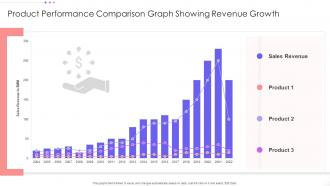
Product Performance Comparison Graph Showing Revenue Growth





Try Before you Buy Download Free Sample Product
 Impress Your
Audience
 100%
Editable
 Save Hours
of Time


Our Product Performance Comparison Graph Showing Revenue Growth are topically designed to provide an attractive backdrop to any subject. Use them to look like a presentation pro.
People who downloaded this PowerPoint presentation also viewed the following :
Product Performance Comparison Graph Showing Revenue Growth with all 7 slides:
Use our Product Performance Comparison Graph Showing Revenue Growth to effectively help you save your valuable time. They are readymade to fit into any presentation structure.






FAQs for Product Performance Comparison Graph
It's pretty industry-specific tbh. Tech companies blow up through product innovation and grabbing new markets. Retail's all about getting customers and running tight operations. Manufacturing? Supply chain optimization mostly - though that's been absolutely brutal for everyone lately. Healthcare grows when they get regulatory approvals or demographics shift in their favor (aging population = more patients). Consumer brands focus hard on building recognition and getting into stores. Just pick 2-3 competitors and see what they're doing aggressively. That'll tell you way more than generic advice.
Yeah so those crazy revenue swings? That's just seasonal demand messing with your head. Ice cream shops tank in January, retail explodes during Christmas - totally normal. Don't compare month-to-month or you'll panic every slow period (trust me on this one). Year-over-year is way more reliable for spotting actual growth. Plot out like two years of sales data so you can see your real patterns. Once you know when the busy/dead periods hit, planning cash flow becomes so much easier. Also helps with inventory - nobody wants to be stuck with Valentine's stuff in March, right?
Dude, pricing strategy can totally make or break your revenue numbers. You've gotta figure out if your growth came from selling more stuff or just jacking up prices - because those mean completely different things. More volume? That's usually good news about demand and how you stack up against competitors. Price increases driving everything? Eh, that might not last forever. I always look at both the average price trends AND unit sales to see what's really going on. Otherwise you're just guessing at why your numbers moved.
Look, every dollar you throw at getting new customers cuts straight into your actual revenue growth. Pretty basic math there. The real nightmare happens when your acquisition costs are higher than what those customers will ever spend with you - you're literally losing money on each person you bring in. Honestly, I've seen way too many companies fall into this trap. Track how long it takes to make back what you spent acquiring each customer. Shoot for 12-18 months max, otherwise you're just bleeding cash for growth that isn't actually profitable.
Honestly, year-over-year revenue growth percentage and CAGR are your best bets. Don't get fooled by single quarters though - seasonality can make things look way better or worse than they actually are. Revenue per employee is pretty solid too, plus market share growth if you can find reliable data (which isn't always easy). The tricky part? You've gotta compare companies that are actually similar - same industry, similar growth stage. Otherwise you're comparing a startup to like, Microsoft or something. Look for consistent patterns over time rather than just the biggest numbers.
Dude, segmentation is a total game changer for revenue. You stop wasting money on generic campaigns that nobody cares about. Different customer groups want different things, so why treat them all the same? It's honestly like using the right bait when you fish - way more effective. Your conversion rates go up because people actually connect with your messaging. Plus you can charge different prices for different segments, which is smart. Look at your customer data first and find maybe 2-3 clear groups. Then just test some targeted campaigns for each one. Trust me, the results speak for themselves.
Ugh, economic cycles totally screw with revenue comparisons - they create so much noise you can't tell what's actually good business vs. just timing. A recession makes even solid companies look flat, while boom times can make garbage look golden. Really annoying when you're trying to figure out what's worth your money. Look at full cycles instead of just year-over-year stuff. Compare companies from the same periods if you can. I always wonder - is this growth because they're smart or just got lucky with the economy? That question saves me from bad picks.
Here's the thing - innovation literally creates new money-making opportunities. Better products mean customers will pay more, and you'll steal market share from competitors who are stuck doing the same old stuff. Netflix is the perfect example, right? They completely pivoted from mailing DVDs to streaming and basically invented a whole new industry. But here's what matters most: your innovations need to fix actual problems people have. Don't just add random features because you can. Figure out what's genuinely frustrating your customers and build solutions around that. That's where the real revenue boost comes from.
Honestly, digital transformation is a game changer for revenue. Start with something simple like getting your sales online or organizing customer data better - don't go crazy trying to fix everything at once. You'll suddenly have way more ways to reach people, and the automation saves so much time it's ridiculous. The analytics part is where it gets interesting though - you start seeing patterns in customer behavior you never noticed before. Personalization becomes actually doable at scale, and I've seen conversion rates go through the roof. Your costs go down while you're reaching customers globally. Pretty wild combo.
Dude, retention is absolutely huge for revenue growth - way bigger than most people think. You're not just keeping current money flowing in. Retained customers buy more stuff, refer friends, and trust you enough for upsells. The math is wild too - acquiring new customers costs like 5-25x more than keeping existing ones. Your margins get way better over time. I'd start checking your retention numbers every month and figure out why people are bailing. That's honestly where you'll find the best growth opportunities hiding.
Yeah so M&A creates this fake revenue boost that looks amazing on paper but isn't real growth. Companies buy other businesses and suddenly their numbers shoot up because they're just combining two revenue streams - it's basically financial sleight of hand. The annoying thing is figuring out what growth actually came from the original business vs what came from acquisitions. You want to look for "organic growth" metrics in their reports instead. That strips out all the acquisition noise and shows you how the core business is really doing. Way more honest picture.
Look, eco-friendly products are where it's at right now - people will literally pay more for sustainable stuff. Cut waste and energy costs in your operations too, that's free margin right there. The circular economy thing is smart - design products so they can be reused or recycled later. Honestly, sustainability used to be just nice PR fluff, but now it's actually giving companies real competitive edge. Oh and track your revenue alongside sustainability metrics at the same time. You'll start seeing patterns where being green actually drives more profit.
So basically, different markets have totally different growth potential depending on how developed they are. Emerging spots like Southeast Asia can hit 15-20% growth - crazy numbers compared to the steady 2-5% you'll see in developed markets. But here's the thing: those high-growth areas are way more volatile. Currency swings alone can wreck your projections overnight. I learned that the hard way watching some companies get burned. Developed markets are boring but predictable. You probably want a mix of both, just depends on how much risk keeps you up at night and whether you can actually handle the operational headaches of expanding into less stable regions.
Honestly, start with whatever CRM you're already using - Salesforce, HubSpot, whatever. Most track deals and recurring revenue anyway, so why reinvent the wheel? Google Analytics works great too. If you're doing SaaS stuff, ChartMogul and ProfitWell are pretty solid for subscription metrics. Tableau and Power BI can get fancy with visualizations, but here's the thing - none of this matters if your data's messy. I learned that the hard way last year. Clean up what you've got first, then worry about the bells and whistles later.
Consumer preferences can totally flip your revenue projections upside down. When they shift toward your stuff, growth takes off way faster than expected. But man, when they turn against you? Your projections become pure fantasy - just look at what streaming did to Blockbuster. Don't wait for sales numbers to tell you what's happening. Watch social media buzz, see what early adopters are doing, track market research. I always tell people to build different scenarios and update them every quarter. Way better than getting blindsided by a trend you should've seen coming.
-
I can say with full confidence that all your business, academic, or professional work requirements will be sufficed with SlideTeam. Their gallery is as rich as 2Million+!!
-
The templates are handy and I can personalize them as per my needs. Glad to be your subscriber!