


Project challenges faced ppt inspiration




Try Before you Buy Download Free Sample Product
 Impress Your
 Audience
 100%
100% Editable
 Save Hours
 of Time


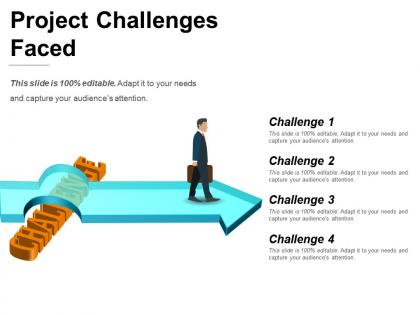
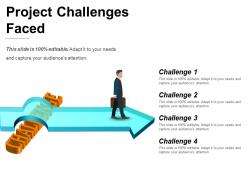
Grab your audience's attention with this amazing template on Project Challenges Faced PPT inspiration. Every project whether small or big faces a number of challenges right from the planning stage to execution stage and delivering stage. These challenges or obstacles needs to be addressed as soon as possible for a smooth process with highest efficiency. Our PowerPoint template helps the team to track project issues as they arise and discuss them on time so that necessary actions can be taken and any failures can be averted. The template shows a man walking on a path overcoming the challenge or the obstacle which is represented by a speed breaker. The PPT can be used by the project managers to discuss the project issues with the team. So, instead of designing a presentation from scratch, get access to the ready-made project challenges PPT and find the solutions to those problems. Download the PPT and deliver strong impact on your audience. Display economy and efficiency with our Project Challenges Faced Ppt Inspiration. Conserve your cash and energy.
People who downloaded this PowerPoint presentation also viewed the following :
Project challenges faced ppt inspiration with all 5 slides:
Enjoy yourself at the dais. Have a ball with our Project Challenges Faced Ppt Inspiration.


FAQs for Project challenges
Scope creep is the worst - stakeholders keep saying "oh just add this tiny thing" but never give you more time. Then you've got unrealistic deadlines set by people who've never actually done the work themselves. Communication issues though? That's what really murders projects. Everyone ends up working off completely different assumptions and you don't realize until it's too late. My advice - be super clear about scope from day one and write everything down, even the obvious stuff. Trust me on this one.
Look, good communication literally saves projects from going to hell. I learned this the hard way on a client project last year - total mess because nobody knew what anyone else was doing. Weekly check-ins are your best friend here. People won't freak out about deadlines if they actually know what's happening instead of sitting there wondering if you've vanished into thin air. Your team needs to feel like they can bug you with questions without you being a jerk about it. Honestly, stakeholders are surprisingly chill when you just keep them updated regularly. It's the silence that makes them panic.
Look, stakeholder engagement is basically your lifeline when projects hit walls. Get them involved early and they'll actually help you solve problems instead of creating them. Budget cuts? Scope creep? They've got your back because they're invested now. The political stuff always gets messy - that's just reality - but engaged stakeholders will fight for your project when it matters. Map out who really has influence first. Then set up regular check-ins where you actually listen to their input and show how it's shaping decisions. Makes them feel heard, which is honestly half the battle. Trust me on this one.
Honestly, just loop your team into these conversations instead of trying to handle scope changes solo. When something new comes up, talk through what it actually means for deadlines and workload with them. Don't automatically say yes or no - get their input on whether it's even doable. I've watched PMs try to "protect" their teams from this stuff, but it always blows up later. If you do take on extra work, fight for more time or budget instead of just cramming it in. Trust me, your team will respect you way more for pushing back on unrealistic timelines than being a total pushover.
Honestly, it's all about overcommunicating since you can't just tap someone on the shoulder. Daily standups are clutch, and tools like Asana help keep everyone on the same page. Time zones suck but async work isn't always terrible - sometimes it's actually more efficient than constant meetings. Weekly one-on-ones catch problems before they blow up. Oh, and make your deadlines crystal clear from day one because remote confusion is the worst. Shared docs where everyone can see what's happening are a lifesaver too. Trust me, better to over-explain than leave people guessing.
Yeah, tech can be super helpful for project stuff - those dashboards are actually pretty sweet for seeing everything at once, and automated workflows definitely save you time. Real-time collab tools are clutch too. But honestly? It gets overwhelming fast. You'll end up with like 15 different apps that don't even sync with each other, plus everyone expects instant responses to every ping. My advice - just pick maybe 2 or 3 tools that actually work together and ignore the rest. I know it's tempting to try every new productivity app, but most of them are solving problems you don't really have.
Oh man, team dynamics are HUGE. I've literally watched solid projects crash because people just couldn't get along. Good communication and trust? You'll crush deadlines and figure stuff out way faster. But when there's drama, weird personalities clashing, or people who won't talk to each other - everything becomes a nightmare. You end up babysitting grown adults instead of actually getting work done, which is honestly exhausting. My advice? Spot the red flags early and deal with them directly. Team building activities, defining who does what, or just straight-up asking people how they like to work.
Dude, bad project management will absolutely wreck your budget. I've watched projects balloon from $50k to $150k because nobody was paying attention. Scope creep sneaks in, deadlines get missed (hello expensive overtime), and suddenly you're throwing money at the wrong stuff. The worst part? Hidden costs like burnout and having to redo everything twice. Cost overruns can hit 20-200% in really messy situations - though hopefully yours won't get that bad. My advice: check your actual vs planned spending every week. Seriously, it's the only way to catch problems before they snowball into disasters.
Don't treat risk assessment like some boring one-and-done task. Build it into your regular project flow instead. Get your team together at each phase and brainstorm everything that could go wrong - honestly, the weirder the scenario, the better. Keep a risk register (sounds fancy but it's just a living doc) and actually check it weekly, not when everything's already on fire. Score each risk by how likely it is and how much damage it'd do. Then create real mitigation plans for the scary ones. Oh, and set up early warning signs so you catch problems before they tank your timeline.
So if your requirements keep changing, go with Agile - those iterative sprints handle chaos pretty well. Waterfall's actually better when everything's locked down, like construction projects or anything with heavy compliance stuff. Most teams I know mix both approaches now since pure anything rarely works in practice. Tight deadlines with clear deliverables? Waterfall keeps people on track. But if you're building something innovative where customers constantly change their minds (ugh), Agile's flexibility will save you. I'd honestly just look at what's causing you the most headaches right now and pick whichever method fixes that directly.
Honestly, culture is everything for projects. When you've got transparency and fast decisions, things actually get done. But bureaucratic places with teams that don't talk to each other? Total nightmare - I've seen projects die slow deaths there. People won't share problems or take risks if the culture punishes that stuff. Same with supporting changes nobody really wants. Figure out how your company actually works (not what they say on the website) and adapt around it. Fighting the culture is like swimming upstream - exhausting and pointless.
Honestly, Gantt charts are a lifesaver for spotting bottlenecks - try Asana or Monday.com. Risk registers sound boring but they're clutch for catching problems early (wish someone told me that years ago). Slack channels dedicated to each project keep everyone in the loop without the email chaos. Quick dashboards in Trello work great too, though I'm probably biased since I use it for everything. Start with whatever fixes your biggest headache first. Don't overwhelm yourself trying to implement like five new systems at once - been there, done that, it's a mess.
Ugh, tight deadlines are the worst - they basically create this whole mess where everything falls apart. You start cutting corners on planning because there's no time. Risk assessment? Forget about it. Quality checks get rushed or skipped entirely. Your team gets super stressed and starts screwing up left and right - honestly, I've watched good projects completely implode because everyone's freaking out. Communication goes out the window too since apparently there's "no time" for updates. Pro tip: always pad your timeline with buffer time and just be real about what you can actually deliver from the start.
Honestly, running practice scenarios is a game changer. Get your team doing "what if" workshops - like what happens when scope explodes or timelines get slashed. Teams that drill this stuff handle real crises so much better. Cross-training helps too. When your devs know testing basics and testers understand some code, you're not screwed if someone's out sick. Communication training matters more than people think, especially when stakeholders start breathing down your neck. I'd start by figuring out where your team's weakest, then build training around those gaps. Way more effective than generic stuff.
So basically, IT projects are messier because you're dealing with scope creep and requirements that keep changing - stuff you can't really see coming. Construction's different though. Weather delays, supply issues, physical constraints... annoying but at least predictable most of the time. Here's the thing: IT gives you flexibility but zero predictability. Construction? Way stricter deadlines but you actually know what your milestones look like. For IT, just communicate constantly and plan in chunks. Construction needs way more upfront planning and - honestly this saved my ass once - always build in buffer time for the inevitable delays.
-
Out of the box and creative design.
-
Design layout is very impressive.