

Project Closing Procedure Powerpoint Presentation Slides





Try Before you Buy Download Free Sample Product
 Impress Your
 Audience
 100%
100% Editable
 Save Hours
 of Time


Keep it simple with our Project Closing Procedure Powerpoint Presentation Slides. Your ideas will be clear and concise.
People who downloaded this PowerPoint presentation also viewed the following :
Content of this Powerpoint Presentation
Slide 1: This slide introduces Project Closing Procedure. State Your Company Name and begin.
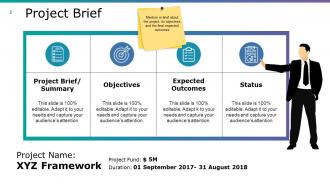
Slide 2: This slide presents Project Brief. Mention in brief about the project, its objectives and the final expected outcomes.
Slide 3: This slide showcases Project Description. Describe in detail, what the project is all about.
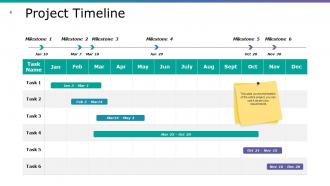
Slide 4: This slide presents Project Timeline.This slide covers the timeline of the entire project, you can use it as per your requirements.
Slide 5: This slide showcases Project Progress Summary.This template covers the broad summary of the entire project to highlight the completion level, its priority and the cost associated with these tasks. You can se this as per your requirements.
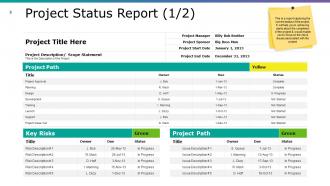
Slide 6: This slide shows Project Status Report (1/2). This is a report capturing the current status of the project. It will help you in achieving clarity about the completion of the project & would enable you to focus on the risk & issues associated with the project.
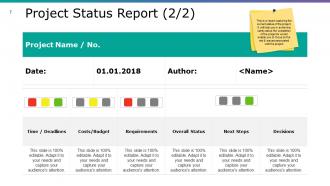
Slide 7: This slide showcases Project Status Report (2/2).This is a report capturing the current status of the project. It will help you in achieving clarity about the completion of the project & would enable you to focus on the risk & issues associated with the project.
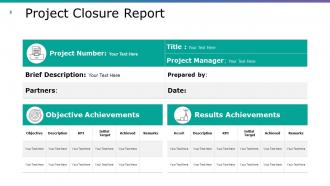
Slide 8: This slide presents Project Closure Report.
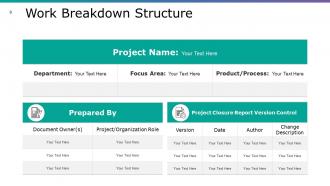
Slide 9: This slide showcases Work Breakdown Structure.
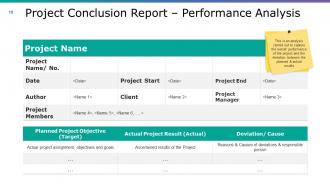
Slide 10: This slide presents Project Conclusion Report – Performance Analysis.This is an analysis carried out to capture the overall performance of the project and the deviation between the planned & actual results.
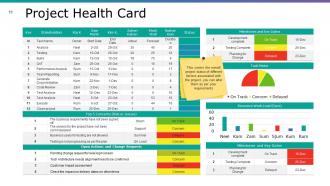
Slide 11: This slide showcases Project Health Card.This covers the overall project status of different factors associated with the project, you can alter them as per your requirements.
Slide 12: This slide presents Project Dashboard.
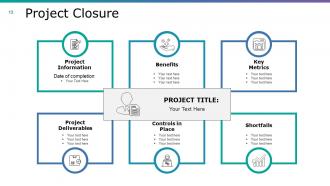
Slide 13: This slide shows Project Closure.
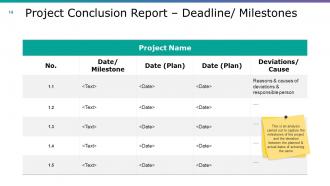
Slide 14: This slide showcases Project Conclusion Report – Deadline/ Milestones.This is an analysis carried out to capture the milestones of the project and the deviation between the planned & actual dates of achieving the same.
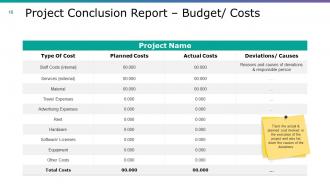
Slide 15: This slide Project Conclusion Report – Budget/ Costs.Track the actual & planned cost involved in the execution of the project and also list down the causes of the deviations.
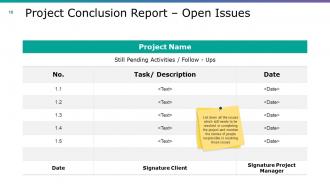
Slide 16: This slide showcases Project Conclusion Report – Open Issues. List down all the issues which still needs to be resolved in completing the project and mention the names of people responsible in resolving those issues.
Slide 17: This is a Coffee Break slide to halt. You may change it as per requirement.
Slide 18: This slide is titled Charts & Graphs to move forward.
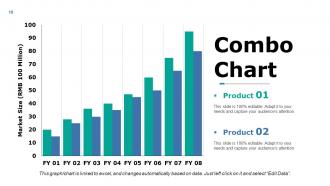
Slide 19: This slide presents Combo Chart.
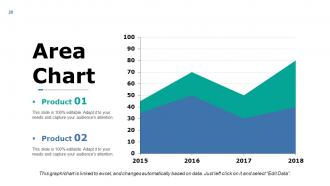
Slide 20: This slide showcases Area Chart.. Add the data and use it.
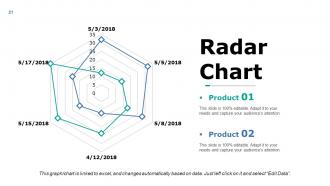
Slide 21: This slide shows Radar Chart
Slide 22: This slide is titled Additional Slides to move forward.
Slide 23: This is a Vision, Mission and Goals slide. State them here.
Slide 24: This is an About Us slide showing Our Company, Value Client, and Premium services as examples.
Slide 25: This slide showcases Our Team with Name and Designation to fill.
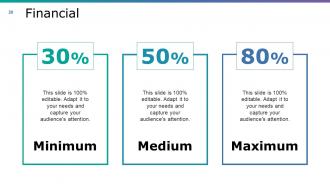
Slide 26: State your Financial score in this slide with relevant imagery and text.
Slide 27: This slide shows Our Goals for your company.
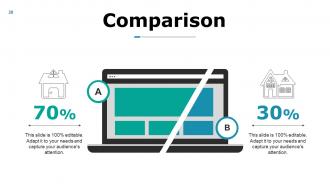
Slide 28: This is a Comparison slide to show comparison of two entities.
Slide 29: This is a Team slide for acknowledgement.
Slide 30: This is a Team slide for acknowledgement.
Slide 31: This is a Thank You image slide with Address, Email and Contact number.
Project Closing Procedure Powerpoint Presentation Slides with all 31 slides:
Our Project Closing Procedure Powerpoint Presentation Slides believe in give and take. They give their all and you take the credit.









FAQs for Project Closing Procedure
Honestly, you'll know when everything's actually done and your stakeholders have signed off on it. That's the big one - no final approval means you're still stuck with it! Check that your success criteria are met and there's no loose budget hanging around. Your team should be wrapping up their stuff too, with no major issues left that could blow up later. Oh, and document what you learned (I know, boring but helpful). Once those boxes are checked, just start closing it out. Don't be that person who lets projects drag on forever when they're basically done.
Dude, this is where so many projects totally fall apart - people just assume everyone knows what's happening when really nobody does. Get formal sign-offs from your key stakeholders first. Then send out that final summary with all the outcomes and metrics. Document lessons learned too (trust me on this one). You need to spell out what deliverables are actually done, what's still hanging, and how things transition to whoever's taking over. Otherwise you'll have people hitting you up weeks later asking random questions. Clean closure now saves you headaches later when you're trying to start your next project.
Okay so you'll want to get your project closure report done first - basically just comparing what you actually accomplished vs what you originally planned. Financial stuff too, like final budget reports and any leftover invoices. Get stakeholders to sign off on all the deliverables. Honestly, the lessons learned doc is probably the most useful thing even though everyone hates writing it. I always end up referencing those later. Oh and make sure contracts are wrapped up properly with vendors. Start collecting this stuff like a week early though - trust me, you don't want to be scrambling last minute trying to track down signatures.
Honestly, stakeholder feedback can totally change how you close out a project. Their input shows what worked and what bombed - plus there's always some random deliverable you forgot about (happens every time). You'll want to grab this feedback early, not when you're already halfway out the door. It affects how "successful" everyone thinks your project was, which matters more than it should. The insights help with final reports and often spark ideas for follow-up work. Sometimes you discover process improvements you never would've thought of otherwise.
So basically, lessons-learned sessions are where you sit down with your team after a project wraps up and hash out what went right and what was a total mess. Don't let people scatter before you do this - everyone forgets the details super fast. Talk through what you'd change next time too. Most teams skip this step because they're just happy to be done, which is such a waste. Write it all down somewhere you'll actually find it later (not buried in some random folder). Trust me, you'll thank yourself when you're starting the next project and can't remember why something didn't work last time.
Honestly, you gotta go through every single deliverable and check it off against what you originally promised. I know it sounds tedious, but trust me on this one. Get actual sign-offs from your stakeholders - don't just assume they're happy because nobody's complaining. Make a literal checklist and work through it systematically. Cross-check everything with your acceptance criteria too. Missing something now is way worse than spending an extra day double-checking. Also watch out for any last-minute additions trying to sneak in. Flag incomplete stuff immediately and nail down how you'll finish it.
Ugh, the worst part is always team members vanishing right when you need final docs done. Plus stakeholders totally check out once the exciting stuff wraps up - classic move. Build your closure tasks into the timeline way earlier than you think. Don't save everything for the end! Schedule those lessons learned meetings before people scatter to new projects. Also, weave documentation into regular deliverables instead of treating it like some afterthought. Oh, and this one's huge - get written sign-off before releasing anyone. Trust me on that.
Look, project closure is honestly where you capture what worked and what totally bombed before everyone disappears. Document lessons learned and share the good stuff with other teams. I know it sounds boring, but this gets skipped constantly because people just want to move on already. Here's the reality though - when you actually reflect on wins and failures, you're saving future teams from making your same dumb mistakes. Set up a real retrospective meeting (not just a quick chat) and put those insights somewhere people can actually find them later. Trust me on this one.
Dude, project closure is gonna hit your wallet in a few ways. Final contractor payments are the big one, plus you've got equipment disposal costs. Late? Expect penalty fees too. Audits and documentation will cost you - super tedious but finance won't let you skip it. Here's the thing though: you might actually get some money back! Unused software licenses, deposits you forgot about, that kind of stuff. Tax implications can be tricky depending on how everything's structured. Pro tip: document literally everything because your finance team will want receipts for days when they put together that final report.
So first thing - make a list of everything that's not done and figure out what happens next with each item. Some stuff can move to other projects, some goes to regular ops teams, and honestly? Some things just need to die (with approval obviously). Write up a handover doc explaining what's incomplete, why you didn't finish it, and who's grabbing it now. Dependencies too - that part always bites people later. Get stakeholders to actually sign off on what transfers vs what gets axed. Being upfront about the mess prevents way bigger headaches down the road.
Oh dude, bring your ops team in way earlier than you think you need to. I learned this the hard way on my last project - don't be like me lol. Get them doing knowledge transfer sessions while you're still building stuff. Run both systems side by side for a while so they can get comfortable. Document everything (I know, boring but necessary). Figure out who's gonna be your main contact when shit hits the fan. Here's the thing though - you can't just dump it on them and bounce. Hang around for a few weeks to help with whatever breaks.
First thing - go through all your contracts and double-check the deliverables actually match what you promised. Handle any payment stuff or disputes now before they get messy. Look for warranty periods or liability clauses that might still apply after you're "done." IP rights are critical too - figure out who owns what going forward. Oh, and data protection is massive, especially if you need to return or destroy client info. Honestly, I learned the hard way to make a legal checklist at the start of projects. Saves you from panicking later. If it's a big project, loop in your legal team for final approval.
Honestly, your team needs that win when you wrap up a project - it's like validation for all the crazy hours they put in. Projects are exhausting, especially at the end when everyone's running on fumes. Taking time to celebrate makes people feel like their work actually mattered instead of just jumping straight into the next fire drill. Doesn't have to be fancy either - grab lunch together, give shoutouts in the team meeting, or just write down what went awesome. The trick is making it feel real, not some corporate checkbox thing. Trust me, it pays off later.
For project wrap-up, stick with what you already know honestly. Microsoft Project and Asana handle final deliverables pretty well. Confluence or Notion work great for lessons learned docs - though I've seen teams just use a simple SharePoint site and it works fine. DocuSign speeds up those stakeholder approvals like crazy. Don't learn new software when you're trying to close things out, that's just asking for headaches. Build your closure checklist in whatever tool you've been using all along. Sometimes the boring solution is the right one.
Honestly, project closure is all over the place depending on what you do. IT stuff? You're mostly handling knowledge transfer and documenting systems, maybe setting up post-launch support. But construction is a whole different beast - tons of inspections, permits, warranties, plus those formal handover meetings with clients. Healthcare projects are probably the worst though, especially clinical ones. The compliance paperwork never ends, and you'll be monitoring results for months or years after you think you're "done." That's the thing - some industries don't really close projects, they just shift into different phases. My advice? Figure out your regulatory requirements upfront so you're not panicking later.
-
Excellent Designs.
-
Unique and attractive product design.