

Project Closure Powerpoint Presentation Slides






Try Before you Buy Download Free Sample Product
 Impress Your
 Audience
 100%
100% Editable
 Save Hours
 of Time


As far as any project cycle is concerned, it’s important to give it a good closure in the form of PPT presentation slide. This project closure is generally the fourth or last stage in any planned project PowerPoint layout. The Project Closure PowerPoint Presentation Slides ensure that project is brought to near completion mode in a carefully structured or professional manner. Whether you are presenting on project completion, project issue, termination or execution, the PPT template ensures every section or segment is given right amount of space and importance. Confirmation about the fact that the work has been rightly done, gaining a formal acceptance and finally completing off with performance rating, all this can be easily recorded and maintained using this presentation layout. As part of management process, it’s important to use professional designs and PPT template to put forward all the deliverables to the customers and timely updating all the stakeholders regarding all project activities. Each PowerPoint slide makes the concept visually engaging and easy to understand. Get folks eager for an exciting experience with our Project Closure Powerpoint Presentation Slides. They ensure a bigger headcount.
People who downloaded this PowerPoint presentation also viewed the following :
Content of this Powerpoint Presentation
Slide 1: This slide introduces Project Closure. Add your company name and get started.
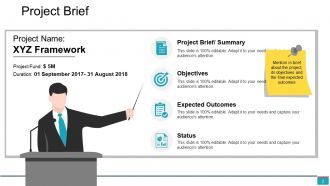
Slide 2: This slide showcases Project Brief. Mention in brief about the project, its objectives and the final expected outcomes.
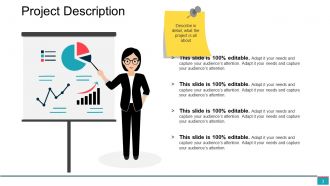
Slide 3: This slide presents Project Description .Describe in detail, what the project is all about .
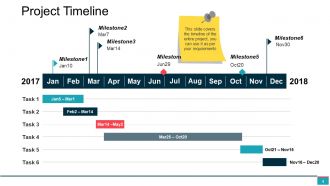
Slide 4: This slide showcases Project Timeline.This slide covers the timeline of the entire project, you can use it as per your requirements.
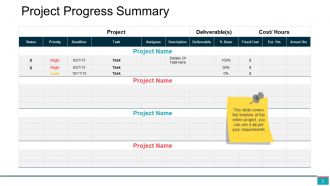
Slide 5: This slide presents Project Progress Summary , also it covers the timeline of the entire project, you can use it as per your requirements.
Slide 6: This slide displays Project progress summary. This also is a report capturing the current status of the project. It will help you in achieving clarity about the completion of the project & would enable you to focus on the risk & issues associated with the project .
Slide 7: This slide presents Project Status Report. This also includes report capturing the current status of the project. It will help you in achieving clarity about the completion of the project & would enable you to focus on the risk & issues associated with the project .
Slide 8: This slide showcases Project Health Card. This covers the overall project status of different factors associated with the project, you can alter them as per your requirements .
Slide 9: This slide presents Project Dashboard. This is a representation of the entire project in a gist form capturing all the important highlights of the project. You can alter this as per the need
Slide 10: This slide displays Project Closure . You can fill the information as per need. We have mentioned important parameters.
Slide 11: This slide presents Project Closure Report which includes project number, objective achievement, Result achievement. You can add/edit as per your need.
Slide 12: This slide showcases Work Breakdown Structure. You can add as per your requirement.
Slide 13: This slide presents Project Conclusion Report – Performance Analysis. This is an analysis carried out to capture the overall performance of the project and the deviation between the planned & actual result.
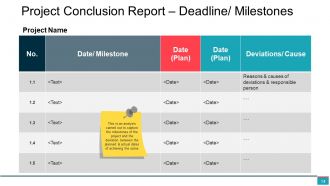
Slide 14: This slide displays Project Conclusion Report – Deadline/ Milestones. This is an analysis carried out to capture the milestones of the project and the deviation between the planned & actual dates of achieving the same.
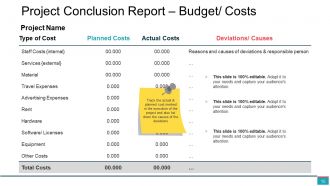
Slide 15: This slide showcases Project Conclusion Report – Budget/ Costs. Track the actual & planned cost involved in the execution of the project and also list down the causes of the deviations .
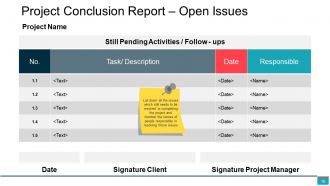
Slide 16: This slide displays Project Conclusion Report – Open Issues. List down all the issues which still needs to be resolved in completing the project and mention the names of people responsible in resolving those issues.
Slide 17: This slide shows Coffee Break image.
Slide 18: This slide displays the title Charts & Graphs.
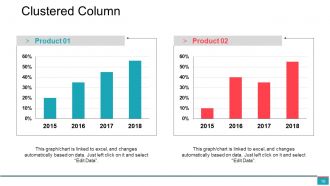
Slide 19: This slide showcases Clustered Column with two product comparison.
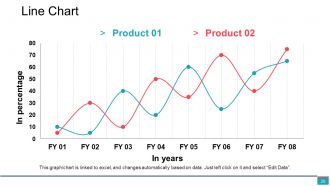
Slide 20: This slide shows a Line Chart for two product comparison.
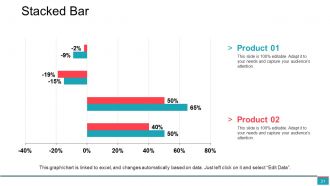
Slide 21: This slide shows a Stacked Line graph in terms of percentage and years for comparison of Product 01, Product 02, Product 03 etc.
Slide 22: This slide is titled Additional Slides to move forward.
Slide 23: This is a Vision, Mission and Goals slide. State them here.
Slide 24: This is an Our Team slide with name, image&text boxes to put the required information.
Slide 25: This slide helps show- About Our Company. The sub headings include- Creative Design, Customer Care, Expand Company
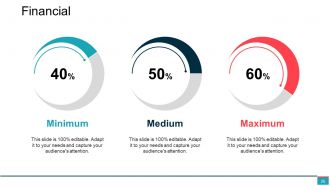
Slide 26: This slide is titled as Financials. Show finance related stuff here.
Slide 27: This slide shows Our Goals for your company.
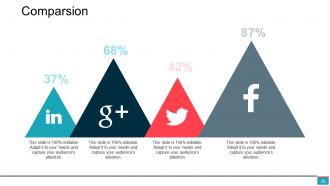
Slide 28: This is a Comparison slide to show comparison of four entities.
Slide 29: This is a Target slide. State your targets here.
Slide 30: This slide presents a Mind map with text boxes.
Slide 31: This is a Thank You slide with image.
Project Closure Powerpoint Presentation Slides with all 31 slides:
Examine the implications with our Project Closure Powerpoint Presentation Slides. Figure out the after effects.
-

Project Closure
-
Project Brief
-
Project Description
-
Project Timeline
-
Project Progress Summary
-
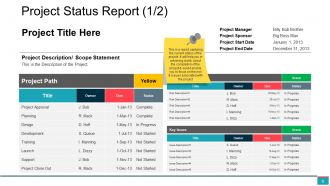
Project Status Report 1 2
-
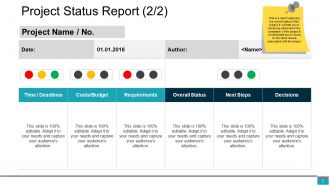
Project Status Report 2 2
-
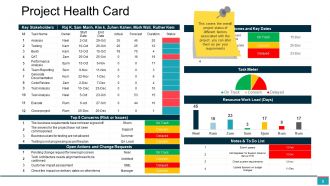
Project Health Card
-
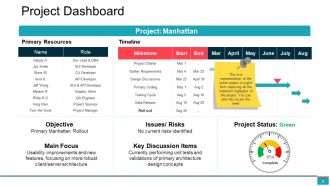
Project Dashboard
-
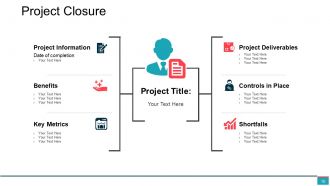
Project Closure
-
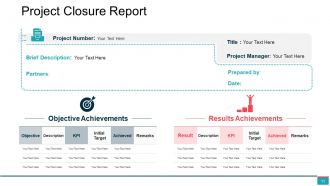
Project Closure Report
-
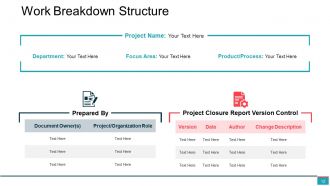
Work Breakdown Structure
-
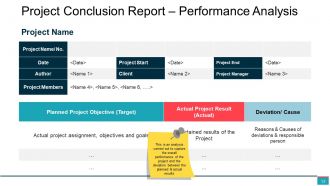
Project Conclusion Report Performance Analysis
-
Project Conclusion Report Deadline Milestones
-
Project Conclusion Report Budget Costs
-
Project Conclusion Report Open Issues
-

Coffee Break
-

Charts Graphs
-
Clustered Column
-
Line Chart
-
Stacked Bar
-

Additional Slides
-

Our Mission
-

Our Team
-

About Our Company
-
Financial
-

Our Goal
-
Comparsion
-

Our Target
-

Mind Map
-

Thank You
FAQs for Project Closure
Hey! So your closure report needs the basics - what you planned vs what actually happened, budget stuff, timeline performance. Document lessons learned (this is where the real gold is honestly). Get stakeholder feedback and list any leftover issues for whoever's next. Oh, and don't skip the wins! Future teams will thank you for noting what worked. Team highlights are good too. Make sure key people sign off before you wrap, then store it somewhere people can actually find later - can't tell you how many reports just disappear into the void.
Honestly, good communication saves you from so much project closure drama. People know exactly what's expected instead of running around like headaches. I'd send everyone a clear plan upfront - key dates, who needs to do what, the whole deal. It also helps get buy-in for those lessons learned sessions (which nobody wants to attend but whatever, they matter). You'll dodge those weird moments where half the team thinks you're still working while you're trying to close everything out. Short sentences mixed with longer explanations work best. Don't let people guess what's happening.
Look, lessons learned are basically notes to your future self so you don't make the same dumb mistakes twice. Document what bombed, what actually worked, and what you'd change. Then - and this is the part most people skip - actually USE them when planning your next project. Reference them in your risk planning, templates, whatever. I've seen too many teams just dump everything in a folder and forget about it. The whole point is creating a cheat sheet for next time. It's honestly one of those things that seems obvious but saves you so much headache down the road.
Make sure you write everything down first - which issues are still hanging out there, who's gonna take them on, and what needs to happen next. The worst thing is just dropping them on someone without getting buy-in. Get whoever's taking over to actually agree to own each problem. If any of these could mess with day-to-day operations, loop in leadership before you officially wrap up. I've seen too many projects where unfinished stuff just... disappeared into the void. Your project's done, but those issues still need someone responsible for fixing them.
Honestly, communication is everything here. Send out that closure announcement first - let everyone know the timeline and what's happening. Then grab time with your key players individually to go through outcomes and get their feedback. Those conversations are where you'll get the best insights, trust me. Oh, and don't forget about the people who weren't super involved but still need the heads up! A final summary works great - hit the achievements, what got delivered, next steps. One thing I always add is a "what's changing" bit so people actually know how this affects their daily routine going forward.
Dude, definitely do a closure celebration - it's such a game changer for team morale. People bust their asses for months, so they deserve some recognition and fun time together. Plus you get to debrief on what worked and what was a total disaster (we've all been there lol). The energy from celebrating wins together carries over into your next projects too. Teams bond over pizza and war stories, you know? Short version: don't just let projects die a slow death. Actually plan something, even if it's just ordering takeout and doing a quick retrospective. Your future self will thank you when everyone's pumped for the next challenge.
Focus on the classic trio first - schedule, budget, and scope. Did you hit deadlines? Stay under budget? Actually deliver what you promised? Quality stuff matters too, like defect rates and how happy customers are. Honestly though, stakeholder happiness is everything. I've seen "failed" projects that kept people engaged totally beat "successful" ones that pissed everyone off. Team performance is worth tracking too. Pro tip: build a simple dashboard with these metrics early on, not when you're wrapping up. Trust me, you don't want to be hunting for data at the last minute.
Yeah, this stuff gets tricky fast. Your German teammates will want brutally honest feedback sessions, but Asian colleagues might dodge any criticism - even the helpful kind. Some cultures need extensive post-mortems and formal docs, others just want quick verbal check-ins before moving on. Time zones obviously make everything messier. There's also weird differences in how people want to celebrate wins versus just ticking the box. Honestly, I'd just survey everyone upfront about their closure preferences. Then cobble together some hybrid approach that doesn't leave anyone feeling like the project just... died.
Start with your final project report covering what you accomplished and lessons learned. Financial docs are next - budget reconciliation, final costs, all that fun stuff (honestly the most boring part but whatever). Get your stakeholder sign-offs done before people disappear. Don't forget to archive everything and document any handovers for ongoing support. I'd make a closure checklist early on so you're not scrambling at the end trying to remember what you missed. Trust me on that one.
Write up what actually went wrong and what worked - trust me, you'll thank yourself later when similar stuff comes up. Document how accurate your predictions were too, it'll help you get better at spotting risks. The ones that blindsided you are honestly the most valuable to capture. Update your company's risk templates with the new info you learned. Oh and make sure other PMs can actually find this stuff - I've seen so many good lessons just disappear into some random folder. Bottom line: turn it into something useful, not just another document that sits there.
Honestly, the handover meetings are clutch - get your team to walk through everything with whoever's coming in next. Document all the key stuff in one place (trust me, you'll need it later). For technical stuff, pair programming works way better than just explaining things. Oh, and record video walkthroughs of the tricky processes since some people learn better that way. Don't just throw a pile of docs at them though. Make it interactive. Set up a follow-up meeting in a few weeks to fill any holes you missed.
Go through your project charter line by line and check off each deliverable. Boring but necessary! Get sign-offs from whoever commissioned the work - emails are totally fine. I always make a simple checklist because I guarantee you'll forget about that random report from week 3. Make sure documentation and training materials actually get handed over too. Don't rush this part, even though you probably want to. Start at least a week before your closure date so you can hunt down any stragglers or missing pieces.
Document everything and get sign-offs before you close anything out. Seriously, get those deliverables officially accepted and settle all contracts. Any lingering issues? Write them down with clear ownership - trust me on this one. I've watched projects blow up months later because people figured they'd "deal with it eventually." Hand over everything properly to whoever's taking maintenance. Write up lessons learned (yeah, I know it's boring but do it anyway). Archive communications somewhere people can actually access later. Don't leave loose threads hanging because you'll hate yourself for it down the road.
Honestly, formal surveys work but sometimes just grabbing coffee and asking "so how'd that really go?" gets you way better intel. Send them questions about timeline, communication, deliverable quality - the usual stuff. But watch for the real indicators too: are they talking about next projects? Did they approve everything fast or drag their feet? Quick reference - if they'll put their name behind your work, you nailed it. Oh and timing matters - catch them within a week while it's all still fresh in their heads. Don't just ask "how'd we do" though, get specific.
Honestly, rushing the closure will bite you later. You'll miss documenting what went wrong, and your team will just repeat the same screw-ups on the next project - I've watched this happen so many times. Knowledge transfer gets botched, stakeholders feel left hanging, and suddenly you're the PM who can't get decent resources because nobody trusts you to finish things properly. Plus there's always some random deliverable that comes back to haunt you six months later. Seriously, just take that extra week. Do the debrief, write up lessons learned, get everything archived. Your future self will thank you.
-
Very unique and reliable designs.
-
Very well designed and informative templates.