


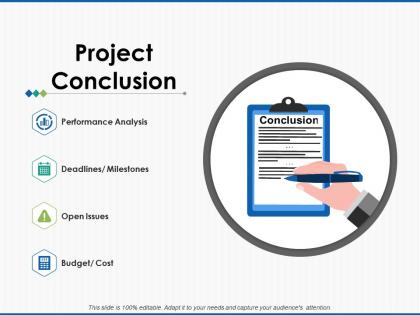
Project conclusion performance analysis ppt powerpoint presentation file ideas




Try Before you Buy Download Free Sample Product
 Impress Your
 Audience
 100%
100% Editable
 Save Hours
 of Time


Address any instability that exists with our Project Conclusion Performance Analysis Ppt Powerpoint Presentation File Ideas. It helps control fluctuating circumstances.
People who downloaded this PowerPoint presentation also viewed the following :
Project conclusion performance analysis ppt powerpoint presentation file ideas with all 5 slides:
Introduce any aspect with our Project Conclusion Performance Analysis Ppt Powerpoint Presentation File Ideas. Acquaint folks with the fundamentals of any concept.

FAQs for Project conclusion performance analysis ppt powerpoint
Look for clear deliverable completion and stakeholder sign-off first. Did you actually solve the problem you set out to tackle? That's the big one. Check if you stayed within scope, budget, and timeline too. Document any lessons learned - trust me, future you will thank you for this. Getting everyone to agree it's "done" is honestly the most annoying part because suddenly everyone's a critic! Oh, and start writing up your conclusion stuff early. Don't be that person scrambling last minute. Your project should tell a coherent story from beginning to end, with measurable outcomes backing up what you accomplished.
Don't let those lessons slip away - grab them while everything's still fresh in people's heads. I'd make a quick template covering what worked, what bombed, and what you'd do differently. Teams always want to rush to the next thing (totally get it), but honestly? This stuff is gold for future projects. Get your key people together for like 30 minutes max and actually write down what they say. Store it somewhere people can find later - not buried in some random folder. Oh, and tag everything by project type so you can search for it when you're dealing with similar chaos down the road.
You absolutely need stakeholder feedback for your project wrap-up - it's what stops you from just patting yourself on the back. They'll tell you if you actually hit the mark or just think you did. Your team might be blind to obvious issues since you've been buried in the details. Honestly, some of the best insights come from people who weren't in the weeds with you. They catch things you miss and call out wins you didn't even realize happened. Don't just wait around for feedback either - actually go ask through surveys or quick interviews.
Look, when you wrap up a project, take 30 minutes to actually talk through what happened. Figure out what worked so you can do it again. More importantly though - catch the stuff that sucked so it doesn't bite you next time. I know everyone wants to jump straight into the next thing (guilty of this myself), but skipping this step is dumb. You'll keep making the same mistakes over and over. Communication gets better when you're honest about what went wrong. Your processes improve. It's literally the easiest way to level up without extra work.
Track the obvious stuff first - budget, timeline, quality of what you deliver. But honestly? Stakeholder happiness and whether your team still talks to you afterwards matter just as much. I've seen "successful" projects that left everyone wanting to quit. Scope creep is huge to monitor. Risk management too - did you actually prevent the disasters you saw coming? Post-launch metrics if it's that kind of project. Mix the hard numbers with real feedback from people. Oh, and figure this out before you start, not when someone asks "so... did we win?"
Okay so first thing - figure out what your company actually cares about this year. Revenue targets? New markets? Whatever it is, write down how your project helped with that stuff. I literally do the "we did X which helped achieve Y" thing because it works. Don't just list accomplishments - that's boring and nobody connects the dots for you. Use the exact same words leadership throws around in their strategy docs (trust me on this). Oh and put all this in your final report so people can actually see why your project mattered. Makes such a difference when stakeholders can easily spot the value.
Don't rush through it just because you're relieved the project's over - trust me, I've been there. You'll miss good insights that way. Focus on wins too, not just what went sideways. Also avoid the blame game or being super vague about lessons learned. Write your findings down somewhere people can actually find later (not just mental notes). Get input from everyone on your team - honestly their takes might catch you off guard. Oh and do this while everything's still fresh, otherwise you'll forget half the details.
Look, your brilliant analysis means nothing if you can't explain it clearly. Stakeholders tune out fast - trust me on this one. Focus on the story behind your data, not just numbers. What actually happened and why? I always tie conclusions to real examples people can picture. Don't let insights vanish because you buried them in jargon or made things too complicated. Short, punchy explanations work best. And honestly? Always finish with specific next steps. Otherwise people just nod along and forget everything five minutes later.
Dude, visuals are a game changer for presentations. Charts and graphs let people see your key data instantly - way better than making them dig through paragraphs. Timelines work great for showing project phases too. I'm obsessed with before/after comparisons because the impact just jumps out at you. Infographics help when you've got complex stuff to explain (honestly, most people's eyes glaze over with too much text). During presentations, having something to point at keeps everyone focused. Just don't go overboard - pick 2-3 solid visuals that actually back up your main points.
Set up regular check-ins with your main stakeholders and create KPIs that actually measure if your recommendations are working. Monthly or quarterly works, depending on how big the project is. Honestly, the biggest mistake I see is not assigning specific people to own each piece - stuff just disappears otherwise. Automated dashboards are clutch if you can swing them. Brief review meetings help too, but make it routine or it won't stick. Oh, and start with like 3-5 core metrics max that show whether people are actually doing what you suggested and getting results.
Honestly, just start with what you already have. Excel or Sheets work fine for comparing your actual budget vs what you planned. Microsoft Project's solid if you're already using it, otherwise Asana does the job for timeline stuff. For getting feedback from your team, I'd probably just throw together a Google Form - way easier than overthinking it with fancy survey tools. Though SurveyMonkey's decent too if you want something prettier. Oh, and if you need to map out what worked vs what didn't, Miro's pretty helpful for that visual stuff. But seriously, don't go crazy with new tools unless you actually need them.
Yeah, cultural stuff gets messy when you're analyzing what went right or wrong. Western teams love pointing fingers at individuals, but in collectivist cultures they'll focus on the whole group instead. Some cultures are brutally honest about failures while others sugarcoat everything - honestly drives me crazy sometimes. Time's another thing - missed deadlines are disasters in some places, totally normal elsewhere. You should set up structured feedback sessions and actually ask people to share their cultural take on things. Otherwise you're just getting one perspective and missing half the story.
Do it within 2-3 weeks while the project's still raw in people's heads. Bring everyone in, not just the managers - that's key. Make sure no one's gonna get roasted for being honest about screwups. I've watched so many of these turn into blame games and it's pointless. Cover three things: what rocked, what sucked, and what you'd do differently. Actually write this stuff down though. Don't just talk and forget about it. Give people specific things to own and fix. The whole point falls apart if you don't use these lessons on the next project.
Get specific with your data and tie everything to actual outcomes your team can do something about. Don't just say "communication sucked" - write something like "standups went 20 minutes over because we never set agendas." I've read so many project reports that just collect dust afterward, honestly. Each conclusion needs someone's name on it, what they're gonna do, and a deadline. The real test? If someone found your analysis months later, could they actually follow through? Short answer: probably not unless you're really concrete about next steps.
Honestly, doing a solid project wrap-up analysis is one of the best ways to build stronger relationships with your stakeholders. When you're transparent about what worked and what bombed, it shows you actually care about their experience. Nobody wants to be blindsided later! Those debrief sessions give people space to share stuff they maybe kept quiet about during the project - which is super valuable. It proves you're serious about making future collaborations better. Just don't be that person who collects all this feedback and then ignores it. That'll backfire fast and make relationships worse than before.
No Reviews