


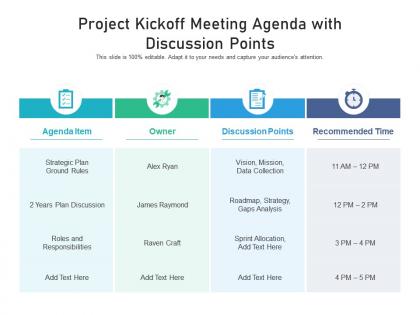
Project kickoff meeting agenda with discussion points




Try Before you Buy Download Free Sample Product
 Impress Your
 Audience
 100%
100% Editable
 Save Hours
 of Time


Our Project Kickoff Meeting Agenda With Discussion Points are topically designed to provide an attractive backdrop to any subject. Use them to look like a presentation pro.
People who downloaded this PowerPoint presentation also viewed the following :
Project kickoff meeting agenda with discussion points with all 2 slides:
Use our Project Kickoff Meeting Agenda With Discussion Points to effectively help you save your valuable time. They are readymade to fit into any presentation structure.
FAQs for Project kickoff meeting agenda
Project kickoff objectives include establishing clear project scope, defining roles and responsibilities, setting realistic timelines and milestones, aligning stakeholder expectations, and creating communication protocols. These foundational elements streamline project execution by minimizing confusion, enhancing team coordination, and ensuring resource allocation efficiency, with many organizations finding that well-defined objectives ultimately deliver faster completion times and improved project outcomes.
Project stakeholders typically include project sponsors, team members, clients, end users, department heads, and external vendors or contractors. These stakeholders collaborate by providing strategic direction, executing deliverables, offering subject matter expertise, and ensuring alignment with business objectives, with many organizations finding that clear role definition from kickoff significantly enhances project success and stakeholder engagement.
**INPUT**: What resources are necessary for successful project execution, and how will we allocate them? **OUTPUT**: Essential project resources include skilled personnel, technology infrastructure, budget allocation, project management tools, and stakeholder communication systems. Strategic resource allocation involves assessing project phases, prioritizing critical path activities, and maintaining flexibility for adjustments, with many organizations finding that balanced distribution ultimately delivers enhanced efficiency and competitive advantage.
**INPUT**: What is the timeline for this project, including key milestones and deadlines? **OUTPUT**: Project timelines typically include planning phases, development stages, testing periods, implementation milestones, and final delivery dates. These structured approaches streamline execution by establishing clear accountability, enabling resource allocation, and maintaining stakeholder alignment, with many organizations finding that detailed milestone mapping ultimately delivers faster project completion and enhanced operational efficiency.
Progress communication typically involves structured status reports, regular milestone meetings, collaborative project dashboards, stakeholder briefings, and automated notification systems. These approaches streamline information flow by establishing clear reporting schedules, maintaining transparent project visibility, and enabling real-time updates, with many organizations finding that consistent communication rhythms ultimately enhance team alignment and stakeholder confidence.
Project risks include scope creep, resource constraints, timeline delays, stakeholder misalignment, and technical challenges. Effective mitigation involves establishing clear project boundaries, securing adequate resources upfront, building buffer time into schedules, and implementing regular stakeholder communication protocols, with many organizations finding that proactive risk assessment during kickoff significantly reduces project failures.
Project tracking and collaboration tools include project management platforms like Asana or Monday.com, communication software such as Slack or Microsoft Teams, file sharing systems, time tracking applications, and reporting dashboards. These technologies streamline workflow coordination, enhance team communication, and provide real-time visibility into project progress, ultimately delivering improved accountability and faster project completion across organizations.
Project success is defined through clear deliverables, timeline adherence, budget compliance, stakeholder satisfaction, and quality standards that align with business objectives. These metrics enable teams to track progress through milestone completion rates, resource utilization efficiency, and ROI measurements, with many organizations finding that defined success criteria ultimately streamline project execution and enhance accountability.
Project kickoff deliverables typically include project charter, scope documentation, timeline with milestones, resource allocation plans, and communication protocols. These deliverables are distributed among project managers handling coordination and timelines, stakeholders defining scope and requirements, and team leads managing resource planning, ultimately establishing clear accountability frameworks that streamline execution across organizations.
Changes to project scope are managed through a formal change control process involving documentation, stakeholder approval, and impact assessment on timeline, budget, and resources. This structured approach ensures transparency and accountability, with many organizations finding that regular communication through status updates, revised project documentation, and stakeholder meetings prevents scope creep while maintaining project alignment and delivery success.
Critical assumptions at project kickoff typically include resource availability, stakeholder commitment levels, timeline feasibility, budget accuracy, and scope stability throughout execution. These assumptions form the foundation for project planning, with many teams finding that documenting and validating them early prevents costly revisions, ensures realistic expectations, and ultimately delivers smoother project outcomes.
Alignment is achieved through comprehensive goal documentation, clear role definitions, structured communication protocols, and regular checkpoint meetings throughout the project lifecycle. During kickoff sessions, teams establish shared success metrics, define decision-making processes, and create feedback loops, with many organizations finding that formal alignment frameworks reduce project delays by 30% while enhancing stakeholder satisfaction.
Lessons from previous projects include establishing clear communication protocols, defining realistic timelines with buffer periods, identifying potential risks early, securing stakeholder buy-in upfront, and documenting decisions comprehensively. These strategic approaches streamline project execution by minimizing scope creep, reducing delays, and enhancing team alignment, with many organizations finding that proactive planning ultimately delivers higher success rates and improved resource efficiency.
Project budgets typically encompass resource allocation, timeline costs, contingency reserves, technology investments, and operational expenses, with effective management requiring transparent tracking systems, regular milestone reviews, and stakeholder approval processes. Through strategic budget monitoring tools and cross-functional collaboration, organizations streamline cost control, minimize overruns, and enhance project delivery timelines, ultimately delivering measurable ROI and competitive advantage.
Project conflicts are handled through established escalation protocols, regular checkpoint meetings, transparent communication channels, and designated conflict resolution frameworks that address issues at appropriate organizational levels. These structured approaches enable teams to resolve technical disagreements, resource constraints, and timeline pressures efficiently, while maintaining project momentum and stakeholder alignment, ultimately delivering smoother project outcomes.
-
The Designed Graphic are very professional and classic.
-
Visually stunning presentation, love the content.