Project kickoff meeting agenda with preparation and process

Rating:
90%
Project kickoff meeting agenda with preparation and process
Slide 1 of 2

or

Favourites Favourites

Try Before you Buy Download Free Sample Product

Audience Impress Your
Audience
Editable 100%
Editable
Time Save Hours
of Time
The Biggest Sale is ending soon in
0
0
:
0
0
:
0
0
Rating:
90%
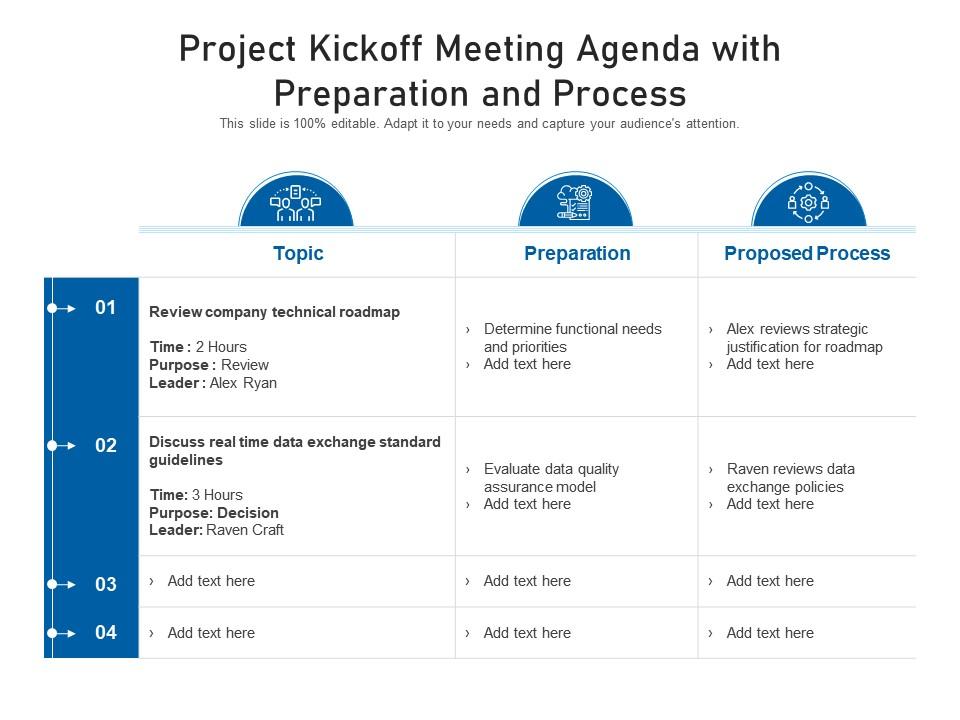
Presenting our well-structured Project Kickoff Meeting Agenda With Preparation And Process. The topics discussed in this slide are Data Quality, Strategic, Technical Roadmap, Decision, Assurance Model. This is an instantly available PowerPoint presentation that can be edited conveniently. Download it right away and captivate your audience.

People who downloaded this PowerPoint presentation also viewed the following :

FAQs for Project kickoff meeting agenda with

Honestly, you just want everyone on the same page about what you're doing and when stuff's due. Figure out who's handling what - that's huge. Set up how you'll communicate (Slack, email, whatever works). I always try to spot potential problems early because they WILL come up later. Build some rapport too since you're stuck with these people for the next few months lol. Send a recap email after - people forget things immediately. Oh, and be super clear about deadlines. Nothing worse than someone saying "wait, that was due today?"

Definitely send an agenda ahead of time and tell people to come ready with input on their stuff. Here's what I've found works - call people out by name instead of that "any thoughts?" thing where everyone just stares at their phones. Round-robin style works great too, makes everyone say something even if it's quick. The quiet people usually have the best insights honestly, so I always try to pull them in specifically. Oh and I learned this one the hard way after a few terrible meetings where only like 2 people talked the whole time. You'll get way better results when everyone actually contributes instead of just the usual suspects dominating everything.

Start with the basics - scope, timeline, milestones, and who's doing what. Budget overview and communication stuff comes next. Oh, and definitely do introductions if it's a new team (nothing worse than not knowing who actually calls the shots). I always throw in risks and assumptions early - trust me, it'll save you drama later. Time-box everything or you'll end up in marathon sessions about tiny details. Success metrics are key too. Send it out a day before so people can prep instead of just showing up blind.

Honestly, just come with a real agenda and don't let it go off the rails. Get everyone introduced first - even if they think they know each other, trust me on this one. Then be super clear about what winning looks like for the whole project. You'll want to seem excited but not like you're selling them a timeshare or something. Give people room to ask questions early because they're gonna have them anyway. Structure matters, but don't be a total control freak about it. Wrap up by making sure everyone knows what they're doing next and who's responsible for what.

So project scope is literally the backbone of your whole kickoff - it draws the line between what you're building and what's totally out of bounds. You'll walk through deliverables, timelines, and how you'll measure success. Everyone needs to be on the same page here. Honestly, this is where projects either get super clear direction or become a nightmare later (I've seen both happen). The scope chat helps spot risks early and makes sure stakeholders know exactly what they're getting. Oh, and definitely write down any scope questions that pop up - you'll need those answers before moving ahead.

Honestly, visuals are a game-changer for kickoffs. People actually absorb timeline info when it's not buried in boring text blocks. I mean, would you rather squint at paragraphs or glance at a clean chart? Templates keep you from forgetting crucial stuff too - I've seen too many meetings where someone realizes they never covered budgets or whatever. Everyone gets the same reference point, so you won't get those annoying follow-up messages asking about deadlines. Oh, and definitely share the slides afterward! I usually prep 2-3 key visuals beforehand. Makes everything so much smoother.

Get everyone in a room during kickoff and make them actually spell out their goals - you'd be shocked how often people think they want the same thing but totally don't. Put it all on a whiteboard or something visual so the contradictions jump out at you. When things get messy (and they will), just go back to what the business actually needs to make the call. Don't let anyone leave without hammering out the big stuff. Oh, and schedule regular check-ins because people's minds change constantly as the project moves along. Making assumptions explicit from day one saves so much headache later.

Spend like 15-20 minutes just talking through what might blow up. Go around and ask everyone what they're worried about - devs will mention tech debt, PMs always bring up scope creep, you know how it goes. Honestly, teams that skip this because it feels "too negative" are setting themselves up for disaster. Write down the top 3-5 risks everyone actually agrees on. Give each one an owner to watch for warning signs. Set up your escalation plan now so people know exactly when to freak out and who to call when everything's on fire.

Honestly, meeting minutes are probably your best bet - just have someone jot down the important stuff and send it around after. I love using shared docs like Google Docs so everyone can see what's happening in real time. Recording works too if your team's okay with it, but you'll still need to dig through later for the actual decisions (which is kind of a pain). Tools like Asana are clutch for tracking who's doing what by when. Oh, and whatever you do, get that summary out within a day or two. Trust me, people forget fast and you don't want to be that person chasing everyone down asking "wait, what did we decide about X again?"

Dude, you HAVE to sort out communication stuff in your kickoff - like, seriously prioritize it. Otherwise you'll get that nightmare scenario where everyone's using different apps and nothing gets through. Half your team's on Slack, others doing email, and there's always that one person who... I don't know, calls? Weird. Short answer: decide on channels and timing upfront. Document it so people can't claim they "forgot" later. I've seen projects totally derail because nobody knew where to look for updates. Just pick something and make everyone stick to it.

Oh, "Two Truths and a Lie" is always solid! Or just have people share their role plus something random about themselves. My favorite though? "Desert Island Skills" - you ask what unique skill everyone would bring to a deserted island. People get weirdly creative with it and you actually learn stuff about their personalities. You could also do a quick "What's your communication style?" round so everyone knows how people like to work together. Just don't go over 15 minutes or you'll lose them before the actual meeting even starts.

Oh man, hybrid meetings are tricky but totally doable. First off, cameras ON for everyone - I know people hate it but trust me, it changes everything. Send your agenda out the day before so remote people aren't scrambling. Time zones are honestly the worst part... someone's always getting screwed with an early morning or late call. Keep people engaged with polls or breakout rooms - otherwise remote folks just zone out (been there). And definitely have someone whose only job is watching the chat and making sure virtual attendees actually get to talk. Otherwise it's just the in-person people dominating the whole thing.

Track attendance and how engaged people seemed - like did they actually ask questions or just sit there? Anonymous surveys work really well because people tell the truth when nobody knows it's them. Check if folks are hitting their deadlines in the first week or two after. That's honestly the best indicator that everyone understood what they were supposed to do. I'd also do a quick check-in with key people about a week later. Sometimes what felt clear in the moment gets fuzzy once everyone's back to their regular chaos. If action items were vague, you'll know pretty fast.

Honestly, I've found the trick is asking pointed questions instead of that useless "any questions?" thing everyone does. Like "what's bugging you about these deadlines?" - way better response rate. Do a vibe check halfway through too, keeps people awake. Round-robin works great where everyone has to say something, or throw up some anonymous sticky notes if they're being shy. Here's the key part though - you actually have to DO something with their feedback or they'll never speak up again. Always promise to circle back within 48 hours on the real concerns.

Get those meeting notes out fast - like within 24 hours before people forget what happened. Include the big decisions, who's doing what by when, and any random but important stuff that came up. I always loop in people who missed it because nobody likes being out of the loop. Book your first check-in for two weeks out. Honestly, people need that accountability or things just die. Oh and set up your project chat - Slack, Teams, whatever. The whole point is keeping that momentum going before everyone gets distracted by other stuff.

Ratings and Reviews

90% of 100
Review Form
Write a review
Most Relevant Reviews
  1. 80%

    by Cyrus Ellis

    Awesome use of colors and designs in product templates.
  2. 80%

    by Claud Hughes

    Best Representation of topics, really appreciable.
  3. 100%

    by Claude Price

    Really like the color and design of the presentation.
  4. 100%

    by Davis Mason

    Excellent design and quick turnaround.

4 Item(s)

per page: