


Project proposal template powerpoint presentation slides





Try Before you Buy Download Free Sample Product
 Impress Your
 Audience
 100%
100% Editable
 Save Hours
 of Time


Our Project Proposal Template Powerpoint Presentation Slides are topically designed to provide an attractive backdrop to any subject. Use them to look like a presentation pro.
People who downloaded this PowerPoint presentation also viewed the following :
Content of this Powerpoint Presentation
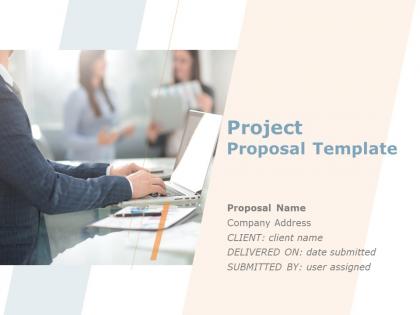
Slide 1: This slide introduces Project Proposal. Mention Proposal Name, Company Address, client name, date submitted.
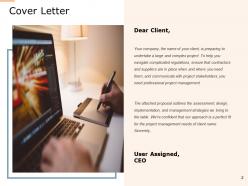
Slide 2: This is Cover Letter slide.
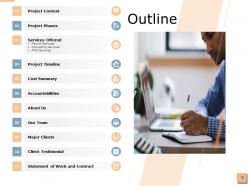
Slide 3: This slide showcase outline containing Project Context, Project Phases, Services Offered, Payroll Services, Consulting Services, PMO Services, Cost Summary, Accountabilities, About Us, Our Team, Major Clients, Client Testimonial, Statement of Work and Contract and Project Timeline
Slide 4: This is also Outline slide containing Project Context and Project Phases
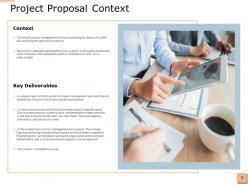
Slide 5: This slide presents Project Proposal Context
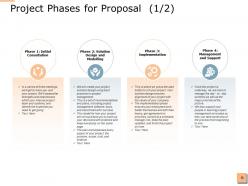
Slide 6: This slide showcase Project Phases for Proposal
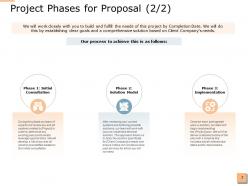
Slide 7: This is also Project Phases for Proposal slide
Slide 8: This is Outline slide containing Services Offered, Payroll Services, Consulting Services, PMO Services and Project Timeline
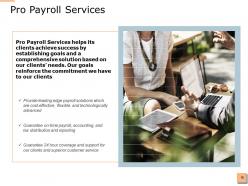
Slide 9: This slide displays pro payroll services
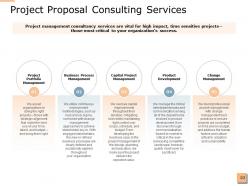
Slide 10: This slide describes Project Proposal Consulting Services along with Project Portfolio Management, Business Process Management, Capital Project Management, Product Development and Change Management
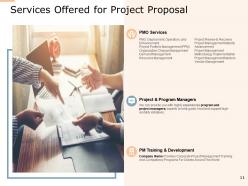
Slide 11: This slide showcase Services Offered for Project Proposal.
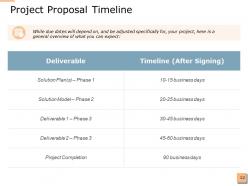
Slide 12: This is Project Proposal Timeline slide.
Slide 13: This slide presents Outline with Cost Summary and Accountabilities.
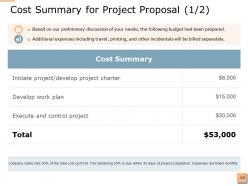
Slide 14: This slide displays Cost Summary for Project Proposal.
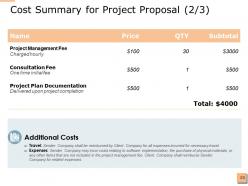
Slide 15: This slide also displays Cost Summary for Project Proposal.
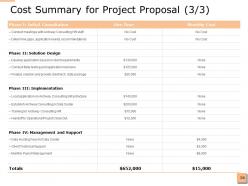
Slide 16: This slide also displays Cost Summary for Project Proposal.
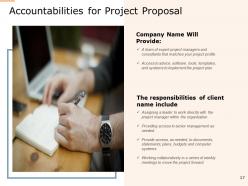
Slide 17: This slide displays Accountabilities for Project Proposal.
Slide 18: This is Outline slide containing About Us and Our Team
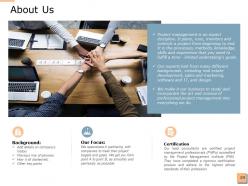
Slide 19: This is About Us slide. Add Certification, Company history and Background.
Slide 20: This slide displays Our team.
Slide 21: This is also Our Team slide.
Slide 22: This slide showcase Outline with Major Clients, Client Testimonial, Statement of Work and Contract
Slide 23: This slide showcase Major Clients
Slide 24: This slide displays Client Testimonials
Slide 25: This slide also displays Client Testimonials
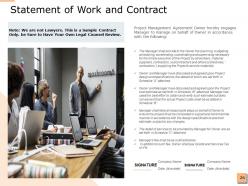
Slide 26: This slide showcase Statement of Work and Contract. State your company name,signature and designation
Slide 27: This is Contact slide with Address,Contact Numbers and Email Address
Slide 28: This slide is titled as Additional Slides for moving forward
Slide 29: This is Our Mission slide. Showcase vision, mission and goal of your company
Slide 30: This is Timeline slide
Slide 31: This is 30 60 90 Days Plan slide
Slide 32: This slide showcase the Roadmap
Project proposal template powerpoint presentation slides with all 32 slides:
Use our Project Proposal Template Powerpoint Presentation Slides to effectively help you save your valuable time. They are readymade to fit into any presentation structure.

FAQs for Project proposal template
So for a solid project proposal, you'll need the basics first: executive summary, problem statement, and your proposed solution. Timeline with milestones is key, plus budget breakdown and team roles. Here's what people always miss though - expected outcomes and success metrics. Seriously, that section makes or break getting approval. Also throw in potential risks and how you'd handle them. Oh, and don't forget what support you'll need from stakeholders - that part can save you headaches later. Start simple with a template, then tweak it based on who's reading it.
Honestly, templates are lifesavers because they make you hit the stuff executives actually want to know - budget, timeline, what you'll get out of it, risks. Your stakeholders can scan through quickly instead of digging around for the important bits. I've literally watched proposals get shot down because someone buried the ROI way down in the third paragraph - such a waste! Templates also stop you from going off about technical details that sound cool but don't matter to the people writing checks. Just follow problem → solution → benefits → costs and you'll get way faster approvals.
Honestly, most proposals look like total garbage - just walls of text that make reviewers want to cry. Break that shit up with headers and bullet points, especially for deliverables. White space is clutch, don't cram everything together. Pick a clean font and stick with consistent colors throughout. Charts or timelines help too if you've got data to show. I'd grab a simple template and just roll with it - consistency alone beats 90% of what's out there. Oh, and if you have any branding elements, toss those in. Makes you look way more professional than you probably are.
Honestly, it depends on your field. IT proposals are all about tech specs and timelines - super detail-heavy. Healthcare ones? They're drowning in compliance stuff and patient safety requirements (seriously, the paperwork is insane). Construction focuses more on materials, labor costs, and breaking everything into phases. The basic format is pretty much the same everywhere, but you really want one made for your industry. The sections and jargon are gonna be completely different otherwise. Like, a healthcare template won't help you if you're pitching a software project, you know?
Think of your project timeline as basically showing everyone when stuff's gonna happen. Break everything down into phases with realistic deadlines - and seriously, add extra time because things always take longer than you think they will. Stakeholders love seeing this because it proves you actually know what you're doing. Plus it becomes super useful for keeping yourself on track later. Oh, and make sure whatever dates you pick actually work with your budget and team availability. Otherwise you'll just be setting yourself up to fail from day one.
Dude, markdown is a game changer for proposals. Headers break everything into clean sections, bullet points make deliverables super clear, and you can bold the important stuff like deadlines or budget numbers. I've reviewed so many proposals that were just endless paragraphs - honestly makes me want to skip to the end. Tables are perfect for timelines too. The whole point is creating that visual flow so people can jump straight to whatever they care about. Even if you're just starting out, headers and bullets alone will make your stuff way easier to read.
Honestly, the worst thing you can do is make it too generic - then every proposal looks exactly the same and stakeholders notice. Don't dump everything into one massive section either. I totally bombed a proposal once because I forgot the budget breakdown (ugh). Simple language beats fancy jargon every time, trust me. You need space for risk stuff too - way more important than people think. Oh, and put your success metrics right at the top so reviewers know what you're actually trying to accomplish. Test it on a real project first though, before your whole team starts using it.
Honestly, the budget section can make or break your whole proposal. Stakeholders want to see exactly where their money's going - no vague "miscellaneous expenses" bullshit. Break it down into real categories: personnel, materials, software, travel, whatever applies to your project. I've watched solid ideas get tossed because someone threw together a half-assed budget that looked inflated. Each major expense needs a quick justification too. Think of it this way - your budget basically tells the story of how you'll actually pull this thing off, so don't rush it.
Keep your visuals clean and simple - they should back up your points, not distract from them. Gantt charts are perfect for timelines, bar charts for budgets, flowcharts for processes. I've honestly watched so many good proposals get tanked by messy infographics that look "cool" but add zero value. Basic pie charts work for resource allocation, line graphs for projections. Each visual needs to directly support what you're arguing and be scannable in like 3 seconds. Oh, and resist the urge to add more - I swear less is always better with this stuff.
Honestly, templates are game-changers because everyone knows what to expect right away. You'll think through timeline, budget, risks upfront instead of scrambling later. Stakeholders can jump straight to the sections they care about - no more hunting through messy email chains. I've literally watched approval times shrink by weeks just from using one. The basic stuff to include: objectives, scope, timeline, budget. Oh and you can totally customize it later once you get the hang of it. Trust me, those "wait what are we doing again?" conversations basically disappear.
Honestly, you've gotta tailor everything to who's reading it. Executives? Hit them with ROI and big picture stuff right away - they don't have time for details. Tech teams want the nuts and bolts, like actual methodologies and what resources they'll need. Stakeholders mostly care about deadlines and what they're getting. I actually keep like 3 different versions of the same template because people want such different things. Oh, and for external clients, focus on benefits rather than boring internal stuff. Figure out what each group actually loses sleep over, then put that info first. Works way better than sending everyone the same generic thing.
Look at your last 5-10 proposals and find the patterns in feedback you got. Budget issues? Timeline problems? Whatever keeps coming up, build those fixes right into your template. I actually think the approved proposals are just as important to study - you'll spot what reviewers love and can turn that into prompts or examples. The templates I've seen improve the most added whole sections that tackle common concerns upfront. Like if reviewers always ask about stakeholder communication, boom - make that a standard section. It's kinda like creating a cheat sheet based on what you've learned the hard way.
Think of your problem statement as the anchor for everything else. Without one, you're basically throwing random solutions around hoping something works - which honestly looks pretty amateur. It keeps you focused during the project and gives stakeholders a clear reason to care. Plus you need something concrete to measure your success against later. Make yours specific and measurable, with a direct line to business impact. Oh, and if you can't explain the problem in 2-3 sentences max, you probably don't understand it well enough yet. Go back and dig deeper first.
Definitely add a risk section - just make a simple table with the risk, how likely it is (high/medium/low), what happens if it goes wrong, and how you'll handle it. Even boring stuff like budget issues or people quitting is worth putting down. Honestly, stakeholders eat this stuff up because it shows you're not just assuming everything will go perfectly. Then add who's watching each risk and what warning signs mean it's time to use your backup plan. Don't make it complicated though - straightforward is better.
You want SMART goals - specific, measurable, achievable, relevant, time-bound. Pick 2-3 clear ones that actually solve their main problem. Break those down into 3-5 objectives with real metrics they can track. Bullet points are your friend here. Nobody reads walls of text, and honestly, bad formatting kills more proposals than terrible budgets do. Use action words like "increase" or "reduce" instead of fluffy stuff like "enhance." Keep it to one page max, and always tie everything back to the business value they'll get. That's what they really care about anyway.
-
Great designs, Easily Editable.
-
Nice and innovative design.
-
Appreciate the research and its presentable format.