


Research Proposal Template Powerpoint Presentation Slides





Try Before you Buy Download Free Sample Product
 Impress Your
 Audience
 100%
100% Editable
 Save Hours
 of Time


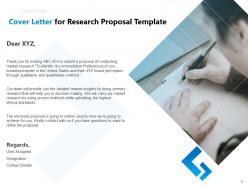
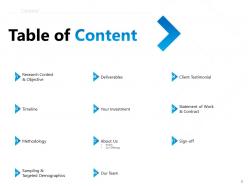
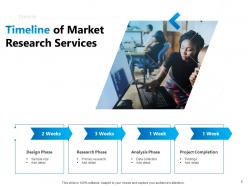
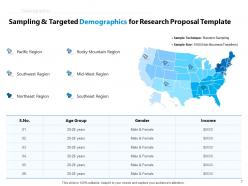
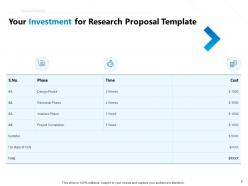
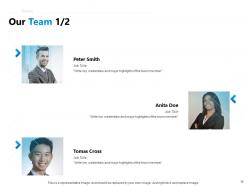
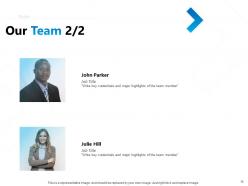
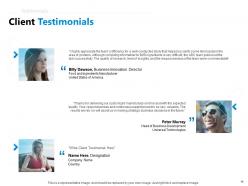
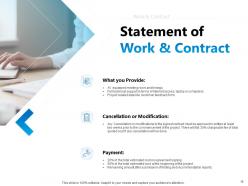
Research is done by marketers to know the customer’s needs and wants. It helps to gather information about the latest market trends which an organization later uses to establish its product. The main purpose of this is to fulfill the requirements of potential customers. Without researching the latest target market, an organization can't launch their new product successfully. Presenting our content ready Research Proposal Template PowerPoint Presentation Slides where you can offer your services to your clients with ease. With the aid of this outwardly engaging market research proposal PPT layout, you can make a good-looking proposal and tweak the content accordingly. Use the research proposal presentation template to mention the skills and expertise of your highly-professional staff that assist your clients in completing their goals. The proposal PowerPoint theme consists of a table of contents that includes the research context & objectives, sampling demographics, client testimonials, investment on a project, statement of work & contract, etc. Take the assistance of this attention-grabbing market research proposal PPT slide to explain the overall time frame in completing the research phase, design phase, analysis phase, and project completion. Employ our professionally designed proposal PowerPoint presentation to showcase the methodologies like survey, focus group, interview, and customer feedback that are provided by your company. With the help of this visually-attractive research proposal PPT theme, you can talk about the targeted demographics of the market that holds the interest of your clients. Take advantage of the PowerPoint presentation template to highlight your accreditations and certifications that make your proposal even more impactful. To add a modern touch to your proposal, you can showcase your sample designs and successful projects. Highlight your advanced technologies to the clients and gain their confidence in a positive manner. Enhance the brand productivity of your client in the market by downloading our ready-to-use research proposal presentation templates.
People who downloaded this PowerPoint presentation also viewed the following :
Research Proposal Template Powerpoint Presentation Slides with all 24 slides:
Use our Research Proposal Template Powerpoint Presentation Slides to effectively help you save your valuable time. They are readymade to fit into any presentation structure.







FAQs for Research Proposal Template
So you need a solid problem statement first - that's honestly the make-or-break part. If reviewers don't buy why your research matters, you're done. Then hit the usual suspects: lit review, methodology, timeline, budget. Make your objectives super specific, not some hand-wavy nonsense. Oh, and don't forget researcher qualifications and a brief background section for context. Expected outcomes and limitations too. Honestly though, before you even start writing, find a few successful proposals in your field and see how they structure everything. Way easier than guessing what format works.
Look, starting with a blank page is absolutely brutal - templates save you from that nightmare. They give you the basic structure already laid out: methodology, lit review, timeline, budget, whatever. You just fill in your actual research instead of stressing about what section comes next. Most have little prompts too that help you think through each part. Honestly, grab one that fits your field and funding agency. You'll probably finish your draft twice as fast, and you won't accidentally skip something important that reviewers always look for.
Your lit review is basically proving you've done the work and there's actually something worth researching. Show you get what's already out there - what worked, what bombed, where things stand now. Honestly, this part can make or break your credibility. Don't just dump a bunch of study summaries though. You gotta connect them and show how your research fits in or shakes things up. Stick to recent stuff that actually matters to your topic. The whole point? Clearly explain what's missing that you're gonna tackle.
Okay so basically, start broad then zoom way in on the exact gap you're filling. Don't just say "more research needed" - that's honestly lazy and reviewers hate it. Frame it more like "We know tons about X, but nobody's figured out how Y impacts Z for this specific group." Be super concrete about what you're solving. I learned this the hard way - vague problem statements kill papers. Your research questions should flow directly from whatever gap you identify. The whole point is making readers instantly get why your work matters and what hole you're plugging in the research. Precision is everything here.
Okay so you'll definitely need a title page, abstract, lit review, methodology, timeline, and budget - can't skip those. Use consistent headers and stick with Times New Roman or Arial. Trust me, sloppy formatting kills your chances before they even read the content. Your methodology needs the most detail by far. Double-space with 1-inch margins unless they say otherwise. Oh and citations better be perfect throughout. Honestly? Find a good template and tweak it for each application. Way easier than starting from scratch every time.
Here's the thing - reviewers need to see you actually know what you're doing. A solid methodology section shows them you've thought through your approach and won't waste their money. Think of it like showing work on a math test, but with way higher stakes for your career. You need to explain WHY you picked each method, not just list what you'll do. Honestly, the more specific you get, the better. When they see you've considered other options and potential problems, they'll trust you can pull this off. It's basically your chance to prove you're not just winging it.
Write your abstract last, trust me on this one. You'll know exactly what story you're telling by then. Start with your research question and method right up front - reviewers skim like crazy so hook them early. Keep it under 250 words but don't waste space on fluffy language. I always ask myself: would someone from a totally different field get why this matters? End with what gap you're actually filling. The whole thing should read like a mini version of your entire paper. Oh, and skip the academic jargon - concrete beats vague every time.
Okay so the budget part is seriously make-or-break. Format it like a detailed table - personnel, equipment, supplies, indirect costs. Each line needs a solid justification because reviewers will totally judge if you're asking for way too much or being unrealistic. Don't just randomly throw numbers in there! Write a short narrative explaining your big expenses and how they actually connect to your research goals. Oh and double-check your math - I've seen proposals get dinged for basic calculation mistakes which just looks sloppy. You'll want to show you actually thought this through.
Don't just fill in the blanks mindlessly - you'll get this choppy, cookie-cutter thing that reads like garbage. The template structure shouldn't boss you around either. Maybe one section needs three pages while another gets two sentences, you know? Templates act like every part matters equally but that's BS. Oh and definitely adjust your tone for whoever's reading it. Different fields have totally different expectations. Think of it more like... scaffolding? Use it to build something, then tear the scaffolding down and make it yours.
Honestly, visuals are a game changer for proposals. Try adding infographics for your methodology or simple flowcharts showing research phases - way better than dense paragraphs nobody wants to read. Charts work great for timelines too. Mock-ups of your planned data visualizations help, even if they're just rough sketches of your theoretical framework. Screenshots of tools you'll use? Perfect. Sample survey layouts also grab attention. Just don't go overboard - keep things clean and purposeful. Look at your most confusing sections first and figure out what visual would actually clarify things.
Honestly, just grab 3-4 successful proposals from your field and study them hard. Each discipline is totally different – psychology proposals look nothing like engineering ones. Engineering needs all the technical specs and equipment lists, while humanities focuses way more on theory and lit reviews. Social sciences? Ethics sections for days. What I'd do is reverse-engineer how those funded proposals are structured, then steal their approach (in a good way obviously). Match whatever language and methodology they're using because that's what reviewers expect to see. It's kind of like following a recipe – you can't just wing it.
Honestly, build feedback collection right into your template structure. Add sections that ask reviewers to comment on specific stuff - methodology, literature gaps, feasibility. Otherwise you'll just get those useless "looks good!" responses that don't help anyone. Peer feedback is only as useful as the questions you ask, so include a simple checklist alongside your template. Guide them to focus on research questions, timeline, budget justification - the meat of it. Way better than surface-level comments. You'll actually get suggestions you can work with instead of just polite nods.
Dude, don't mess around with ethics and compliance - they'll torpedo your proposal before anyone even looks at your actual research. Map out all the IRB requirements, consent forms, data privacy stuff early on. I learned this the hard way when I had to completely redo a section because I missed some regulatory thing. Your methodology section needs to cover participant risks upfront. Most funding agencies are super picky about this stuff nowadays. Honestly, a sketchy ethics section will get you rejected faster than asking for a ridiculous budget. Just get ahead of it during planning.
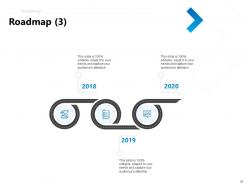
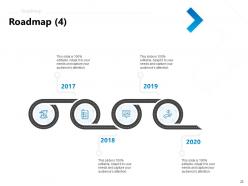
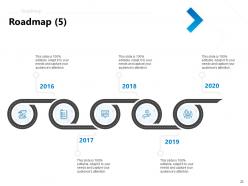
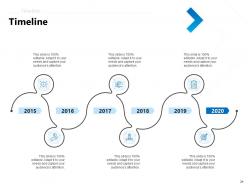
Make a visual timeline breaking your research into phases - lit review, data collection, analysis, writing. Gantt charts are solid but honestly even a basic timeline graphic works fine. Give realistic timeframes for each phase and build in buffer time for delays (trust me, there will be delays). Some phases will overlap, which is totally normal. The whole point is showing reviewers you've actually mapped this out instead of just guessing at dates. I'd say detailed enough to prove you have a plan, but don't go overboard with every tiny task or it gets messy to read.
Start with a killer problem statement - show exactly why your research matters using real examples, not vague academic speak. Your methodology needs to sound confident too. Skip the "I hope to" stuff and just say what you're doing. Throw in some actual numbers or preliminary data if you have it. The lit review is honestly where most people mess up - don't just list sources, but weave them together to prove you actually get the field. Oh, and make sure your timeline and budget look realistic. Reviewers can smell BS from a mile away on those.
-
Unique research projects to present in meeting.
-
Best way of representation of the topic.
-
Perfect template with attractive color combination.
-
Great product with highly impressive and engaging designs.