

Sample Thesis Proposal Template Powerpoint Presentation Slides





Try Before you Buy Download Free Sample Product
 Impress Your
 Audience
 100%
100% Editable
 Save Hours
 of Time


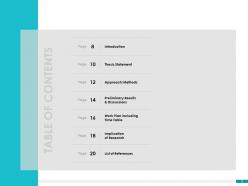
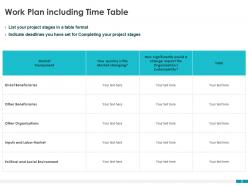
Thesis refers to a document that is generally submitted by a student for applying to a professional university. It is used to present the research topic and subject of study in a detailed manner. A thesis can be written on any particular subject and it is also known as a dissertation. You can explain the background of your study by using the readymade proposals. Presenting our topic-specific Sample Thesis Proposal Template PowerPoint Presentation Slides where you can write down a summary of the project for your clients. The sample dissertation proposal PPT layout comprises a table of contents that include the introduction, thesis statement, approach or methods, preliminary results & discussion, work plan, implications of research, and the list of references. You can capture the reader’s interest by providing easy-to-understand content in your proposal. In this visually-attractive thesis proposal presentation template, you can talk about the thesis statement that covers the topic like hypothesis, research questions, project, or goal statement. This will help you to capture the essence of your intended project. Employ this professionally designed sample thesis proposal PowerPoint theme to indicate the deadlines you set for completing your project research. Take the assistance of our attention-grabbing sample dissertation project proposal PowerPoint presentation slide to focus on the market components like direct beneficiaries, other beneficiaries, inputs & labor market, and political & social environment. With the help of our visually-appealing sample thesis proposal PPT slide, you can list your project stages in a table format. On the first page of your proposal, you can mention the school you are representing, your faculties, and the course of study. Included here are high-quality icons and visuals with which you can make your proposal even more creative yet professional. To make your proposal even more eye-catching, you can list down the topic which is not already known by others. Provide a brief description of the research you do by downloading our ready-to-use thesis presentation ppt templates.
People who downloaded this PowerPoint presentation also viewed the following :
Sample Thesis Proposal Template Powerpoint Presentation Slides with all 17 slides:
Use our Sample Thesis Proposal Template Powerpoint Presentation Slides to effectively help you save your valuable time. They are readymade to fit into any presentation structure.

FAQs for Sample Thesis Proposal Template
Okay so for your thesis proposal, you'll need the basics: problem statement, lit review, research questions, methodology, timeline, and expected outcomes. Oh and obviously an intro for context plus bibliography. Methodology is where everyone I know gets totally stuck - seriously spend the most time there explaining your data collection and analysis plan. Include potential roadblocks too because professors love that stuff. My advice? Start super simple with just an outline of those sections, then fill in details bit by bit. Way less intimidating than staring at a blank page forever.
Honestly, templates are lifesavers because they force you to get specific about your research goals instead of just winging it. You'll have actual sections for your questions, methods, all that stuff - so no more rambling around your point. The prompts usually make you dig into why your research matters, not just what you're doing. I've watched people's proposals go from total mess to actually readable just by following a decent template. Oh and find one that fits your field specifically - like, don't use a science template for literature. Use it as your blueprint and you'll stay way more organized.
Honestly, a solid lit review outline saves you so much headache later. Committees want proof you're not just making stuff up - they need to see you actually understand what research already exists and where your project fits in. I learned this the hard way! Map out your key themes and major debates now, maybe 3-4 sections tops. Show how existing work connects to your question. Trust me, when you're drowning in actual writing later, you'll be grateful for that roadmap. It's basically showing your cards upfront, but in a good way that proves you've done the legwork.
So your methodology is basically your roadmap for tackling the research question. I'd start with whether you're going qualitative, quantitative, or mixing both. Then get into the nitty-gritty - how you'll collect data, sample size, what tools you'll use for analysis. The trick is writing it so anyone smart could follow along, even if they don't know your field super well. Oh and don't just list stuff! Explain why each method actually fits your goals. Honestly, a timeline helps too if you've got room for it.
Honestly, your committee just wants to see you're not completely delusional about timing. Break it down by semester or month - research phase, data collection, analysis, writing, etc. A simple table works great. Don't go crazy with daily stuff because that's way too much detail and kind of annoying to read through. Build in extra time because I swear everything takes twice as long as you think it will. The whole point is showing you've actually thought this through and aren't just winging it. They want organized, not overly optimistic.
The methodology and lit review sections totally depend on your field. STEM stuff needs all those detailed experimental procedures and numbers, but humanities is more about theoretical frameworks and qualitative analysis. Social sciences gets to mix both - kinda jealous tbh. Check what citation style your department wants first (APA, MLA, Chicago, whatever). Your timeline needs to actually make sense for your research type too. Honestly? Just look at proposals from recent grads in your program. That'll give you the best sense of what works.
Don't just fill in the blanks like it's a Mad Libs game - that's the fastest way to sound robotic. Your advisor probably has their own preferences too, so check with them first (learned that one the hard way). Templates are meant to be starting points, not straitjackets. If something doesn't fit naturally in a section, move it around. I'd honestly rather see a proposal that flows well than one that rigidly follows some format. Adapt the headings to match what your field actually expects. Think of it more like scaffolding you can adjust.
Dude, definitely throw in some visuals - charts, graphs, whatever makes sense. Your reviewers will love you for breaking up all that dense text. I always use flowcharts for methodology stuff and timelines to show my research schedule. Tables work great for comparing literature too. Don't get carried away though - I learned that the hard way after spending way too much time on some fancy diagram that didn't even help my argument. Keep it simple and purposeful. Even basic bullet points and clean formatting make your proposal look so much more professional. Trust me, anything's better than walls of text.
Whatever citation style your department wants (APA, MLA, Chicago) - just stick with it the whole way through. Cite everything, even when you're paraphrasing or think something's common knowledge. I've watched people lose points over missing citations on stuff that seemed obvious. Your committee's gonna scrutinize that reference list hard, so make sure it's spot-on. Oh, and seriously get Zotero or some citation manager set up now. Trust me on this one - you'll thank yourself later when you're not manually formatting 50+ references at 2am.
Look, just be honest about what could go wrong - reviewers hate it when you pretend everything's perfect. Add a "Limitations" section and call out the real issues: small sample size, access problems, whatever. But here's what matters: show how you'll deal with each one. Maybe you can't fix it completely, but explain your workaround or why it won't kill your whole project. I've watched so many people try to hide obvious problems and it backfires every time. For every limitation you mention, have a plan B ready. Shows you actually thought this through and won't panic when stuff inevitably gets messy.
Look, your committee wants to see you've actually figured out what this thing will cost you. Like are you gonna need special software? Travel money? Cash to pay survey participants? Even a rough estimate shows you're not just throwing together some pie-in-the-sky project that'll somehow need $20k when your budget is basically lunch money. Departments also use these numbers when they're deciding who gets funding or helping students apply for grants. Honestly, even if your math is a bit off, at least you're showing you thought about the practical stuff ahead of time instead of just winging it.
Honestly, just grab your department's template right away - it's like having a cheat sheet for exactly what your committee wants. You won't have to guess about formatting or which sections to include. Those little details like citation styles and page limits? The template handles all that boring stuff so you don't accidentally mess up something stupid. I mean, who remembers if they want 12pt or 11pt font, right? Use it as your basic structure first, then you can make the actual content sound like you later. Trust me, it'll save you so much "wait, am I doing this totally wrong?" stress.
Start with something that grabs them - a crazy statistic or weird question about your research. Tell it like a story so they actually care about the problem you're solving. Don't just read your slides word for word (honestly, that's the fastest way to put people to sleep). Look at them, use your hands when it makes sense, throw in some pauses. Maybe ask a rhetorical question or two to keep them awake. Your slides should be mostly visual - nobody wants to read paragraphs. Practice how you'll move between sections so it doesn't feel choppy. But here's the thing - if you're genuinely excited about your research, it shows. That enthusiasm will carry you through way more than perfect delivery ever could.
Honestly, just build the feedback process right into your template from day one. Add comment boxes after each section where your advisor can drop notes. I set up a basic table with "Feedback," "Status," and "Revised" columns - way better than hunting through endless email chains, trust me. Throw a revision log at the top so everyone knows what changed and when. The trick is getting your advisor involved early instead of waiting for some mythical "final" draft. Use a shared doc where they can comment in real-time, then schedule regular check-ins to talk through their thoughts before you go too far down the wrong rabbit hole.
Start with your university's grad handbook - they're pretty strict about formatting stuff. Your school's writing center is clutch for templates and examples from people who actually got approved. ProQuest has tons of dissertations you can browse for structure ideas (don't plagiarize though, duh). Mendeley or Zotero will seriously save your sanity with citations. LaTeX makes everything look fancy if you're feeling ambitious. Honestly, I'd just grab a few examples from your department and mash them together into something that checks all their boxes. Way easier than starting from scratch.
-
Appreciate the research and its presentable format.
-
Great product with highly impressive and engaging designs.
-
Commendable slides with attractive designs. Extremely pleased with the fact that they are easy to modify. Great work!
-
Use of different colors is good. It's simple and attractive.
-
Understandable and informative presentation.