


Project Quality Management Gantt Chart




Try Before you Buy Download Free Sample Product
 Impress Your
 Audience
 100%
100% Editable
 Save Hours
 of Time


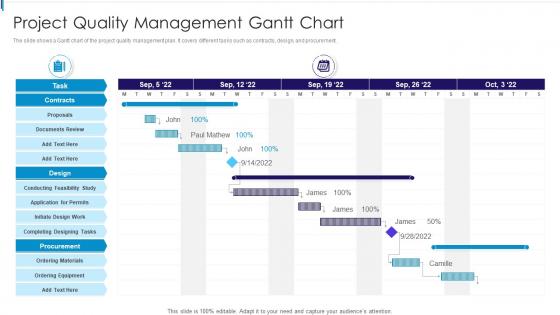
The slide shows a Gantt chart of the project quality management plan. It covers different tasks such as contracts, design, and procurement.
People who downloaded this PowerPoint presentation also viewed the following :
Project Quality Management Gantt Chart with all 6 slides:
Use our Project Quality Management Gantt Chart to effectively help you save your valuable time. They are readymade to fit into any presentation structure.





FAQs for Project Quality
So you've got three things to nail down: quality planning, assurance, and control. First, figure out what "good" actually looks like for your project - set those standards early or you'll regret it later. QA is the ongoing stuff where you follow proper procedures throughout. Not gonna lie, it feels like busy work half the time, but it saves your butt. Then there's quality control - that's where you test and inspect everything before it goes to stakeholders. The planning part is honestly the most critical. Get that right and the rest falls into place way easier.
So PDCA is like your go-to framework for fixing quality issues in projects. Plan your standards and processes first. Then Do - actually implement them while you're executing. Check means you're measuring how things are going against what you planned. Finally, Act on whatever you learned by making improvements. Honestly, the repetitive nature used to annoy me at first, but that's literally the magic - you keep looping through these four steps throughout the project. Instead of crossing your fingers and hoping quality just happens, you're constantly tweaking things. Just pick one quality problem and start there.
So for QA tools, I'd go with audits first - they'll show you if people are actually doing what they're supposed to. Process analysis is clutch for finding where things get stuck. Metrics tracking matters too, but honestly don't go crazy with data or you'll drown in spreadsheets. When stuff breaks, do root cause analysis to figure out why. Oh, and checklists are boring but they work. Start simple with just audits and maybe 3-4 key metrics. You can get fancy later once everything's running smooth.
Your stakeholders are honestly your best quality control system. They're the ones who actually know what "good" looks like for your project. Get them involved early and often - like, way before you think you need to. They'll catch stuff you'd never see coming and save you from that nightmare scenario where you deliver something and they're like "uh, this is completely wrong." Set up real checkpoints where they can actually change things, not just nod along to your updates. I've seen too many projects where people treat stakeholders like they're just there for show. Don't do that. Make them your quality partners and they'll spot issues before they become disasters.
Honestly, risk management is like having a heads-up for quality problems before they bite you. You spot potential issues early - stuff like team shortages, messy requirements, tech headaches - then build in safeguards during planning. Way better than scrambling to fix things after you've already delivered garbage to stakeholders (been there, not fun). Prevention costs way less than cleanup. Next time you're planning a project, just do a quick assessment of what could tank your quality. It's basically insurance for your deliverables, and you'll thank yourself later.
Track your project metrics to catch quality problems early - it's way cheaper than fixing stuff later. Look at defect rates, how often you're redoing work, and test results. Honestly, most teams are shocked when they first see their data laid out like this. Build some dashboards so you can watch your quality numbers in real-time. Predictive analytics can help forecast where things might go wrong (though I still think gut instinct matters too). Start simple with basic tracking, then add fancier analytics once you're comfortable. The trick is being consistent about collecting data throughout everything.
So there's ISO 9001 which is the basic quality management one most companies use. Six Sigma is huge for cutting defects - though honestly the whole belt system is kinda ridiculous. TQM focuses on improving everything across your org continuously. PMBOK has quality stuff too if you're in project management. My advice? Just go with whatever your industry already does. Makes life way easier when everyone's speaking the same language. Most places stick to one framework anyway instead of mixing them up. Six Sigma's principles are actually pretty solid once you get past all the marketing fluff around it.
Track both the predictive stuff and actual results. Leading indicators - defect prevention, training rates, process adherence - show what's coming. Lagging ones give you the real deal: defect rates, customer satisfaction, rework costs. Most PMs I know get obsessed with the results and totally miss early warning signs, which is backwards honestly. Cost of quality matters too - compare prevention costs against failure costs for decent ROI insight. Oh, and keep your dashboard simple. Pick 3-4 key metrics max so you can actually spot trends without drowning in data.
Ugh, remote work can be such a pain for quality control. Communication breaks down constantly - people misunderstand requirements because they can't just pop over to your desk. Different time zones make it worse since you're never all online together. I swear half our issues come from people working in silos without realizing they're going off track. You really need to nail down your quality standards from day one and stick to regular check-ins. Also, get tools where everyone can actually see what's happening in real-time instead of finding out about problems three days later.
Honestly, just write down what "done" actually means for your stuff first. Like, super specific. Then show everyone real examples - good work vs trash work - because people get it way faster that way. Don't make it only QA's problem either, that's annoying for everyone. Regular check-ins help tons. Oh and give people the right tools/training or you're just setting them up to fail. Visual stuff like checklists work great too. The key thing is getting everyone aligned from the start, otherwise you'll be fixing everything later.
Honestly, retrospectives after each sprint are game-changers - that's where you'll actually figure out what's broken. Get stakeholder feedback throughout the project, not just at the end when you're screwed if something's wrong. I love the "fail fast, learn faster" thing, sounds cheesy but it works. Track your quality metrics in real-time so you can tweak things on the fly. The key is making it feel natural instead of like more work piled on top. Start with one small process improvement each cycle and just build from there.
Honestly, company culture is huge for quality - way more than people realize. When leadership pushes for speed over everything else, your team starts skipping tests and rushing through code reviews. But places that actually care about quality? People will slow down to double-check things and won't hesitate to flag problems. Here's the thing though - culture also decides if your teammates feel safe reporting bugs or if they'll just hide issues to save face. I've seen both, and it makes a massive difference. Look at what behaviors actually get praised around your office, not just what's written in some handbook somewhere.
Dude, lessons learned are like your secret weapon for quality management. Document what worked and what totally bombed - then actually USE that info to improve your standards and testing for next time. Can't tell you how many teams just ignore this gold mine and keep making the same dumb mistakes. Make sure you can actually find and review these notes during planning (I've seen so many buried in random folders). Build templates from your wins, and definitely flag those quality nightmares that caught you off guard before. Honestly, it's like getting free advice from your past self.
So QA is all about setting up good processes from the start to prevent screwups, while QC happens after - that's when you're actually catching and fixing problems. I always think of it like QA builds the guardrails, QC inspects what you made. Here's the thing though - QA will save your ass (and wallet) because fixing stuff later costs way more than preventing it. But you still need QC as backup since nothing's perfect. Honestly, most successful projects I've seen use both. Strong processes upfront plus regular check-ins throughout keeps everything on track.
Dude, you should totally look into AI for quality management - it catches stuff you'd never spot manually. Automated testing runs constantly in the background checking your deliverables. The ML algorithms are pretty wild at finding defect patterns and predicting where issues might hit next. I've seen it analyze old project data to flag quality risks way before they blow up. Real-time dashboards beat waiting around for those painful weekly reports too. Honestly? Just try some basic automated quality checks on whatever you're working on now. You'll probably save yourself hours of headache down the road.
-
Topic best represented with attractive design.
-
Keep doing the good work guys. Surpass the needs and expectations always!!