


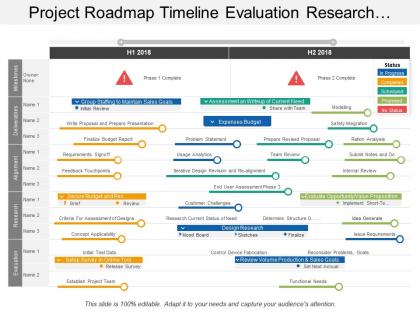
Project roadmap timeline evaluation research alignment deliverables milestones





Try Before you Buy Download Free Sample Product
 Impress Your
 Audience
 100%
100% Editable
 Save Hours
 of Time


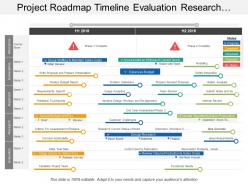
Project roadmap timeline evaluation research alignment deliverables milestones is a snapshot of your project which will help you to ensure your project stakeholders and interest holders to develop mutual understanding from very beginning. The project roadmap PPT PowerPoint model is extremely useful guide and driving factor for the underlying project. Creating a project roadmap is relatively a simple and easy task but how effective it is depends on its detailing. And so our team of experts has taken all measures to come up with a detailed and easy to comprehend project roadmap timeline PowerPoint graphic which encompasses all the phases of project like evaluation, research, alignment, deliverables and milestones. There are innumerable benefits of creating a strong project roadmap in form of our project timeline PPT presentation visual like shared understanding of the scope, timeline, and goals of the project amongst the project interest holders and team members. Our Project Roadmap Timeline Evaluation Research Alignment Deliverables Milestones are pragmatic. They help you get things done quick.
People who downloaded this PowerPoint presentation also viewed the following :
Project roadmap timeline evaluation research alignment deliverables milestones with all 5 slides:
Estimate how the future will evolve with our Project Roadmap Timeline Evaluation Research Alignment Deliverables Milestones. It helps evaluate the indications.
FAQs for Project roadmap timeline evaluation research
So you need five main things: clear objectives, realistic milestones with dates, key deliverables, resource needs, and task dependencies. Risks too - they're gonna happen anyway so might as well plan for them. Connect everything to bigger business goals so people get why it matters. Make it visual if you can. Charts beat boring text blocks every time, honestly. Draft it first, then let your team tear it apart and give feedback. Oh and don't overthink the first version - you'll probably change half of it anyway once reality hits.
Honestly, roadmaps are lifesavers for avoiding those awkward "wait, what are we doing again?" moments in meetings. Everyone gets on the same page about what's happening when. Your team can actually see how their stuff fits into the bigger puzzle, which is pretty motivating. Updates to stakeholders become so much easier too - like, ridiculously easier. The visual timeline thing really works for spotting problems before they blow up. Just don't let it collect dust somewhere. Actually use it in meetings or people will forget it exists. Oh, and keep updating it regularly or it becomes useless fast.
Honestly, Roadmunk or ProductPlan are solid if you want something made specifically for roadmaps - stakeholders eat that stuff up. But if your team's already on Miro or Figma, just stick with those. Way easier than getting everyone to learn new software. Notion works too if you're being cheap (been there). The real trick is picking whatever your team won't abandon after two weeks. I've seen too many beautiful roadmaps that nobody bothers updating. Just start with whatever feels easiest. You can always switch later once you figure out what actually works for your chaos.
Figure out what'll actually kill your launch date first - that's your critical path stuff. Map out which tasks depend on each other, then think about who's gonna be pissed if things are late. I like making a quick scoring system for urgency vs business impact vs how much work it takes. Saves so much arguing later. Schedule your high-impact time-sensitive stuff first, then squeeze everything else around it. Always pad some buffer time because something *will* go sideways. Weekly check-ins with the team are clutch. Don't get too attached to your plan though - you'll be shuffling priorities constantly.
So basically, strategic roadmaps are your company's big picture stuff - like where you want to be in a few years. Project roadmaps? Way more granular. They're all about one specific initiative with actual deadlines and who's doing what. I always tell people to nail down the strategic piece first because honestly, you don't want to waste time on projects that don't match your overall direction. Most project roadmaps should connect back to the strategic one anyway. It's like having a GPS for your long-term goals versus turn-by-turn directions for today's drive, if that makes sense.
Monthly updates work well for most projects, but honestly it's more about reading the room. Fast-moving stuff with tons of feedback? Maybe weekly makes sense. Super stable project? Quarterly could be fine - though I personally think that's pushing it. Major scope changes or budget shifts should trigger updates regardless of your schedule. Don't wait around if something big happens. Start with monthly as your default, then tweak based on how chaotic things get. Oh, and definitely set a recurring reminder or you'll forget!
Honestly, stakeholder feedback is what saves you from building something nobody wants. I've watched so many projects crash because teams just assumed they knew what users needed. You'll catch problems way earlier if you're actually talking to people regularly - like monthly check-ins work pretty well. Their input tells you which features matter most, what technical roadblocks you're hitting, and when business priorities change (which happens more than you'd think). Just make sure there's an easy way for people to reach you throughout the project, not just at formal meetings.
Honestly, color coding is a game changer - group similar features or show what's high priority. Timelines are clutch for showing when stuff actually happens. Progress bars help track where you're at with everything. Icons are surprisingly useful too, people can spot different work types without reading tons of text. I swear, some roadmaps are just giant walls of words that nobody bothers with. You want someone to walk up and instantly get what's going on. Make it visual enough that the big picture hits them right away without needing a whole presentation.
Honestly, make it super visual and show outcomes instead of boring feature lists. A timeline with clear milestones is clutch - stakeholders eat that stuff up because they can actually see how pieces fit together. I bombed a presentation once with a total mess of a roadmap, so trust me on this. Lead with your big picture goal first. Then break it into phases. Oh, and don't sugarcoat the risks or timeline stuff that might change - they'll appreciate the honesty. Make it interactive too. Ask questions, get them talking. Your roadmap should start conversations, not just dump information on people.
So traditional roadmaps are super rigid - you plan everything upfront with exact dates and features, then just track progress. Agile ones? Totally different. You work with themes and big-picture goals instead of "this exact feature drops March 15th." It's honestly weird at first! Like, instead of specific deliverables, you'd say "Q1 we're focusing on better user onboarding" and figure out the details as you go. The whole thing gets updated constantly based on what you learn from sprints and user feedback. My advice? Pick your main themes for the next few quarters, then let sprint planning handle the nitty-gritty stuff.
Don't get stuck mapping out every tiny detail from day one - huge mistake I made early on. Priorities change constantly, so you'll just waste time. Never give specific dates to stakeholders either (they screenshot everything lol). Stick to "Q2" instead of "March 15th" or whatever. Keep things high-level so you can actually pivot when needed. Though honestly, the themed approach works way better than feature-by-feature planning. Update it regularly too or it becomes totally pointless. The goal is giving direction without boxing yourself in completely.
Always bake in extra time upfront - like 20-30% buffer because trust me, stuff will go sideways. Don't get bogged down in weekly details since they'll be wrong in a month anyway. Keep things high-level instead. You'll want regular check-ins with stakeholders because priorities change constantly (and I mean constantly). When things do shift, write down why so your team doesn't think you're just winging it. Oh, and give people a heads up about changes ASAP - nobody likes surprises, especially the bad kind that mess with deadlines.
Track your milestone completion rates and budget variance - those are non-negotiable. Timeline stuff too, obviously. Resource utilization is massive though, like are your people swamped or sitting around? Scope creep will absolutely kill you if you don't watch it. Quality metrics matter more than people think - defect rates, customer feedback, that kind of thing. Otherwise you're just hitting arbitrary dates without actual value. Oh and set up some weekly dashboard thing so you catch issues before they spiral. Trust me on this one.
Build risk assessment right into your roadmap from day one - don't just tack it on later. During initial planning, spot your biggest risks and pad buffer time around dicey items. Actually add risk mitigation as real roadmap tasks too. Trust me, I got burned when what seemed like a "simple" integration completely wrecked our Q3 plans. Checkpoints are clutch - they give you escape hatches if things go sideways. Making risks visible on the roadmap shows stakeholders you're being real about timelines, not just telling them what they want to hear.
Honestly, visual storytelling is everything here. Ditch the tech jargon - say "launch new feature" instead of "implement API integration" or whatever. Timelines and color-coding work great, throw in some simple icons too. Group stuff by business outcomes, not technical milestones. Way more effective. Different views for different people is clutch - execs want the big picture while PMs need the nitty-gritty details. Always start with why before jumping into what you're building. Your stakeholders don't really care about your tech stack anyway, they want to know about customer impact and business value.
-
Presentation Design is very nice, good work with the content as well.
-
Qualitative and comprehensive slides.