

Proposal for business venture powerpoint presentation slides




Try Before you Buy Download Free Sample Product
 Impress Your
 Audience
 100%
100% Editable
 Save Hours
 of Time


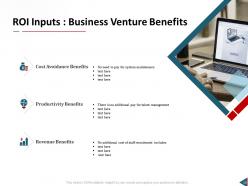
Before starting any short-term or long-term business venture, it is important to create an effective business plan. To attract stakeholders or investors, the aspiring entrepreneurs need to understand the new trends of the market that help them in establishing their business. Everyone wants to get success in the field of business but it takes a lot of strategizing and ample amount of resources to reach out to the goal. Most entrepreneurs or business owners take the help of the service providers who can collaborate with them and support them in managing their new business ventures. They can choose the best deal that suits their requirements and expectations with the help of professionally designed readymade proposals. Introducing our content ready and interactive Proposal For Business Venture PowerPoint Presentation Slides that help you to deliver your quality-driven services to the clients. With the aid of this outwardly engaging business venture proposal PPT layout, you can input all the necessary elements associated with the project. To gain the confidence of clients, you can list down the steps of processes that will solve the issues of your client’s business. Take the assistance of our outwardly engaging business venture proposal PowerPoint theme to highlight the project tasks like strategic planning, project development, execution of the project, project maintenance, analysis, and reporting. Provide a better understanding of the time frame your company takes to finish these tasks. Employ this creatively designed business venture proposal presentation template to mention the benefit of ROI inputs that consist of cost avoidance benefits, productivity benefits, and revenue benefits. The slide contains plenty of space where you can give a brief overview of your company and its background. Also, you can add the logo of your company that holds the essence of your brand. Make your client’s startup profitable by downloading our ready-to-use business venture proposal PowerPoint presentation template.
People who downloaded this PowerPoint presentation also viewed the following :
Content of this Powerpoint Presentation
Slide 1: This slide introduces Proposal for Business Venture. State Company name, Client name, Submission date, User name.
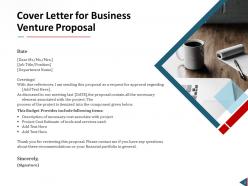
Slide 2: This slide displays Cover Letter for Business Venture Proposal.
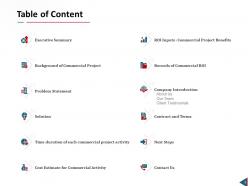
Slide 3: This slide displays Table of Content of the presentation.
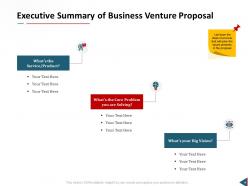
Slide 4: This slide depicts Executive Summary of Business Venture Proposal. List down the steps of process that will solve the issues presents in the proposal
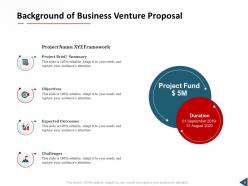
Slide 5: This slide shows Project Fund.
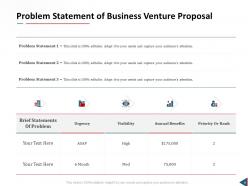
Slide 6: This slide presents Problem Statement of Business Venture Proposal
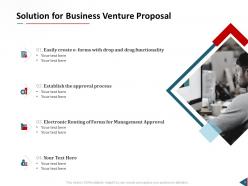
Slide 7: This slide represents Solution for Business Venture Proposal.
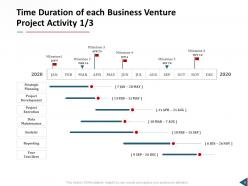
Slide 8: This slide showcases Time Duration of each Business Venture Project Activity.
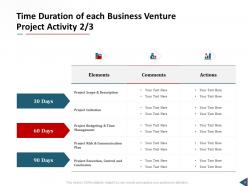
Slide 9: This slide showcases Time Duration of each Business Venture Project Activity.
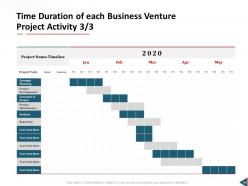
Slide 10: This slide also shows Time Duration of each Business Venture Project Activity.
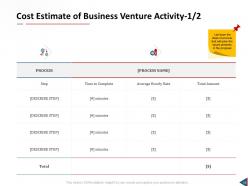
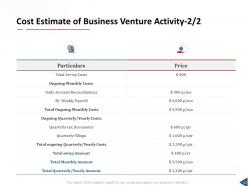
Slide 11: This slide depicts Cost Estimate of Business Venture Activity. List down the steps of process that will solve the issues presents in the proposal
Slide 12: This slide is continued with Cost Estimate of Business Venture Activity.
Slide 13: This slide represents ROI Inputs : Business Venture Benefits
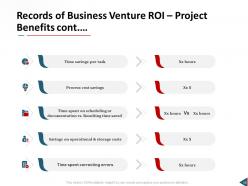
Slide 14: This slide depicts Records of Business Venture ROI – Project Benefits.
Slide 15: This slide is continued with Records of Business Venture ROI - Project Benefits.
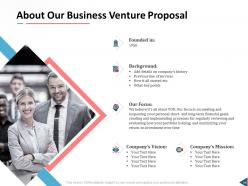
Slide 16: This is About us slide with Company's Vision, Mission, Background details etc.
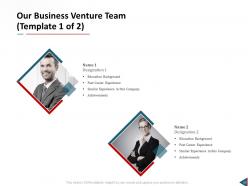
Slide 17: This is Our Business Venture Team slide with Names and Designations.
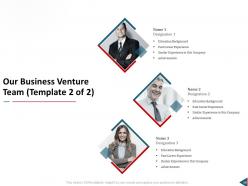
Slide 18: This is Our Business Venture Team slide with Names and Designations.
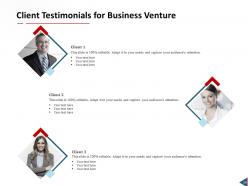
Slide 19: This slide displays Client Testimonials for Business Venture
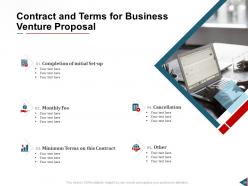
Slide 20: This slide shows Contract and Terms for Business Venture Proposal.
Slide 21: This slide showcases Next Step for Business Venture Proposal
Slide 22: This is Contact Us slide with Contact details, Email address.
Slide 23: This is Icons Slide for Business Venture Proposal.
Slide 24: This slide is titled as Additional Slides for moving forward.
Slide 25: This is Our Mission, Vision and Goal slide.
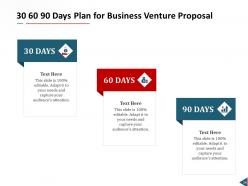
Slide 26: This is 30 60 90 Days Plan slide.
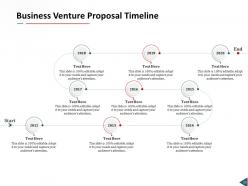
Slide 27: This slide shows Business Venture Proposal Timeline.
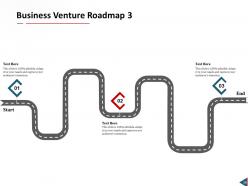
Slide 28: This is 3 Step Roadmap process slide.
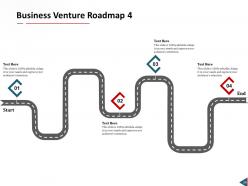
Slide 29: This is 4 Step Roadmap process slide.
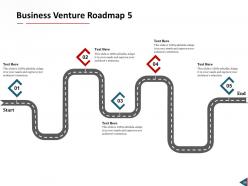
Slide 30: This is 5 Step Roadmap process slide.
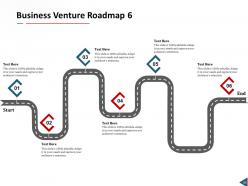
Slide 31: This is 6 Step Roadmap process slide.
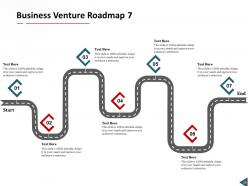
Slide 32: This is 7 Step Roadmap process slide.
Proposal for business venture powerpoint presentation slides with all 32 slides:
Use our Proposal For Business Venture Powerpoint Presentation Slides to effectively help you save your valuable time. They are readymade to fit into any presentation structure.


FAQs for Proposal for business venture
So you need the basics covered: executive summary, market analysis, business model, financial projections, and team overview. The executive summary is like your elevator pitch but on paper - honestly, investors usually bail after this if it sucks, so make it good. Also throw in your go-to-market strategy, who you're competing against, and exactly how much money you need plus where it's going. Oh, and grab a decent template to start with - saves you time. Just remember to tweak it for whoever you're pitching to since VCs and angel investors care about different things.
Look, investors want proof you're not just winging it. Good market research shows you actually get the space you're jumping into - who your competitors are, what customers really want, how big the opportunity is. It validates there's real demand for what you're building. Honestly, the timing angle is huge too - you need to explain why NOW makes sense for your idea. Don't just throw a bunch of stats at them though. Connect the dots between your research and why your venture can win. Oh, and it'll help you avoid nasty surprises down the road.
Look, your financial forecast is what separates real entrepreneurs from dreamers. Investors want to see you've done the math - revenue projections, expenses, cash flow timing. Without solid numbers backing up your pitch, you're toast. I've watched so many founders crash and burn because they just wing it with random optimistic guesses. Your forecasts prove you get the market size and pricing strategy. Plus when you'll actually turn a profit (hopefully before you run out of money lol). Just make sure you can defend every single assumption when they start grilling you.
Don't bury your best stuff on page 10 - hit them with your USP right up front. What problem do you solve that literally no one else can? Lead with that, then prove it with real numbers or customer stories. Honestly, most proposals sound like the same boring template everyone uses. Yours should jump off the page. If you can't explain what makes you different in one sentence, you're not there yet. Oh, and tie it directly to their profit - they don't care about your cool process unless it makes them money.
Your exec summary is make-or-break territory - it either opens doors or lands you in the rejection pile. After that, walk through the problem, your solution, and market size. Financial projections need to be realistic (those crazy hockey stick charts fool nobody these days). Don't forget your team's background and exactly how much funding you need. Here's the thing - address risks head-on instead of hiding them. Investors actually respect that honesty. Each section should be meaty but not bloated. Stick detailed financials in the appendix. Oh, and practice your pitch so much you can do it without slides if needed.
Dude, competitive analysis is huge - investors always flip to that section early. You've gotta show you actually know what's happening in your space, not just winging it with some random idea. It proves you did the research and can realistically compete against whoever's already out there. Also helps you spot opportunities others missed and threats that could mess you up later. Honestly, I've seen people tank just because they skipped this part and looked completely clueless. I'd spend like 15-20% of your prep time really digging into the competition.
Dude, definitely throw in some financial charts and market size stuff - that's what they want to see. Visuals are huge because most decks are just walls of text and honestly, that's boring as hell. Product screenshots or mockups work great if you've got them. Maybe add some infographics breaking down how you actually make money? Oh, and a timeline with your key milestones - keeps things concrete. Just make sure everything's readable though. Nothing kills your vibe like people squinting at tiny fonts. Put your best visual early, like slide two, to grab them right away.
Yeah, definitely add a whole risk analysis section. List out the big threats - market shifts, running out of cash, losing key team members, whatever keeps you up at night. Then get specific about how you'd handle each one. Don't just wing it with generic solutions like "we'll hire more people" for everything (investors see right through that). Include actual timelines, what it'll cost, who's doing what. I mean, they want to see you've thought about the messy stuff, not just the best-case scenario. Shows you're realistic about what could go wrong.
Look, just be upfront about conflicts of interest and don't sugarcoat your track record. Investors can smell BS from a mile away, and overpromising will come back to haunt you. Be real about risks, timelines, market size - all that stuff. I learned this the hard way once, actually. Think about how your venture affects everyone involved, not just your bottom line. Short sentences work. Longer ones should flow naturally without sounding like a business textbook. Here's my test: if your pitch showed up in the local news tomorrow, would you cringe? If not, you're golden.
You'll need to totally customize your pitch for each type of investor - they want completely different things. VCs are obsessed with massive scale and growth potential. Angels? They connect more with your personal story and why you know this market. Banks just care if you can pay them back, so hit them with solid cash flow numbers and what collateral you've got. Grant applications are honestly such a grind, but if you can show social impact or innovation that matches their mission, it's worth the headache. Research what they've funded before and speak their language.
Start with your financial stuff - revenue forecasts, profit margins, when you'll break even. Those are must-haves. Market validation comes next: how big is your target market, what's customer acquisition gonna cost, your projected share. Oh and don't skip the operational metrics (I totally bombed that part in my last pitch). You need industry-specific KPIs, competitive analysis showing why you're better, plus risk assessment with your backup plans. Honestly, investors can spot BS numbers immediately. The whole point is showing them both the opportunity AND that you can actually execute it.
Dude, stories beat data dumps every single time. People remember narratives way better than spreadsheets - like when you tell investors about that customer who was drowning in X problem until your solution saved them. Numbers matter obviously, but stories stick around when they're making decisions weeks later (which happens more than you'd think). Think of it like a movie: problem hits, characters struggle through it, boom - resolution. Paint that relatable scenario first, show the transformation journey, then circle back with your projections. Way more engaging than just throwing stats at them.
Okay so the biggest thing is being super vague about money and market research. Investors hate that fluffy stuff - they want real numbers. Keep it short too, like seriously nobody's reading 50 pages about your startup. That's just painful for everyone involved. Don't forget to actually explain why you're better than competitors, and honestly most people totally lowball their costs. Big mistake. You gotta show you actually know your customers exist and aren't just making stuff up. Oh, and include risks! I know it sounds backwards but admitting potential problems makes you look way more legit.
Honestly, you're gonna miss stuff when you're too close to your own work. Fresh eyes catch things you can't see anymore - confusing parts, weak logic, assumptions you didn't know you were making. I literally always find something embarrassing after getting feedback on what I thought was already perfect! Your colleagues might have experiences or insights that actually make your argument stronger. Ask different people for different things though - like get your detail person to check numbers while someone else looks at the big picture strategy. Oh and set a real deadline, otherwise people just... don't.
Honestly, your exec summary is make-or-break time. Investors see hundreds of these things, so if yours doesn't hook them fast, they won't even bother with the rest. Pack your value prop, market size, and financial projections into 1-2 pages max. What problem are you solving? How big is the opportunity? Why can your team actually pull this off? I always write mine last even though it goes first - sounds backwards but trust me on this. Think elevator pitch but on paper, and don't overthink it.
-
It is very nice the powerpoint
-
Great product with highly impressive and engaging designs.