

Proceso de aseguramiento de calidad y organigrama de herramientas




Try Before you Buy Download Free Sample Product
 Impress Your
Audience
 100%
Editable
 Save Hours
of Time


¿Se le ha pedido que cree el organigrama para resaltar el proceso de aseguramiento de la calidad? Si es así, descargue nuestro diseño de presentación de organigrama. Hemos creado esta impresionante diapositiva de PowerPoint para los profesionales que trabajan en el departamento de gestión de calidad. Con nuestra plantilla de PPT, puede mostrar la importancia del aseguramiento de la calidad y lo importante que es mantener la calidad para lograr el interés del cliente. Nuestro diagrama de presentación le permite involucrar al cliente potencial con su producto o servicio y hacer que tomen la decisión de elegirlos. El proceso jerárquico ayuda a mostrar una imagen clara de cómo asegura la calidad cuando se trata de cumplir con las expectativas del cliente y quiénes son los responsables de mantenerla. El organigrama también se puede usar para presentar los valores clave, como el nombre y el cargo de las personas que administran el negocio. Cualquier comunicación que tenga, puede comunicarla fácilmente a la audiencia con este diagrama de presentación. Simplemente seleccione y descargue el diseño de PPT para compartir la información. Muestre una intensa participación con nuestro Organigrama del Proceso y las Herramientas de Aseguramiento de Calidad. Póngase manos a la obra con total empeño.
People who downloaded this PowerPoint presentation also viewed the following :
Contenido de esta presentación de Powerpoint
Su empresa necesita asegurar que se mantenga un alto nivel de calidad en cada caso para cualquier tipo de producto y servicio. Para mantener la calidad, una empresa puede utilizar varias técnicas, procesos, marcos y modos de back-end. Aún así, incluso después de utilizar tantos elementos, su clientela o audiencia puede ser escéptica sobre sus productos o servicios porque carecen de información sobre las técnicas de mantenimiento de la calidad.
Sin embargo, proporcionar garantía de calidad a sus clientes puede ayudar significativamente a su negocio. Una de las formas más confiables y probadas de entregar garantía de calidad es explicar todo el proceso a la audiencia.
Puede utilizar el diagrama de flujo 100% personalizable de SlideTeam sobre el proceso y las herramientas de garantía de calidad para esta tarea. Este diagrama le ayudará a mostrar diferentes espectros y procesos de garantía de calidad. Así que, echa un vistazo a la plantilla proporcionada para aprender lo que ofrece.
Plantilla 1: Diagrama organizacional del proceso y herramientas de garantía de calidad
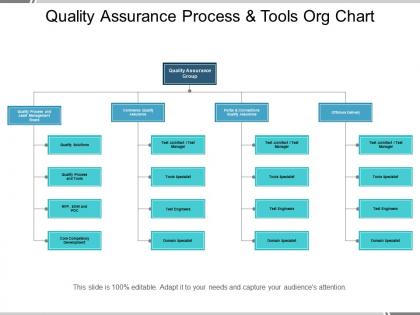
El diagrama de garantía de calidad es muy inclusivo y comienza con el grupo de Garantía de Calidad en la parte superior. Tiene cuatro categorías: Junta de Gestión de Procesos y Activos de Calidad, Garantía de Calidad de Comercio, Garantía de Calidad de Portal y Conexiones, y Entrega Offshore. Puede dividir aún más estas categorías y enumerar los tipos de herramientas y personal empleados dentro de cada categoría para garantizar una calidad óptima. Toda esta información ayudará a su audiencia a analizar el alcance y nivel del programa de garantía de calidad utilizado por la empresa.
Plantilla de Garantía de Calidad: Una técnica confiable para ganar la confianza del cliente
Compartir o utilizar una plantilla de garantía de calidad ayuda a transmitir que su empresa no tiene nada que ocultar y hace todo de manera abierta. Este audaz documento contribuye en gran medida a ganar la confianza requerida de los clientes potenciales y la audiencia en general. La plantilla proporcionada anteriormente puede ayudarlo a hacer lo mismo al ofrecer los detalles de garantía de calidad de manera completa e informal.
Proceso de aseguramiento de calidad y organigrama de herramientas con las 5 diapositivas: 1. Definición del proceso de aseguramiento de calidad 2. Herramientas de aseguramiento de calidad 3. Roles y responsabilidades en el proceso de aseguramiento de calidad 4. Métricas clave de desempeño 5. Estructura organizativa del equipo de aseguramiento de calidad
Refuerza la confianza en el proceso de aseguramiento de la calidad y las herramientas de tu organigrama. Haz que tus clientes vuelvan a creer.
FAQs for Quality assurance process and
Honestly, focus on building quality in from the start instead of hunting for bugs later - way cheaper that way. Get your whole team thinking about it, not just QA people. Document everything and track whatever you can measure, because how else do you know if you're actually getting better? Oh, and do retrospectives after sprints. Sounds boring but they're actually super helpful for figuring out what's broken in your process. Prevention beats detection every time, and keep your customers in mind with everything. That's really it - nothing too fancy.
QA is about preventing bugs by fixing your processes first. QC is catching bugs in the actual product. So QA = building better guardrails and code standards throughout development. QC = hands-on testing right before you ship. I get these mixed up constantly tbh! QA runs through your whole dev cycle, but QC kicks in when you're actively hunting for problems. Most teams I've worked with do way too much QC and not enough QA, which is backwards. You'll save yourself tons of headaches if you build both in properly.
Mix planned audits with random spot-checks - that combo works best. Focus on the high-risk stuff first instead of treating everything the same. Definitely write everything down as you go (seriously, your memory isn't as good as you think). Talk to the people actually doing the work, not just their bosses. Checklists keep you on track, but don't get so stuck on them that you miss obvious problems. Oh, and always circle back on fixes within a month or they'll just forget about it. Balance being thorough with actually getting done.
So CI runs your tests automatically every time someone pushes code - catches bugs super early instead of that last-minute panic before releases. Every commit gets tested, which stops broken stuff from getting through. Developers end up writing cleaner code too since they know it'll get checked right away. Your QA people can actually focus on the interesting stuff like edge cases instead of running the same boring tests repeatedly. I swear it's like having someone watching your code 24/7. Oh and if you're just starting out, maybe begin with unit tests only - don't go crazy trying to automate everything at once.
Dude, automated testing is like having a safety net that catches bugs before they mess up your live site. I'd go crazy doing CI/CD without it now - seriously saves your team from doing the same boring tests over and over. Unit tests, API stuff, smoke tests... all perfect for automation. But don't think it replaces everything though. You still need actual people checking usability and weird edge cases that your scripts won't catch. My advice? Pick your most important user flows first and automate those, then just keep adding more as you go.
So honestly, the ratio of bugs you catch vs what customers find is huge - tells you everything about how you're doing. I track defect detection rates, how fast we fix stuff, and customer satisfaction scores. Used to get way too obsessed with defect density per feature though lol. Customer impact metrics are what really matter. Also watch your cycle times and whether you're actually hitting deadlines without cutting corners on quality. Just throw these numbers on a simple dashboard and check monthly. You'll start seeing patterns pretty quick and can tweak things from there.
Honestly, the timeline crunch is brutal - QA always gets squeezed when sprints run tight. Requirements shift constantly too, which is fun. Documentation? What documentation? You'll be deciphering acceptance criteria like hieroglyphics half the time. Here's the thing though - automation becomes make-or-break, but setting it up takes forever (ironic, right?). Your CI pipeline better be bulletproof from sprint one or you're screwed. My take? Get tight with the devs immediately. Fight tooth and nail for decent user stories. And yeah, invest in test automation upfront even if it tanks your first sprint's velocity.
Honestly, you gotta make quality everyone's problem, not just QA's. Get your leadership to actually show they care about doing things right vs. rushing crap out the door. When people see managers backing that up, they'll follow. Reward the folks catching bugs instead of just celebrating speed demons - I swear, some places punish you for finding problems! Set up regular retros where teams can be real about what's broken. Oh, and this is huge - give people actual time to do it right instead of these insane deadlines that force shortcuts. Quality takes breathing room.
Focus on defect density and escape rates first - those show how many bugs you're catching vs letting slip through. Test coverage percentage is obvious but still crucial. Mean time to resolution is my favorite though, tells you how fast your team recovers when shit hits the fan. Track test execution rates and first-pass yield too. Customer satisfaction scores are gold if you can actually get reliable data. Honestly, stick to maybe 5-7 metrics max that you check weekly. More than that and you'll just get buried in numbers that don't help you make real decisions.
Honestly, just stick to simple templates for everything - test cases, bug reports, the whole deal. I've watched so many teams create these elaborate docs that collect dust because they're way too complicated. Start with your most critical stuff first, then expand. Document the "why" behind decisions, not just what you did - like why you chose certain test scenarios or skipped others. Oh, and don't forget about risk assessments and acceptance criteria context. Track metrics your stakeholders actually care about (trust me on this one). Keep it all in one central spot so people aren't hunting around. You'll thank yourself later when someone new joins the team.
Honestly, just set up feedback collection everywhere - surveys after beta releases, forms in staging, user interviews during UAT. But here's the thing that everyone messes up: you actually have to DO something with what people tell you. I've seen so many teams collect feedback then let it sit there gathering dust. Sort issues by how often they come up and how badly they affect users, not just what's easiest to fix technically. Oh, and definitely tell users when you've fixed something they complained about - makes them way more likely to keep giving you useful input next time.
So compliance basically controls your whole QA approach - sets your minimum standards, drives how you document stuff, determines testing methods. Ad-hoc testing? Forget about it. Frameworks like ISO or FDA requirements will dictate everything from metrics to defect handling. Build it into your processes from the start though - seriously, retrofitting compliance later is absolute hell (learned that one the hard way). You'll save yourself tons of headaches. The documentation alone will make you want to cry if you try doing it backwards.
Dude, AI is seriously changing QA right now. You can automate way more than just the basic stuff - machine learning actually predicts where bugs will pop up based on your code changes. Pretty crazy, right? Test case generation happens automatically now too. Visual testing got way smarter - AI catches UI changes that would take us ages to find manually. Oh and the tools for this keep getting better every few months. My advice? Don't try to do everything at once though. Pick one thing like automated test generation first, then expand from there. Way less overwhelming that way.
Start with the basics - testing methods and bug tracking stuff like Jira. But honestly? Just dive into hands-on practice instead of getting stuck in theory forever. Check out Test Automation University or those Coursera QA courses. Learn Selenium for automation (everyone uses it) and definitely get comfortable with Postman for API testing. ISTQB certification isn't sexy but it opens doors. The real trick is finding projects where you can break things without consequences - that's where you actually learn. Oh, and maybe grab one free course this week to get rolling.
Honestly, you've gotta shift left and automate early - there's no way around it. Instead of treating QA like some final checkpoint, build those quality checks right into development from the start. Yeah, it's more work upfront (won't sugarcoat that), but automated testing and continuous integration actually make things faster once you get rolling. Oh, and focus your manual QA on the stuff that'll really screw you over if it breaks - risk-based testing is clutch for that. Don't try to automate everything at once though. Start small and just keep building on it.
No Reviews