

Quality circles structure




Try Before you Buy Download Free Sample Product
 Impress Your
 Audience
 100%
100% Editable
 Save Hours
 of Time


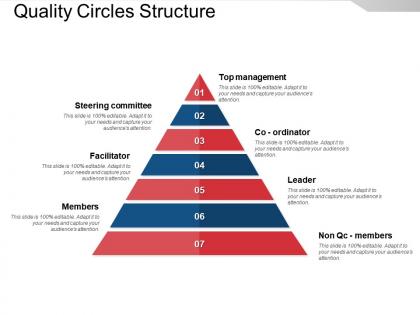
Employ this Quality Circles Structure PowerPoint presentation to discuss the features of quality management in the firm. Using this HR administration PPT layout, you can illustrate the mechanism for productive work culture in your enterprise. Also, with this management technique PowerPoint theme, you can encourage your employees to participate in the problem-solving activities of your organization. The philosophy of a structured framework methodology, quality circle in an organization can be showcased using this quality management PowerPoint theme. The seven stages in the formation of a quality circle can be discussed with employees by taking the assistance of management methodology PPT slideshow. The features of basic elements namely top management, steering committee, coordinator, facilitator, leader, member, and non-QC members can be elucidated using this management tool PowerPoint template. Hence, download this quality control methodology PPT template for enriching the lives of the employees, creating harmony hence increasing your business performance.
People who downloaded this PowerPoint presentation also viewed the following :
Quality circles structure with all 5 slides:
Be completely at ease in any environment with our Quality Circles Structure. You will definitely feel you belong.


FAQs for
So quality circles basically run on four things: people joining because they want to, giving employees actual power to make decisions, focusing on real problems, and that whole continuous improvement thing. Don't force anyone to participate - seriously, that backfires every time. Let your team pick quality issues they actually see and care about fixing. Use proper problem-solving methods like root cause analysis (sounds fancy but it's just finding what's really broken). The cycle's pretty straightforward: spot problems, fix them, check if it worked, repeat. Oh and start with something small that bugs everyone - you'll get way more buy-in that way.
Honestly, quality circles work because people actually get to fix the stuff that bugs them every day. Instead of dropping ideas into some black hole suggestion box, employees form little groups and tackle real problems. Seeing your solution get implemented? That's huge for motivation. The teamwork aspect is pretty cool too - you get people from different departments working together who might never interact otherwise. Just a heads up though - if management ignores their recommendations, the whole thing dies fast. People aren't stupid, they'll stop participating if nothing changes.
Honestly, first thing is getting your boss on board and finding someone decent to facilitate - trust me, bad facilitators kill these things fast. Grab 6-8 people from the same department who can meet weekly to solve quality problems. The process is pretty straightforward: spot issues, dig into what's actually causing them, brainstorm fixes, then pitch solutions to management. You'll need some upfront training on basic tools like fishbone diagrams and Pareto charts (sounds fancy but it's not). Here's the thing though - stick to problems your team can actually control, not the massive company-wide stuff. Start with one pilot group first to figure out what works.
So you'll want to track the obvious stuff first - cost savings, fewer defects, how many suggestions actually got used. But honestly? The numbers don't tell the whole story. Check if people are still showing up and participating after a few months. That's huge. Survey folks about whether they feel heard - sounds cheesy but it matters. When you start seeing people volunteer ideas without being asked, that's when you know it's working. Oh, and don't go crazy with metrics at first. Pick maybe 2-3 things that match what you're trying to accomplish and check them monthly.
Oh man, leadership makes or breaks this whole thing. If your managers aren't genuinely on board, just forget it. They need to actually listen to what comes out of these circles and - here's the kicker - implement the good ideas. Can't tell you how many times I've seen quality circles just die because management ignored everything. Super demoralizing. Your leaders also gotta make sure people feel safe speaking up about problems. Without that psychological safety thing, nobody's gonna be honest about issues. Honestly, if leadership isn't actively participating and providing real resources, you're wasting everyone's time starting quality circles.
Oh yeah, quality circles totally work remotely! We've been doing them over Zoom with digital whiteboards like Miro. Honestly, some people actually speak up more on video calls than they do in person - weird but true. Just keep the sessions shorter since staring at screens gets exhausting fast. Maybe 45 minutes tops? What I'd do is have people throw problems into a shared doc beforehand, then jump on a call to hash out solutions together. The brainstorming part still works great. You're just swapping the conference room for breakout rooms and virtual sticky notes.
Honestly, quality circles work because your frontline people are the ones who actually see what's broken every day. Management misses half the inefficiencies that workers deal with constantly. Set up regular meetings where teams can dig into problems and test out fixes together - nothing too formal or corporate-y. The key is consistency and letting them analyze real data, not just complain. People will actually follow through on changes when they helped come up with the solution instead of having some executive dump new processes on them. Start small though. Pick your worst process headache and run one pilot circle around that.
Honestly, getting people to show up consistently is brutal - everyone's "too busy" suddenly. Management support is huge too because without it, people bail fast. Your group will probably try solving world hunger instead of fixing one small thing (classic mistake). I'd start with maybe 3-4 people who actually want to be there rather than dragging reluctant coworkers along. Keep meetings stupidly short. Celebrate tiny wins right away so people feel like they're accomplishing something. Oh, and set expectations early or you'll end up herding cats every week.
You know what's cool about quality circles? They naturally smash those department walls. Picture this - production folks, engineers, and QA people all hashing out problems together. Suddenly everyone gets why other teams do what they do. It's kind of a lightbulb moment, honestly. Those connections don't just disappear when meetings end either. People start texting each other directly instead of sending formal emails up the chain (which takes forever anyway). Just make sure you're not picking the same usual suspects every time - mix up who's actually at the table.
Honestly, going digital with your quality meetings is a game changer. Miro or Jamboard beat sticky notes any day - way less chaos when collecting ideas. Get some data dashboards running so you're not just guessing about metrics. Video calls obviously help remote folks join in, though we all know how those can go sometimes. Trello keeps your improvement projects from falling through the cracks. My advice? Pick whatever fixes your biggest headache first. If idea sessions are a mess, start with virtual whiteboards. Flying blind on numbers? Dashboards first. Don't try to overhaul everything at once.
Toyota's the obvious one - their factory workers basically built their reputation for reliability by spotting and fixing problems on the spot. Motorola did the same thing with Six Sigma. Boeing tried it too for cutting down defects (though honestly, they've had other issues lately). Even American Express jumped in to improve customer service stuff. Here's what I noticed though - they only worked when management actually let frontline people make real decisions, not just throw suggestions into some black hole. The companies that treated it like checking a box? Total waste of time.
Honestly, it comes down to what you're actually measuring. Manufacturing quality circles are way easier - you've got clear stuff like defect rates, how fast production's going, when machines break down. Pretty black and white. Service industries though? That's where it gets messy. You're trying to measure customer satisfaction and response times, plus all these subjective experiences that don't fit neatly into spreadsheets. And you'll need way more departments working together since your "product" basically touches everyone. The core problem-solving stays the same - collect data, brainstorm fixes, test them out. Just nail down your metrics first, especially in services where quality means something different to every person you ask.
So they'll need basic problem-solving stuff - root cause analysis, brainstorming, data collection. Group facilitation is huge too since it's all about teamwork. Most places add communication training because, honestly, presenting to managers freaks people out. Oh and quality tools like fishbone diagrams, Pareto charts - you know, the classic ones. They should learn how to track improvements too. I'd start with a 2-3 day workshop covering the basics, then coach them through their first real projects. That way they don't feel thrown to the wolves.
Dude, quality circles are actually pretty game-changing for company culture. Basically you're letting employees tackle problems themselves instead of just complaining about them in the break room. Teams get to spot issues and come up with fixes, which makes people feel like they actually have a voice for once. The collaboration gets way better too. I'd honestly start with just one department though - don't go crazy right away. You'll notice communication improves between different levels, and that whole "continuous improvement" thing stops being corporate BS and becomes real. People develop this ownership mentality that's contagious.
Honestly, you've gotta shake things up or people will zone out completely. Switch who's running the show each week - same person talking gets old fast. Mix your focus between department stuff and bigger company issues so everyone feels heard. Public shoutouts when someone's idea actually gets used? Game changer. Bring in guest speakers sometimes or do cross-training sessions with other teams for fresh perspectives. Oh, and actually follow through on action items - nothing kills engagement like promising changes that never happen. Each meeting should feel different and worth people's time.
-
Innovative and attractive designs.
-
Out of the box and creative design.