

Quantum Computing IT Powerpoint Presentation Slides




Try Before you Buy Download Free Sample Product
 Impress Your
 Audience
 100%
100% Editable
 Save Hours
 of Time


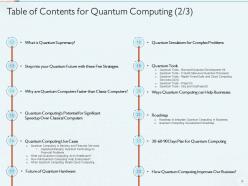
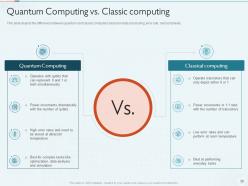
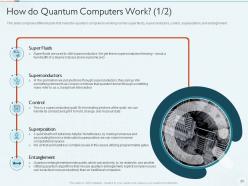
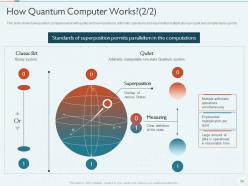
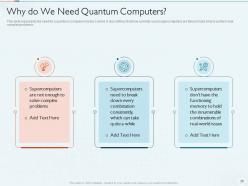
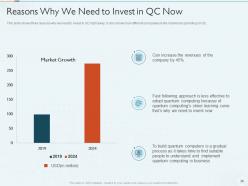
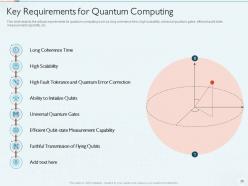
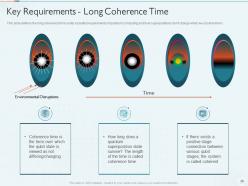
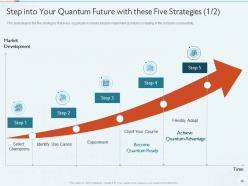
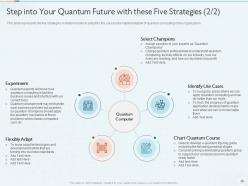
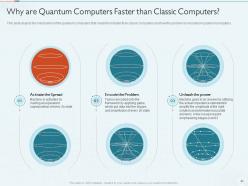
Introducing the concept of Quantum computing utilizing these amazingly designed PowerPoint decks. Quantum Computing is the process of developing computers based on the principles of quantum physics. Todays computers can only work on the values of 0s and 1s. This is why it takes a considerable time to solve complex problems, but these difficult problems can be solved instantly with quantum computers. This PowerPoint presentation is of significant assistance to learn about quantum computing and present details on the same. This PPT deck provides a brief idea about quantum computing, its layered stack architecture, applications, and benefits in different sectors. In this PowerPoint presentation, we have covered the problems faced by the company and the gap analysis, along with the difference between traditional computing and quantum computing. Furthermore, this quantum computing template includes the definition of qubits, their two properties, such as superposition and entanglement, and the working of quantum computers and their need. In addition, quantum computation PPT contains the reasons businesses invest in quantum computing, its requirement, description of quantum supremacy, and strategies to adopt quantum computing. Moreover, this quantum cryptography presentation showcases the reasons behind the speed of quantum computers, their use cases, the future of quantum hardware, quantum simulators for complex problems, and quantum tools. Lastly, the quantum mechanics presentation represents how quantum computers can help businesses, a roadmap to integrate quantum computing in business, 30-60-90 days plan, and commercialization of quantum use cases. Download our 100 percent editable and customizable template, which is also compatible with Google Slides.
People who downloaded this PowerPoint presentation also viewed the following :
Content of this Powerpoint Presentation
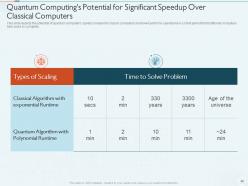
Last month, March 2024, Google announced a $5 million, three-year competition to develop quantum algorithms capable of solving real-world problems. A quantum computer that the company demonstrated in 2019 was able to solve a problem that a traditional computer will solve in 10,000 YEARS, IN MINUTES.
Explore SlideTeam’s PPT Templates to help you understand quantum computing’s layered architecture, applicability across industries, and considerable advantages over conventional computing.
IBM, Microsoft, Intel, Airbus, Volkswagen, and other corporations have begun executing computations and moves toward the concept. Even Hollywood blockbusters like “Interstellar” and “Ant-Man and the Wasp: Quantumania” featured features of the quantum domain.
This blog explores the intricacies of quantum computing. This will serve as an easy-to-use reckoner for understanding this new approach to computing. Use it to discuss the uses and benefits of quantum computing across fields. This will enable you to discuss the features that distinguish quantum computers from classical computers. Download today!
Also, check out “How Google Quantum Computer Harnesses the Power of Advanced Computing? - Free PPT & PDF.”
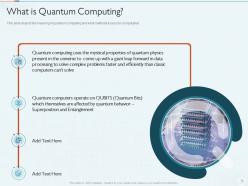
Template 1: What is Quantum Computing?
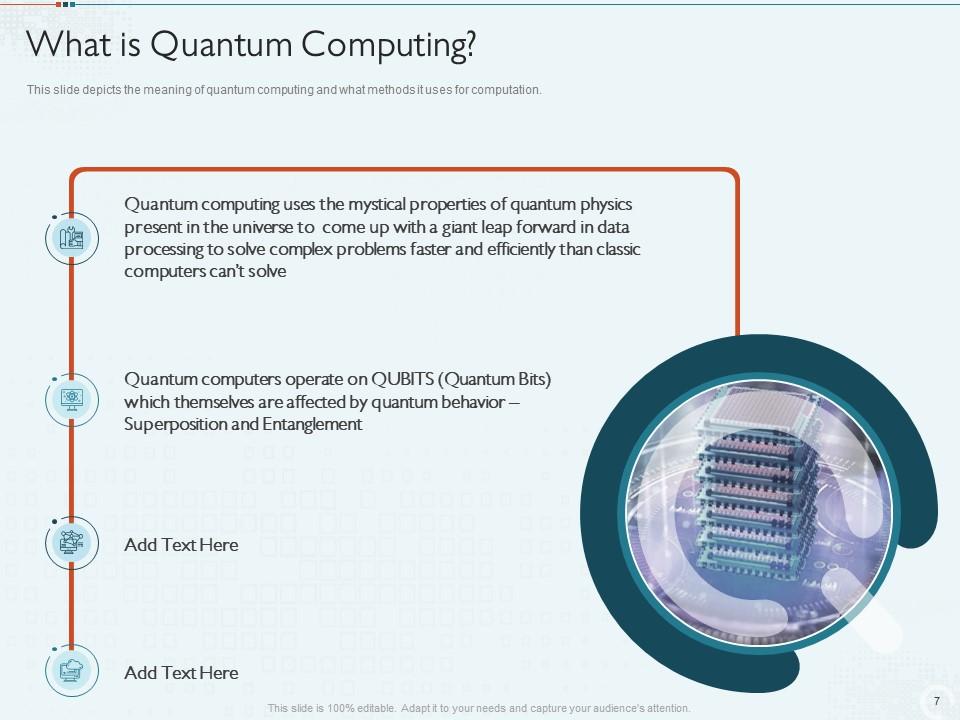
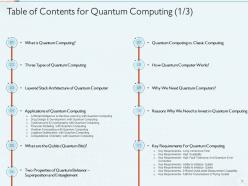
Quantum computing has transformed the digital landscape. This PPT Template serves as a reference to understand quantum computing. It focuses on computational methods for identifying potential solutions to complicated problems and challenges. This slide is an excellent resource for explaining to your audience how it differs from traditional computing.
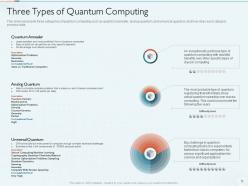
Template 2: Three Types of Quantum Computing
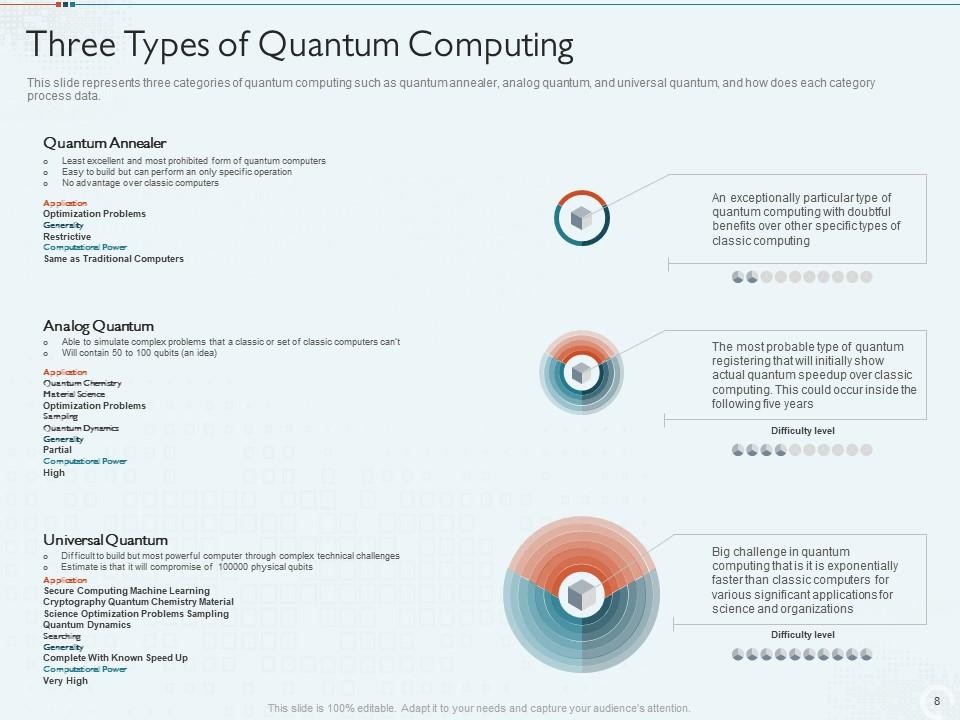
This PPT Slide illustrates three types of quantum computing. It shows how the quantum annealer, analog quantum, and universal quantum process data. Use this presentation to describe their operation, generality, processing power, and applications.
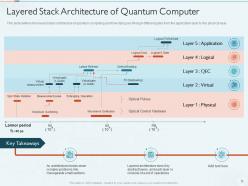
Template 3: Layered Stack Architecture of Quantum Computer
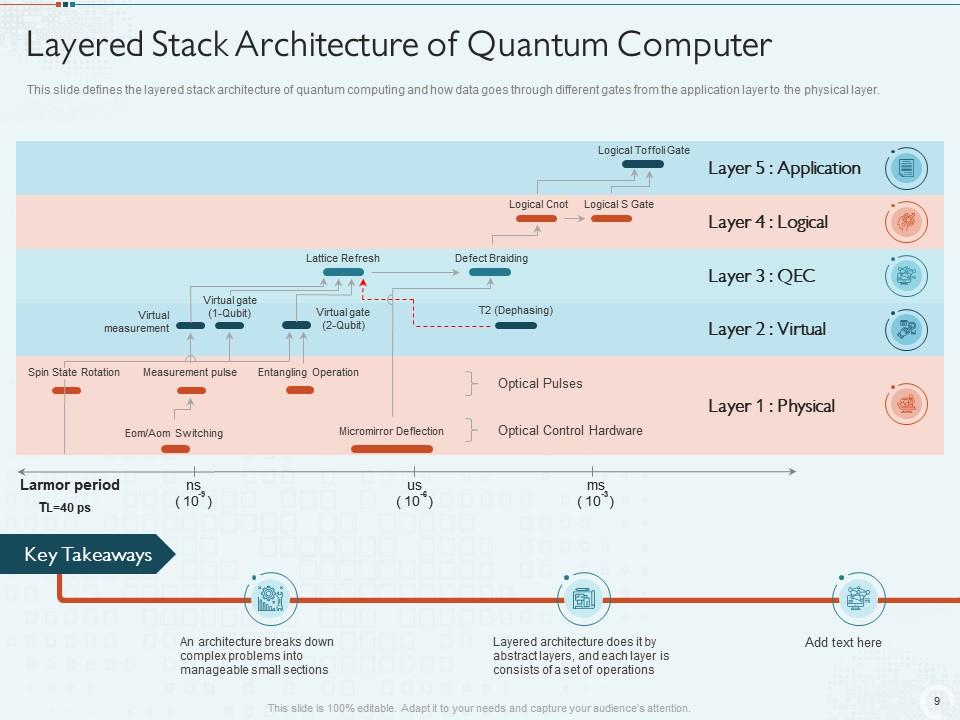
Use this PPT Layout to present a thorough framework for understanding quantum computing systems. This slide outlines the three basic levels that make up the layered stack architecture of quantum computing: the application, system, and physical layers. Employ this PowerPoint Presentation to show how data moves from the application layer to the physical layer.
Template 4: Applications of Quantum Computing
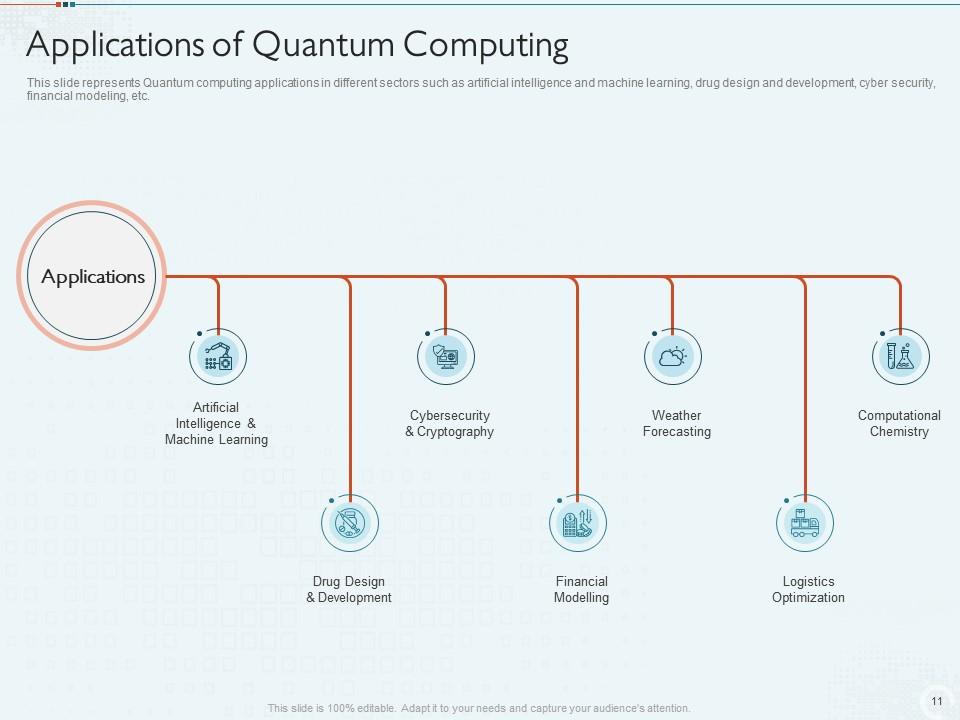
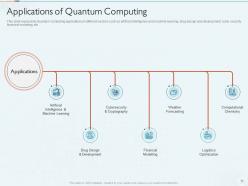
Quantum computing is on the verge of supremacy. This slide illustrates its uses across industries. It demonstrates applications in artificial intelligence and machine learning, drugs research and development, cyber security, financial modeling, and more. You can provide data to show how quantum computing enables significant breakthroughs.
Template 5: Artificial Intelligence & Machine Learning with Quantum Computing
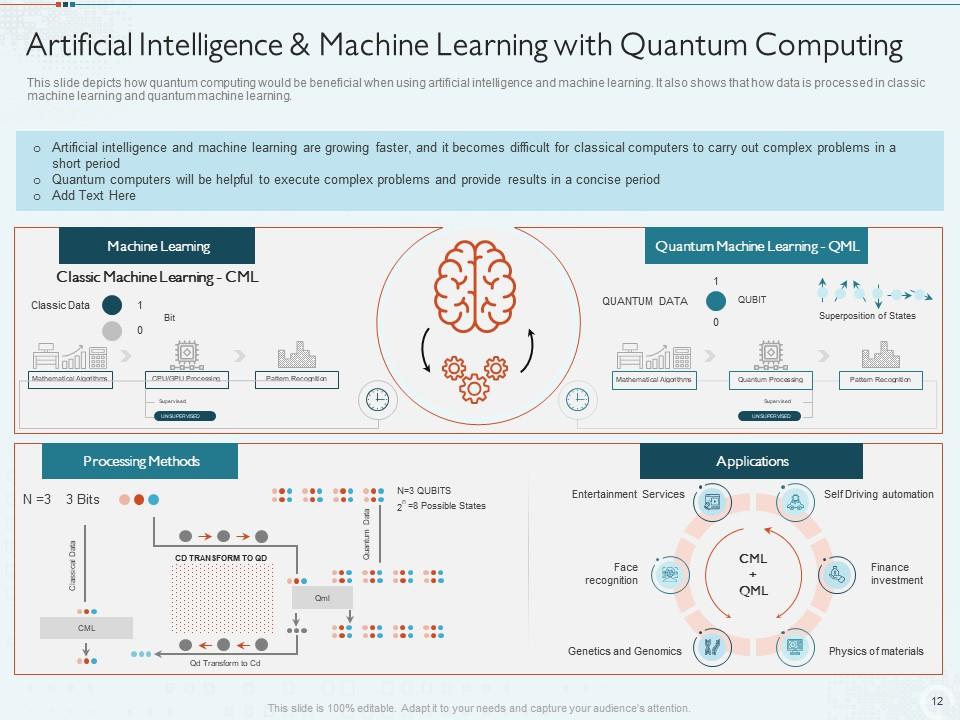
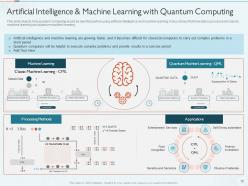
Studies indicate that quantum computers are millions of times faster than classical computers in terms of processing speed. As a result, it has enormous potential for artificial intelligence and machine learning. Use this PPT Slide to demonstrate how quantum computing can benefit artificial intelligence and machine learning. This will help to demonstrate differences in data processing between typical machine learning and quantum machine learning.
Template 6: Drug Design & Development with Quantum Computing
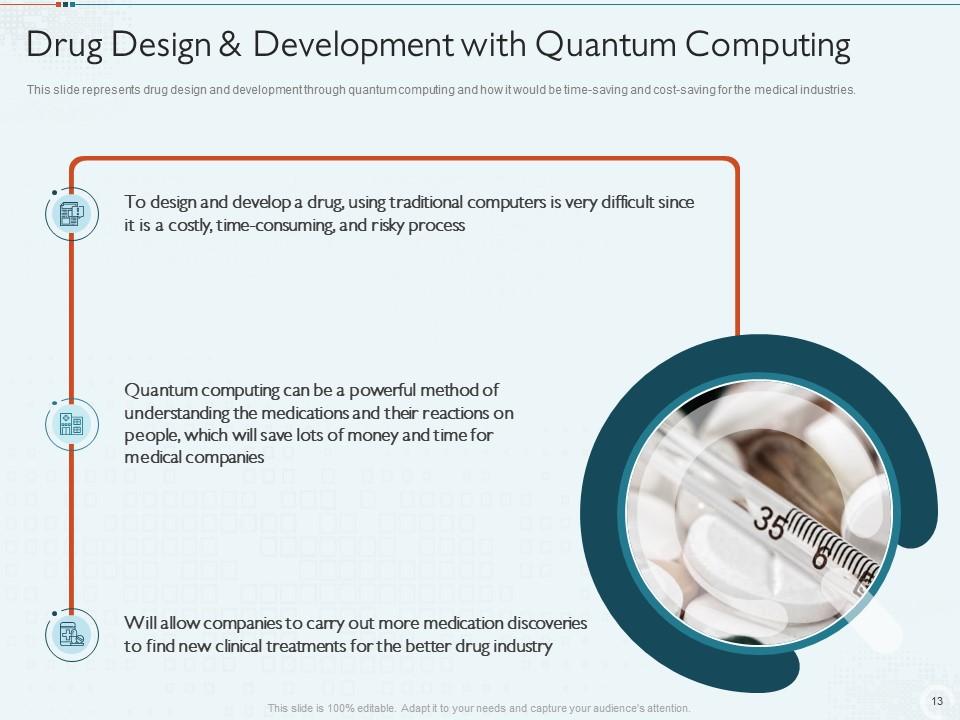
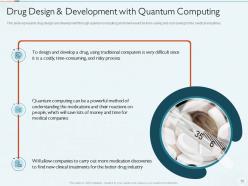
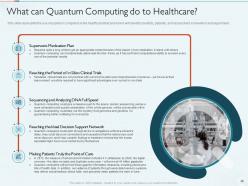
The ability of quantum computers to process large volumes of data rapidly and accurately has changed the drug discovery and development sector. This PowerPoint Design demonstrates the advantages of quantum computing for the medical industry. Use this presentation to highlight benefits, such as faster computation, cost savings, simpler clinical trials, shorter timeframes, and better overall patient selection.
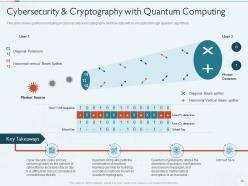
Template 7: Cybersecurity & Cryptography with Quantum Computing
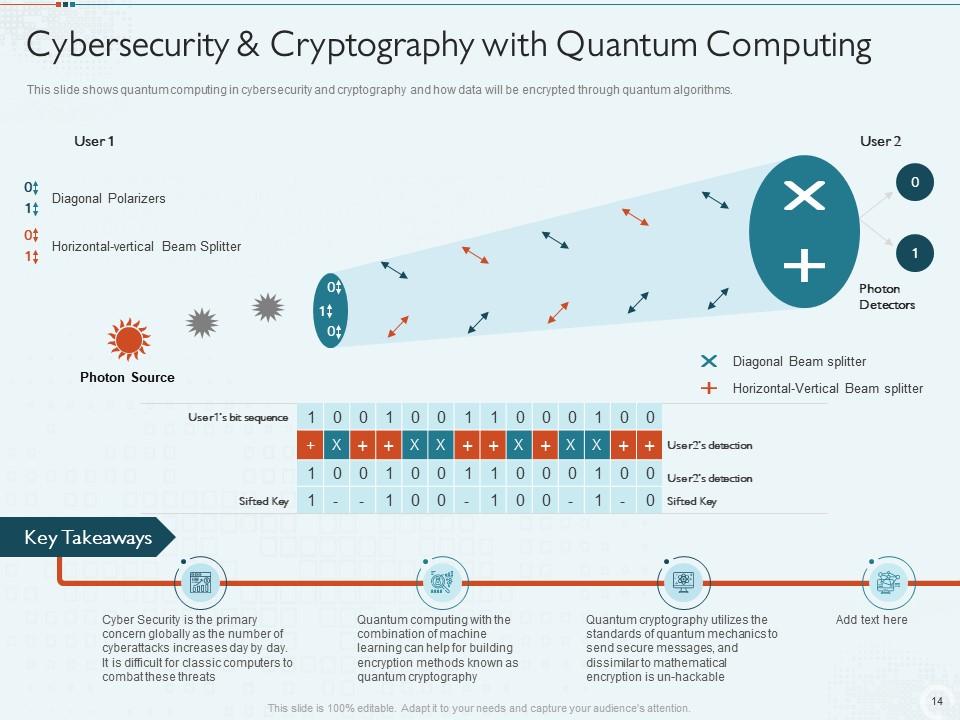
Quantum computing is revolutionizing cyber security. Use this PowerPoint Template to demonstrate the design of encryption schemes using quantum algorithms. This will allow your company to begin preparing for quantum-era cyberattacks with time on your side. Employ this download to instill crypto agility in your workplace.
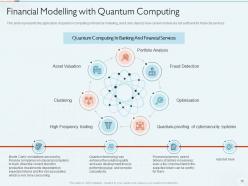
Template 8: Financial Modelling with Quantum Computing
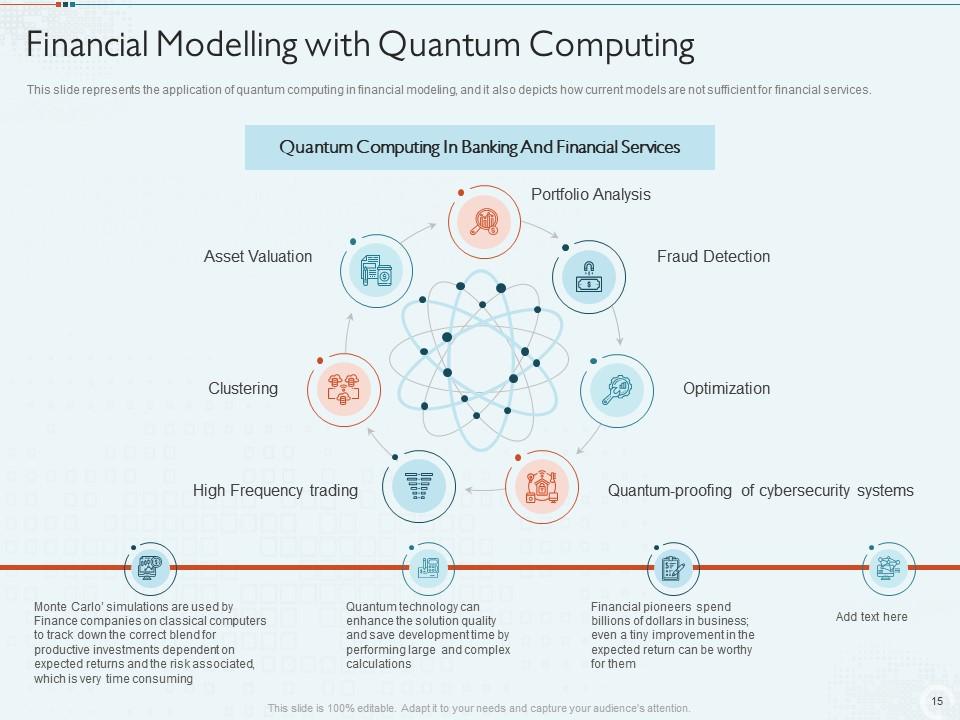
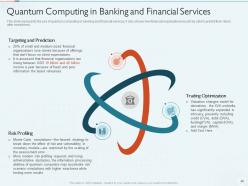
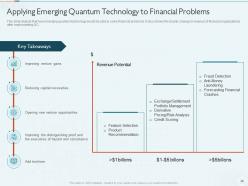
Financial modeling has advanced greatly with the use of quantum computing. This PPT Template illustrates the use of quantum computing in financial research. It demonstrates how approaches present today are insufficient for financial services. Use this presentation to discuss how quantum computing can help financial institutions and banks make better judgments, spot market trends, improve customer service, and optimize investment strategies.
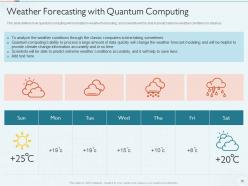
Template 9: Weather Forecasting with Quantum Computing
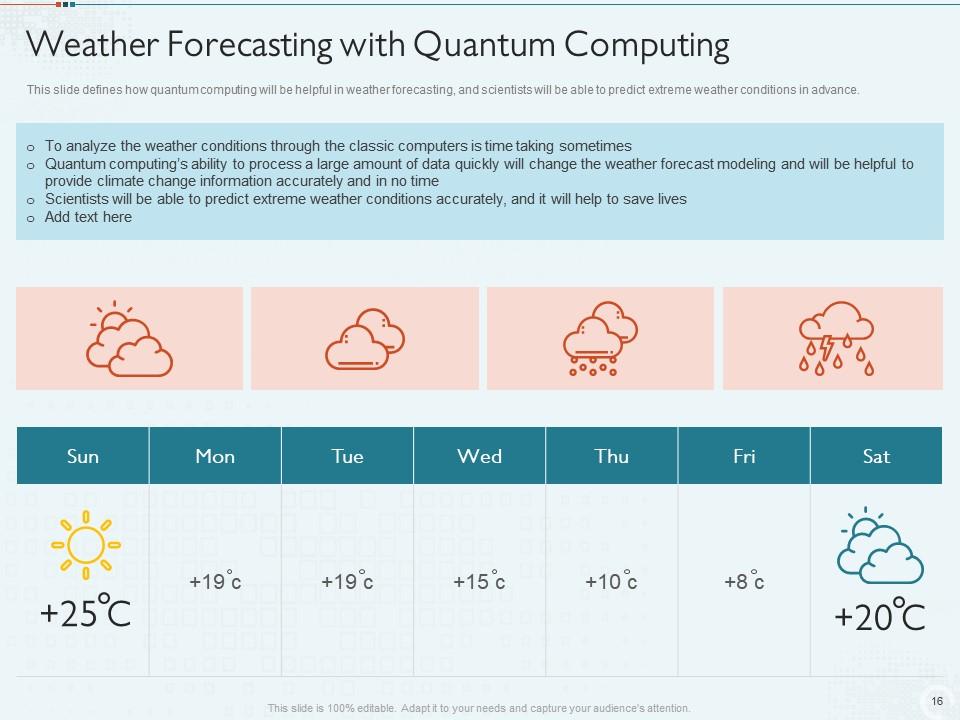
Weather forecasting is one area where quantum computing is making progress. Quantum computers evaluate atmospheric conditions, ocean currents, and other variables to understand weather patterns. This PPT Slide describes the use of quantum computing in weather forecasting. Use this layout to illustrate quantum computing’s huge potential for disaster prevention and improved agriculture practices.
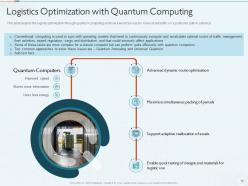
Template 10: Logistics Optimization with Quantum Computing
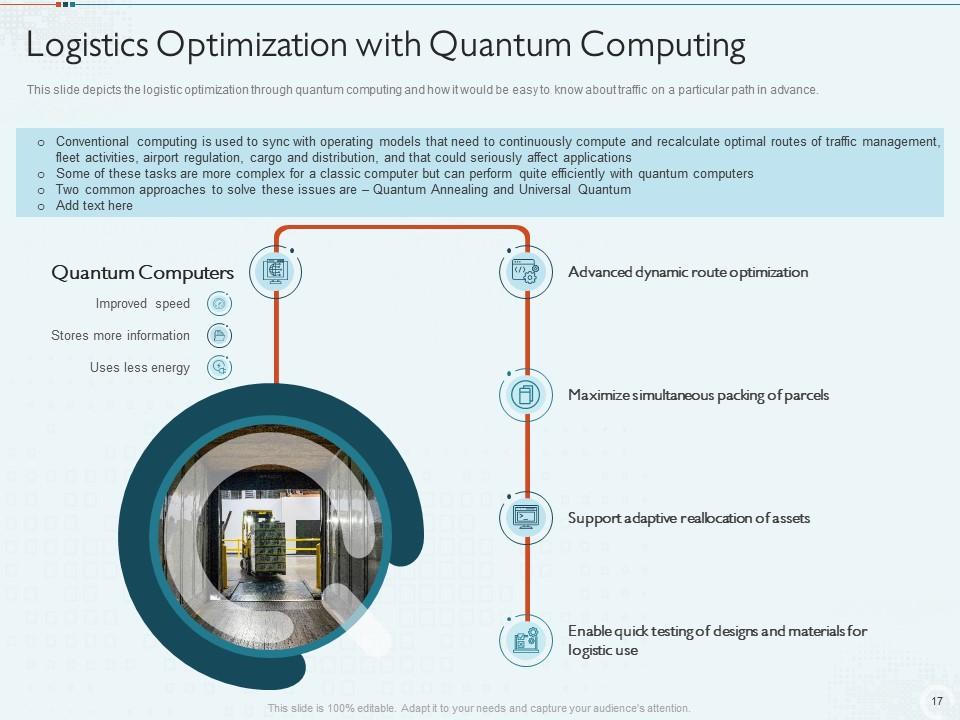
Do you need to streamline your logistical decision-making to choose the best solutions from crucial data? This PowerPoint Template demonstrates the use of quantum computing in logistics planning. It supports the development of a strong framework for improving logistical efficiency and effectiveness. Discuss how to use quantum computing to optimize your supply chain and stay competitive.
New ways of Computing
Quantum computing allows you to solve highly complicated problems faster. Use SlideTeam’s PPT Templates to learn about this game-changing technology and its uses in the modern world.
PS Quantum cryptography benefits organization in many ways, some that we may even not realize it. Click here to read more.
Quantum Computing IT Powerpoint Presentation Slides with all 84 slides:
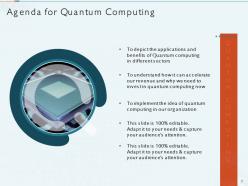
Use our Quantum Computing IT Powerpoint Presentation Slides to effectively help you save your valuable time. They are readymade to fit into any presentation structure.
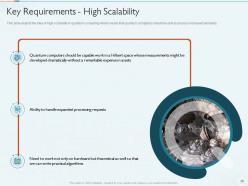
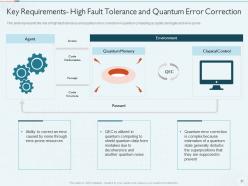
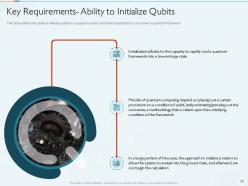
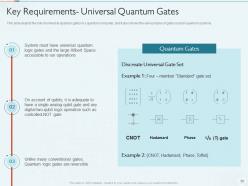

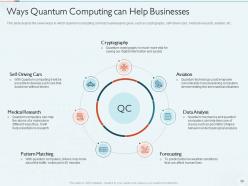
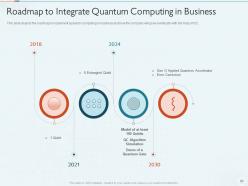
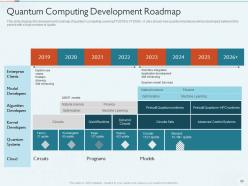



 Click here to view PDF
FAQs for Quantum Computing IT
So there's three big things: superposition, entanglement, and interference. Superposition is wild - qubits can be in multiple states at once instead of just 0 or 1 like regular bits. That's where the crazy processing power comes from. Entanglement connects qubits in this weird way where measuring one instantly affects another, even if they're miles apart. I still don't totally get how that works tbh. Then interference amplifies right answers while wrong ones cancel out. Start with superposition though - once you wrap your head around that, the rest makes more sense.
So regular bits are stuck being either 0 or 1, right? But qubits can actually be both at the same time until you check them. Weird, I know. Picture a spinning coin versus one that's landed. That's basically the difference. Regular bits are like the landed coin - definitely heads or tails. Qubits are still spinning, holding multiple possibilities. This means quantum computers can test tons of solutions simultaneously instead of going through each one. Pretty wild honestly. You should check out what this means for breaking encryption codes - that's where things get really interesting and kinda scary.
So quantum gates are like the building blocks for manipulating qubits - similar to logic gates in regular circuits but they work with superposition which is wild. You chain them together to make quantum algorithms. Hadamard gates create superposition, CNOT gates handle entanglement. The hard part is figuring out the right sequence for your problem without quantum decoherence screwing things up (which it loves to do). Honestly, grab a quantum simulator first - I spent way too much time just messing around with different gate combinations. It'll blow your mind how they affect qubit states.
So basically, entanglement is this wild phenomenon where two quantum particles get linked together. When you measure one, it instantly affects the other - doesn't matter if they're across the universe. Einstein thought it was totally bizarre and called it "spooky action at a distance." Quantum computers use this weirdness to make qubits collaborate in ways regular bits can't. More entangled qubits = more computational power. That's honestly where the magic happens - it's why quantum computing could solve certain problems way faster than classical computers. Pretty mind-bending stuff when you think about it!
Honestly, the scale problem is insane - you need like hundreds of physical qubits just to make one reliable "logical" qubit that actually works. Quantum states are super fragile, so they're constantly getting messed up by noise and random interference. Current error correction needs way too many resources than what we can build right now. Oh, and the correction process itself can screw things up if it's not done perfectly, which is kind of ironic. IBM and Google are getting better at lowering error rates though, so definitely check out their latest stuff if you're thinking about quantum projects.
Okay so quantum computers use these things called qubits instead of regular bits. Normal computers read 0 or 1, but qubits can be both at the same time - sounds weird but that's quantum physics for you. This means they can test tons of possibilities simultaneously rather than going through each one. They're gonna be huge for breaking encryption, finding new drugs, stuff like that. Honestly the math behind it makes my head hurt, but the potential is insane. Don't hold your breath for a quantum iPhone though - we're probably decades away from everyday use.
Dude, quantum computing is already shaking things up in crypto and pharma. So like, these computers can crack our current encryption - which is terrifying - but they're also building quantum-safe replacements your security folks need to think about now. Drug discovery is where it gets really cool though. Companies like Roche are partnering with quantum startups to run molecular simulations way faster. We're talking weeks instead of years for testing how drugs interact. Honestly didn't expect pharma to be this far ahead. You should probably check which quantum companies are targeting your industry.
So quantum computers can basically check tons of solution paths at the same time instead of going through them one by one. Regular computers have to test each possibility separately - which honestly takes forever on big problems. Quantum ones use this weird superposition thing where they evaluate way more combinations at once. Pretty wild if you think about it. They're crazy good for stuff like cryptography and drug research. Oh, and optimization problems too - my cousin works in that field actually. If you're dealing with huge datasets or complex modeling, definitely worth checking if quantum algorithms could help speed things up.
So gate-based quantum computers let you control each qubit precisely - you're basically programming with quantum gates to build whatever algorithm you want. IBM's machines work this way. Quantum annealing is totally different though. It's like rolling a ball downhill to find the lowest point, where the system just naturally settles into the optimal solution. D-Wave makes these. Honestly, annealers are pretty limited - they're really only good for optimization problems. But if that's what you need, they can be solid. Gate-based machines are way more flexible since they can run any quantum algorithm you design. What kind of project are you working on? That'll help determine which approach makes sense.
So both algorithms tap into superposition and interference for crazy speedups. Shor's uses quantum Fourier transforms for period-finding in modular arithmetic - way faster than classical methods. Grover's is different though, it amplifies amplitudes to search unsorted databases quadratically faster than brute force. What's cool is they don't just swap classical steps for quantum ones. They completely rethink the problem so quantum mechanics does most of the work. Honestly, I'd start with Grover's on a simulator - you can actually watch the amplitude manipulation happen, which is pretty satisfying.
So the big names are IBM, Google, Microsoft - then you've got smaller companies like Rigetti and IonQ doing cool stuff. Google's the one that claimed "quantum supremacy" but honestly that's still pretty controversial. IBM has this Qiskit thing that's actually free to mess around with, which is nice. Universities like MIT and Oxford are where the real research happens. Oh and Quantinuum too - almost forgot them. If you want to try it yourself, definitely start with IBM's platform since it won't cost you anything and the tutorials are solid.
So quantum computers are gonna break all our current encryption - RSA, AES, everything we use now becomes pointless once they get powerful enough. We're probably looking at 10-20 years before this hits hard. But it's not all bad news though. Drug discovery, financial stuff, AI development - quantum computing will completely change those fields in crazy ways. Oh, and definitely start reading up on quantum-resistant crypto methods now. You don't want to be scrambling later when everyone else is already ahead of the game.
For quantum development, Python's definitely the way to go. Qiskit from IBM is probably your safest bet - tons of docs and the community's pretty active. Google has Cirq too, and there's PennyLane if you want to mess around with quantum ML stuff. Microsoft's got Q
-
Nice and innovative design.
-
Use of icon with content is very relateable, informative and appealing.