


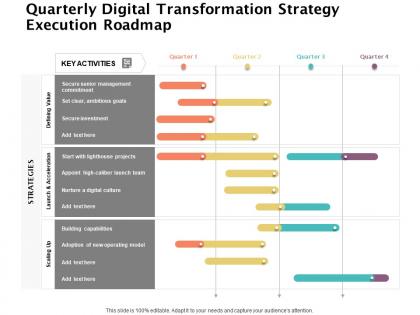
Roteiro de Execução de Estratégia de Transformação Digital Trimestral




Try Before you Buy Download Free Sample Product
 Impress Your
 Audience
 100%
100% Editable
 Save Hours
 of Time


Utilize nosso Roteiro de Execução de Estratégia de Transformação Digital Trimestral pré-construído para apresentar seu plano de ação da maneira mais eficaz. Reduza a papelada e mostre como as diferentes atividades estão ligadas umas às outras, incorporando este tema do PowerPoint que chama a atenção. Este layout PPT de roteiro completamente editável é adequado para atender a todas as suas necessidades e para ter um esboço estruturado de todo o fluxo do processo usando codificação de cores. Forneça orientações aos seus colegas de equipe sobre o processo de progressão empregando nosso tema PPT. Os membros da equipe podem ser facilmente designados em equipes, acessando os marcos de trabalho a serem cumpridos dentro do prazo. Você pode modificar facilmente o slide do PowerPoint de acordo com as situações em tempo real. Faça o download do nosso impressionante Roteiro de Execução de Estratégia de Transformação Digital Trimestral e você estará pronto para provar sua experiência em planejamento estratégico.
People who downloaded this PowerPoint presentation also viewed the following :
Roteiro trimestral de execução da estratégia de transformação digital com todos os 2 slides:
Use nosso Roteiro de Execução de Estratégia de Transformação Digital Trimestral para ajudá-lo a economizar seu valioso tempo. Eles são readymade para caber em qualquer estrutura de apresentação.

FAQs for Quarterly digital transformation
Key components driving successful digital transformation include cloud infrastructure, data analytics platforms, automation technologies, employee training programs, and customer-centric digital experiences. These elements work together by streamlining operations, enhancing decision-making capabilities, and improving service delivery, with many organizations finding that strategic integration of these components delivers competitive advantages and accelerated growth.
Businesses can measure digital transformation ROI through key performance indicators like operational efficiency gains, cost reduction percentages, revenue growth, customer satisfaction scores, and time-to-market improvements. By tracking metrics such as automated process completion rates, reduced manual errors, and enhanced customer engagement, organizations can quantify tangible benefits while demonstrating strategic value to stakeholders.
Leadership serves as the primary catalyst for digital transformation by establishing strategic vision, securing necessary resources, fostering cultural change, and ensuring organizational alignment throughout the transition process. Effective leaders drive adoption by communicating clear benefits, investing in employee training, and breaking down silos between departments, with many organizations finding that executive commitment directly correlates with transformation success and competitive advantage.
Employee training and development ensures smooth digital transformation by building technical competencies, reducing resistance to change, and accelerating technology adoption across all organizational levels. Through comprehensive upskilling programs, companies enable seamless workflow transitions, minimize productivity disruptions, and foster innovation mindsets, with many organizations finding that well-trained teams deliver faster implementation timelines and sustained competitive advantage.
Common digital transformation challenges include resistance to change, legacy system integration, skills gaps, data security concerns, and budget constraints. Organizations overcome these by implementing comprehensive change management programs, adopting phased migration strategies, investing in employee training, and establishing robust cybersecurity frameworks, with many finding that strategic partnerships and clear communication ultimately deliver smoother transitions and competitive advantage.
Data analytics supports digital transformation by enabling data-driven decision making, identifying operational inefficiencies, predicting customer behaviors, and optimizing resource allocation across organizational processes. Through advanced analytics platforms, companies in retail, manufacturing, and financial services streamline operations, enhance customer experiences, and accelerate innovation cycles, ultimately delivering competitive advantage and measurable business growth.
Digital transformation enhances customer experience through personalized interactions, omnichannel integration, real-time support capabilities, automated service processes, and data-driven insights. These technologies streamline customer journeys by reducing response times, anticipating needs, and delivering consistent experiences across all touchpoints, with many retail and financial services organizations finding that strategic digital initiatives ultimately increase satisfaction while reducing operational costs.
Cloud computing, artificial intelligence, Internet of Things, automation technologies, and data analytics are the most disruptive trends driving digital transformation initiatives. These technologies revolutionize business operations by streamlining processes, enhancing customer experiences, and enabling real-time decision-making, with many organizations finding that strategic integration delivers significant competitive advantages and operational efficiency.
Organizational cultures significantly impact digital transformation through leadership commitment, employee adaptability, risk tolerance, and change management approaches. Progressive cultures that embrace innovation, encourage experimentation, and prioritize continuous learning accelerate transformation, while rigid, risk-averse environments create resistance, with many organizations finding that cultural alignment ultimately determines their digital success.
Successful digital transformation case studies include Walmart's e-commerce integration, JPMorgan Chase's AI-powered fraud detection, Mayo Clinic's telemedicine platforms, and Starbucks' mobile-first customer experience strategy. These organizations streamlined operations, enhanced customer interactions, and accelerated service delivery, with many finding that strategic technology adoption delivers competitive advantage and measurable cost reductions.
SMEs can adapt to digital transformation more rapidly than larger corporations through agile decision-making, cloud-based solutions, and targeted automation in key areas like customer management and operations. While larger corporations have more resources, SMEs benefit from faster implementation cycles and lower legacy system constraints, with many finding that strategic, phased approaches deliver competitive advantages through enhanced customer experiences and operational efficiency.
Companies should prioritize data privacy, algorithmic transparency, employee impact management, cybersecurity accountability, and equitable access to digital services during transformation initiatives. These considerations become increasingly critical as organizations digitize customer interactions, automate decision-making processes, and restructure workforce roles, with many finding that proactive ethical frameworks ultimately enhance customer trust and competitive positioning.
Agile methodology accelerates digital transformation by enabling iterative development, rapid prototyping, and continuous feedback loops that minimize project risks and adaptation delays. Through cross-functional teams and sprint-based delivery cycles, organizations streamline software deployment, enhance customer responsiveness, and pivot quickly based on market demands, ultimately delivering faster innovation cycles and improved competitive positioning in increasingly dynamic business environments.
Cybersecurity serves as the foundational pillar of digital transformation strategies, protecting data integrity, ensuring regulatory compliance, maintaining customer trust, and safeguarding operational continuity during technology adoption. Without robust security frameworks, organizations risk data breaches, system vulnerabilities, and compliance failures that can derail transformation initiatives, ultimately making cybersecurity essential for sustainable digital growth and competitive advantage.
Businesses ensure alignment by establishing clear digital objectives that directly support corporate goals, creating cross-functional governance teams, and regularly measuring transformation initiatives against strategic KPIs. Through integrated planning processes, organizations streamline decision-making, enhance resource allocation, and accelerate strategic outcomes, with many finding that this structured approach delivers sustainable competitive advantage and measurable business growth.
No Reviews