

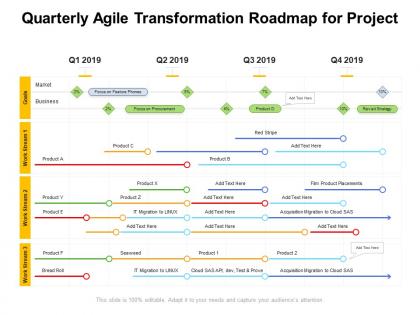
Quarterly agile transformation roadmap for project




Try Before you Buy Download Free Sample Product
 Impress Your
 Audience
 100%
100% Editable
 Save Hours
 of Time


The success rate of business plans is hugely dependent on the plan of action, and this editable Quarterly Agile Transformation Roadmap For Project rightly serves the purpose. Encapsulate all the information related to the project in a well structured manner to obtain maximum efficiency by incorporating our stunning PowerPoint theme. State the critical deliverable, steps involved, time frame, workforce allocation, and lots more in an easy to understand manner by utilizing this pre designed roadmap PowerPoint layout. You can also prioritize your tasks and discuss the problem areas with your colleagues by incorporating this tailor made PPT layout. Empower your work plan by employing this professionally designed PPT theme. Entrepreneurs can download Quarterly Agile Transformation Roadmap For Project as a beneficial communication tool that facilitates in collaborating with different tasks and achieve targets.
People who downloaded this PowerPoint presentation also viewed the following :
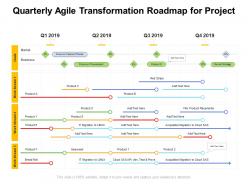
Quarterly agile transformation roadmap for project with all 2 slides:
Give your audience a fulfilling experience. They will find our Quarterly Agile Transformation Roadmap For Project elevating.
FAQs for Quarterly agile transformation
So there are basically four stages you'll go through. Start with assessment and getting leadership on board - that's crucial. Then pick one or two teams for a pilot (this is honestly make-or-break time). After that, you can scale it out to more departments. The final stage is just continuously tweaking things. One thing though - don't let anyone rush you. Most transformations take at least 12-18 months, sometimes way longer if you're a big company. I've seen too many places try to do it in like 6 months and it's a disaster.
Start with a maturity assessment framework - the Agile Fluency Model works well, or just make your own scorecard. Hit the key areas: team practices, leadership buy-in, cultural stuff, delivery metrics, customer collaboration. Here's the thing though - most companies are way less mature than they think they are. Don't just ask managers what they think. Actually survey your teams and dig into the real delivery data. I'd also interview people at different levels since everyone sees things differently. You're not trying to ace some test here. Find your biggest gaps first, then figure out what needs fixing most urgently.
Honestly, leadership makes or breaks the whole thing. They've got to actually walk the walk - model the behaviors, clear out organizational roadblocks, and stick with it when stuff gets weird (which it definitely will). The hardest part? Getting managers to stop micromanaging and just trust their teams instead. Without real buy-in from the top, you'll end up with what I call "Agile theater" - teams doing all the ceremonies but nothing actually changes underneath. My advice? Get leadership aligned on WHY you're doing this transformation before you even think about the how. Otherwise you're just wasting everyone's time.
Honestly, the biggest pain points are usually people just hating change, executives who say they're on board but aren't really, and teams doing this whole "Agile theater" thing where they use the buzzwords but nothing actually changes. Get your leadership genuinely committed first - not just nodding along in meetings. Quick wins help build momentum early on. Heavy coaching investment pays off because most pushback comes from people being scared of new stuff. Don't go crazy trying to flip everything overnight though. Pick a few pilot teams and let the success stories do the talking. Oh, and track actual results, not just whether people are doing the ceremonies right.
Track the usual stuff like sprint velocity and cycle time, but honestly the soft metrics are where it's at - team morale, how good your retros actually are, whether people are stepping up without being told. Don't go crazy with dashboards though, maybe 3-4 things max that actually matter for your situation. Get your baseline numbers first before changing anything (learned that one the hard way). Monthly check-ins work well. Oh and make sure the teams can see this data themselves - they'll start fixing things on their own once they can actually see what's happening.
Honestly, getting buy-in early is everything. Find your change champions first - those people who actually get excited about new stuff and can help you spread the word. They're absolute lifesavers during transitions, trust me. Make sure everyone understands why you're doing this and what's in it for them specifically. Don't just talk at people though - run feedback sessions so they feel heard. Oh, and celebrate those small wins! People need to see progress. I'd start mapping out potential champions this week if I were you.
Dude, training is where most companies totally blow it. People think their team will just magically understand sprint planning and user stories - spoiler alert, they won't. I've watched places dive straight into "agile" and it becomes a complete mess. Start with leadership training first, then work your way down. Everyone needs to get the WHY behind these changes, not just the boring mechanics. Oh, and don't cheap out on ongoing coaching either. This isn't some weekend workshop thing you do once. Your team will need support for months while they figure out their new rhythm.
Start with the basics - Jira or Azure DevOps for sprint tracking, plus Slack/Teams for daily chats (trust me, you'll practically live there). Miro's great for those virtual sticky note sessions during retros. Your dev teams will need CI/CD stuff like Jenkins too, though that's more their thing. Honestly, resist the urge to roll out everything at once. Pick 2-3 tools max or people will lose their minds. Monday.com's another solid option if Jira feels too heavyweight. GitHub Actions is worth looking at if you're already using GitHub anyway.
Honestly, treat them like actual partners instead of people you just update occasionally. Be real about what's going wrong, not just the successes - I've watched so many projects crash because leadership only shared the shiny stuff. Pull them into planning meetings where they can genuinely influence decisions. Monthly working sessions work great for this. Skip the survey nonsense and have real conversations about what's actually working. Oh, and here's the thing - don't just expect them to figure out their new role. Walk them through it. Show them how they fit into this new process, celebrate wins together, and tackle problems as a team.
Look at both your delivery numbers AND how your teams are actually doing. Velocity, cycle time, customer satisfaction - yeah, those matter. But burnout kills everything, so check team engagement and psychological safety too. Are people collaborating or stuck in silos? Quality of sprint retros tells you more than you'd think. Don't stress about perfect metrics from day one though - this stuff takes forever. Pick 3-4 things to track, review monthly, see what story they're telling. Oh, and cross-team collaboration is where most places struggle the most.
Honestly, you've gotta connect your Agile stuff directly to business wins - revenue growth, customer satisfaction, faster launches. Leadership needs to see how sprint work actually impacts the bottom line. I've watched so many teams get caught up in the ritual of standups and retros while missing the whole point. Don't measure velocity for the sake of it. Focus on metrics that actually matter to executives - the stuff that keeps them stressed at 2am. Oh, and schedule regular check-ins where you can show real progress on those key numbers. That's what'll get buy-in.
Dude, culture will absolutely make or break your Agile thing. All the fancy processes mean nothing if your team won't actually collaborate or share what's going wrong. People have to feel safe failing without getting thrown under the bus - which honestly sounds simple but most companies are terrible at this. The whole blame game thing? Total transformation killer. You've got to flip that script so mistakes become learning opportunities instead of witch hunts. Oh, and spot those cultural roadblocks early because they'll torpedo everything else. I've seen it happen way too many times.
Set up retrospectives after each sprint where people can actually talk about what's broken. Don't skip these - I've watched teams crash and burn because they thought they were "too busy" for feedback. Track basic stuff like velocity and cycle time too. Monthly stakeholder check-ins help, and honestly? Quarterly leadership reviews are clutch for the bigger picture stuff. Oh, and cross-team learning sessions are gold if you can swing them. Here's the thing though - you've gotta act on what you hear. Pick maybe two things each cycle and actually fix them, otherwise it's just theater.
Honestly? Pick a couple small teams first and prove it actually works - don't go crazy trying to transform everyone at once. Your people need real coaching during this, not just some PDF they'll never read. Mixed signals from leadership will absolutely tank the whole thing, so get them on the same page first. Let teams share what's working (and what's failing) with each other. You want some consistency in tools and practices, but don't be too rigid about it. Oh, and choose your early adopters carefully - you need wins that'll spread organically, not forced success stories that feel fake.
Yeah, you definitely can't just slap the same agile approach on every industry - I learned that the hard way at my last job. Healthcare teams obsess over compliance and patient safety during sprints. Manufacturing? They're all about lean processes and supply chain stuff. Financial services get bogged down in regulatory requirements that basically dictate everything. The core agile principles don't change, but how you actually implement them totally depends on your industry's specific headaches. Figure out what's causing your sector the biggest problems first, then adapt agile practices to fix those issues. Makes way more sense than forcing some generic framework.
No Reviews