Quarterly planning and development for the future roadmap
Try Before you Buy Download Free Sample Product
Audience
Editable
of Time
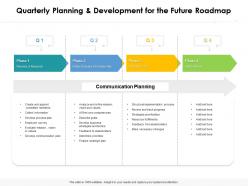
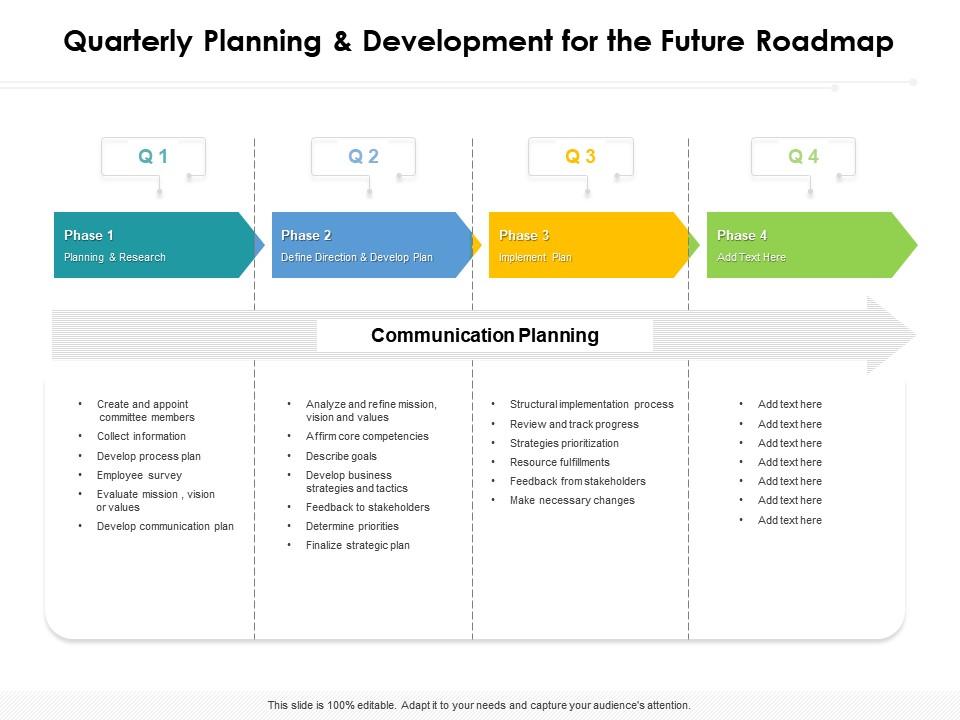
Visualize your work plan and communicate your ideas impactfully with our pre designed Quarterly Planning And Development For The Future Roadmap. Showcase the detailed overview of the project, the key deliverables, and the milestones to be achieved with the help of our fully customizable PowerPoint layout. You can easily emphasize on the project goals and discuss all the activities involved in an easy to comprehend manner by utilizing our professionally designed PPT theme. This roadmap PowerPoint layout is a perfect strategic planning tool that can help in keeping the project on track. With our attractive PowerPoint theme, you can articulate the workflow, track the work progress, and have a clear vision of the goal to be achieved. Download this versatile Quarterly Planning And Development For The Future Roadmap and save your hours of work.
People who downloaded this PowerPoint presentation also viewed the following :
Quarterly planning and development for the future roadmap with all 2 slides:
Give your audience a fulfilling experience. They will find our Quarterly Planning And Development For The Future Roadmap elevating.
FAQs for Quarterly planning and development for
Honestly, stick to 2-4 big objectives per quarter that actually move the needle on your yearly goals. Think outcomes over features - like "cut churn by 15%" instead of just "ship dashboard." Technical debt is annoying but you've gotta tackle at least one piece each quarter or it'll destroy you later. Make them specific enough so your team knows what winning looks like, but don't box yourself in completely. Priorities change, right? Each objective needs an owner and some way to measure success. Oh, and work backwards from what you want to achieve - makes the path way clearer.
Map your initiatives to your top 3-5 business goals first. Score them on impact vs effort - you want stuff that actually moves revenue, customer satisfaction, whatever metrics matter this quarter. Honestly? Skip anything that doesn't tie back clearly to those goals. It's just noise. Rank everything and be ruthless about your top picks. Check in with leadership regularly since priorities change fast (learned this the hard way). When stakeholders ask for "just one more thing" - and they will - be transparent about what tradeoffs that means.
Honestly, just get a proper roadmap tool - ProductPlan or Aha! are solid choices. Way better than trying to make PowerPoint work (been there, it sucks). Miro's great for the brainstorming part when everyone's throwing ideas around. If your dev team already uses Jira, might as well stick with Atlassian since everything connects nicely. I wasted so much time with spreadsheets before switching to dedicated tools. Pick whatever your team will actually open and use regularly though - doesn't matter how many features it has if it just sits there collecting digital dust.
I do 70/30 most of the time - strategic stuff gets 70%, quick wins get 30%. Block out your big initiatives first, then squeeze the quick wins around them. Those small victories keep everyone from breathing down your neck, which honestly is half the battle. But don't let them hijack your whole plan or you'll spend forever just putting out fires. Color-coding helps a ton - you can actually see when things get lopsided. My old manager used to say quick wins are like caffeine: great for energy, terrible as your main fuel source.
Honestly, I'd focus on feature delivery rate and sprint velocity first - those tell you the most. Stakeholder satisfaction scores matter too, but don't go crazy with metrics or you'll spend more time measuring than actually building stuff. Track how often you're changing direction from your original plan. Some pivoting is totally normal, but if it's constant then maybe your upfront planning needs work. Customer adoption for shipped features is huge too. Pick like 3-4 max and set up a weekly dashboard. Review them in retros to see what's actually moving the needle vs what just looks impressive.
Start collecting feedback way earlier than you think - like 4-6 weeks before locking anything down. Do stakeholder interviews and send out those prioritization surveys to key departments. Sales and customer success teams always have the best dirt on what's actually broken (learned this the hard way). Don't just ask "what do you want?" - that's useless. Ask specific questions about trade-offs instead. Build a simple scoring system to weigh everything against your goals. Oh, and definitely tell people how you used their input afterward, even if you ignored some of it. Transparency helps a ton.
So market research is basically your sanity check when you're putting together those quarterly roadmaps. It shows you what customers actually need vs. what you assume they need. You can validate which features to prioritize, find gaps where competitors are beating you, and catch trends early. I've watched way too many teams build roadmaps in isolation and totally whiff on what matters. The research helps balance what your internal people are demanding against real market needs - you don't want to waste time on features that seem awesome but nobody will actually pay for. Oh, and definitely review recent customer interviews first.
Check it weekly during your regular planning stuff - that's what most teams do anyway. Bi-weekly works too if you're swamped. Weekly keeps you from missing those priority shifts that'll mess up your whole quarter. Do a quick scan each week, then every two weeks actually dig into whether your timelines are still realistic. Honestly, roadmaps change so fast these days. Set a calendar reminder or you'll totally forget - I always do. The key is catching problems early instead of realizing a month later that everything's off track.
Honestly, cross-functional workshops are your best bet here. Get everyone in a room to lay out their priorities and constraints from the start. Marketing wants features, engineering needs realistic timelines, sales wants launch dates that actually work - tie all that together with shared objectives. Pro tip: bring in someone neutral to facilitate or it'll turn into a total turf war (learned that the hard way). Tools like Miro help everyone contribute visually to the roadmap. The whole point is showing each team how their success depends on the others. Document those dependencies clearly so nothing gets forgotten later. Trust me, it's worth the upfront effort.
Oh man, when unexpected stuff derails your roadmap, you gotta figure out what's actually broken first. Timeline? Resources? Scope? Pick one and be brutal about priorities - I learned this the messy way by trying to keep everything on track without cutting anything. Bad idea. Document your decisions because someone will definitely question them later. And don't sit on major problems until your next meeting, just rip the band-aid off. The trick is staying flexible while protecting whatever's absolutely critical. Everything else? Fair game for negotiation.
Mix visuals with talking - works way better than just one or the other. Make a clean roadmap showing timelines and what depends on what (Miro's solid for this, or just slides). Do an all-hands walkthrough, then break into smaller groups so people can ask stuff that actually matters to their work. Honestly, those smaller convos are where the real clarity happens. Get a written summary out within a day while everyone remembers. Then - and this is crucial - keep bringing it up in standups and team meetings. Otherwise it becomes another one-and-done presentation that sits in people's email forever.
Honestly, don't jam-pack your roadmap too tight - leave wiggle room from day one. COVID taught me this lesson brutally when we had to flip everything overnight. During quarterly reviews, do market check-ins and label some stuff as flexible vs. absolutely critical. Market shifts? Go back to your assumptions first, then move resources to whatever's gonna hit hardest. Your stakeholders will probably surprise you with how cool they are about changes if you just explain the "why." I used to stress about this way more than necessary. Think of your roadmap like... I dunno, more like a GPS that reroutes than some stone tablet you can't touch.
Dude, you've gotta set realistic timelines or your team will hate you. Missing deadlines constantly destroys trust - I've watched good teams completely burn out chasing impossible stuff. Nobody wants that drama. Look at what your team actually delivered before and tack on like 20% extra time. Surprises always happen, and honestly? Leadership thinks you're brilliant when you hit targets consistently. Your team stays motivated too instead of feeling defeated every quarter. It's basically the difference between looking competent vs looking like you have no clue what you're doing.
Honestly, you've gotta make someone own each piece - none of this "team goal" nonsense that always falls apart. Give people specific stuff to deliver with actual deadlines. Then do check-ins every couple weeks where they report what they got done. I learned this the hard way when everyone just assumed someone else was handling the big items. Your project tool should show who's doing what (otherwise what's the point of having it?). Don't let anyone wiggle into "we're all working on it" because that's where roadmaps go to die. Clear expectations upfront, then stick to those reviews.
Honestly, we all overcommit like crazy - it's basically inevitable. Dependencies between teams will mess you up every time if you don't plan for them. Never treat your roadmap like gospel either. Buffer time is your best friend because random stuff always pops up. I learned this the hard way lol. Check with stakeholders regularly since priorities shift constantly. Don't pack every week full - everything takes way longer than you think it will. Do a mid-quarter reality check to see what's actually doable. Oh, and start your next planning by looking at what you didn't finish and figuring out why.
No Reviews