


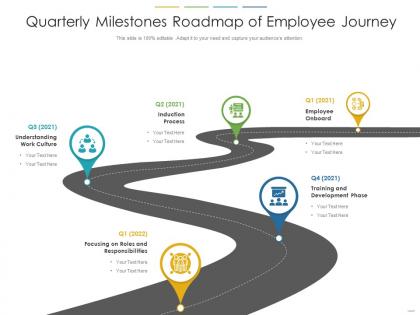
Quarterly milestones roadmap of employee journey




Try Before you Buy Download Free Sample Product
 Impress Your
 Audience
 100%
100% Editable
 Save Hours
 of Time


Our Quarterly Milestones Roadmap Of Employee Journey are topically designed to provide an attractive backdrop to any subject. Use them to look like a presentation pro.
People who downloaded this PowerPoint presentation also viewed the following :
Quarterly milestones roadmap of employee journey with all 2 slides:
Use our Quarterly Milestones Roadmap Of Employee Journey to effectively help you save your valuable time. They are readymade to fit into any presentation structure.
FAQs for Quarterly milestones roadmap
So there's five main stages you gotta think about: pre-boarding, onboarding, development, retention, and offboarding. Pre-boarding gets people hyped before they even start. Then onboarding actually sets them up to win at their job. Development is huge - nobody wants to feel like they're just spinning their wheels forever, you know? Retention keeps your good people from jumping ship. And honestly, even offboarding matters because those folks might come back someday or at least say good things about you. Just map out what you're currently doing at each stage and look for the obvious gaps. You'll probably spot some easy fixes right away.
Honestly, just map out every single touchpoint from when someone applies to when they leave. Focus on the big moments - onboarding, those crucial first 90 days, performance reviews, career convos. Here's the thing though: you've gotta get brutally honest feedback from your actual people about what's broken. They'll tell you the truth if you ask right. Once you know the pain points, tackle the worst 2-3 areas first. Don't be that person who tries to fix everything at once - I've seen that backfire so many times. Nail a few key stages, then expand from there.
Honestly, onboarding is make-or-break time. Your new hire's figuring out if they made the right choice, and you've got maybe 90 days to prove they did. Mess it up and they're already updating their LinkedIn (seen it happen too many times). Good onboarding isn't just paperwork and office tours. It's about making people feel like they belong, connecting them with the right teammates, and actually setting them up to win. Map out those first three months with some intention - trust me, the effort pays off way more than you'd think.
Start with pulse surveys during onboarding, then do regular check-ins for the first 90 days. Most companies totally botch exit interviews, honestly. Mix up your channels - anonymous surveys, one-on-ones, casual coffee chats, peer feedback. The trick is making it feel natural, not like some corporate checkbox exercise. Map out what you're already doing first. You'll probably find gaps where you're missing chances to actually listen. Oh, and this is crucial - don't just collect feedback and let it sit there. Act on it and tell people what you changed. Otherwise you're just wasting everyone's time.
Track the obvious stuff first - employee satisfaction, retention rates, how fast new people get up to speed. Participation in onboarding events matters too. Those 30/60/90-day check-ins? Get feedback scores from those. Manager quality is huge but harder to measure. Here's the thing though - sometimes the best data comes from just asking people straight up how things went. I'd probably do quarterly reviews of everything and tweak based on what you're seeing. Oh, and don't sleep on tracking how connected people feel to their teams early on.
So start with job postings that don't accidentally screen people out, then mix up your interview panels. When people join, introduce them to employee resource groups right away - sets the tone. Mentorship programs work best when they cross different backgrounds, and be super transparent about how people actually get promoted (this is where companies mess up most). Regular surveys help, but ask specifically about belonging, not just generic "how happy are you" stuff. Oh, and map out where bias sneaks in - usually happens in places you don't expect. Make it part of your process, not just a training thing.
For mapping employee journeys, I'd start with Miro or Lucidchart - they're super intuitive for flowcharts. Figma works great too, especially if your team's already using it for design stuff. Microsoft Visio is solid if you're already locked into Office. Don't overthink it though - sometimes a whiteboard session beats fancy software for getting ideas flowing. Oh, and if you want actual data backing up your maps, tools like Glint or Culture Amp let you layer in real employee feedback. My advice? Pick whatever won't collect dust after the first week. Start basic, then upgrade once you've got momentum going.
Look, leadership touches literally everything your employees go through. You're setting the tone right from recruitment - those job descriptions and interviews? They better match reality. Day one matters too - new hires can tell if you actually care or if they're just another body filling a seat. Growth happens when you give real feedback and opportunities (not just annual reviews, ugh). Recognition goes a long way. Even exits matter - how you handle someone leaving affects everyone watching. I'd map out where you're currently showing up and find spots to be more present. Being proactive beats scrambling to fix things later.
Honestly, real employee stories work so much better than corporate fluff. During onboarding, don't just rattle off benefits - tell them about Sarah from marketing who actually used the wellness program when her dad got sick. Performance reviews? Share actual success stories of people who moved up. People remember stories way better than boring bullet points anyway. Oh, and definitely collect stories from employees who are leaving - their feedback is gold. Just interview a few people about their best (or worst) moments and use those. Makes everything feel way more genuine than whatever HR usually puts together.
Honestly, most companies just grab a template and call it done - huge mistake. You've gotta make it specific to your actual workplace culture and problems. Don't let HR handle this solo either, that never works out well. Get managers and employees from different teams involved or it'll feel totally disconnected from reality. Remote workers need their own path too since their experience is completely different. Oh and here's what kills me - companies create these beautiful roadmaps then never touch them again. You'll want to check in quarterly and actually listen to feedback, otherwise it becomes this useless document gathering dust.
Okay so here's the thing - you've gotta match training to where people actually are in their career journey. New hires need the basics and job-specific stuff. People ready to grow? Give them stretch projects and leadership training. Career switchers need reskilling or exposure to other departments. Most companies just randomly dump training on everyone without thinking about timing, which is honestly such a waste. For your experienced folks who might leave, advanced certs or mentoring roles work well. It's really about personalizing based on someone's actual stage, not just how long they've been there. I'd start by looking at what you currently offer and see how it maps to these different phases.
Culture is literally the foundation of everything your employees experience. Think about it - from the moment someone interviews to their first day onboarding, they're picking up on whether your company actually walks the talk. You can map out the most beautiful employee journey ever, but if your culture sucks? People see right through it. The disconnect becomes painfully obvious pretty fast. My advice - take a hard look at your current culture before you start designing anything fancy. Otherwise you're basically just... well, you know that saying about putting makeup on farm animals. Start there, then build your roadmap around what's real.
Put exit interviews at the very end of your employee journey map - right after someone quits or gets let go. It's your last shot at getting real feedback about their whole experience. Honestly, most companies just forget this part exists! Ask questions that connect back to onboarding, their manager, career growth, all that stuff. Document what they tell you (and actually do something with it). Otherwise you're just wasting everyone's time. The insights help you fix things for the next person who comes along.
Definitely make separate touchpoints for each team - sales people need CRM training while your engineers care about code reviews and stuff. Generic onboarding is honestly just lazy and nobody learns anything useful. Interview some folks from different departments first to see what they actually want. Marketing will obsess over brand guidelines, HR lives for compliance checkboxes, but they're all hitting different milestones at totally different speeds. Map out what tools and pain points matter most to each group. Then build your journey stages around that instead of forcing everyone through the same boring process.
Honestly, you've gotta create feedback loops everywhere - pulse surveys, exit interviews, the whole deal. But here's what most places mess up: they skip "stay" interviews with current employees. Those are absolute gold for spotting problems before people quit. Every quarter, map out your employee journey using real data, not just what you think happens. Track stuff like how long it takes new hires to actually become productive, plus engagement scores by team. Oh, and treat this like you're constantly tweaking a product based on what users tell you. It's never really "done."
-
Excellent products for quick understanding.
-
Out of the box and creative design.
-
Easy to edit slides with easy to understand instructions.