

Real Estate Strategic Plan Powerpoint Ppt Template Bundles





Try Before you Buy Download Free Sample Product
 Impress Your
 Audience
 100%
100% Editable
 Save Hours
 of Time


Our Real Estate Strategic Plan Powerpoint Ppt Template Bundles are topically designed to provide an attractive backdrop to any subject. Use them to look like a presentation pro.
People who downloaded this PowerPoint presentation also viewed the following :
Real Estate Strategic Plan Powerpoint Ppt Template Bundles with all 22 slides:
Use our Real Estate Strategic Plan Powerpoint Ppt Template Bundles to effectively help you save your valuable time. They are readymade to fit into any presentation structure.












FAQs for Real Estate Strategic Plan Powerpoint
Key elements include market analysis, financial projections, investment criteria, risk assessment strategies, portfolio diversification goals, and performance metrics. These components work together by identifying profitable opportunities, establishing clear investment parameters, and creating measurable benchmarks, with many real estate firms finding that comprehensive strategic planning ultimately delivers superior returns and minimizes market volatility risks.
Market analysis enhances real estate strategic plans by identifying emerging neighborhoods, pricing trends, demographic shifts, and competitive landscapes that inform investment decisions. Through comprehensive data evaluation, developers and investors can strategically time acquisitions, optimize property positioning, and anticipate market demands, ultimately delivering higher returns and competitive advantage in dynamic markets.
Financial forecasting provides critical insights for real estate planning by predicting cash flows, market trends, property values, and investment returns across different scenarios. Through comprehensive financial modeling, developers and investors can evaluate project viability, optimize resource allocation, and mitigate risks, with many real estate firms finding that accurate forecasting ultimately delivers better investment decisions and competitive market positioning.
Demographic trends significantly influence real estate strategic plans by shaping housing demand patterns, neighborhood preferences, and property investment priorities. Aging populations drive demand for accessible housing and healthcare facilities, while millennial preferences favor urban walkability and mixed-use developments, with many developers finding that demographic analysis ultimately delivers targeted investment strategies and competitive market positioning.
Key metrics include occupancy rates, rental yield, property appreciation, cash flow, cap rates, and return on investment. These financial indicators streamline performance evaluation by tracking profitability, market positioning, and portfolio growth, with many real estate investors finding that consistent monitoring ultimately delivers better acquisition decisions and enhanced long-term returns.
Real estate strategic plans should be reviewed quarterly and updated annually, with additional reviews triggered by significant market shifts, regulatory changes, or major business developments. Through regular assessment cycles, real estate organizations can adapt to evolving market conditions, adjust investment priorities, and capitalize on emerging opportunities, ultimately maintaining competitive advantage in an increasingly dynamic property landscape.
Real estate investment risks include market volatility, interest rate fluctuations, property devaluation, liquidity constraints, and regulatory changes. A comprehensive strategic plan addresses these through diversified portfolios, thorough market analysis, and contingency planning, with many investors finding that proactive risk assessment ultimately delivers more stable returns and enhanced portfolio resilience.
Technology enhances real estate strategic plans through predictive analytics, automated property valuation models, CRM systems, digital marketing platforms, and virtual tour capabilities. These tools streamline market analysis, portfolio management, and client engagement, with property developers and investment firms finding that data-driven insights accelerate decision-making, reduce operational costs, and ultimately deliver competitive advantages in increasingly dynamic markets.
Best practices for stakeholder engagement in real estate strategy development include conducting comprehensive needs assessments, facilitating cross-functional workshops, establishing clear communication protocols, creating feedback loops, and implementing phased consultation processes. These approaches streamline decision-making by aligning diverse perspectives, minimizing project delays, and enhancing buy-in across departments, with many organizations finding that early stakeholder involvement ultimately delivers faster approvals and more strategic outcomes.
Zoning and regulatory changes can significantly reshape real estate strategic plans by altering development potential, property values, permitted uses, and project timelines. These shifts present both challenges and opportunities, with many developers and investors finding that proactive monitoring enables strategic pivots, enhanced portfolio diversification, and competitive advantage through early adaptation to regulatory landscapes.
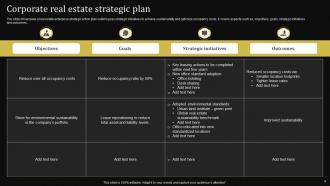
Including sustainability practices in real estate strategic plans delivers reduced operating costs, enhanced property values, improved tenant retention, regulatory compliance, and competitive market positioning. These green initiatives streamline energy consumption, minimize waste management expenses, and attract environmentally-conscious tenants, with many commercial developers finding that sustainable buildings command premium rents while significantly reducing long-term operational overhead.
Competitor analysis is crucial in real estate strategy, enabling firms to identify market gaps, pricing opportunities, target demographics, and differentiation strategies. Through comprehensive competitor research, real estate companies can optimize their positioning, enhance service offerings, and develop competitive advantages in location selection, while many finding that strategic market intelligence ultimately drives better investment decisions and superior customer acquisition.
Portfolio diversification in real estate requires considering geographic distribution, property types, tenant profiles, investment timelines, and market cycles. Strategic combinations across residential, commercial, industrial, and retail sectors enable risk mitigation while maximizing returns, with many institutional investors finding that balancing urban and suburban markets, along with varying lease terms, ultimately delivers enhanced stability and competitive advantage.
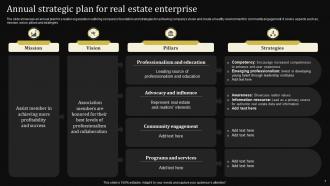
A strategic plan aligns with a real estate firm's vision and mission by translating broad aspirations into specific, measurable objectives, market positioning strategies, and operational frameworks that guide daily decision-making. Through targeted market analysis, service differentiation, and resource allocation, firms streamline operations, enhance client experiences, and accelerate growth, with many real estate organizations finding that strategic alignment ultimately delivers competitive advantage and sustainable market positioning.
Common pitfalls include inadequate market research, unrealistic financial projections, ignoring zoning regulations, poor location analysis, and insufficient risk assessment. These oversights can derail projects by creating cost overruns, regulatory delays, and missed opportunities, with many developers finding that thorough due diligence and flexible planning ultimately deliver stronger returns and competitive advantage.
-
Very unique and reliable designs.
-
Visually stunning presentation, love the content.