


Retail Excellence Playbook Powerpoint Presentation Slides




Try Before you Buy Download Free Sample Product
 Impress Your
 Audience
 100%
100% Editable
 Save Hours
 of Time


Check out our efficiently designed Retail Excellence Playbook that showcases best practices to enhance customers retail store experience. It aids retailers in achieving retail store excellence by enabling a seamless shopping experience, potential future innovations, promote shopper engagement. This presentation caters to key considerations impacting consumers decisions visiting a retail store and value dimensions across marketing and retail infrastructure. It helps build different shopping experiences at retail stores such as luxury, active, connected or curated. It also allows understanding shoppers preferences by tracking customer experience at the store and determining retail store environment and new shopper imperatives. The retail excellence enablement is determined by deploying strategies to enhance overall store experience, initiatives to improve productivity across different retail stores, technology advancement across the retail store, etc. Shopper engagement is managed by optimizing digital channels and loyalty programs to leverage positive in store experiences. The playbook also caters information about checklist highlighting COVID response initiatives by retailers, retail store team members, cost assessment and retail store activities tracking dashboard. Download our 100 percent editable and customizable deck to know more in detail.
People who downloaded this PowerPoint presentation also viewed the following :
Content of this Powerpoint Presentation
Slide 1: This slide introduces Retail Excellence Playbook. State Your Company Name and begin.
Slide 2: This slide states Agenda of the presentation.
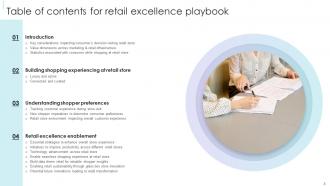
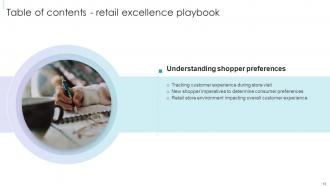
Slide 3: This slide presents Table of Content for the presentation.
Slide 4: This is another slide continuing Table of Content for the presentation.
Slide 5: This slide highlights title for topics that are to be covered next in the template.
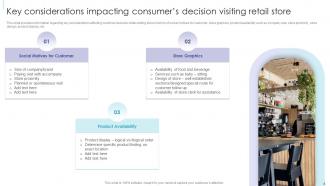
Slide 6: This slide displays Key Considerations Impacting Consumer’s Decision Visiting Retail Store.
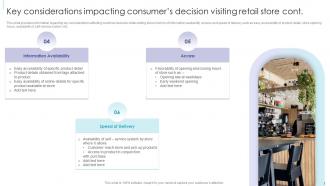
Slide 7: This is another slide continuing Key Considerations Impacting Consumer’s Decision Visiting Retail Store.
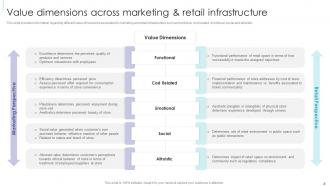
Slide 8: This slide represents Value Dimensions Across Marketing & Retail Infrastructure.
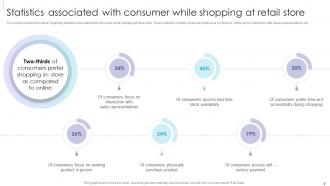
Slide 9: This slide showcases Statistics Associated with Consumer While Shopping at Retail Store.
Slide 10: This slide highlights title for topics that are to be covered next in the template.
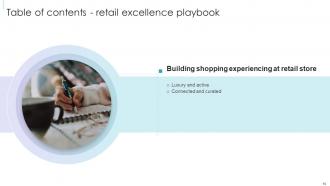
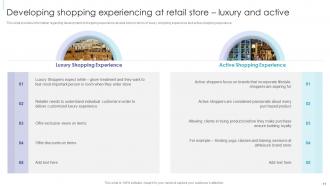
Slide 11: This slide shows development of shopping experience at retail store.
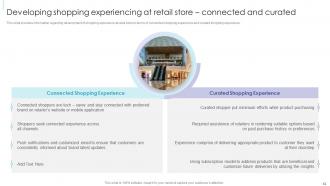
Slide 12: This slide presents development of shopping experience at retail store in terms of connected shopping experience and curated shopping experience.
Slide 13: This slide highlights title for topics that are to be covered next in the template.
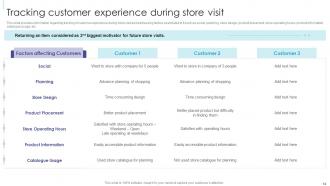
Slide 14: This slide displays Tracking Customer Experience During Store Visit.
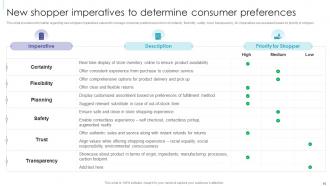
Slide 15: This slide represents New Shopper Imperatives to Determine Consumer Preferences.
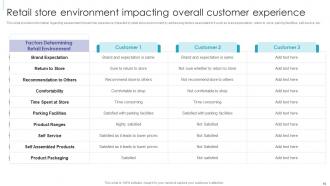
Slide 16: This slide showcases Retail Store Environment Impacting Overall Customer Experience.
Slide 17: This slide highlights title for topics that are to be covered next in the template.
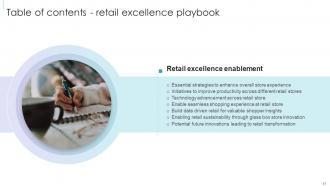
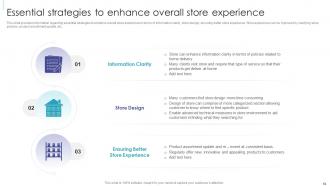
Slide 18: This slide shows Essential Strategies to Enhance Overall Store Experience.
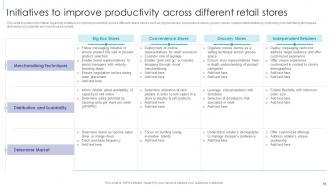
Slide 19: This slide presents Initiatives to Improve Productivity Across Different Retail Stores.
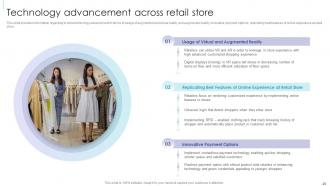
Slide 20: This slide displays Technology Advancement Across Retail Store.
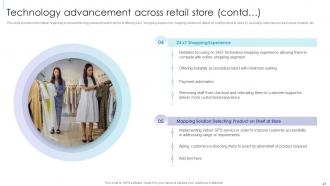
Slide 21: This is another slide continuing Technology Advancement Across Retail Store.
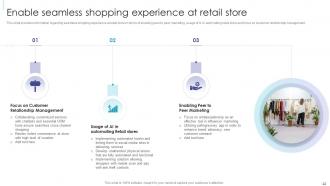
Slide 22: This slide represents Enable Seamless Shopping Experience at Retail Store.
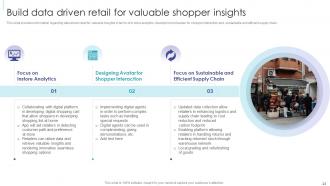
Slide 23: This slide showcases Build Data Driven Retail for Valuable Shopper Insights.
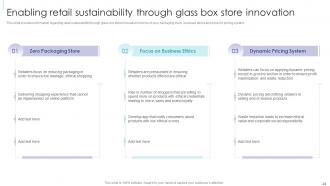
Slide 24: This slide shows Enabling Retail Sustainability Through Glass Box Store Innovation.
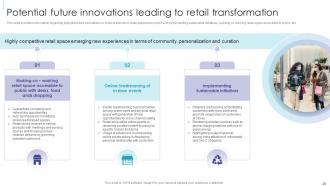
Slide 25: This slide presents Potential Future Innovations Leading to Retail Transformation.
Slide 26: This slide highlights title for topics that are to be covered next in the template.
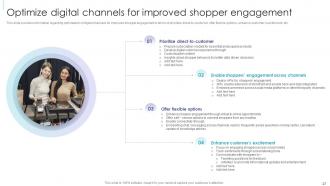
Slide 27: This slide displays Optimize Digital Channels for Improved Shopper Engagement.
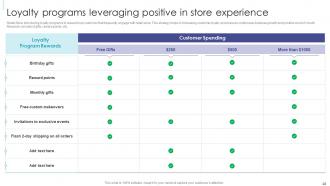
Slide 28: This slide represents Loyalty Programs Leveraging Positive in Store Experience.
Slide 29: This slide highlights title for topics that are to be covered next in the template.
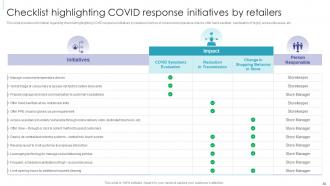
Slide 30: This slide showcases Checklist Highlighting COVID Response Initiatives by Retailers.
Slide 31: This slide highlights title for topics that are to be covered next in the template.
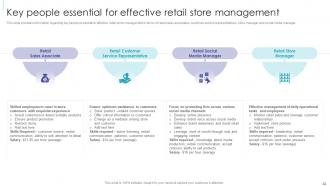
Slide 32: This slide shows Key People Essential for Effective Retail Store Management.
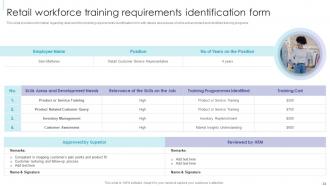
Slide 33: This slide presents Retail Workforce Training Requirements Identification Form.
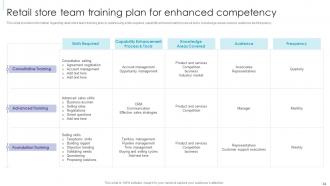
Slide 34: This slide displays Retail Store Team Training Plan for Enhanced Competency.
Slide 35: This slide highlights title for topics that are to be covered next in the template.
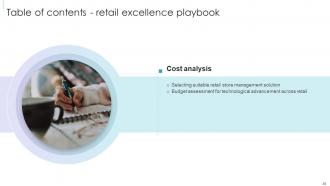
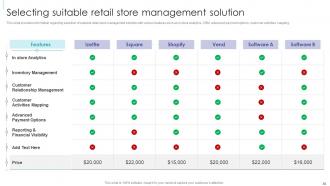
Slide 36: This slide represents Selecting Suitable Retail Store Management Solution.
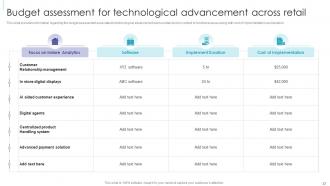
Slide 37: This slide showcases Budget Assessment for Technological Advancement Across Retail.
Slide 38: This slide highlights title for topics that are to be covered next in the template.
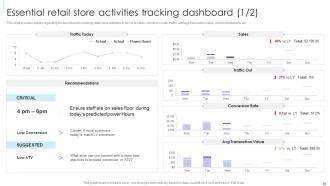
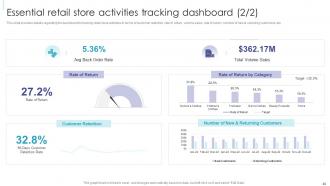
Slide 39: This slide shows Essential Retail Store Activities Tracking Dashboard.
Slide 40: This is another slide continuing Essential Retail Store Activities Tracking Dashboard.
Slide 41: This slide is titled as Additional Slides for moving forward.
Slide 42: This slide displays Icons for retail excellence playbook.
Slide 43: This slide provides 30 60 90 Days Plan with text boxes.
Slide 44: This slide showcases Weekly timeline with task name.
Slide 45: This slide represents Roadmap for process flow.
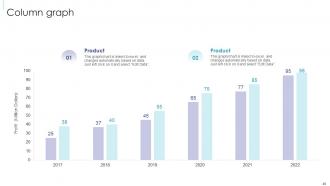
Slide 46: This slide displays Column chart with two products comparison.
Slide 47: This is Our Mission slide with related imagery and text.
Slide 48: This is Our Team slide with names and designation.
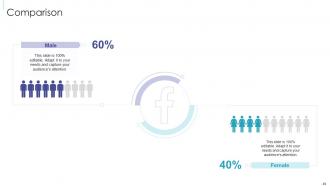
Slide 49: This is a Comparison slide to state comparison between commodities, entities etc.
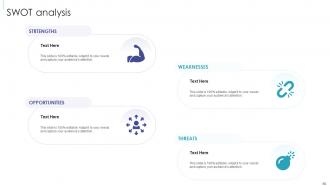
Slide 50: This slide shows SWOT describing- Strength, Weakness, Opportunity, and Threat.
Slide 51: This slide contains Puzzle with related icons and text.
Slide 52: This slide shows Post It Notes. Post your important notes here.
Slide 53: This is an Idea Generation slide to state a new idea or highlight information, specifications etc.
Slide 54: This is a Thank You slide with address, contact numbers and email address.
Retail Excellence Playbook Powerpoint Presentation Slides with all 59 slides:
Use our Retail Excellence Playbook Powerpoint Presentation Slides to effectively help you save your valuable time. They are readymade to fit into any presentation structure.






FAQs for Retail Excellence Playbook
Honestly, it's all about nailing customer experience and making everything work together smoothly. People want to browse on their phone, maybe check stuff out in-store, then buy online later - so your channels better play nice with each other. Data's huge too because you can actually figure out what people want instead of just guessing. Oh, and don't let your inventory system suck because nothing kills the vibe like "sorry, we're out of stock." Your employees matter way more than people think - they're literally your brand walking around. I'd start by just mapping out how customers actually shop with you right now and see where things get annoying.
Dude, your customers are basically expecting this stuff now - mobile checkout, AR try-ons, chatbots that actually help. Data analytics will show you what people actually buy (not what you think they want), plus you can avoid those super awkward out-of-stock situations with smart inventory tracking. Honestly the personalization thing is huge. Don't try to do everything at once though. Pick whatever's driving your customers most crazy right now and fix that first. Then build from there. It's way less overwhelming that way and you'll actually see results faster.
Dude, training is everything in retail - like seriously, it makes or breaks your whole operation. Your team needs to actually understand the products and why customers would want them, not just memorize some script. I've watched places go from total disasters to actually decent just by fixing how they train people. Short bursts work better than those marathon training sessions nobody remembers anyway. Don't just tell them what to do - explain the reasoning behind it. Otherwise you're crossing your fingers hoping they'll magically figure out customer service. Start small, see what gaps you've got, then build from there.
Honestly, start with your POS data - it's probably sitting there unused anyway. Check what's selling best and when your busy periods hit, then staff up accordingly. Customer segmentation works way better than those annoying mass emails everyone deletes. I'd look at purchase patterns too - like what people buy together - for decent cross-selling ideas. Don't jump into expensive analytics tools right away though. Basic reporting can show you tons about customer behavior and help you stock smarter. Once you've got those insights down, you'll know if you need fancier stuff.
First thing - your data needs to be spot on. Can't fix what you don't actually know you have. Set up automatic reorder points based on real sales patterns, not guessing. Focus hardcore on your big money items (ABC analysis stuff). Safety stock should factor in how long suppliers take and how crazy your demand gets. Most retailers screw this up - they'll hoard dead inventory while running out of bestsellers. Such a profit killer. Your POS system probably has goldmine data you're not even using. Oh, and seriously audit your current accuracy this week before doing anything else.
Honestly, good visual merchandising can boost your sales by like 20-30% just by making smart moves. Put your best stuff at eye level. Create displays that actually make sense. Warm colors get people browsing around more, while cooler tones make them trust what you're selling - psychology is wild that way. You want customers finding what they came for easily, but also stumbling across stuff they didn't plan to buy. I'd start by walking through your store and asking yourself: does this display help people shop, or does it just look pretty? Both matter, but shopping ease wins every time.
Honestly, going green is one of the smartest business moves right now. People will literally pay more for sustainable stuff - that eco-conscious crowd has serious buying power. You'll cut costs too through less waste and better energy use. The media loves covering sustainable companies, so free publicity there. Your team will actually care more about their work when they feel good about where they work. Even small changes help - like switching to recyclable packaging or buying local. I read somewhere that sustainable brands get way better social media engagement too, which is huge for marketing without spending a fortune.
Dude, omnichannel is honestly everything for keeping customers happy. People want to browse on their phone during lunch, maybe check stuff out on their laptop later, then swing by the store to grab it. If that flow feels clunky? You've lost them. I swear the companies that get this right see way better satisfaction scores because customers feel understood. Plus omnichannel shoppers spend more and stick around longer - the numbers don't lie. Start by mapping out your customer journey and spot where things get weird between channels.
So basically you want to watch inventory turnover - that shows if your stuff is actually moving. Sales per square foot tells you whether your space is earning its keep. Labor productivity is massive though, like it can totally tank your margins if you're not careful. Also track conversion rates and average transaction value since those hit your profits directly. Oh and start with monthly tracking to get your baseline, then go weekly once you know what normal looks like for your store. Honestly the labor one surprised me how much it mattered when I helped my cousin with his shop.
Dude, it's because people want to feel seen, you know? Like when a brand actually remembers what you bought before and suggests stuff you'd actually want - that hits different than generic spam. Makes you feel like they get you instead of just seeing dollar signs. I mean, we all have that one store where they know our taste, right? Same concept. Customers will keep coming back and dropping more cash when the experience feels tailored to them specifically. Just gotta be smart about using purchase data without being weird about it.
Omnichannel is where I'd start - your customers are jumping between your website, store, and app expecting everything to sync up perfectly. Personalization through AI recommendations is massive right now. Honestly, sustainability isn't optional anymore, especially if you want Gen Z customers who'll drop you in a heartbeat over environmental stuff. Social commerce is blowing up too - people are buying straight from Instagram and TikTok feeds now. Voice shopping through Alexa is growing but maybe tackle that later? First thing though - audit where your customer experience currently breaks between channels and fix those gaps.
Keep your return policy super simple - confusing rules just piss people off. Clear deadlines, less paperwork, and give your staff actual authority to make decisions without hunting down managers. Honestly, I've watched businesses tank customer relationships over like $20 returns, which is insane. Your team should see returns as chances to build trust, not automatic losses. Most people aren't trying to scam you anyway. Process everything fast and stay friendly - even when you can't take something back, explain nicely and throw out other options if you can.
Dude, interactive stuff is where it's at - demos, samples, letting people actually mess around with your products. Your staff can't just stand around looking dead inside, they need to actually talk to customers. Oh and visual displays? Switch them up constantly because everyone's gonna Instagram the cool ones anyway. Train your team to be proactive instead of waiting for people to come to them. Honestly, I've walked out of so many stores because nobody seemed to care I was there. Start small with like two things and track what actually boosts sales, not just how many people walk through the door.
Honestly, social media's like having a free marketing team that actually works. You get to show off your stuff while building real connections with customers - way better than throwing money at ads that nobody trusts anyway. When your customers post about you? That's pure gold, way more believable than anything you could make. Yeah, the algorithm changes are annoying as hell, but even basic organic posts cost way less than traditional advertising. Pick one platform where your people actually are and master that first. Don't spread yourself thin across everything. Just focus on being helpful instead of constantly selling.
Oh man, shopping's gotten so weird since COVID! People will literally research everything online first, then still drive to the store just to touch stuff before buying. Or they'll do the opposite - browse in person, then order it later for delivery because why not? Honestly, customers are way pickier about cleanliness now and expect contactless everything. Digital payments are here to stay (which is fine by me - cash is disgusting). They want super fast shipping and easy returns too. The biggest change? People actually care if brands match their values now. So definitely show off any sustainability stuff you're doing.
-
SlideTeam is the way to go when you are in a time crunch. Their templates have saved me many times in the past three months.
-
Innovative and Colorful designs.