

Rubiks cubes powerpoint presentation slides
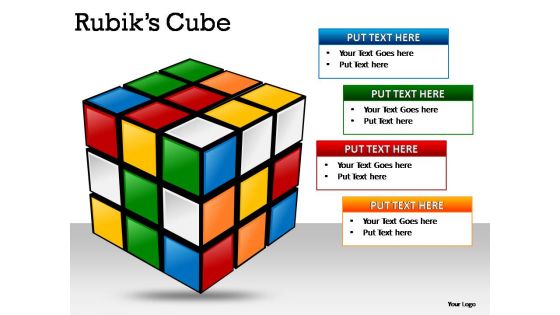




Try Before you Buy Download Free Sample Product
 Impress Your
 Audience
 100%
100% Editable
 Save Hours
 of Time


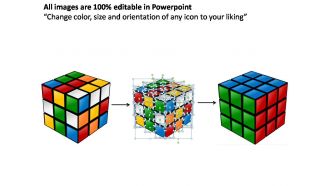
We have a comprehensive bank of Rubiks Cubes Powerpoint Presentation Slides. Colourful notes to suit every need.
People who downloaded this PowerPoint presentation also viewed the following :
Rubiks cubes powerpoint presentation slides with all 28 slides:
Chart your plans on our Rubiks Cubes Powerpoint Presentation Slides. Signal your ideas for the days to come.

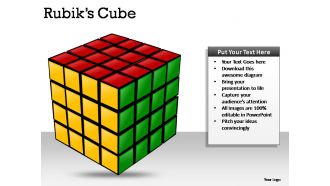
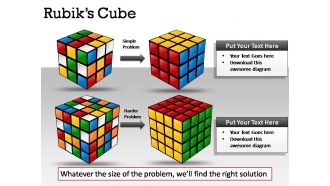
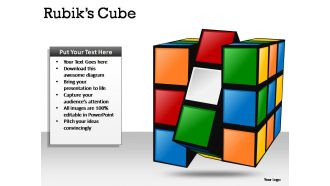
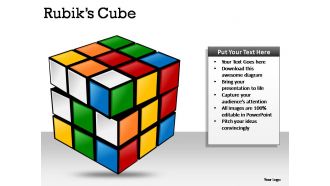
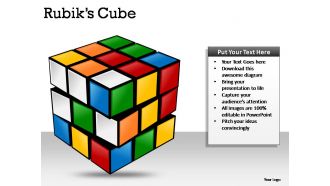
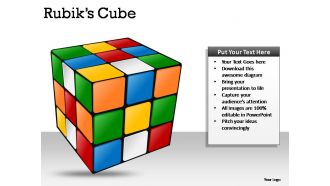
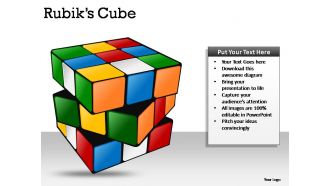

FAQs for Rubiks cubes
So this Hungarian guy Ernő Rubik invented it back in 1974 - he was an architecture professor who made it to teach students about 3D stuff. Originally called it the "Magic Cube," which honestly sounds cooler than Rubik's Cube. Here's the funny part: it took him over a month to solve his own creation! Must've been pretty frustrating. The toy company Ideal licensed it in 1980 and that's when it exploded everywhere. If you're thinking of learning, YouTube tutorials make it way less painful than Rubik's month-long ordeal. They break everything down step by step.
Dude, cubes have gotten SO much better since the 70s. Modern speed cubes have magnets and ball bearings - makes them crazy smooth compared to those old chunky ones. No more peeling stickers either, which was honestly the most annoying thing ever. Now they use tiles or textured plastic that actually stays put. You can get different sizes, weird shapes, even ones that connect to your phone to time you (though that might be overkill lol). Seriously though, if you're thinking about getting back into it, grab a modern speed cube. The difference is insane.
So there's CFOP and Roux - totally different vibes. CFOP is what most speedcubers go with (Cross, F2L, OLL, PLL). You make a cross on bottom, pair corner-edge pieces, then run two algorithm phases to wrap it up. Roux feels way more intuitive but honestly it's trickier to get good at. You build these 1x2x3 blocks on opposite sides, handle the leftover corners, then finish edges. CFOP's gonna make you memorize like 78 algorithms which sounds insane but whatever. Roux is more about actually understanding the cube and being efficient. I'd probably go CFOP first though - way more tutorials out there and easier to get help when you inevitably get confused.
Go with the layer-by-layer method first - it only needs like 7-8 algorithms total. Learn one algorithm at a time and drill it until your fingers just do it automatically. Boring? Yeah, but that's how it sticks. Those notation trainers online are actually pretty helpful for getting the R, U, F moves down. Break longer algorithms into chunks of maybe 4-6 moves so they're easier to remember. I made the mistake of trying to learn everything at once when I started - don't do that. Get your first complete solve down, then you can worry about speedcubing methods like CFOP later.
Honestly, speedcubers are the reason Rubik's Cubes didn't just die out as some 80s fad. These people turned a puzzle into an actual sport - like, there's world championships and everything. You know those insane videos where 12-year-olds solve cubes in 8 seconds? That's speedcubers constantly one-upping each other and sharing techniques online. The community's pretty cool too, they're not gatekeepy at all. They'll teach beginners and run local competitions. I'd definitely hit up their forums or YouTube channels if you want to learn - way better than staring at a scrambled cube for hours like I did back in the day.
Okay so bigger cubes are honestly a whole different beast. 4x4 and up have centers that actually move around, which is wild compared to the 3x3. Plus you'll run into these weird parity situations that just... ugh, they're the worst. You solve centers first, pair edges, then basically pretend it's a 3x3. The jump from 3x3 to 4x4 is brutal though - way harder than people expect. Other shapes like pyramids use similar ideas but you've gotta learn new algs. I'd probably start with 4x4 if you're looking to branch out.
Yeah, it totally does help with focus! You're basically training your brain to think multiple moves ahead while keeping track of all these color patterns. I'll mess up constantly when I'm learning something new, but that actually builds up your patience. The spatial reasoning skills you pick up are pretty legit - I notice I approach other problems way more systematically now. Plus there's this weird rush when you finally nail it that keeps you coming back for more. Pattern recognition gets sharper too. My advice? Don't try solving the whole cube at first. Learn one face, then build from there.
Dude, forget what you've heard about needing to be some puzzle prodigy. It's literally just memorizing algorithms - like dance moves but for your hands. Most people pick up the basic method over a weekend, maybe less if you're motivated. Oh and don't try solving one face at a time, that's a trap that'll drive you nuts. The "natural puzzle talent" thing is overrated too. What actually matters? Just stick to the method and drill those finger movements until you don't think about them. Your hands will remember even when your brain checks out.
Apps are honestly a game-changer for getting into cubing. No need to drop money on a physical cube right away - you can learn all the basics on your phone first. I'd recommend checking out "Rubik's Cube" or "CubeX" to start. The timer features are weirdly addictive too (spent way too much time trying to shave seconds off my solve). Some apps even do AR stuff where they'll show you the solution steps on a real cube. There's this whole online community now where people share techniques and compete globally. Makes the hobby way more accessible than it used to be.
Honestly, cheap Rubik's cubes are kinda trash for speedcubing. They stick, lock up when you turn fast, and just feel clunky overall. Brands like GAN, MoYu, or QiYi are so much smoother - they've got magnets, adjustable tension, better corner cutting, the whole deal. Yeah you're looking at $15-60 instead of like $8, but trust me the difference is night and day. For casual solving whatever, stick with budget. But if you actually want to get faster or just not hate the experience, get a decent speedcube. I made that mistake for way too long.
Oh totally get your kid a Rubik's cube! My nephew started with the 2x2 version when he was like 7. It's crazy how much it actually helps with problem-solving - they learn to break big challenges into smaller steps. Plus the pattern recognition and spatial skills they pick up are legit useful later. YouTube has a million tutorials now, and some even touch on basic programming logic which is pretty cool. Just don't expect them to solve it right away lol. I'd suggest starting with just getting one side done first, then building from there. Keeps them from getting frustrated and giving up.
Dude, social media completely changed the whole cubing thing. YouTube tutorials made it so anyone can learn now - JPerm and Tingman are honestly the best if you're just starting out. TikTok and Instagram turned speedsolving into viral content, which is wild to think about. Some cubers literally have millions of followers! Competitions get livestreamed to huge audiences too. The community stays tight through Discord and Reddit year-round. It went from being super niche to this massive global scene. Honestly didn't expect it to blow up this much, but here we are.
For one-handed, R U R' algorithms are your best friend since they work great with thumb and fingers. Grip the cube with your pinky and ring finger for stability. Honestly, OH solving feels like starting from scratch - super frustrating but weirdly addictive once you get the hang of it. Blindfolded is different though. Start with Old Pochmann method and use letter schemes to memorize where pieces go. Don't worry about speed yet, just focus on getting your memorization system down first. Practice memo and execution separately until both feel solid, then put them together. M2/R2 methods come later when you're ready for more advanced stuff.
Honestly, I clean mine like every 3-4 months when it starts feeling sluggish. Take the whole thing apart first and wipe everything down with a slightly damp cloth - gets rid of all that gross dust buildup. For lube, get proper silicone stuff made for speedcubes. Just a tiny drop on the contact points between pieces. Whatever you do, don't use WD-40 or random household oils (learned that the hard way lol). Put it back together and solve it maybe 20-30 times to work the lube in. Makes such a difference - you'll actually enjoy practicing again instead of fighting with a sticky mess.
Smart cubes are blowing up right now - they sync with apps for training and competitions. The tech's getting crazy with haptic feedback and AR that shows you moves in real-time. People are making 21x21 cubes now and these shape-shifting puzzles that literally morph while you solve them. 3D printing lets you customize textures and mechanisms too. Honestly, if I were starting cubing today, I'd grab a decent speedcube first but definitely watch the smart cube space. That's where all the cool stuff's happening. Though I still think there's something satisfying about a regular cube without all the bells and whistles, you know?
-
Excellent Designs.
-
I discovered this website through a google search, the services matched my needs perfectly and the pricing was very reasonable. I was thrilled with the product and the customer service. I will definitely use their slides again for my presentations and recommend them to other colleagues.