


Diapositivas de presentación de PowerPoint de propuesta de negocio de muestra de PPT






Try Before you Buy Download Free Sample Product
 Impress Your
 Audience
 100%
100% Editable
 Save Hours
 of Time


Proponga su negocio con nuestras diapositivas de presentación de PowerPoint de propuesta de negocio de PPT de muestra diseñadas profesionalmente. Le ayuda a generar más ingresos a través de posibles clientes. El propósito de la propuesta comercial es definir su negocio y sus estrategias para los posibles clientes comerciales para aprovechar una nueva oportunidad comercial. Esta diapositiva de presentación de propuesta de empresa ayudará a que su documento sea más profesional y ético para compartir con sus posibles clientes comerciales. Escriba una buena propuesta con este esquema de propuesta comercial que incluya elementos como la información comercial general, los detalles de sus promotores comerciales y los detalles de la ubicación de su empresa, los detalles sobre sus activos comerciales, incluidos los activos tangibles o intangibles, los diversos procedimientos comerciales y muchos más. Aunque la planificación empresarial se considera uno de los procedimientos más importantes de su empresa, este diseño de PPT le ayudará a gestionar todos los recados de su empresa lo suficiente. Utilice este diseño de PowerPoint de plan de negocios para aclarar la capacidad comercial de su negocio. Además, dicha estructura empresarial también ayudará a reducir el esfuerzo de gestión. Por lo tanto, comience a instalar este diseño PPT. Nuestras diapositivas de presentación de PowerPoint de propuesta comercial de ejemplo de PPT son absolutamente justas en cada trato. Eliminan cualquier disparidad.
People who downloaded this PowerPoint presentation also viewed the following :
Contenido de esta presentación de Powerpoint
Diapositiva 1 : Esta diapositiva presenta una propuesta empresarial PPT de muestra. Indique el nombre de su empresa y comience.
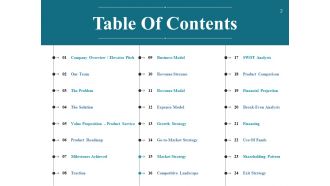
Diapositiva 2 : Esta diapositiva presenta una tabla de contenido que muestra más estos puntos: descripción general de la empresa / discurso del elevador, nuestro equipo, el problema, la solución, la propuesta de valor, el servicio del producto, la hoja de ruta del producto, los hitos logrados, la tracción, el modelo comercial, las fuentes de ingresos, Modelo de ingresos, modelo de gastos, estrategia de crecimiento, estrategia de comercialización, estrategia de mercado, panorama competitivo, análisis DAFO, comparación de productos, proyección financiera, análisis de equilibrio, financiación, uso de fondos, patrón de participación, estrategia de salida.
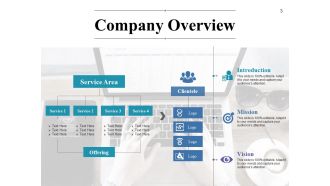
Diapositiva 3 : Esta diapositiva presenta la descripción general de la empresa, que además muestra la introducción, la misión, la visión y el área de servicio.
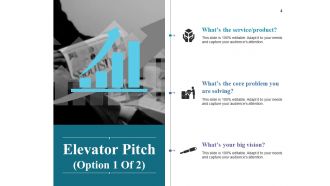
Diapositiva 4 : Esta diapositiva presenta Elevator Pitch (Opción 1 de 2) que lo relaciona más con: cuál es el servicio / producto, cuál es el problema central que está resolviendo, cuál es su gran visión.
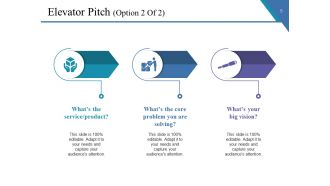
Diapositiva 5 : Esta diapositiva muestra Elevator Pitch (Opción 2 de 2) Cuál es el servicio / producto, Cuál es el problema central que está resolviendo, Cuál es su gran visión.
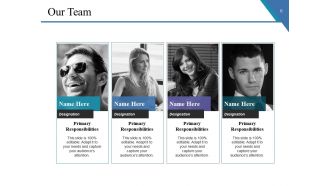
Diapositiva 6 : Esta diapositiva presenta a Nuestro equipo. Puede agregar los detalles y aprovecharlos al máximo.
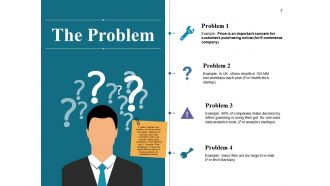
Diapositiva 7 : Esta diapositiva muestra el problema. Para ilustrar mejor su problema, así como para transmitir el planteamiento del problema a alguien que esté menos inmerso en él que usted, considere agregar algunos componentes de la siguiente manera: 1. El cliente intenta algo; 2. Aquí está lo terrible que están enfrentando; 3. Las soluciones existentes no funcionan o no existen
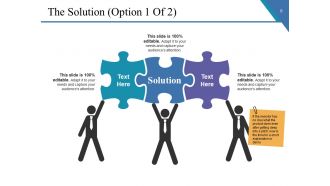
Diapositiva 8 : Esta diapositiva presenta la solución (opción 1 de 2). Si el inversor no tiene ni idea de lo que hace el producto incluso después de profundizar en un tono; ahora es el momento de una breve explicación o demostración.
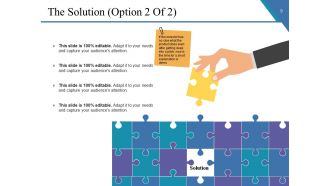
Diapositiva 9 : Esta diapositiva muestra la solución (opción 2 de 2). Si el inversor no tiene ni idea de lo que hace el producto incluso después de profundizar en un tono; ahora es el momento de una breve explicación o demostración
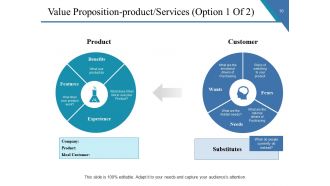
Diapositiva 10 : Esta diapositiva muestra la propuesta de valor-producto / servicios (opción 1 de 2) con estos dos parámetros: cliente, producto, cliente ideal.
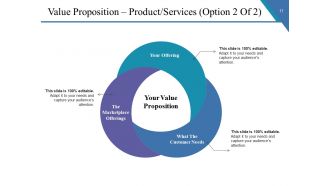
Diapositiva 11 : Esta diapositiva presenta la propuesta de valor: productos / servicios (opción 2 de 2) con su oferta, lo que el cliente necesita, las ofertas del mercado y su propuesta de valor.
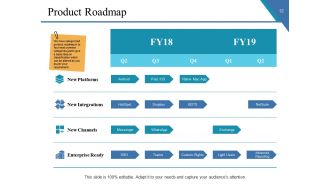
Diapositiva 12 : Esta diapositiva muestra la hoja de ruta del producto. Hemos categorizado la hoja de ruta del producto en las cuatro categorías más comunes solo para brindar una idea básica sobre la clasificación que usted puede modificar según sus requisitos.
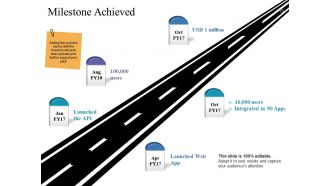
Diapositiva 13 : Esta diapositiva muestra el hito logrado. Agregar algunas historias de éxito con los inversores atraerá sus ojos y respaldará aún más su presentación.
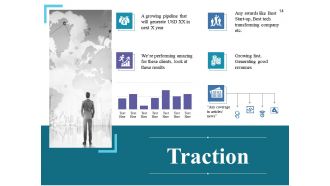
Diapositiva 14 : Esta diapositiva presenta Traction con esto puedes agregar la información y hacer uso de ella.
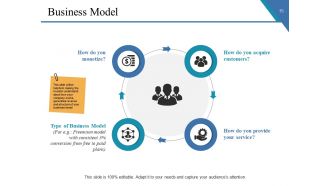
Diapositiva 15 : Esta diapositiva muestra el modelo empresarial. Esta diapositiva será útil para que el inversor comprenda cómo funciona su empresa, cómo genera ingresos y cómo estructura su modelo de negocio.
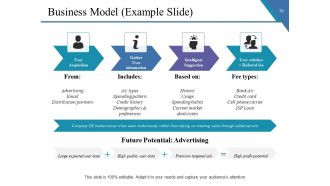
Diapositiva 16 : esta diapositiva presenta el modelo empresarial (diapositiva de ejemplo). Agregue la información de su empresa y aproveche al máximo.
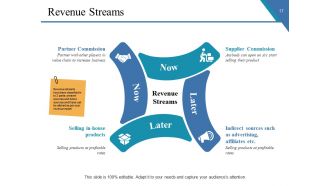
Diapositiva 17 : esta diapositiva muestra las fuentes de ingresos. Las fuentes de ingresos se han clasificado en 2 partes: fuentes presentes y fuentes futuras, que pueden modificarse según su modelo de ingresos.
Diapositiva 18 : Esta diapositiva muestra el modelo de ingresos. Hemos considerado los 6 factores más importantes y comúnmente considerados que los inversores esperan que formen parte de su modelo de ingresos.
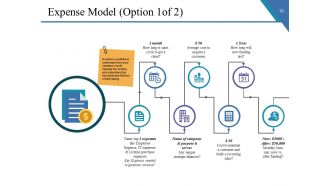
Diapositiva 19 : Esta diapositiva muestra el modelo de gastos (opción 1 de 2). A los inversionistas les gustaría comprender cómo su empresa administraría la financiación y comprender los gastos clave que realizará
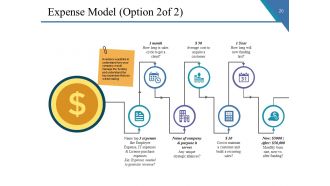
Diapositiva 20 : Esta diapositiva presenta el Modelo de gastos (Opción 2 de 2). A los inversores les gustaría saber cómo su empresa administraría la financiación y comprender los gastos clave que realizará.
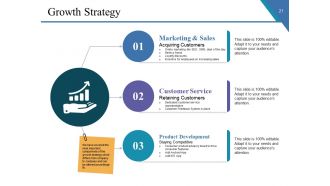
Diapositiva 21 : Esta diapositiva Estrategia de crecimiento con estas tres etapas: marketing y ventas, servicio al cliente, desarrollo de productos. Hemos cubierto los componentes más importantes de la estrategia de crecimiento que difieren de una empresa a otra y pueden modificarse en consecuencia RI.
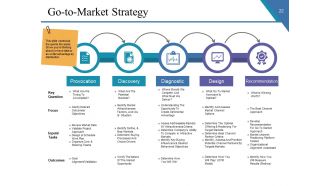
Diapositiva 22 : Esta diapositiva presenta la estrategia de comercialización. Esta diapositiva varía, pero el objetivo es el mismo: Demuestre que está pensando en (o tiene datos o una ventaja injusta en) la distribución.
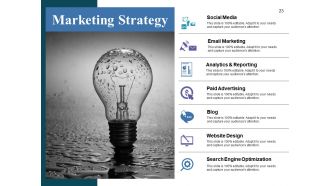
Diapositiva 23 : Esta diapositiva muestra la estrategia de marketing con estos factores importantes: marketing por correo electrónico, análisis e informes, publicidad pagada, blog, diseño de sitios web, optimización de motores de búsqueda, redes sociales.
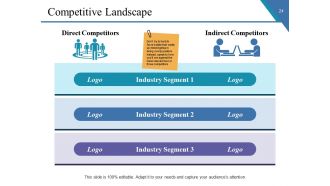
Diapositiva 24 : esta diapositiva presenta el panorama competitivo. No intente forzar una diapositiva que termine sin sentido al ser demasiado positivo. En su lugar, hable de cómo va a ganar contra los dos o tres competidores más relevantes.
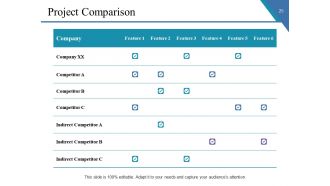
Diapositiva 25 : Esta diapositiva muestra la Comparación de proyectos con una tabla en la que puede agregar sus datos y hacer uso de ellos.
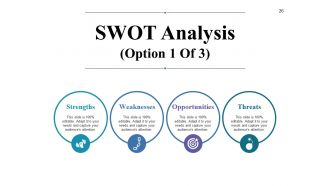
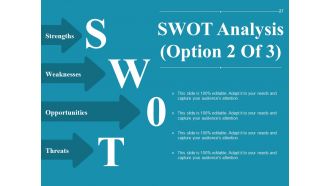
Diapositiva 26 : Esta diapositiva muestra el análisis FODA (opción 1 de 3) con estos cuatro parámetros: fortalezas, debilidades, oportunidades y amenazas.
Diapositiva 27 : Esta diapositiva presenta el Análisis FODA (Opción 2 de 3) con estas cuatro etapas: Fortalezas, Debilidades, Oportunidades y Amenazas.
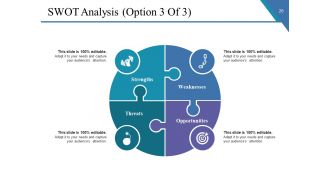
Diapositiva 28 : Esta diapositiva muestra el Análisis FODA (Opción 3 de 3) con estos factores: Fortalezas, Debilidades, Oportunidades, Amenazas.
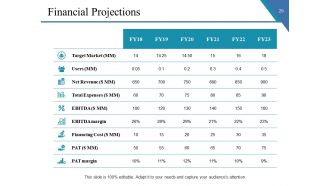
Diapositiva 29 : Esta diapositiva presenta las proyecciones financieras. Agregue los datos en la tabla y utilícelos.
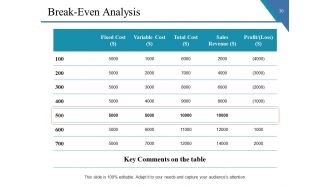
Diapositiva 30 : Esta diapositiva muestra el análisis de equilibrio. Agregue los datos en la tabla y utilícelos.
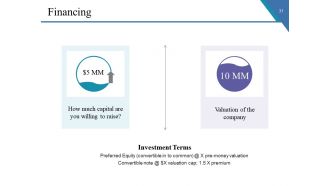
Diapositiva 31 : Esta diapositiva muestra Financiamiento con algunos datos. Puede agregar sus propios datos según sus necesidades.
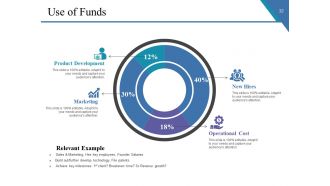
Diapositiva 32 : Esta diapositiva presenta el uso de fondos con los siguientes parámetros: desarrollo de productos, marketing, costo operativo, nuevas contrataciones, ejemplo relevante.
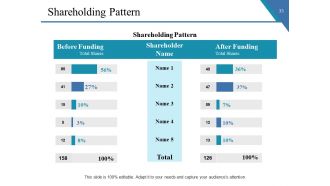
Diapositiva 33 : Patrón de tenencia de acciones antes de la financiación Total de acciones después de la financiación Total de acciones Nombre del accionista Patrón de participación total
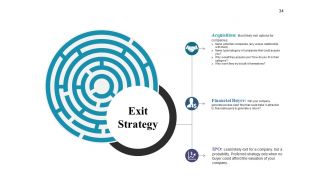
Diapositiva 34 : esta diapositiva presenta la estrategia de salida. Agregue sus propios datos y aproveche al máximo.
Diapositiva 35 : Esta diapositiva muestra los inomios de las pruebas del cliente. Puede agregar testimonios de clientes y usarlos.
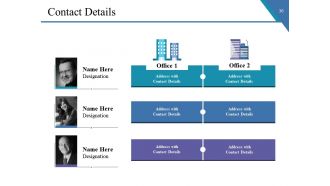
Diapositiva 36 : esta diapositiva presenta los detalles de contacto. Puede agregar el nombre y la designación.
Diapositiva 37 : Esta diapositiva es una imagen de Coffee Break para una pausa.
Diapositiva 38 : Esta diapositiva avanza a Cuadros y gráficos.
Diapositiva 39 : esta diapositiva presenta la barra agrupada. Agregue los datos para comparar.
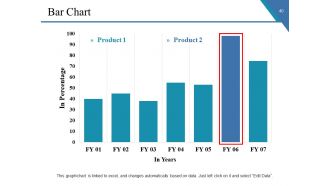
Diapositiva 40 : Esta diapositiva muestra un gráfico de barras con el que puede comparar los productos.
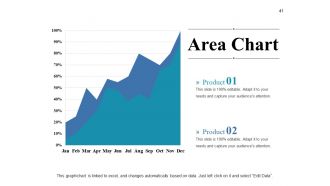
Diapositiva 41 : Esta diapositiva presenta un gráfico de áreas que puede obtener ayuda para comparar.
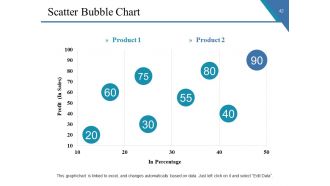
Diapositiva 42 : Esta diapositiva muestra el gráfico de burbujas de dispersión. Puede agregar los detalles y hacer uso de ellos.
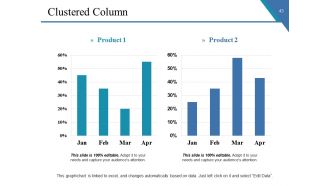
Diapositiva 43 : esta diapositiva muestra la columna agrupada. Puede agregar y usar para comparar.
Diapositiva 44 : esta diapositiva se titula Diapositivas adicionales.
Diapositiva 45 : Esta diapositiva contiene Nuestra misión con cuadros de texto.
Diapositiva 46 : Esta diapositiva ayuda a representar a Nuestro equipo con cuadros de texto.
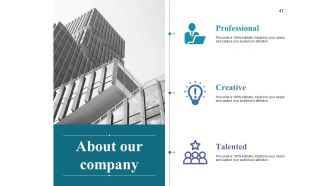
Diapositiva 47 : Esta diapositiva ayuda a mostrar: Acerca de nuestra empresa. Los subtítulos incluyen: Diseño creativo, Atención al cliente, Expandir empresas.
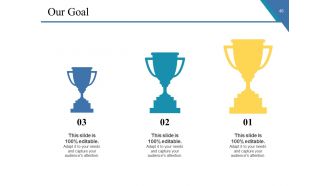
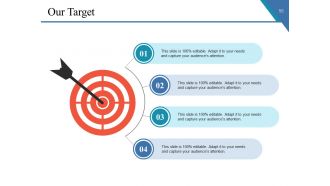
Diapositiva 48 : Esta diapositiva es nuestro objetivo. Puede agregar el objetivo y usarlo para su negocio.
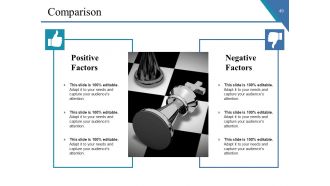
Diapositiva 49 : Esta diapositiva muestra la comparación de factores positivos frente a factores negativos con imágenes de pulgar hacia arriba y hacia abajo.
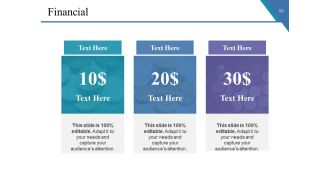
Diapositiva 50 : Esta es una diapositiva de Puntaje financiero para mostrar los aspectos financieros aquí.
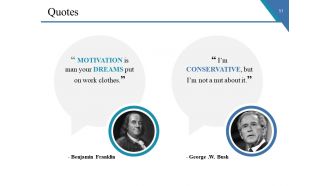
Diapositiva 51 : Esta es una diapositiva de Citas para transmitir mensajes, creencias, etc.
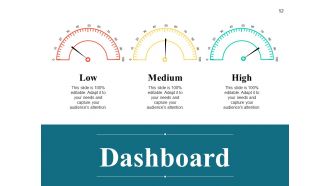
Diapositiva 52 : Esta es una diapositiva del Panel de control para mostrar: Sistema estratégico, Éxito, Proceso de metas, Revisión de ventas, Estudio de comunicación.
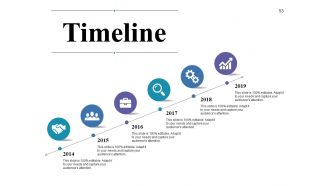
Diapositiva 53 : Esta es una diapositiva de líneas de tiempo para mostrar: planificar, presupuestar, programar, revisar.
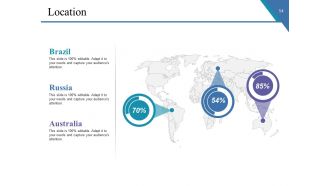
Diapositiva 54 : Esta es una diapositiva de Ubicación para mostrar el crecimiento global, la presencia, etc. en el mapa mundial.
Diapositiva 55 : esta diapositiva muestra la imagen de destino con cuadros de texto
Diapositiva 56 : Esta es una diapositiva de imagen de Siluetas con los subtítulos: INVENTARIO, PAGO, EFECTIVO, TARJETA DE CRÉDITO, PAGO.
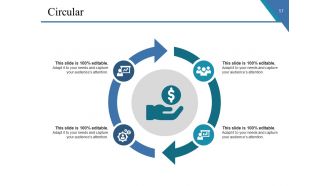
Diapositiva 57 : Esta es una diapositiva de imagen circular para mostrar información, especificaciones, etc.
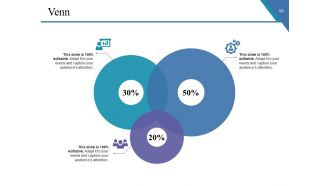
Diapositiva 58 : Esta es una diapositiva de imagen de diagrama de Venn para mostrar información, especificaciones, etc.
Diapositiva 59 : Esta diapositiva muestra un mapa mental para representar entidades.
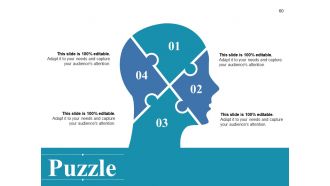
Diapositiva 60 : esta diapositiva muestra un rompecabezas con imágenes.
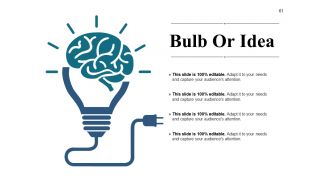
Diapositiva 61 : esta diapositiva muestra una imagen de bombilla o idea.
Diapositiva 62 : Esta es una diapositiva con imagen de lupa para mostrar información, aspectos de alcance, etc.
Diapositiva 63 : Esta es una diapositiva de agradecimiento por reconocimiento.
Muestra de diapositivas de presentación de PowerPoint de propuesta comercial de PPT con las 63 diapositivas:
Maneje eventos icónicos con nuestras diapositivas de presentación de PowerPoint de propuesta comercial de ejemplo de PPT. Asegúrese de que los arreglos sean realmente de clase alta.










FAQs for Sample Ppt Business Proposal
Okay so first thing - make sure you nail the problem statement and your actual solution. Timeline, budget breakdown, why they should pick you over everyone else. Honestly? Most people barely read past the executive summary, so make that part really count. Throw in some case studies if you have them - shows you've done this before and didn't mess it up. Oh, and be super specific about what they'll get and what it'll cost. Use headers and bullets so it's not just a wall of text. The whole point is proving you get their actual problem, not just throwing some cookie-cutter pitch at them.
Honestly, visuals are a game-changer for proposals. People actually remember stuff when you show charts and graphs instead of boring bullet points. I mean, nobody wants to read paragraphs of data anyway. Clean infographics help visual learners get it faster too. Your audience won't zone out scrolling Instagram if there's something interesting to look at. Just don't go crazy with random stock photos - keep it relevant. Focus on charts that back up your main points. Makes the whole thing look way more professional and credible. Trust me on this one.
Dude, the worst thing you can do is send some cookie-cutter template that screams "I didn't bother learning about your business." Focus on their actual problems, not how amazing your company is. Keep it short too - I swear some people think longer equals better, but nobody wants to wade through pages of BS. Make your pricing super clear upfront. Oh, and this should be obvious but PROOFREAD - I once saw someone send a proposal with a competitor's name in it. Yikes. End with exactly what happens next so they don't have to guess.
Honestly, it's all about knowing your audience. Executives? Hit them with ROI and bottom-line impact right off the bat - they don't have time for fluff. Tech teams want the nitty-gritty details and specs. I once made the mistake of sending our CEO this super technical proposal... yeah, that didn't go well! Procurement people care about cost breakdowns and compliance stuff. Do your homework first - stalk their LinkedIn, check old emails, or just ask around about what they actually care about. Start with their hot buttons, then back it up with whatever details make sense.
Look, your proposal won't mean much without solid research backing it up. Data and market analysis show you actually know what you're talking about - not just throwing ideas at the wall. I've watched so many pitches crash because people relied on gut feelings instead of facts. Customer surveys, industry reports, competitive analysis - that stuff helps you spot real problems and prove there's actual demand. Plus you can tackle objections before they even come up. Honestly, the difference is night and day. People trust proposals that feel researched way more than ones that seem rushed together.
Okay so here's what works - start your proposal by describing the exact problem they're dealing with right now. Make it real, you know? Then show how your solution fixes everything. I've noticed proposals that read like boring manuals just get ignored, but when there's an actual story? People remember those. Walk them through the whole journey: this is your current mess, here's what success looks like, and boom - here's my roadmap to get you there. Structure it like you're telling a story with a real beginning and end. Trust me, it makes all the difference.
Start with the money stuff - projected sales bumps, cost savings, new revenue streams with actual dollar figures. Efficiency gains come next (time saved, productivity increases, lower operational costs). Honestly, implementation costs are a must because clients will ask about this no matter what. Break down upfront investment vs ongoing expenses. Timeline matters too - when will they break even and see real returns? Market opportunity size can help if it's relevant to their situation. Just make sure your numbers aren't pie-in-the-sky crazy and back everything up with assumptions they can actually buy into.
Lead with an executive summary that covers your main points - honestly, most execs barely read past that section anyway. After that, go: problem, your solution, timeline, costs. Headers and bullets are your friend here because nobody wants to wade through paragraphs of text. Each section should stick to one idea, then connect smoothly to the next. You're basically telling a story about why hiring you is a no-brainer. Wrap up with specific next steps and deadlines so if they're interested, they know exactly what comes next.
Honestly? Word and Google Docs are fine for basic stuff, but if you're doing this regularly, get something like PandaDoc or Proposify. They've got templates, e-signatures, tracking - the whole deal. Canva's actually pretty solid too if you want it to look nice without paying a designer. I mean, PowerPoint works if you need more visuals. But here's the thing - I've watched people stress over tools when really it's all about the content. That said, once you try PandaDoc's automated follow-ups, you'll never go back to manually chasing clients.
Dude, proposal design is SO underrated. I can't tell you how many brilliant ideas get tossed because the formatting looks like garbage. Decision-makers are busy - they'll bounce if your doc is a wall of text. Last year my colleague had this amazing concept but presented it terribly... straight to the rejection pile. White space is your friend. Break stuff up with bullets, use consistent fonts, make headers obvious. Nothing fancy needed, just clean and scannable. Honestly, good layout shows you actually care about details. Makes it way easier for them to focus on your ideas instead of fighting through messy paragraphs.
Dude, get ahead of their objections before they even bring them up. Figure out what usually freaks them out - money, timeline, whatever - then tackle those concerns right in your proposal. Don't wait for pushback. I always throw in a "risk mitigation" section to show I've actually thought this through. Case studies work great too, especially ones that address their typical worries. Honestly, it's like reading their minds before they speak. Makes you look super prepared and they feel heard. Oh, and testimonials that counter their usual hesitations? Chef's kiss. Shows you totally get where they're coming from.
So here's what I'd do - sort all that feedback into buckets first. Financial stuff, timeline concerns, market assumptions, whatever. Way easier than drowning in random comments. Tackle the deal-breakers first, obviously. Then move to the smaller operational tweaks. But honestly? Don't try to fix everything. Some suggestions will just make your proposal worse, and you can't make everyone happy anyway. Document what you changed and why - you'll need that for follow-ups later. Oh, and definitely shoot a quick summary of your main revisions back to everyone before you submit the final version.
Dude, biggest thing is don't oversell what you can actually do or your timeline - that always bites you later. Keep your pricing super transparent too, no sneaky hidden fees. Also keep their confidential stuff locked down even if the deal falls through. That's just basic decency honestly. Don't make promises that could tank their business, and if you've got any conflicts of interest, just say so upfront. I learned this the hard way but it's pretty simple - would you be pissed if someone pulled this on you? Then don't do it.
Look, trends are basically everything when it comes to your proposal strategy. They tell you what problems to focus on, which solutions to push, and how to frame your whole value prop. Research 2-3 major trends hitting their industry first - then weave that stuff into your problem statement and connect your solution to what's coming next. Nobody's gonna back something that feels like it's from 2019, you know? Reference current data. Make it feel fresh and forward-thinking. Your proposal needs to scream "this person gets where the market's headed" or you're dead in the water.
Okay so first thing - shoot them a quick confirmation email within 24 hours. Just acknowledge you submitted and remind them why you're awesome. Then here's the part that feels weird but trust me - follow up every week. I used to think this was super pushy, but proposals literally disappear into email black holes otherwise. Keep a basic spreadsheet so you don't forget who you've contacted when. Three weeks of silence? Try reaching out to someone else there or switch up your approach. Honestly, the biggest screwup is just submitting then never following up again. Set those calendar reminders now!
-
Qualitative and comprehensive slides.
-
Use of icon with content is very relateable, informative and appealing.