

Scope management plan powerpoint presentation slides




Try Before you Buy Download Free Sample Product
 Impress Your
 Audience
 100%
100% Editable
 Save Hours
 of Time


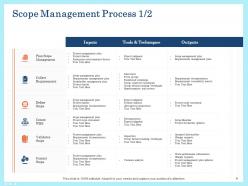
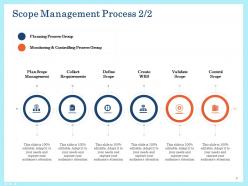
Measure the success of the project undertaken by using the Scope Management Plan PowerPoint Presentation Slides. Take the assistance of our visually appealing cost overrun PPT presentation, and showcase the project objectives and final expected outcomes. Outline your project’s activities, budget, task duration, development, and project scope using our program management PowerPoint templates. Depict the six processes in scope management, such as planning, collecting requirements, defining, creating WBS, validating, and controlling scope. You can quickly determine how the scope is explained, developed, structured, and verified with the help of these professionally designed scope management plan PPT slideshow. Utilize this attention-grabbing slide deck to monitor the status of the project and the product scope to maintain a baseline during the project lifecycle. Steps to manage the scope changes can be easily depicted with the help of our readily available project management PowerPoint template. Hence ensure the success of your project by downloading our ready-to-use scope statement PowerPoint presentation.
People who downloaded this PowerPoint presentation also viewed the following :
Content of this Powerpoint Presentation
Slide 1: This slide introduces Scope Management Plan. State your Company name and begin.
Slide 2: This slide highlights Agenda.
Slide 3: This slide displays Content of the presentation.
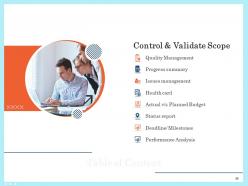
Slide 4: This slide displays Table of Content.
Slide 5: This slide shows Project Brief. Mention in brief about the projects, its objectives and the final expected outcomes
Slide 6: This slide displays Scope Management Process.
Slide 7: This slide also describes Scope Management Process.
Slide 8: This slide shows Table of Content
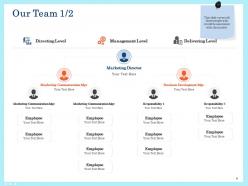
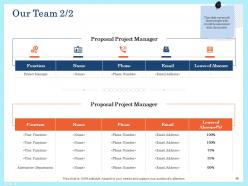
Slide 9: This slide covers all those people who would be associated with this project.
Slide 10: This slide covers all those people who would be associated with this project
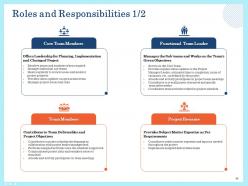
Slide 11: This slide describes Roles and Responsibilities of team members.
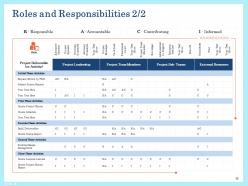
Slide 12: This slide also shows Roles and Responsibilities.
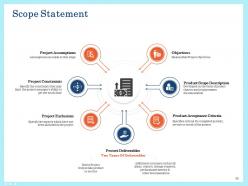
Slide 13: This slide describes Scope Statement.
Slide 14: This slide displays Table of Content.
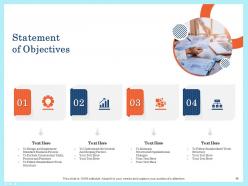
Slide 15: This slide showacases Statement of Objectives.
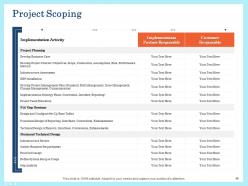
Slide 16: This slide shows Project Scoping
Slide 17: This slide displays Table of Content.
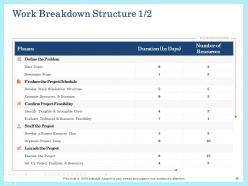
Slide 18: This slide showcaes Work Breakdown Structure.
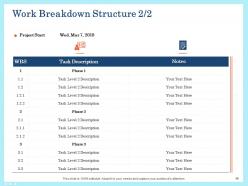
Slide 19: This slide displays Work Breakdown Structure.
Slide 20: This slide highlights Communication Plan.
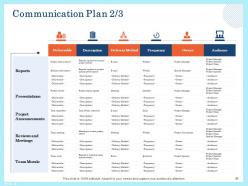
Slide 21: This slide showcases Communication Plan.
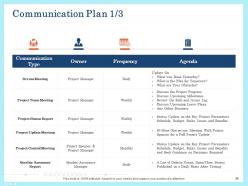
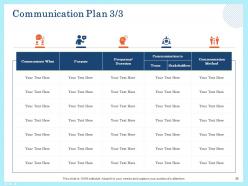
Slide 22: This slide describes Communication Plan.
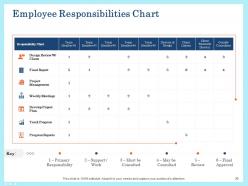
Slide 23: This slide showcases Employee Responsibilities Chart
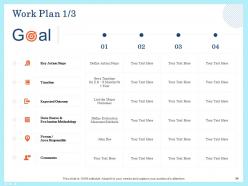
Slide 24: This slide presents Work Plan.
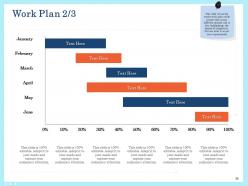
Slide 25: This slide covers the entire work plan of the project split across different months and is also highlighting the degree of completion. You can alter it as per your requirements
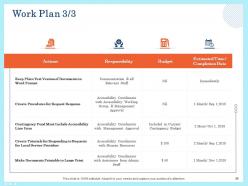
Slide 26: This slide represents Work Plan.
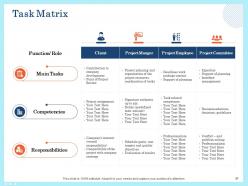
Slide 27: This slide shows Task Matrix
Slide 28: This slide displays Table of Content
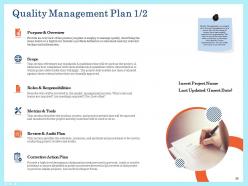
Slide 29: This slide shows Quality Management Plan.
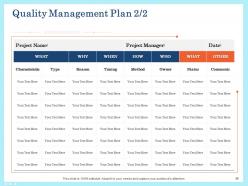
Slide 30: This slide describes Quality Management Plan.
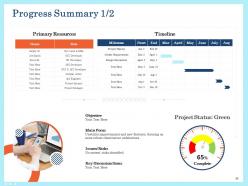
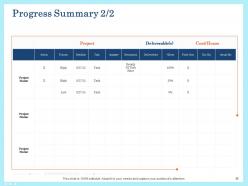
Slide 31: This slide displays Progress Summary.
Slide 32: This slide also shows Progress Summary.
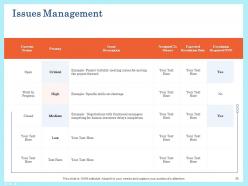
Slide 33: This slide describes Issues Management
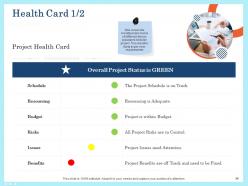
Slide 34: This covers the overall project status of different factors associated with the project. You can alter them as per your requirements
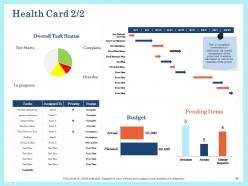
Slide 35: This is a graphical presentation to understand the overall management of the project and to analyze the budget as well as the timelines of the project
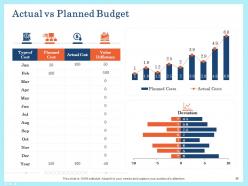
Slide 36: This slide shows Actual vs Planned Budget.
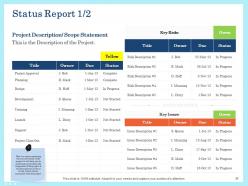
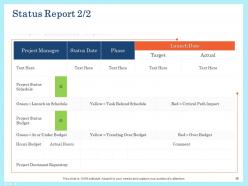
Slide 37: This slide shows capturing the current status of the project. It will help you in achieving clarity about the completion of the project & would enable you to focus on the risk & issues associated with the project
Slide 38: This slide displays Status Report.
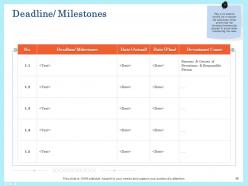
Slide 39: This slide depicts analysis carried out to capture the milestones of the project and the deviation between the planned & actual dates of achieving the same
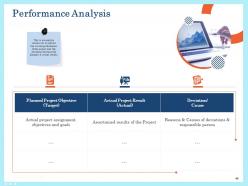
Slide 40: This slide shows Performance Analysis
Slide 41: This slide displays Table of Content
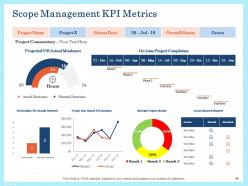
Slide 42: This slide displays Scope Management KPI Metrics.
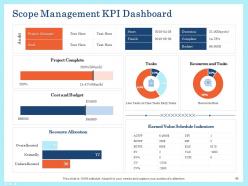
Slide 43: This slide showcases Scope Management KPI Dashboard
Slide 44: This is Icons Slide for Scope Management Plan.
Slide 45: This slide is titled as Additional Slides for moving forward.
Slide 46: This slide represents Mission, Vision and Goal.
Slide 47: This is Our team slide with Names and Designations.
Slide 48: This is About Us slide to showcase Company specifications.
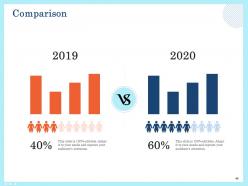
Slide 49: This slide showcases Comparison in percentage.
Slide 50: This slide is titled as Post It Notes. Post your important stuff here.
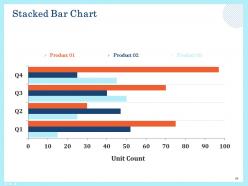
Slide 51: This slide displays Stacked Bar Chart for comparison of products.
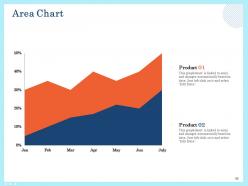
Slide 52: This slide displays Area Chart with product comparison.
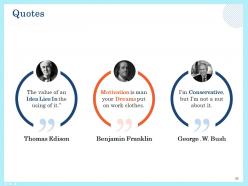
Slide 53: This slide displays Quotes
Slide 54: This slide shows Timeline process.
Slide 55: This is Thank you slide with Contact details.
Scope management plan powerpoint presentation slides with all 55 slides:
Use our Scope Management Plan Powerpoint Presentation Slides to effectively help you save your valuable time. They are readymade to fit into any presentation structure.











FAQs for Scope management plan
The primary purpose of a Scope Management Plan is to define how project scope will be defined, validated, and controlled throughout the project lifecycle, establishing clear boundaries and preventing scope creep. It enables project managers to maintain focus, allocate resources effectively, and deliver agreed-upon deliverables, with many organizations finding that structured scope management significantly reduces project overruns and enhances stakeholder satisfaction.
A Scope Management Plan provides detailed processes for defining, validating, and controlling project scope throughout execution, while a project charter establishes high-level project authorization, objectives, and initial scope boundaries. The charter serves as the foundational document that formally initiates the project, whereas the scope management plan delivers operational frameworks for scope definition, work breakdown structures, and change control procedures, ultimately enabling systematic scope governance and stakeholder alignment.
A Scope Management Plan should include scope definition processes, requirements collection methods, Work Breakdown Structure (WBS) creation, scope verification procedures, and change control mechanisms. These components work together by establishing clear project boundaries, defining deliverables systematically, and managing scope creep effectively, with many organizations finding that comprehensive scope planning reduces project overruns and enhances stakeholder alignment.
A Scope Management Plan helps minimize scope creep by establishing clear boundaries, formal change control processes, stakeholder approval requirements, and regular scope validation checkpoints throughout the project lifecycle. Through structured documentation and systematic monitoring, project managers can identify unauthorized changes early, maintain budget control, and ensure deliverables align with original objectives, ultimately protecting project timelines and resources.
**INPUT**: What techniques can be used to gather requirements effectively for the Scope Management Plan? **OUTPUT**: Effective requirement gathering techniques include stakeholder interviews, workshops, surveys, document analysis, and observation methods. These approaches streamline project clarity by engaging diverse perspectives, capturing detailed specifications, and validating expectations, with many organizations finding that combining multiple techniques delivers comprehensive scope definition and reduces costly changes later.
A Scope Management Plan enhances stakeholder engagement by establishing clear communication protocols, defining roles and responsibilities, setting expectations for scope changes, and creating structured feedback mechanisms. Through regular scope reviews and documentation processes, stakeholders remain informed and involved in decision-making, while transparent change control procedures build trust and ensure alignment, ultimately delivering stronger project outcomes and stakeholder satisfaction.
The Work Breakdown Structure serves as the foundational framework for the Scope Management Plan, breaking complex projects into manageable deliverables, work packages, and tasks that enable precise scope definition and control. This hierarchical decomposition facilitates accurate resource allocation, timeline development, and progress tracking, with project managers across industries like construction, software development, and manufacturing finding that detailed WBS structures significantly enhance scope clarity and minimize project scope creep.
Scope Management Plans in agile methodologies emphasize iterative refinement, flexible requirements, and continuous stakeholder collaboration, while traditional approaches focus on detailed upfront documentation, formal change control processes, and comprehensive scope baselines. Agile teams streamline scope management through sprint planning, user stories, and regular retrospectives, whereas traditional projects rely on Work Breakdown Structures and formal approval gates, with many organizations finding that hybrid approaches deliver optimal flexibility.
Common scope management challenges include unclear requirements, stakeholder misalignment, scope creep, inadequate documentation, and changing business priorities. These obstacles can be mitigated through comprehensive stakeholder engagement, detailed requirement gathering sessions, and robust change control processes, with many organizations finding that regular scope reviews and transparent communication channels ultimately deliver better project outcomes and enhanced stakeholder satisfaction.
A Scope Management Plan should be reviewed at every project milestone, during phase gates, and whenever scope change requests occur, with formal updates typically happening monthly or quarterly depending on project complexity. Many organizations find that regular reviews during sprint planning, stakeholder meetings, and risk assessments enable proactive scope control, ultimately delivering better project outcomes and minimizing costly scope creep.
**INPUT**: What tools or software are recommended for creating and managing a Scope Management Plan? **OUTPUT**: Recommended tools include Microsoft Project, Asana, Trello, Jira, and Monday.com, along with traditional documentation platforms like Confluence and SharePoint. These technologies streamline scope definition, change tracking, and stakeholder collaboration by automating workflows, centralizing documentation, and providing real-time visibility, with many organizations finding that integrated project management platforms ultimately deliver enhanced control and faster project outcomes. [Word count: 58 words]
Project managers ensure Scope Management Plan alignment with project objectives by establishing clear requirements traceability, conducting regular stakeholder reviews, implementing change control processes, and maintaining detailed scope baselines. Through systematic verification methods, project teams validate deliverables against strategic goals, monitor scope creep, and adjust resources accordingly, with many organizations finding that integrated planning approaches ultimately deliver enhanced project success rates and stakeholder satisfaction.
Without a Scope Management Plan, projects face scope creep, budget overruns, timeline delays, and unclear deliverable expectations. Teams struggle with uncontrolled changes, miscommunication between stakeholders, and resource allocation issues, while organizations experience reduced project success rates, strained client relationships, and ultimately diminished competitive advantage in delivering consistent, profitable outcomes.
A well-defined Scope Management Plan improves team collaboration by establishing clear boundaries, shared objectives, standardized communication protocols, and defined roles and responsibilities for all stakeholders. Through detailed documentation and regular scope reviews, teams streamline decision-making processes, minimize misunderstandings, and maintain consistent project focus, with many organizations finding that structured scope management ultimately delivers enhanced productivity and reduced conflicts.
Scope verification and scope control are integral processes within the Scope Management Plan that ensure deliverables meet requirements and prevent unauthorized changes. Verification involves formal acceptance of completed work packages through stakeholder reviews and sign-offs, while control monitors scope boundaries, manages change requests, and maintains project alignment. Together, these processes deliver project integrity and stakeholder satisfaction, with many organizations finding that structured verification and control mechanisms significantly reduce scope creep and enhance delivery predictability.
-
Unique design & color.
-
The Designed Graphic are very professional and classic.