Scope of work project management and construction plan

Rating:
90%
Scope of work project management and construction plan
Slide 1 of 5

or

Favourites Favourites

Try Before you Buy Download Free Sample Product

Audience Impress Your
Audience
Editable 100%
Editable
Time Save Hours
of Time
The Biggest Sale is ending soon in
0
0
:
0
0
:
0
0
Rating:
90%
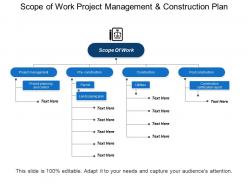
Presenting a customized set of slides called Scope Of Work Project Management And Construction Plan. This involves a four-stage process- scope of work, sow, work opportunities building construction work program schedule. Edit the slide as per your business requirements. Also, this template is ideal for all screen types and can be used for Google Slides as well.

FAQs for Scope of work project management

A Scope of Work is like your project roadmap - it spells out what you're actually delivering and when. Seriously saves your ass when clients inevitably ask for "one tiny addition" halfway through. You'll want clear boundaries written down so there's no confusion about what's included vs what costs extra. Flying without one? Recipe for disaster, honestly. Missed deadlines, blown budgets, the whole mess. I learned this the hard way on a project last year - never again. Get that SOW signed off before you touch anything. Non-negotiable.

Honestly, having a solid scope of work saves you from SO many headaches. No more "wait, wasn't that your thing?" drama mid-project. Everyone knows their role, deadlines, and what they're actually delivering. Think of it like a group chat where everyone's on the same page - people know when to step up, when to pass things along, and how their work connects to everything else. Those awkward moments where nobody knows who's supposed to handle something? Gone. I learned this the hard way on a project last year. Get your team to actually review and approve the scope together upfront. Trust me on this one.

So you need to nail down the obvious stuff first - what you're actually delivering, timeline with milestones, who's doing what. Budget limits too, obviously. But here's the thing that always bites people: spell out your assumptions AND what's NOT included. That's where everything falls apart later. Communication rules matter - how often you'll check in, who approves what. Oh, and definitely have a plan for when (not if) someone wants to change scope halfway through. I always start with whatever template we used last time, then tweak it. Way easier than starting from scratch.

So a proposal is basically your sales pitch - "hey, pick us and here's what we can do." Pretty straightforward. But once you actually get the gig? That's when the Scope of Work comes in, and honestly it's way more important than people realize. The SOW gets super granular - exact deliverables, deadlines, who's responsible for what, costs broken down line by line. I always think of it like this: proposal = movie trailer, SOW = the actual script everyone follows. You'll be referencing that thing constantly once work starts. Trust me, it saves you from so much scope creep drama later.

Dude, your SOW is literally your best defense against project disasters. Think of it as doing a risk assessment before you even start - you'll catch the messy stuff early instead of scrambling later. When stakeholders start adding random requests (they always do), you've got solid documentation to wave around. It forces you to map out every deliverable and timeline upfront. Honestly, mine have prevented so many panic calls from clients. You can track progress way easier too. I know it sounds boring, but treating it like a crystal ball instead of just paperwork will save your sanity.

Honestly, scope almost never stays put - that's just how projects work. You'll start with your baseline but then stakeholders give feedback, you find new requirements, or you hit technical roadblocks you didn't see coming. Change requests become your best friend (or worst enemy, depending on the day). Document everything through proper change control - I can't stress this enough. Communication is huge when changes happen. Get approvals before moving forward or you'll end up with scope creep nightmare. Oh, and definitely keep your project docs updated as you go.

Dude, getting feedback on your Scope of Work is like... non-negotiable. Send it to everyone who matters and give them a real deadline - not just "whenever you get a chance." You'll spot the stuff you missed, catch timelines that are totally unrealistic, and avoid those awkward moments later where someone's like "wait, I thought we were doing X too." Been there, it sucks. Document whatever changes you make so there's no confusion. Honestly, the extra time upfront saves you so much drama once the project actually starts. Everyone knows what they signed up for.

Dude, templates are seriously a game-changer for scope docs. Nobody wants to read through giant paragraphs of boring text - your clients will just skim right past the important stuff. Charts and timelines make everything so much clearer, especially when you're dealing with people who don't get the technical side. I learned this the hard way after sending out way too many confusing SOWs. Break it into sections: objectives, what you'll deliver, timeline, how you'll measure success. The visual layout lets people jump straight to whatever they care about most. Trust me, your future self will thank you.

Okay so the worst mistake? Being vague with stuff like "as needed" - that'll come back to haunt you when nobody agrees on what that actually means. Also don't write some crazy 20-page novel that sits unread (been there). Make sure you're crystal clear about who does what, especially approval timelines because that's where things get messy. Oh and here's the thing - spell out everything, even the obvious stuff. I know it feels weird but when disputes happen later you'll be glad you documented those boundaries instead of just assuming everyone was on the same page.

Honestly, project management tools like Asana or Monday are game-changers for breaking down deliverables and tracking what depends on what. You can use AI writing assistants for first drafts, but you'll still need to customize everything obviously. Template libraries save tons of time too. Real-time collaboration platforms let everyone jump in and refine requirements together - way better than emailing Word docs back and forth like it's 2010. Version control becomes actually manageable. The best part? These tools help you create documents that people actually update when scope changes instead of just ignoring them.

Definitely get everyone who matters in on this review - don't go it alone. First things first, make sure the deliverables are super specific and measurable. Realistic timelines? Check. Clear responsibilities on both sides? Double check. I hate vague stuff like "provide support" because that's how you end up doing way more work than you signed up for. Budget should match what's actually outlined, obviously. If there's a contract involved, have legal peek at it. Oh, and schedule a quick walkthrough meeting before anyone signs anything - saves you from those awkward "wait, that's not what I meant" conversations down the road.

Honestly, taking time to map out every single task upfront makes your estimates way better. You'll actually see where money goes instead of just winging it. Those "oh just one more thing" requests that kill budgets? Way easier to spot when you've got everything written down. I always build in buffers too - random stuff always comes up, trust me. Short sentences work here. The detailed breakdown saves you from those super awkward convos later where you're like "so... we need more cash." Spend that extra hour now, thank yourself later.

Dude, unclear project scope is a nightmare - trust me on this one. Everyone ends up with different ideas about what you're actually building, so you get constant changes and budget blowouts. Your team wastes time on random stuff while missing the things that actually matter. Stakeholders get pissed when the end result isn't what they pictured. I've literally watched entire projects crash because of this mess. Spend the extra time upfront defining exactly what you're delivering and what success looks like. Sounds boring but it'll save your sanity later.

Look, a solid SOW is basically your project GPS. It shows you exactly what skills, tools, and budget you need upfront - no more scrambling for extra developers mid-project because you didn't plan properly. Timeline-wise, it helps sequence everything so your team isn't just sitting around waiting for approvals (which honestly drives everyone nuts). Think of it like meal prep but for work stuff. Map out your resource needs early, create a calendar from your SOW, and loop in stakeholders before things get crazy. Trust me, it'll save you so many headaches later.

Oh definitely construction and software dev - those industries would be a total mess without solid SOWs. Complex projects where scope creep will absolutely destroy your budget. Engineering firms, consultants, marketing agencies all depend on them too since clients love changing their minds halfway through. Government contracts? They're obsessed with documentation (for good reason I guess). Manufacturing's pretty strict about it as well. The pattern I notice is anywhere you've got complicated deliverables, tons of stakeholders, and expensive changes. Custom work or regulatory stuff? Yeah, spend the time upfront getting every detail locked down.

Ratings and Reviews

90% of 100
Review Form
Write a review
Most Relevant Reviews
  1. 100%

    by Dante Wells

    Excellent products for quick understanding.
  2. 80%

    by Clayton Sanders

    Innovative and attractive designs.

2 Item(s)

per page: