


Security And Safety Measures For Hotels Across Hospitality Sector




Try Before you Buy Download Free Sample Product
 Impress Your
 Audience
 100%
100% Editable
 Save Hours
 of Time


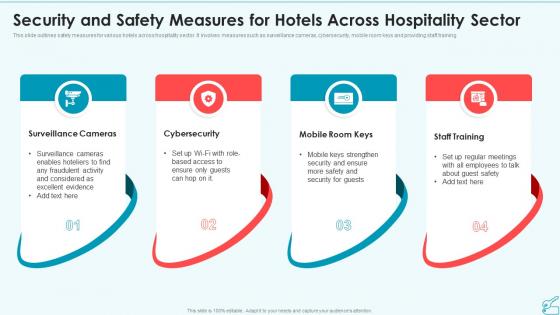
This slide outlines safety measures for various hotels across hospitality sector. It involves measures such as surveillance cameras, cybersecurity, mobile room keys and providing staff training.
People who downloaded this PowerPoint presentation also viewed the following :
Security And Safety Measures For Hotels Across Hospitality Sector with all 6 slides:
Use our Security And Safety Measures For Hotels Across Hospitality Sector to effectively help you save your valuable time. They are readymade to fit into any presentation structure.





FAQs for Security And Safety Measures For Hotels
Essential physical security measures for hotels include controlled access systems, surveillance cameras, perimeter security, lighting systems, and secure entry points to guest floors and amenities. These technologies streamline operations by monitoring visitor flow, deterring unauthorized access, and enabling rapid incident response, with many hospitality organizations finding that comprehensive security integration ultimately enhances guest confidence while reducing liability risks.
Hotels can enhance guest safety through smart card access systems, facial recognition technology, AI-powered surveillance cameras, mobile panic buttons, and real-time monitoring dashboards. These integrated security solutions streamline incident response, enable proactive threat detection, and deliver seamless guest experiences, with many hospitality organizations finding that strategic technology investments ultimately reduce security costs while significantly improving guest confidence and operational efficiency.
Staff training serves as the cornerstone of effective hotel security management, encompassing threat recognition, emergency response protocols, guest verification procedures, and incident reporting systems. Well-trained personnel can identify suspicious activities, handle security breaches professionally, and coordinate with law enforcement when necessary, ultimately delivering enhanced guest safety and operational resilience across all hotel departments.
Hotels effectively manage access control through keycard systems with role-based permissions, biometric scanners for high-security zones, surveillance integration, and time-restricted access protocols. These technologies streamline security by automating entry logs, reducing unauthorized access incidents, and enabling real-time monitoring, with many hospitality organizations finding that strategic access management ultimately enhances guest safety while minimizing operational security costs.
Best practices for securing hotel room keys and electronic locking systems include regular encryption updates, multi-factor authentication protocols, centralized access monitoring, automatic key expiration settings, and secure master key management. These technologies streamline operations by preventing unauthorized access, enabling real-time tracking of entry attempts, and facilitating immediate lockout capabilities, with many hospitality organizations finding that integrated systems significantly reduce security breaches while enhancing guest safety.
Hotels should prepare through comprehensive emergency protocols, staff training programs, guest communication systems, evacuation procedures, and coordination with local authorities. These measures enable swift response during natural disasters like hurricanes or fires and security incidents, with many hospitality organizations finding that regular drills, backup power systems, and clear guest notification processes ultimately deliver enhanced safety outcomes and operational resilience.
Guest identification protocols should include photo ID verification at check-in, credit card authentication, reservation confirmation cross-referencing, and digital identity validation systems. These security measures streamline the verification process while enhancing guest safety and operational efficiency, with many hotels finding that automated ID scanning and biometric systems reduce fraud risk and accelerate check-in experiences.
Hotels balance security and guest comfort by implementing unobtrusive surveillance systems, strategic access controls, and transparent privacy policies while maintaining discretionary staff protocols. Through smart card technologies and selective monitoring in public areas, properties like luxury resorts and business hotels enhance safety without compromising the welcoming atmosphere, ultimately delivering secure experiences that respect guest privacy expectations.
Hotels face cybersecurity risks including payment card breaches, guest data theft, ransomware attacks, unsecured Wi-Fi vulnerabilities, and IoT device compromises. Through multi-layered security protocols, encrypted payment systems, and regular staff training, hospitality organizations can streamline protection while enhancing guest confidence, ultimately delivering safer experiences and competitive advantage in an increasingly digital landscape.
Regular maintenance and inspection of security systems in hotels is critical for ensuring guest safety, regulatory compliance, and operational reliability. Proactive maintenance schedules enable hotels to identify vulnerabilities, prevent system failures, and maintain insurance coverage, while regular inspections help hospitality organizations detect issues early, reduce liability risks, and ultimately deliver consistent security performance that enhances guest confidence and protects brand reputation.
Hotels face significant legal liability for guest safety, including premises liability for inadequate security, negligence claims for foreseeable crimes, and regulatory compliance violations. These legal obligations require comprehensive risk management strategies, with many hospitality organizations finding that proactive security investments, staff training, and incident documentation ultimately reduce litigation exposure while enhancing guest confidence and competitive positioning.
Partnerships with local law enforcement enhance hotel security by providing rapid emergency response, sharing intelligence on regional threats, and conducting regular security assessments. These collaborations enable hotels to access specialized training for staff, coordinate investigations more effectively, and implement community-wide safety protocols, ultimately delivering faster incident resolution and creating a comprehensive security network that enhances guest confidence.
Lighting enhances hotel security by eliminating blind spots, deterring criminal activity, and enabling clear surveillance footage capture. Strategic illumination around entrances, parking areas, and perimeters helps security teams monitor guest movements effectively, while well-lit pathways increase guest confidence and reduce liability risks, ultimately delivering safer environments and enhanced reputation management.
Hotels effectively communicate security policies through pre-arrival emails detailing safety protocols, in-room information packets highlighting emergency procedures, and digital displays in lobbies showcasing key measures like surveillance and access controls. Through mobile apps, front desk briefings, and strategically placed signage, properties enhance guest confidence while streamlining check-in processes, with many hospitality groups finding that proactive communication significantly improves guest satisfaction and reduces security-related inquiries.
Current hotel security technology trends include AI-powered surveillance systems, mobile key access, biometric authentication, contactless check-in solutions, and integrated threat detection platforms. These technologies enhance guest safety and operational efficiency by streamlining access control, reducing physical touchpoints, and enabling real-time monitoring, with many hotel operators finding that strategic security investments ultimately deliver improved guest experiences while minimizing operational risks.
-
My search for complete decks ended with SlideTeam. Such a surplus collection of HD PowerPoints. Moreover, their standard and widescreen formats have helped me in delivering bullseye presentations.
-
The customer care of SlideTeam is very responsive. I was having a payment issue and they fixed it for me in no time.